Loading...
Nestor Kirchner vs Suleyman Demirel
Suleyman Demirel leads by 2.2 pts · 2 figures compared
…
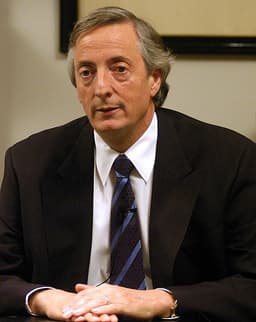
Nestor Kirchner
Politician · Modern
54.4Total

Suleyman Demirel
Politician · Modern
56.6Total
Basic Information
Born
1950
1924
Died
—
—
Era
Modern
Modern
Nationality
Argentina
Turkey
Occupation
Politician
Politician
Civilization
Western
Middle Eastern
Score Comparison
Military (10%)
50.0
28.3
Political (20%)
59.3
59.3
Influence (20%)
57.2
61.0
Legacy (20%)
47.5
54.0
Leadership (15%)
66.0
78.0
Strategy (15%)
44.0
44.1
TOTAL
54.4
56.6
Nestor Kirchner — Complete Timeline
2003 AD
Oversaw strong economic recovery and growthReform◆ Major
Under Kirchner, Argentina experienced rapid economic growth, with GDP expanding by 8-9% annually from 2003 to 2007. This was driven by high commodity prices, a competitive exchange rate, and increased domestic demand, reducing poverty and unemployment.
Economic GrowthRecoveryPoverty Reduction
Impact: nationalconstructive
Elected President of ArgentinaPolitical Action◆ Major
On April 27, 2003, N
ElectionPeronismNew Leadership
Impact: national
Pushed for human rights trials and annulled pardonsPolitical Action◆ Major
In 2003, Kirchner pushed Congress to annul the 1990 pardons granted to military leaders by Menem. He also supported the reopening of human rights trials for Dirty War crimes. This led to the prosecution of hundreds of former officials.
Human RightsTransitional JusticeDirty War
Impact: nationalconstructive
2005 AD
Restructured Argentina's defaulted debtPolitical Action◆ Major
In 2005, Kirchner's government successfully restructured 76% of Argentina's defaulted sovereign debt, offering bondholders a steep haircut of about 65%. This allowed Argentina to return to international capital markets and reduced the debt burden.
Debt RestructuringEconomic PolicySovereign Default
Impact: globalconstructive
2007 AD
Did not seek re-election, paving way for his wifePolitical Action◆ Major
In 2007, Néstor Kirchner chose not to run for re-election, instead supporting his wife, Cristina Fernández de Kirchner, as the Peronist candidate. She won the presidency. This decision established a political dynasty in Argentina.
Political DynastySuccessionPeronism
Impact: national
Suleyman Demirel — Complete Timeline
1965 AD
First Term as Prime Minister of TurkeyPolitical Action◆ Major
Suleyman Demirel became Prime Minister of Turkey for the first time, leading a coalition government of the Justice Party. He served seven non-consecutive terms as prime minister between 1965 and 1993.
Prime MinisterJustice PartyCoalition
Impact: nationalconstructive
1971 AD
Ousted by the 1971 Military MemorandumPolitical Action◆ Major
The Turkish military issued a memorandum demanding Demirel's resignation, citing political instability and economic crisis. Demirel resigned, leading to a period of military-backed governments.
Military InterventionResignationPolitical Crisis
Impact: nationaldestructive
1980 AD
Ousted by the 1980 Military CoupPolitical Action
The Turkish military staged a coup, overthrowing Demirel's government amid widespread political violence and economic turmoil. Demirel was banned from politics for a decade.
Military CoupPolitical Ban1980 Coup
Impact: nationaldestructive
1991 AD
Return to Politics and Seventh Term as Prime MinisterPolitical Action◆ Major
After the 1987 referendum lifted the political ban, Demirel returned as leader of the True Path Party. He became prime minister for the seventh time, leading a coalition government.
Return to PoliticsTrue Path PartyCoalition
Impact: nationalconstructive
1993 AD
Elected President of TurkeyPolitical Action◆ Major
Demirel was elected as the 9th President of Turkey by the Grand National Assembly. He served as president until 2000, focusing on stability and European integration.
PresidencyHead of StateEuropean Integration
Impact: nationalconstructive
Expert Analysis
Origins
Nestor Kirchner was born on February 25, 1950, in Río Gallegos, Santa Cruz, Argentina. His father was a postal worker and his mother a homemaker. He studied law at the National University of La Plata, where he joined the Peronist movement. He married Cristina Fernández in 1975, and they both became involved in politics during the turbulent 1970s. Kirchner served as governor of Santa Cruz from 1991 to 2003, building a reputation as a competent administrator.
Suleyman Demirel was born on November 1, 1924, in İslamköy, Isparta, Turkey, into a modest farming family. He studied civil engineering at Istanbul Technical University and later worked on large-scale infrastructure projects, including the construction of dams and highways. He entered politics in the 1960s, joining the Justice Party (AP) and quickly rising due to his technocratic background and charisma.
Rise to Power
Kirchner rose to national prominence in 2003 when he ran for president amid Argentina's severe economic crisis. He won only 22% of the vote in the first round, but his opponent Carlos Menem withdrew from the runoff, handing Kirchner the presidency. His rise was marked by his positioning as a reformer who would break from Menem's neoliberal policies.
Demirel became prime minister for the first time in 1965 after leading the Justice Party to victory in elections. He served seven non-consecutive terms between 1965 and 1993, with his career punctuated by military interventions. He was ousted by the 1971 military memorandum and again by the 1980 coup, which banned him from politics for a decade. He returned in 1987 and became president in 1993.
Leadership & Governance
Kirchner's leadership style was confrontational and centralizing. He aggressively restructured Argentina's defaulted debt in 2005, offering bondholders a 65% haircut, which secured 76% participation. He also annulled the pardons for military leaders from the dictatorship and pushed for human rights trials. Economically, he oversaw rapid growth (8-9% annually) fueled by high commodity prices and state intervention. His governance scored 66.0 in leadership, reflecting his decisive crisis management.
Demirel was a pragmatic coalition-builder, often navigating between secularist military and Islamist parties. His leadership score of 78.0 is higher than Kirchner's, reflecting his ability to survive multiple coups and return to power. He focused on infrastructure development and European integration, but his tenure was marked by political instability and economic crises. He was ousted twice by the military, indicating a weaker strategic position.
Triumph & Tragedy
Kirchner's greatest triumph was pulling Argentina out of its 2001-2002 crisis: GDP grew from $97 billion in 2002 to $260 billion in 2007, and unemployment fell from 20% to 8%. His debt restructuring was a landmark in sovereign finance. His tragedy was the persistence of high inflation (above 20% by 2007) and his failure to address structural issues, which later plagued his wife's presidency. His political score is 59.3.
Demirel's triumphs include overseeing Turkey's transition to a multi-party system and his role in the Cyprus peace process. He also served as president, a largely ceremonial role, with stability. His tragedy was being overthrown twice by the military, and his inability to prevent the 1980 coup, which led to widespread repression. His political score is also 59.3, but his influence (61.0) and legacy (54.0) are higher.
Character & Destiny
Kirchner was known for his combative and stubborn personality. He centralized power in the presidency and often clashed with the media, the IMF, and foreign creditors. His character drove his aggressive debt restructuring but also led to isolation and economic imbalances. His destiny was to be a transitional figure who set the stage for his wife's presidency, but his health declined, and he died in 2010 at age 60.
Demirel was a survivor, known for his flexibility and pragmatism. He famously said, "The road is long, the work is heavy" (Yol uzun, iş ağır). His character allowed him to return from political bans, but his willingness to compromise with the military undermined democratic consolidation. He died in 2015 at age 90, leaving a mixed legacy.
Legacy
Kirchner's legacy is the reassertion of state intervention in the economy and the pursuit of human rights. His debt restructuring set a precedent for other defaulting countries. However, his policies led to long-term inflation and fiscal deficits. His legacy score is 47.5, reflecting the mixed outcomes.
Demirel's legacy is tied to Turkey's democratic struggles and the role of the military in politics. He is remembered as a durable politician who contributed to infrastructure and European ties. His legacy score is 54.0, higher than Kirchner's, due to his longer impact on Turkish politics.
Conclusion
Suleyman Demirel had a greater overall impact than Nestor Kirchner, as reflected in his higher total score (56.6 vs 54.4). Demirel's seven prime ministerships and presidency shaped Turkey's political trajectory for decades, despite military interruptions. Kirchner's achievements were significant but confined to a shorter period and left unresolved economic problems. In terms of leadership, Demirel's 78.0 surpasses Kirchner's 66.0, but both had similar political scores. Demirel's influence and legacy scores are also higher. Thus, Demirel edges out Kirchner in historical significance.
Rankings
🥇
Suleyman DemirelLeader
Mil: 28.3Pol: 59.3Inf: 61.0
56.6
🥈
Nestor Kirchner
Mil: 50.0Pol: 59.3Inf: 57.2
54.4
+2.2 behind
How This Comparison Works
Algorithm
Each figure is scored on 6 dimensions (0—100 scale) based on structured historical data: Military (10%), Political (20%), Influence (20%), Legacy (20%), Leadership (15%), Strategy (15%). The weighted total produces the final ranking.
Data Sources
Scores are computed from structured sub-indicators in the database. Scale factors adjust for era (Ancient ×0.85, Modern ×1.0) and civilization size (Eastern ×1.05, Other ×0.80) to account for differences in population and military scale.
Maximum 3 Figures
Comparisons are limited to 2—3 figures to ensure readability and statistical meaningfulness.
Error Margins
±5 points per dimension — Sub-scores are derived from historical records with inherent uncertainty. Two figures within 5 points on a dimension should be considered roughly equivalent in that area.
Total Score Accuracy
±3 points overall — The weighted combination of 6 dimensions produces a total score with approximately ±3 points of uncertainty. Differences of less than 3 points are not statistically significant— the figures are effectively tied.
Known Limitations
- Historical records are incomplete and uneven across civilizations
- Figures from oral-tradition societies may be underrepresented
- Occupation labels can misclassify multi-role figures
- Scores measure capability and impact, not moral character
- Quantitative scoring is a comparison tool, not absolute truth
Capability Radar
Military (10%) — Battles & Warfare
Battles
27
22
Win Rate
32
22
Expansion
32
26
Political (20%) — Governance & Reform
Reform
75
65
Diplomacy
65
70
Economy
70
60
Influence (20%) — Cultural & Global Reach
Cultural
40
45
Global
45
50
Legacy (20%) — Historical Impact
Historical
55
55
Longevity
30
50
Leadership (15%) — Power & Stability
Tenure
60
85
Stability
55
55
Strategy (15%) — Tactics & Innovation
Strategy
41
31
Tactics
43
33
Reform
43
36
Similar Comparisons
Comments & Discussion
No comments yet. Be the first to share your thoughts!