Loading...
Truong Chinh vs Yao Qisheng
Yao Qisheng leads by 2.0 pts · 2 figures compared
…
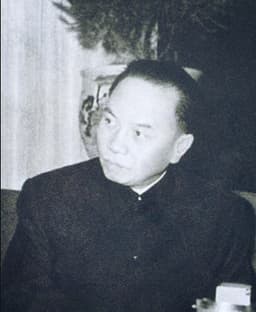
Truong Chinh
Politician · Modern
51.6Total

Yao Qisheng
Politician · Modern
53.6Total
Basic Information
Born
1907
1624
Died
1988
1683
Era
Modern
Modern
Nationality
Vietnam
China
Occupation
Politician
Politician
Civilization
Eastern
Eastern
Score Comparison
Military (10%)
11.6
55.0
Political (20%)
68.0
68.0
Influence (20%)
56.4
51.0
Legacy (20%)
49.2
42.5
Leadership (15%)
68.0
68.0
Strategy (15%)
36.1
43.3
TOTAL
51.6
53.6
Truong Chinh — Complete Timeline
1941 AD
General Secretary of the Communist PartyPolitical Action◆ Major
Truong Chinh became General Secretary of the Communist Party of Vietnam, serving during the First Indochina War. He was a close ally of Ho Chi Minh and helped lead the resistance against French colonial rule.
General SecretaryFirst Indochina WarHo Chi Minh
Impact: nationalconstructive
1950 AD
Land reform theoristCultural◆ Major
Truong Chinh was a leading communist theorist who advocated for radical land reform in North Vietnam. His policies led to the redistribution of land from landlords to peasants, but also caused widespread famine and repression.
Land reformCommunist theoryFamine
Impact: nationaldestructive
1956 AD
Resignation over land reform failuresPolitical Action◆ Major
Truong Chinh resigned as General Secretary after the disastrous land reform campaign caused widespread unrest and famine. He was blamed for the excesses but remained a senior party figure.
ResignationLand reformFamine
Impact: nationaltragic
1960 AD
Chairman of the National AssemblyPolitical Action
Truong Chinh was elected Chairman of the National Assembly of Vietnam, a largely ceremonial role. He continued to influence party policy and ideology until his death.
National AssemblyChairmanCeremonial
Impact: nationalconstructive
Yao Qisheng — Complete Timeline
1674 AD
Appointed Governor of FujianPolitical Action◆ Major
Yao Qisheng was appointed Governor of Fujian by the Kangxi Emperor. He played a key role in planning the Qing campaign against the Three Feudatories and the conquest of Taiwan.
AppointmentQing Dynasty
Impact: regionalconstructive
1676 AD
Planned the suppression of Geng JingzhongWar◆ Major
Yao Qisheng devised the strategy that led to the defeat of Geng Jingzhong's rebellion in Fujian. He coordinated Qing forces and used diplomacy to weaken the rebels.
Military StrategyThree Feudatories
Impact: regionalconstructive
1681 AD
Advocated for the conquest of TaiwanPolitical Action◆ Major
Yao Qisheng strongly urged the Kangxi Emperor to launch a naval campaign against Koxinga's descendants on Taiwan. He argued that Taiwan was essential for coastal security.
AdvocacyTaiwan
Impact: nationalconstructive
1682 AD
Oversaw the construction of a Qing fleetWar◆ Major
Yao Qisheng supervised the building of a large Qing navy in Fujian for the invasion of Taiwan. He ensured the fleet was equipped with ships and supplies for the campaign.
Naval Build-upTaiwan
Impact: regionalconstructive
1683 AD
Participated in the conquest of TaiwanWar◆ Major
Yao Qisheng served as a key official during the Qing conquest of Taiwan. He managed logistics and diplomacy, contributing to the surrender of the Zheng regime.
ConquestTaiwan
Impact: nationalconstructive
Expert Analysis
Origins
Truong Chinh (born 1907) was a Vietnamese communist leader and theorist from Nam Dinh province. He joined the Revolutionary Youth League in 1927 and later studied Marxist theory, becoming a prominent ideologue within the Indochinese Communist Party. His early work focused on peasant mobilization and land policy.
Yao Qisheng (1623–1683) was a Chinese official from Zhejiang province who rose through the Qing bureaucracy. A Han Chinese, he served the Manchu dynasty and gained the trust of the Kangxi Emperor. His career was marked by administrative competence and strategic insight, particularly in military affairs.
Rise to Power
Truong Chinh rose rapidly within the Communist Party due to his theoretical writings. He became a member of the party's Central Committee in 1941 and was appointed General Secretary in 1941, succeeding Ho Chi Minh. His tenure lasted until 1956, during which he directed the party's policies during the First Indochina War.
Yao Qisheng's rise came through imperial service. He was appointed Governor of Fujian in 1678, a key province during the revolt of the Three Feudatories. He devised the strategy that led to the defeat of Geng Jingzhong's rebellion in 1679, earning him the Kangxi Emperor's favor. This success positioned him as a leading advocate for the conquest of Taiwan.
Leadership & Governance
Truong Chinh's leadership was characterized by rigid ideological adherence. As General Secretary, he implemented radical land reforms in North Vietnam from 1954 to 1956, redistributing land from landlords to peasants. However, his approach was brutal, leading to executions of thousands of 'class enemies' and widespread famine. The campaign destroyed agricultural output and caused an estimated 15,000 deaths. His political score of 68.0 reflects his influence within the party, but his strategy score of 36.1 indicates flawed execution.
Yao Qisheng's governance focused on military logistics and diplomacy. He supervised the construction of a Qing navy in Fujian, building over 300 warships for the invasion of Taiwan. He also negotiated the surrender of Zheng dynasty officials, using both force and bribery. His military score of 55.0 is moderate, but his strategic planning was effective: he advocated for a naval blockade and amphibious assault, which ultimately succeeded in 1683.
Triumph & Tragedy
Truong Chinh's greatest triumph was his role in the First Indochina War, where his ideological guidance helped sustain the communist movement. However, his greatest failure was the land reform catastrophe of 1956. The excesses led to a rebellion in Nghe An province, forcing him to resign as General Secretary. He later served as Chairman of the National Assembly (1960–1981), a ceremonial role, but his legacy was tarnished.
Yao Qisheng's triumph was the conquest of Taiwan in 1683, which ended the Zheng regime and incorporated Taiwan into the Qing Empire. He oversaw logistics and diplomacy, ensuring the fleet was ready. However, he failed to secure the governorship of Taiwan after the conquest; the Kangxi Emperor appointed Shi Lang as the first governor. Yao Qisheng died in 1683 shortly after the victory, perhaps due to exhaustion or illness.
Character & Destiny
Truong Chinh was a doctrinaire communist who believed in the necessity of class struggle. His rigid ideology blinded him to the human cost of his policies. Historians note that he was a loyal follower of Ho Chi Minh but lacked the flexibility to adapt to realities. His downfall came from his own policies' consequences.
Yao Qisheng was a pragmatic administrator and strategist. He understood the importance of naval power and diplomacy. His character was marked by ambition and competence, but he also clashed with other officials, such as Shi Lang. His death soon after his greatest achievement prevented him from enjoying the rewards of his success.
Legacy
Truong Chinh's legacy is mixed. In Vietnam, he is remembered as a party theorist but also blamed for the land reform disaster. His ideas influenced later communist policies, but his methods were discredited. His scores: political 68.0, influence 56.4, legacy 49.2.
Yao Qisheng's legacy lies in his role in expanding the Qing Empire. The conquest of Taiwan had lasting consequences for Chinese history. However, his name is less known than Shi Lang's. His scores: military 55.0, influence 51.0, legacy 42.5.
Conclusion
Comparing their total scores (Truong Chinh 51.6, Yao Qisheng 53.6) suggests Yao Qisheng had slightly higher overall impact. However, Truong Chinh's political score (68.0) matches Yao's, but his strategic failures cost him. Yao Qisheng's successful planning of Taiwan's conquest had a more enduring geopolitical impact, integrating Taiwan into China for centuries. Truong Chinh's land reform, while transformative, caused immense suffering and failed economically. Therefore, Yao Qisheng had greater impact due to his strategic achievements that shaped modern East Asian borders.
Rankings
🥇
Yao QishengLeader
Mil: 55.0Pol: 68.0Inf: 51.0
53.6
🥈
Truong Chinh
Mil: 11.6Pol: 68.0Inf: 56.4
51.6
+2.0 behind
How This Comparison Works
Algorithm
Each figure is scored on 6 dimensions (0—100 scale) based on structured historical data: Military (10%), Political (20%), Influence (20%), Legacy (20%), Leadership (15%), Strategy (15%). The weighted total produces the final ranking.
Data Sources
Scores are computed from structured sub-indicators in the database. Scale factors adjust for era (Ancient ×0.85, Modern ×1.0) and civilization size (Eastern ×1.05, Other ×0.80) to account for differences in population and military scale.
Maximum 3 Figures
Comparisons are limited to 2—3 figures to ensure readability and statistical meaningfulness.
Error Margins
±5 points per dimension — Sub-scores are derived from historical records with inherent uncertainty. Two figures within 5 points on a dimension should be considered roughly equivalent in that area.
Total Score Accuracy
±3 points overall — The weighted combination of 6 dimensions produces a total score with approximately ±3 points of uncertainty. Differences of less than 3 points are not statistically significant— the figures are effectively tied.
Known Limitations
- Historical records are incomplete and uneven across civilizations
- Figures from oral-tradition societies may be underrepresented
- Occupation labels can misclassify multi-role figures
- Scores measure capability and impact, not moral character
- Quantitative scoring is a comparison tool, not absolute truth
Capability Radar
Military (10%) — Battles & Warfare
Battles
16
40
Win Rate
19
45
Expansion
19
50
Political (20%) — Governance & Reform
Reform
55
40
Diplomacy
50
60
Economy
40
45
Influence (20%) — Cultural & Global Reach
Cultural
40
20
Global
40
15
Legacy (20%) — Historical Impact
Historical
50
35
Longevity
45
20
Leadership (15%) — Power & Stability
Tenure
60
55
Stability
45
50
Strategy (15%) — Tactics & Innovation
Strategy
21
55
Tactics
29
50
Reform
27
30
Similar Comparisons
Comments & Discussion
No comments yet. Be the first to share your thoughts!