Loading...
Macky Sall vs Nestor Kirchner
Nestor Kirchner leads by 3.7 pts · 2 figures compared
…
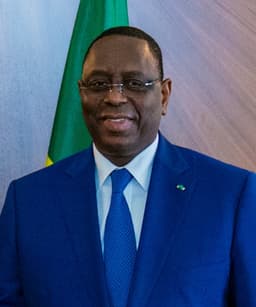
Macky Sall
Politician · Modern
50.7Total
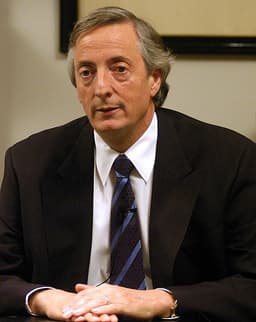
Nestor Kirchner
Politician · Modern
54.4Total
Basic Information
Born
1961
1950
Died
—
—
Era
Modern
Modern
Nationality
Senegal
Argentina
Occupation
Politician
Politician
Civilization
Other
Western
Score Comparison
Military (10%)
26.0
50.0
Political (20%)
62.7
59.3
Influence (20%)
54.9
57.2
Legacy (20%)
41.7
47.5
Leadership (15%)
72.0
66.0
Strategy (15%)
37.3
44.0
TOTAL
50.7
54.4
Macky Sall — Complete Timeline
2012 AD
Elected President of SenegalPolitical Action
Macky Sall won the presidential election in a runoff against incumbent Abdoulaye Wade. His victory was seen as a defense of democratic norms after Wade's controversial third-term bid.
ElectionDemocracy
Impact: nationalconstructive
2014 AD
Launched the Plan Senegal EmergentReform◆ Major
Sall launched the Plan Senegal Emergent, a national development strategy focusing on infrastructure, agriculture, and energy. The plan aimed to achieve middle-income status by 2035.
Development PlanEconomic Reform
Impact: nationalconstructive
2016 AD
Reduced Presidential Term to Five YearsReform◆ Major
Sall oversaw a constitutional referendum that reduced the presidential term from seven to five years and limited the president to two terms. The reform was intended to strengthen democratic institutions.
Constitutional ReformTerm Limits
Impact: nationalconstructive
2019 AD
Re-elected for a Second TermPolitical Action◆ Major
Sall was re-elected in the first round with 58.3% of the vote. The election was peaceful but criticized by opposition for excluding some candidates, though international observers noted improvements.
Re-electionControversy
Impact: national
Nestor Kirchner — Complete Timeline
2003 AD
Oversaw strong economic recovery and growthReform◆ Major
Under Kirchner, Argentina experienced rapid economic growth, with GDP expanding by 8-9% annually from 2003 to 2007. This was driven by high commodity prices, a competitive exchange rate, and increased domestic demand, reducing poverty and unemployment.
Economic GrowthRecoveryPoverty Reduction
Impact: nationalconstructive
Elected President of ArgentinaPolitical Action◆ Major
On April 27, 2003, N
ElectionPeronismNew Leadership
Impact: national
Pushed for human rights trials and annulled pardonsPolitical Action◆ Major
In 2003, Kirchner pushed Congress to annul the 1990 pardons granted to military leaders by Menem. He also supported the reopening of human rights trials for Dirty War crimes. This led to the prosecution of hundreds of former officials.
Human RightsTransitional JusticeDirty War
Impact: nationalconstructive
2005 AD
Restructured Argentina's defaulted debtPolitical Action◆ Major
In 2005, Kirchner's government successfully restructured 76% of Argentina's defaulted sovereign debt, offering bondholders a steep haircut of about 65%. This allowed Argentina to return to international capital markets and reduced the debt burden.
Debt RestructuringEconomic PolicySovereign Default
Impact: globalconstructive
2007 AD
Did not seek re-election, paving way for his wifePolitical Action◆ Major
In 2007, Néstor Kirchner chose not to run for re-election, instead supporting his wife, Cristina Fernández de Kirchner, as the Peronist candidate. She won the presidency. This decision established a political dynasty in Argentina.
Political DynastySuccessionPeronism
Impact: national
Expert Analysis
Origins
Macky Sall was born in 1961 in Fatick, Senegal, to a modest family. He studied geology and engineering before entering politics, joining the Senegalese Democratic Party (PDS) under Abdoulaye Wade. His early career included serving as mayor of Fatick and minister of energy and mines.
Nestor Kirchner was born in 1953 in Río Gallegos, Argentina, to a middle-class family. He studied law at the National University of La Plata, where he became involved in Peronist politics. He married Cristina Fernández in 1975, and both were active in the Peronist Youth. Kirchner served as governor of Santa Cruz from 1991 to 2003, building a political base in the Patagonian region.
Rise to Power
Sall rose through the ranks of the PDS, becoming prime minister in 2004 under President Wade. However, a falling-out over Wade's plan to run for a third term led Sall to leave the party and form his own, the Alliance for the Republic (APR). In 2012, he won the presidency in a runoff against Wade, securing 65.8% of the vote. His victory was seen as a defense of democratic norms after Wade's controversial attempt to extend his tenure.
Kirchner's rise was less meteoric. He won the presidency in 2003 with only 22% of the vote in the first round, after former President Carlos Menem withdrew from the runoff. Kirchner inherited a country in deep crisis: the 2001-2002 economic collapse had left Argentina in default, with unemployment over 20% and poverty above 50%. His low initial support made him a weak president on paper, but he quickly asserted authority.
Leadership & Governance
Sall's leadership is technocratic and reformist. He oversaw a constitutional referendum in 2016 that reduced the presidential term from seven to five years and limited it to two terms. He launched the Plan Senegal Emergent (PSE) in 2014, a national development strategy focusing on infrastructure, agriculture, and energy. The PSE aimed for GDP growth of 7-8% annually. Sall also invested in transport (new highways, regional train) and energy (solar plants). However, critics point to limited progress on corruption and inequality. His political score of 62.7 reflects his ability to navigate Senegalese politics, but his influence and legacy scores (54.9 and 41.7) suggest mixed results.
Kirchner's governance was characterized by assertive state intervention. He restructured 76% of Argentina's defaulted debt in 2005, offering a steep haircut of about 65% to bondholders. This allowed Argentina to return to international capital markets. He oversaw strong economic recovery, with GDP growing 8-9% annually from 2003 to 2007, driven by high commodity prices and expansionary policies. He also pushed for human rights trials, annulling pardons for military leaders from the dictatorship. His leadership score of 66.0 reflects his decisive actions, but his strategy score of 44.0 indicates a lack of long-term planning, as policies were often populist and unsustainable.
Triumph & Tragedy
Sall's greatest success is the PSE, which improved Senegal's infrastructure and boosted growth to around 6% annually. He also strengthened democratic institutions by reducing presidential powers. However, his second term was marred by protests in 2021 and 2023 against his handling of the opposition and perceived authoritarian drift. His handling of the COVID-19 pandemic was praised for its efficiency, but his political score (62.7) is modest.
Kirchner's triumph was pulling Argentina out of its worst economic crisis. His debt restructuring and economic policies restored growth and reduced unemployment to 8.5% by 2007. He also advanced human rights, reopening trials for crimes of the dictatorship. His tragedy was the populist economic legacy: high inflation (over 20% by 2007) and fiscal imbalances that his successors could not manage. His military score of 50.0 is average, reflecting his focus on civilian politics.
Character & Destiny
Sall is pragmatic, cautious, and focused on institutional reform. He avoided the strongman style of some African leaders, but his later years in power saw increased repression. His character shaped his destiny: his early reforms won him international praise, but his reluctance to step aside or tolerate dissent led to protests and a tarnished legacy. His total score of 50.7 reflects a balanced but unremarkable record.
Kirchner was combative, ambitious, and deeply political. He used crisis to concentrate power, often bypassing Congress and the judiciary. His character drove him to take bold steps, but also to create a cult of personality. His decision not to seek re-election in 2007, instead supporting his wife Cristina, was both a strategic move and a reflection of his dynastic ambitions. His total score of 54.4 edges out Sall, driven by higher influence and legacy.
Legacy
Sall's legacy is tied to the PSE and the constitutional reforms. He has positioned Senegal as a stable democracy in West Africa, but his second-term controversies may overshadow his achievements. His legacy score of 41.7 suggests limited long-term impact compared to his peers.
Kirchner's legacy is more complex. He restored Argentina's economy and human rights agenda, but his populist policies set the stage for future crises. His wife Cristina succeeded him and continued many of his policies, creating a Kirchnerist political dynasty. His legacy score of 47.5 reflects this mixed but lasting impact.
Conclusion
Nestor Kirchner had a greater impact than Macky Sall. Kirchner's actions in restructuring debt and reviving Argentina's economy from a deep crisis were more consequential than Sall's gradual reforms. While Sall's political and leadership scores are close, Kirchner's influence and legacy scores are higher, reflecting his role in shaping Argentina's modern trajectory. The total score gap of 3.7 points (Kirchner 54.4, Sall 50.7) underlines this assessment. Sall's impact is real but limited to Senegal's development, while Kirchner's actions had regional and global implications for debt restructuring and human rights.
Rankings
🥇
Nestor KirchnerLeader
Mil: 50.0Pol: 59.3Inf: 57.2
54.4
🥈
Macky Sall
Mil: 26.0Pol: 62.7Inf: 54.9
50.7
+3.7 behind
How This Comparison Works
Algorithm
Each figure is scored on 6 dimensions (0—100 scale) based on structured historical data: Military (10%), Political (20%), Influence (20%), Legacy (20%), Leadership (15%), Strategy (15%). The weighted total produces the final ranking.
Data Sources
Scores are computed from structured sub-indicators in the database. Scale factors adjust for era (Ancient ×0.85, Modern ×1.0) and civilization size (Eastern ×1.05, Other ×0.80) to account for differences in population and military scale.
Maximum 3 Figures
Comparisons are limited to 2—3 figures to ensure readability and statistical meaningfulness.
Error Margins
±5 points per dimension — Sub-scores are derived from historical records with inherent uncertainty. Two figures within 5 points on a dimension should be considered roughly equivalent in that area.
Total Score Accuracy
±3 points overall — The weighted combination of 6 dimensions produces a total score with approximately ±3 points of uncertainty. Differences of less than 3 points are not statistically significant— the figures are effectively tied.
Known Limitations
- Historical records are incomplete and uneven across civilizations
- Figures from oral-tradition societies may be underrepresented
- Occupation labels can misclassify multi-role figures
- Scores measure capability and impact, not moral character
- Quantitative scoring is a comparison tool, not absolute truth
Capability Radar
Military (10%) — Battles & Warfare
Battles
23
27
Win Rate
31
32
Expansion
29
32
Political (20%) — Governance & Reform
Reform
55
75
Diplomacy
60
65
Economy
55
70
Influence (20%) — Cultural & Global Reach
Cultural
30
40
Global
40
45
Legacy (20%) — Historical Impact
Historical
30
55
Longevity
20
30
Leadership (15%) — Power & Stability
Tenure
60
60
Stability
50
55
Strategy (15%) — Tactics & Innovation
Strategy
36
41
Tactics
36
43
Reform
38
43
Similar Comparisons
Comments & Discussion
No comments yet. Be the first to share your thoughts!