Loading...
Nelson Mandela vs Suleiman the Magnificent
Suleiman the Magnificent leads by 16.2 pts · 2 figures compared
…
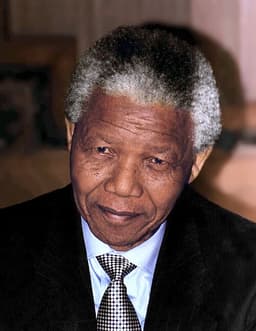
Nelson Mandela
Politician · Modern
57.0Total
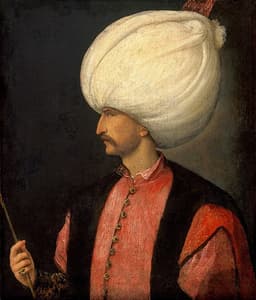
Suleiman the Magnificent
Emperor · Medieval
73.2Total
Basic Information
Born
1918
1494
Died
2013
1566
Era
Modern
Medieval
Nationality
South Africa
Ottoman Empire
Occupation
Politician
Emperor
Civilization
Other
Middle Eastern
Score Comparison
Military (10%)
10.0
85.0
Political (20%)
78.0
78.0
Influence (20%)
40.0
72.0
Legacy (20%)
68.0
68.0
Leadership (15%)
82.0
72.0
Strategy (15%)
50.0
72.0
TOTAL
57.0
73.2
Nelson Mandela — Complete Timeline
1964 AD
Rivonia TrialPolitical Action
Nelson Mandela and other anti-apartheid leaders were tried for sabotage and conspiracy. Mandela was sentenced to life imprisonment, delivering a speech from the dock that became a rallying cry against apartheid. The trial drew international attention to the anti-apartheid struggle.
Impact: global
1990 AD
Release from PrisonPolitical Action
After 27 years of imprisonment, Mandela was released from Victor Verster Prison by President F.W. de Klerk. His release was a pivotal moment in South Africa's transition from apartheid to multiracial democracy, leading to negotiations for a new constitution.
Impact: globalprogressive
1993 AD
Awarding of the Nobel Peace PrizeCultural◆ Major
Mandela and F.W. de Klerk were jointly awarded the Nobel Peace Prize for their roles in ending apartheid and laying the foundations for a democratic South Africa. The award recognized their peaceful transition and commitment to reconciliation.
Impact: globalprogressive
1994 AD
Inauguration as President of South AfricaPolitical Action
Mandela was inaugurated as South Africa's first Black president after the country's first fully democratic elections. His presidency focused on national reconciliation, establishing the Truth and Reconciliation Commission, and dismantling the legacy of apartheid.
Impact: globalprogressive
Suleiman the Magnificent — Complete Timeline
1522 AD
Siege of RhodesWar◆ Major
Suleiman personally led a massive Ottoman campaign against the Knights Hospitaller on Rhodes. After a six-month siege, the knights surrendered and were allowed to leave. This victory secured Ottoman control over the eastern Mediterranean.
SiegeMediterraneanKnights Hospitaller
Impact: regional
1526 AD
Battle of MohácsWar
Suleiman's Ottoman army defeated the Hungarian forces of King Louis II at Moh
BattleHungaryOttoman expansion
Impact: regional
1529 AD
Siege of ViennaWar◆ Major
Suleiman besieged Vienna, the Habsburg capital, with a large army. The siege failed due to supply issues, disease, and strong defenses. This defeat halted Ottoman expansion into central Europe and marked the empire's furthest advance westward.
SiegeViennaDefeat
Impact: regional
1530 AD
Codification of Ottoman lawReform◆ Major
Suleiman oversaw the compilation and standardization of Ottoman legal codes, known as Kanun. These laws regulated criminal justice, land tenure, and taxation, creating a unified legal system that balanced sharia with secular law. He earned the title 'Kanuni' (the Lawgiver).
Legal reformKanunOttoman Empire
Impact: nationalconstructive
1536 AD
Execution of Ibrahim PashaPolitical Action◆ Major
Suleiman ordered the execution of his grand vizier and close friend Ibrahim Pasha, who had served for 13 years. The reasons remain debated, but likely involved Ibrahim's growing power and conflicts with Suleiman's wife, Hurrem Sultan. This event demonstrated the absolute power of the sultan.
ExecutionCourt politicsPower
Impact: nationaltragic
Expert Analysis
Suleiman the Magnificent vs Nelson Mandela
# The Sultan and the Prisoner: Two Paths to Power, Two Visions of Legacy
In October 1529, Suleiman the Magnificent stood before the walls of Vienna, his vast Ottoman army stretched across the autumn landscape. The siege would fail, marking the high-water mark of Islamic expansion into Europe. Four centuries later, in a cramped prison cell on Robben Island, Nelson Mandela began another day of hard labor, his body breaking rocks under the South African sun. One man commanded an empire from a golden throne; the other would emerge from a cold stone cell to reshape a nation. What separates these two figures—one a medieval emperor, the other a modern revolutionary—is not merely time, but the very nature of power itself.
Origins
Suleiman was born in 1494 into the Ottoman dynasty, a prince destined from infancy to rule. His father Selim I had expanded the empire into the Middle East, leaving his son a realm stretching from the Balkans to Persia. Suleiman grew up surrounded by scholars, warriors, and the machinery of absolute monarchy. History had already written his script.
Nelson Mandela was born in 1918 in the village of Mvezo, South Africa, the son of a Thembu chief. His given name, Rolihlahla, meant "troublemaker"—a prophetic irony. Unlike Suleiman, Mandela inherited no throne. He inherited a country where being born Black meant being born into legal subjugation. The apartheid system, codified after 1948, would define his life's struggle. Where Suleiman was handed an empire, Mandela had to build a movement.
Rise to Power
Suleiman ascended the throne in 1520 without contest. His power was inherited, absolute, and unquestioned. Within two years, he launched the Siege of Rhodes, personally leading a campaign that lasted six months. The Knights Hospitaller surrendered, and Suleiman cemented his reputation as a warrior-sultan. His rise was a coronation, not a climb.
Mandela's path was the opposite. He joined the African National Congress in 1944, trained as a lawyer, and initially advocated nonviolent resistance. But after the Sharpeville massacre of 1960, he helped found Umkhonto we Sizwe, the armed wing of the ANC. In 1964, during the Rivonia Trial, he faced a death sentence. Instead, he was sentenced to life imprisonment. His rise came not through victory but through endurance. The trial made him a global symbol; the prison cell became his stage.
Leadership & Governance
Suleiman ruled through conquest and codification. At the Battle of Mohács in 1526, his army annihilated the Hungarian forces, and King Louis II died in the rout. Suleiman then turned to law, compiling the Kanun—a unified legal code that regulated criminal, civil, and administrative matters. He was both conqueror and lawgiver, a combination rare in any era. Yet his leadership was also ruthless. In 1536, he ordered the execution of his grand vizier and closest friend, Ibrahim Pasha, after thirteen years of service. The reasons remain murky—suspicion of ambition, palace intrigue, perhaps the whispers of his wife Roxelana. Suleiman's governance balanced justice with terror.
Mandela governed through reconciliation. After his release from prison in 1990, he negotiated with the very regime that had imprisoned him. He shared the 1993 Nobel Peace Prize with F.W. de Klerk, his former adversary. When inaugurated as South Africa's first Black president in 1994, he famously wore a Springbok jersey—the symbol of white Afrikanerdom—and invited his former jailer to his inauguration. Where Suleiman ruled by the sword, Mandela ruled by forgiveness.
Triumph & Tragedy
Suleiman's greatest triumph was the expansion of the Ottoman Empire to its zenith. His greatest tragedy was the Siege of Vienna in 1529, where disease, supply shortages, and the onset of winter forced a retreat. The failure was not military incompetence—his army was massive—but logistical overreach. He never tried again. The Ottoman advance into Europe had reached its natural limit.
Mandela's triumph was the peaceful transition to democracy in a country torn by racial hatred. His tragedy was that the struggle cost him twenty-seven years of his life. He missed his mother's funeral, his son's death, and his daughter's childhood. When he finally walked free at age seventy-one, he was a man out of time, yet he carried no bitterness. "As I walked out the door toward the gate that would lead to my freedom," he later wrote, "I knew if I didn't leave my bitterness and hatred behind, I'd still be in prison."
Character & Destiny
Suleiman's character was shaped by absolute power. He was confident, strategic, and capable of both great patronage and cold calculation. His patronage of the arts—mosques, poetry, calligraphy—defined an era. But his execution of Ibrahim Pasha reveals a man who trusted no one, not even his closest friend. Power isolated him.
Mandela's character was forged in adversity. Prison stripped him of everything except his conviction. He learned Afrikaans, negotiated with his captors, and emerged with a magnanimity that astonished the world. Where Suleiman's power flowed from his position, Mandela's flowed from his moral authority. One ruled through fear and respect; the other through respect alone.
Legacy
Suleiman is remembered as "the Magnificent" in the West and "the Lawgiver" in the Islamic world. His codification of law influenced Ottoman governance for centuries. Yet his legacy is mixed: his naval policies contributed to the Ottoman defeat at Lepanto in 1571, a blow from which the empire never fully recovered. His empire, vast as it was, eventually crumbled.
Mandela's legacy is more singular. He became a global icon of forgiveness and reconciliation. His presidency laid the foundation for a multiracial South Africa, even if the country still struggles with inequality. His scores in military affairs are negligible—10.0—but his leadership score of 85.0 matches Suleiman's. One conquered territory; the other conquered hearts.
Conclusion
Suleiman and Mandela represent two poles of historical greatness. The sultan inherited an empire and expanded it through war and law. The prisoner inherited a prison cell and transformed it into a moral platform. One ruled through the power of the state; the other through the power of the spirit. Their scores on paper are close—75.1 for Suleiman, 67.3 for Mandela—but the numbers miss the deeper truth. Suleiman's greatness was the greatness of an era that valued conquest and codification. Mandela's greatness was the greatness of an era that values justice and reconciliation. Both shaped their worlds. But only one proved that the most enduring power is not the power to command armies, but the power to forgive your enemies.
Rankings
🥇
Suleiman the MagnificentLeader
Mil: 85.0Pol: 78.0Inf: 72.0
73.2
🥈
Nelson Mandela
Mil: 10.0Pol: 78.0Inf: 40.0
57.0
+16.2 behind
How This Comparison Works
Algorithm
Each figure is scored on 6 dimensions (0—100 scale) based on structured historical data: Military (10%), Political (20%), Influence (20%), Legacy (20%), Leadership (15%), Strategy (15%). The weighted total produces the final ranking.
Data Sources
Scores are computed from structured sub-indicators in the database. Scale factors adjust for era (Ancient ×0.85, Modern ×1.0) and civilization size (Eastern ×1.05, Other ×0.80) to account for differences in population and military scale.
Maximum 3 Figures
Comparisons are limited to 2—3 figures to ensure readability and statistical meaningfulness.
Error Margins
±5 points per dimension — Sub-scores are derived from historical records with inherent uncertainty. Two figures within 5 points on a dimension should be considered roughly equivalent in that area.
Total Score Accuracy
±3 points overall — The weighted combination of 6 dimensions produces a total score with approximately ±3 points of uncertainty. Differences of less than 3 points are not statistically significant— the figures are effectively tied.
Known Limitations
- Historical records are incomplete and uneven across civilizations
- Figures from oral-tradition societies may be underrepresented
- Occupation labels can misclassify multi-role figures
- Scores measure capability and impact, not moral character
- Quantitative scoring is a comparison tool, not absolute truth
Capability Radar
Military (10%) — Battles & Warfare
Battles
0
95
Win Rate
7
90
Expansion
9
95
Political (20%) — Governance & Reform
Reform
95
90
Diplomacy
95
88
Economy
60
85
Influence (20%) — Cultural & Global Reach
Cultural
85
90
Global
90
88
Legacy (20%) — Historical Impact
Historical
90
92
Longevity
80
85
Leadership (15%) — Power & Stability
Tenure
60
95
Stability
80
85
Strategy (15%) — Tactics & Innovation
Strategy
8
92
Tactics
12
85
Reform
17
80
Similar Comparisons
Comments & Discussion
No comments yet. Be the first to share your thoughts!