Loading...
Napoleon Bonaparte vs Nelson Mandela
Napoleon Bonaparte leads by 13.9 pts · 2 figures compared
…

Napoleon Bonaparte
General · Modern
70.9Total
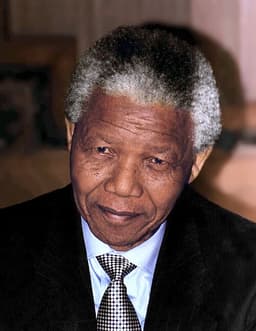
Nelson Mandela
Politician · Modern
57.0Total
Basic Information
Born
1769
1918
Died
1821
2013
Era
Modern
Modern
Nationality
France
South Africa
Occupation
General
Politician
Civilization
Western
Other
Score Comparison
Military (10%)
94.0
10.0
Political (20%)
72.0
78.0
Influence (20%)
40.0
40.0
Legacy (20%)
80.0
68.0
Leadership (15%)
78.0
82.0
Strategy (15%)
90.0
50.0
TOTAL
70.9
57.0
Napoleon Bonaparte — Complete Timeline
1799 AD
Coup of 18 BrumaireOther◆ Major
Napoleon Bonaparte, with support from his brother Lucien and key political figures, overthrew the Directory in a bloodless coup. He established the Consulate with himself as First Consul, effectively becoming the ruler of France. This event ended the French Revolution's most unstable period.
French RevolutionCoupRise to Power
Impact: regional
1804 AD
Promulgation of the Napoleonic CodeOther◆ Major
Napoleon enacted the Civil Code of the French, known as the Napoleonic Code, a comprehensive set of laws that replaced the fragmented feudal legal systems. The code established legal equality, protected property rights, and secularized law. It became the basis for legal systems in many European and world countries.
Legal ReformNapoleonic CodeCivil Law
Impact: globalconstructive
1805 AD
Battle of AusterlitzWar◆ Major
Napoleon's Grande Arm
Napoleonic WarsBattleDecisive Victory
Impact: global
1812 AD
Invasion of RussiaWar◆ Major
Napoleon led the Grande Arm
Napoleonic WarsInvasionDisaster
Impact: globaldestructive
1815 AD
Battle of WaterlooWar◆ Major
Napoleon's French army was defeated by the combined forces of the Duke of Wellington's Anglo-Allied army and Gebhard Leberecht von Bl
Napoleonic WarsBattleFinal Defeat
Impact: globaldestructive
Nelson Mandela — Complete Timeline
1964 AD
Rivonia TrialPolitical Action
Nelson Mandela and other anti-apartheid leaders were tried for sabotage and conspiracy. Mandela was sentenced to life imprisonment, delivering a speech from the dock that became a rallying cry against apartheid. The trial drew international attention to the anti-apartheid struggle.
Impact: global
1990 AD
Release from PrisonPolitical Action
After 27 years of imprisonment, Mandela was released from Victor Verster Prison by President F.W. de Klerk. His release was a pivotal moment in South Africa's transition from apartheid to multiracial democracy, leading to negotiations for a new constitution.
Impact: globalprogressive
1993 AD
Awarding of the Nobel Peace PrizeCultural◆ Major
Mandela and F.W. de Klerk were jointly awarded the Nobel Peace Prize for their roles in ending apartheid and laying the foundations for a democratic South Africa. The award recognized their peaceful transition and commitment to reconciliation.
Impact: globalprogressive
1994 AD
Inauguration as President of South AfricaPolitical Action
Mandela was inaugurated as South Africa's first Black president after the country's first fully democratic elections. His presidency focused on national reconciliation, establishing the Truth and Reconciliation Commission, and dismantling the legacy of apartheid.
Impact: globalprogressive
Expert Analysis
Napoleon Bonaparte vs Nelson Mandela
# The General and the Prisoner: Two Roads to Immortality
On a windswept island in the South Atlantic, a man in a gray overcoat stared out at the endless sea. Napoleon Bonaparte, once master of Europe, was counting down his final days in exile, his empire reduced to memories of cannon smoke and coronation robes. Half a world away and a century later, another man would enter a prison cell on Robben Island, knowing he might never leave. Nelson Mandela, at forty-six, had just been sentenced to life for opposing apartheid. One had conquered nations; the other would conquer hatred. Both would reshape the world, but in ways so different that they force us to ask: What truly makes a leader unforgettable?
Origins
Napoleon was born in 1769 on Corsica, an island of fierce independence recently annexed by France. His family was minor nobility, but poor. Young Napoleon spoke Italian before French, and his schoolmates mocked his accent. He was small, quick-tempered, and driven—a boy who compensated for his stature with ambition. The French Revolution, erupting when he was twenty, shattered the old order and opened paths that birth could never have granted. In that chaos, a gifted artillery officer could become emperor.
Mandela was born in 1918 in Mvezo, a village in South Africa's Eastern Cape. His father was a Thembu chief, but when Mandela was nine, his father died, and the boy was placed under the regency of the king. He grew up hearing the history of his people—wars lost to white settlers, lands stolen, dignity denied. He attended mission schools, where he learned English and law, but also absorbed the Christian ideals of justice that would later fuel his resistance. Where Napoleon was forged in revolution, Mandela was forged in the slow, grinding injustice of colonial rule.
Rise to Power
Napoleon’s ascent was meteoric. In 1793, at twenty-four, he recaptured the port of Toulon from British forces, and within three years he was commanding the French army in Italy. He won battle after battle—Lodi, Arcole, Rivoli—not merely by courage but by speed, by reading terrain, by knowing when to strike and when to wait. By 1799, he had seized political power in a coup. He was thirty. The speed of his rise left Europe breathless.
Mandela’s path was slower, more deliberate. He joined the African National Congress in 1944, when he was twenty-six. At first he advocated nonviolent protest, but after the Sharpeville massacre of 1960, he helped form Umkhonto we Sizwe, the armed wing of the ANC. He went underground, traveled abroad for military training, and was arrested in 1962. At the Rivonia Trial in 1964, he faced the death penalty. Instead, he used the courtroom as a stage. "I have fought against white domination, and I have fought against black domination," he declared. "I have cherished the ideal of a democratic and free society." He was sentenced to life.
Leadership & Governance
As emperor, Napoleon ruled with a mind that never rested. He reformed French law into the Napoleonic Code, establishing principles of equality before the law and secular administration that still shape Europe. He built roads, standardized education, and centralized government. But he also crowned himself, placed his brothers on thrones, and waged endless war. His military genius was unmatched: at Austerlitz in 1805, he destroyed a Russian and Austrian army twice his size. Yet he could not stop. Conquest became addiction.
Mandela governed with a different genius. After twenty-seven years in prison, he emerged in 1990 not bitter but strategic. He understood that South Africa teetered on the edge of civil war, that reconciliation was not sentiment but survival. As president from 1994 to 1999, he created the Truth and Reconciliation Commission, invited his former jailers to his inauguration, and wore the jersey of the mostly white rugby team to unite a divided nation. Where Napoleon imposed unity through force, Mandela wove it through forgiveness.
Triumph & Tragedy
Napoleon’s greatest triumph was Austerlitz, where he crushed the Third Coalition and cemented his legend. His greatest tragedy was the invasion of Russia in 1812. He marched six hundred thousand men into the vastness; fewer than a hundred thousand returned. The disaster broke his aura of invincibility. Exiled to Elba in 1814, he escaped and ruled for a hundred days before Waterloo. The final exile on Saint Helena was a slow death from stomach cancer, surrounded by guards and memory.
Mandela’s greatest triumph was the 1994 election, when millions of South Africans voted for the first time. His greatest tragedy was the cost of that victory: twenty-seven years of his life, the death of his eldest son while he was imprisoned, the collapse of his first marriage. He never spoke of prison with self-pity, but the weight of those years was visible in his slow walk, his measured voice. He emerged not broken but distilled.
Character & Destiny
Napoleon was restless, brilliant, and insatiable. "Impossible is a word to be found only in the dictionary of fools," he said. He trusted his star, his intelligence, his cannon. But his hunger for glory consumed everything—his army, his family, his health. He died at fifty-one, alone, having outlived his empire.
Mandela was patient, disciplined, and deeply human. "The brave man is not he who does not feel afraid, but he who conquers that fear," he wrote. In prison, he learned to negotiate with his captors, to endure without breaking, to plan for a future he might never see. He died at ninety-five, surrounded by love, having seen his dream realized.
Legacy
Napoleon’s legacy is written in the legal codes of Europe, the streets of Paris, the very idea of modern meritocracy. But it is also written in the graves of half a million soldiers, in the bitterness of conquered nations, in the lesson that even genius cannot govern alone.
Mandela’s legacy is written in the constitution of South Africa, in the eyes of children who grow up without apartheid, in the idea that reconciliation is possible. But it is also written in the unfinished work of economic justice, in the poverty that still haunts his country, in the reminder that freedom is never complete.
Conclusion
Standing on opposite ends of history, Napoleon and Mandela offer two models of greatness. One conquered the world and lost it; the other conquered himself and won a nation. One believed in the power of the individual will; the other believed in the power of collective humanity. The general died in exile, the prisoner died a father of his country. Perhaps the deepest lesson is this: Leadership is not about how many battles you win, but what you leave behind when the fighting ends. Napoleon left a legend; Mandela left a living hope.
Rankings
🥇
Napoleon BonaparteLeader
Mil: 94.0Pol: 72.0Inf: 40.0
70.9
🥈
Nelson Mandela
Mil: 10.0Pol: 78.0Inf: 40.0
57.0
+13.9 behind
How This Comparison Works
Algorithm
Each figure is scored on 6 dimensions (0—100 scale) based on structured historical data: Military (10%), Political (20%), Influence (20%), Legacy (20%), Leadership (15%), Strategy (15%). The weighted total produces the final ranking.
Data Sources
Scores are computed from structured sub-indicators in the database. Scale factors adjust for era (Ancient ×0.85, Modern ×1.0) and civilization size (Eastern ×1.05, Other ×0.80) to account for differences in population and military scale.
Maximum 3 Figures
Comparisons are limited to 2—3 figures to ensure readability and statistical meaningfulness.
Error Margins
±5 points per dimension — Sub-scores are derived from historical records with inherent uncertainty. Two figures within 5 points on a dimension should be considered roughly equivalent in that area.
Total Score Accuracy
±3 points overall — The weighted combination of 6 dimensions produces a total score with approximately ±3 points of uncertainty. Differences of less than 3 points are not statistically significant— the figures are effectively tied.
Known Limitations
- Historical records are incomplete and uneven across civilizations
- Figures from oral-tradition societies may be underrepresented
- Occupation labels can misclassify multi-role figures
- Scores measure capability and impact, not moral character
- Quantitative scoring is a comparison tool, not absolute truth
Capability Radar
Military (10%) — Battles & Warfare
Battles
95
0
Win Rate
90
7
Expansion
95
9
Political (20%) — Governance & Reform
Reform
95
95
Diplomacy
80
95
Economy
85
60
Influence (20%) — Cultural & Global Reach
Cultural
85
85
Global
90
90
Legacy (20%) — Historical Impact
Historical
95
90
Longevity
90
80
Leadership (15%) — Power & Stability
Tenure
85
60
Stability
70
80
Strategy (15%) — Tactics & Innovation
Strategy
95
8
Tactics
98
12
Reform
92
17
Similar Comparisons
Comments & Discussion
Latin Lover6/16/2026
The Corsican vs the Xhosa: one died with 99 captured enemy flags at his funeral, the other with 67 years of service measured in smiles, not casualties. Napoleon's legacy is Waterloo; Mandela's is a rainbow nation. I know which triumph I'd rather inherit.
历史叛逆者6/16/2026
别再把拿破仑和曼德拉放在同一个神坛上了。一个用百万尸骨铺就自己的皇冠,另一个用沉默的尊严拆解了种族隔离的牢笼。曼德拉出狱时手里没枪,拿破仑流放时心里还揣着征服梦。伟大?定义都不一样。
Heritage Hawk6/16/2026
Mandela chose forgiveness not because he was soft, but because he was strategic—like Napoleon after Austerlitz. Both understood that true power lies in turning enemies into allies. One did it through preemptive strikes, the other through patient embrace. Same genius, different grammar.
Napoleon's Ghost6/16/2026
Napoleon conquered Europe in a decade; Mandela conquered a nation in 27 years of imprisonment. The difference? One built an empire on fear, the other on forgiveness. Waterloo was a battlefield; Robben Island was a marathon of the soul. History measures them by different clocks entirely.
数据猎手6/16/2026
数据不会撒谎:拿破仑一生发动了60多场战役,而曼德拉推动了人类历史上最和平的权力过渡之一。一个每27天就打一仗,另一个27年不打一仗却赢了。你说谁更会算总账?