Loading...
Nawaz Sharif vs William Laud
Nawaz Sharif leads by 2.6 pts · 2 figures compared
…
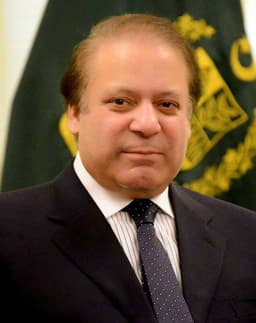
Nawaz Sharif
Politician · Modern
55.5Total
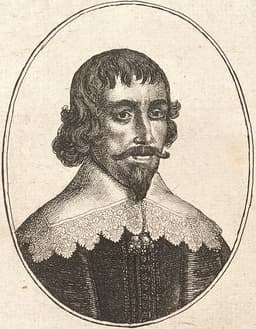
William Laud
Politician · Modern
52.9Total
Basic Information
Born
1949
1573
Died
—
1645
Era
Modern
Modern
Nationality
Pakistan
England
Occupation
Politician
Politician
Civilization
Indian
Western
Score Comparison
Military (10%)
28.9
50.0
Political (20%)
68.0
43.7
Influence (20%)
56.4
54.9
Legacy (20%)
45.0
46.7
Leadership (15%)
74.0
67.0
Strategy (15%)
60.0
59.0
TOTAL
55.5
52.9
Nawaz Sharif — Complete Timeline
1990 AD
First Term as Prime Minister of PakistanPolitical Action◆ Major
Nawaz Sharif became Prime Minister of Pakistan for the first time, leading the Islami Jamhoori Ittehad coalition. He served three non-consecutive terms: 1990-1993, 1997-1999, and 2013-2017.
Prime MinisterCoalitionFirst Term
Impact: nationalconstructive
1993 AD
Ousted by Presidential OrderPolitical Action◆ Major
President Ghulam Ishaq Khan dismissed Sharif's government under Article 58(2)(b), citing corruption and mismanagement. The Supreme Court later reinstated Sharif, but he resigned after a compromise.
DismissalArticle 58(2)(b)Constitutional Crisis
Impact: nationaldestructive
1998 AD
Second Term and Nuclear TestsPolitical Action
During his second term, Sharif ordered Pakistan's nuclear tests in response to India's tests. Pakistan conducted six nuclear tests in the Chagai Hills, becoming a declared nuclear weapons state.
Nuclear TestsChagaiNuclear Weapons
Impact: globalconstructive
1999 AD
Ousted by the 1999 Military CoupPolitical Action
General Pervez Musharraf led a military coup, overthrowing Sharif's government. Sharif was arrested, tried for hijacking and terrorism, and sentenced to life imprisonment, later exiled to Saudi Arabia.
Military CoupArrestExile
Impact: nationaldestructive
2013 AD
Third Term as Prime MinisterPolitical Action◆ Major
Sharif returned to power for a third term after PML-N won the 2013 elections. His government focused on infrastructure projects like the China-Pakistan Economic Corridor (CPEC).
Third TermPML-NCPEC
Impact: nationalconstructive
2017 AD
Disqualified from Office by the Supreme CourtPolitical Action◆ Major
The Supreme Court of Pakistan disqualified Sharif from holding public office over the Panama Papers scandal, citing dishonesty. He resigned as prime minister and was later sentenced to prison.
DisqualificationPanama PapersSupreme Court
Impact: nationaldestructive
William Laud — Complete Timeline
1633 AD
Appointed Archbishop of CanterburyPolitical Action◆ Major
Laud was appointed Archbishop of Canterbury by Charles I. He enforced uniformity in worship, emphasizing ritual and ceremony, which alienated Puritans and contributed to rising tensions.
Religious Policy
Impact: national
1637 AD
Imposed the Book of Common Prayer on ScotlandPolitical Action◆ Major
Laud attempted to impose a new Prayer Book on the Scottish Church, sparking riots in Edinburgh. This led to the National Covenant and the Bishops' Wars, precursors to the English Civil War.
Religious ConflictCivil War
Impact: regionaldestructive
1641 AD
Imprisoned in the Tower of LondonPolitical Action
Laud was arrested by the Long Parliament and imprisoned in the Tower of London on charges of treason. His policies were blamed for the political and religious crisis.
ImprisonmentPolitical Fall
Impact: national
1645 AD
Executed for TreasonPolitical Action◆ Major
Laud was tried and executed by beheading on Tower Hill after a lengthy imprisonment. His death marked a victory for Parliamentarian forces during the English Civil War.
ExecutionCivil War
Impact: nationaltragic
Expert Analysis
Origins
**Nawaz Sharif** was born on December 25, 1949, in Lahore, Pakistan, into a wealthy business family. His father, Muhammad Sharif, was a prominent industrialist. Nawaz studied law at the University of the Punjab and later joined his family's business before entering politics in the 1980s under the patronage of military ruler Zia-ul-Haq.
**William Laud** was born on October 7, 1573, in Reading, England, to a clothier family. He attended St John's College, Oxford, and became a clergyman. Laud rose through the church hierarchy due to his anti-Puritan views and loyalty to the crown, eventually becoming Archbishop of Canterbury in 1633.
Rise to Power
**Nawaz Sharif** rose to prominence as a protégé of Zia-ul-Haq. He became Chief Minister of Punjab in 1985 and later Prime Minister in 1990 after leading the Islami Jamhoori Ittehad coalition to victory. His first term ended in 1993 when President Ghulam Ishaq Khan dismissed his government under Article 58(2)(b), though the Supreme Court reinstated him briefly. He returned for a second term in 1997 with a landslide victory, securing a two-thirds majority.
**William Laud** rose due to his alignment with Charles I's absolutist policies. He became Bishop of London in 1628 and Archbishop of Canterbury in 1633. Laud implemented uniformity in worship, suppressing Puritanism and emphasizing ritual. His influence peaked in the 1630s as a key advisor to Charles I, but his policies sparked resistance, particularly in Scotland.
Leadership & Governance
**Nawaz Sharif** governed as a populist with a focus on economic liberalization and infrastructure. During his second term, he ordered Pakistan's nuclear tests in 1998, scoring 28.9 in military but 68.0 in political. His third term emphasized the China-Pakistan Economic Corridor (CPEC). However, his governance was marred by authoritarian tendencies, including attempts to curb judicial independence and the military's role. His total score of 55.5 reflects mixed effectiveness.
**William Laud** governed the Church of England with an iron hand, enforcing the Book of Common Prayer and suppressing dissent. His policies aimed at uniformity but alienated Puritans and Scots, leading to the Bishops' Wars. His leadership score of 67.0 reflects his determination, but his political score of 43.7 shows his failure to build consensus. His governance exacerbated tensions that led to civil war.
Triumph & Tragedy
**Nawaz Sharif**'s greatest triumph was orchestrating Pakistan's nuclear tests in 1998, making Pakistan a nuclear power. His greatest tragedy was the 1999 military coup led by General Pervez Musharraf, which ousted him and led to his imprisonment. He was convicted for hijacking and terrorism but later exiled. His third term ended in 2017 when he was disqualified by the Supreme Court over the Panama Papers scandal.
**William Laud**'s triumph was his influence over Charles I and the imposition of Anglican uniformity. His tragedy was his execution in 1645 for treason by the Parliamentarians. His policies were blamed for the religious and political turmoil, and he was beheaded on Tower Hill. His death marked a victory for the Puritan faction.
Character & Destiny
**Nawaz Sharif** was pragmatic and business-oriented, but his authoritarian streak and conflicts with the judiciary and military shaped his fate. His personality scored 74.0 in leadership but 60.0 in strategy. His destiny was cyclical: rise, fall, and return. His inability to secure lasting institutional support led to repeated ousters.
**William Laud** was rigid and uncompromising, driven by a vision of religious uniformity. His character scored 67.0 in leadership but 43.7 in political acumen. His inflexibility alienated allies and enemies alike. His destiny was sealed when the Long Parliament arrested him in 1640; he became a scapegoat for the crown's failures.
Legacy
**Nawaz Sharif** left a legacy of nuclear capability and infrastructure projects like CPEC. His political score of 68.0 and legacy score of 45.0 reflect his impact on Pakistan's democracy and economy, though his authoritarian tendencies and corruption allegations tarnish his reputation. He remains a major figure in Pakistani politics.
**William Laud** left a legacy of religious conflict and the strengthening of Puritan opposition. His influence score of 54.9 and legacy score of 46.7 reflect his role in precipitating the English Civil War. His policies were reversed after his death, but his emphasis on ritual influenced the Anglo-Catholic movement.
Conclusion
Nawaz Sharif had a greater impact on history due to his role in making Pakistan a nuclear power and shaping its modern political landscape. His total score of 55.5 edges out Laud's 52.9. While Laud's policies triggered civil war, Sharif's actions had broader geopolitical consequences. Sharif's legacy is more enduring in terms of tangible outcomes, despite his flaws. Therefore, Nawaz Sharif is the more significant historical figure.
Rankings
🥇
Nawaz SharifLeader
Mil: 28.9Pol: 68.0Inf: 56.4
55.5
🥈
William Laud
Mil: 50.0Pol: 43.7Inf: 54.9
52.9
+2.6 behind
How This Comparison Works
Algorithm
Each figure is scored on 6 dimensions (0—100 scale) based on structured historical data: Military (10%), Political (20%), Influence (20%), Legacy (20%), Leadership (15%), Strategy (15%). The weighted total produces the final ranking.
Data Sources
Scores are computed from structured sub-indicators in the database. Scale factors adjust for era (Ancient ×0.85, Modern ×1.0) and civilization size (Eastern ×1.05, Other ×0.80) to account for differences in population and military scale.
Maximum 3 Figures
Comparisons are limited to 2—3 figures to ensure readability and statistical meaningfulness.
Error Margins
±5 points per dimension — Sub-scores are derived from historical records with inherent uncertainty. Two figures within 5 points on a dimension should be considered roughly equivalent in that area.
Total Score Accuracy
±3 points overall — The weighted combination of 6 dimensions produces a total score with approximately ±3 points of uncertainty. Differences of less than 3 points are not statistically significant— the figures are effectively tied.
Known Limitations
- Historical records are incomplete and uneven across civilizations
- Figures from oral-tradition societies may be underrepresented
- Occupation labels can misclassify multi-role figures
- Scores measure capability and impact, not moral character
- Quantitative scoring is a comparison tool, not absolute truth
Capability Radar
Military (10%) — Battles & Warfare
Battles
46
30
Win Rate
46
29
Expansion
51
35
Political (20%) — Governance & Reform
Reform
45
55
Diplomacy
50
30
Economy
55
20
Influence (20%) — Cultural & Global Reach
Cultural
35
40
Global
45
20
Legacy (20%) — Historical Impact
Historical
40
50
Longevity
30
30
Leadership (15%) — Power & Stability
Tenure
60
60
Stability
30
10
Strategy (15%) — Tactics & Innovation
Strategy
51
36
Tactics
55
42
Reform
59
47
Similar Comparisons
Comments & Discussion
No comments yet. Be the first to share your thoughts!