Loading...
Robert Peel vs William Laud
Robert Peel leads by 13.1 pts · 2 figures compared
…

Robert Peel
Politician · Modern
66.0Total
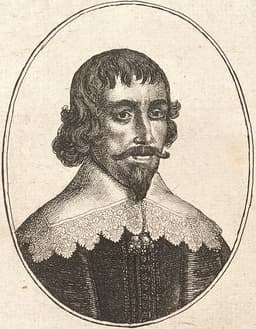
William Laud
Politician · Modern
52.9Total
Basic Information
Born
1788
1573
Died
1850
1645
Era
Modern
Modern
Nationality
United Kingdom
England
Occupation
Politician
Politician
Civilization
Western
Western
Score Comparison
Military (10%)
50.0
50.0
Political (20%)
85.0
43.7
Influence (20%)
72.0
54.9
Legacy (20%)
55.0
46.7
Leadership (15%)
82.0
67.0
Strategy (15%)
42.4
59.0
TOTAL
66.0
52.9
Robert Peel — Complete Timeline
1829 AD
Founded Metropolitan PoliceReform
As Home Secretary, Peel established the Metropolitan Police Act in 1829, creating the first modern professional police force in London. Officers became known as 'bobbies' or 'peelers' after him. This model was later adopted across Britain and influenced policing worldwide.
PoliceLaw EnforcementReform
Impact: globalconstructive
Catholic Emancipation ActReform◆ Major
Peel, despite earlier opposition, supported the Catholic Relief Act 1829, which removed most restrictions on Catholics in the UK. This allowed Catholics to sit in Parliament and hold public office. The act was passed to avoid civil war in Ireland.
Catholic RightsReligious FreedomIreland
Impact: nationalprogressive
1834 AD
Tamworth ManifestoPolitical Action
Peel issued the Tamworth Manifesto in December 1834, outlining the principles of the new Conservative Party. It accepted the Reform Act of 1832 and advocated for moderate reform, establishing the modern Conservative Party's platform and defining 'One Nation' conservatism.
Conservative PartyPolitical ManifestoReform
Impact: nationalconstructive
1842 AD
Mines Act 1842Reform
Peel's government passed the Mines Act 1842, which prohibited women and girls from working underground in coal mines and set a minimum age of 10 for boys. This was a significant labor reform, improving working conditions in the mining industry.
Labor ReformMiningChild Labor
Impact: nationalprogressive
1846 AD
Repeal of the Corn LawsReform
Peel, as Prime Minister, repealed the Corn Laws in June 1846, ending tariffs on imported grain. This split the Conservative Party, as many protectionists opposed free trade. Peel's government fell immediately after, but the repeal lowered food prices and shaped British economic policy.
Free TradeCorn LawsEconomic Policy
Impact: nationalconstructive
William Laud — Complete Timeline
1633 AD
Appointed Archbishop of CanterburyPolitical Action◆ Major
Laud was appointed Archbishop of Canterbury by Charles I. He enforced uniformity in worship, emphasizing ritual and ceremony, which alienated Puritans and contributed to rising tensions.
Religious Policy
Impact: national
1637 AD
Imposed the Book of Common Prayer on ScotlandPolitical Action◆ Major
Laud attempted to impose a new Prayer Book on the Scottish Church, sparking riots in Edinburgh. This led to the National Covenant and the Bishops' Wars, precursors to the English Civil War.
Religious ConflictCivil War
Impact: regionaldestructive
1641 AD
Imprisoned in the Tower of LondonPolitical Action
Laud was arrested by the Long Parliament and imprisoned in the Tower of London on charges of treason. His policies were blamed for the political and religious crisis.
ImprisonmentPolitical Fall
Impact: national
1645 AD
Executed for TreasonPolitical Action◆ Major
Laud was tried and executed by beheading on Tower Hill after a lengthy imprisonment. His death marked a victory for Parliamentarian forces during the English Civil War.
ExecutionCivil War
Impact: nationaltragic
Expert Analysis
Origins
Robert Peel (1788-1850) was born in Bury, Lancashire, to a wealthy cotton manufacturer father, also named Robert Peel. He was educated at Harrow and Christ Church, Oxford, where he excelled in classics and mathematics. His father's influence secured him a parliamentary seat at age 21. Peel's early political career was marked by his opposition to Catholic emancipation, earning him the nickname "Orange Peel."
William Laud (1573-1645) was born in Reading, Berkshire, to a clothier family. He attended Reading School and St John's College, Oxford, where he became a fellow. Laud was ordained and rose through the church hierarchy, becoming a trusted advisor to King Charles I. His high church views and emphasis on ritual aligned with the king's belief in divine right.
Rise to Power
Peel's rise was rapid. He became Chief Secretary for Ireland in 1812, aged 24, where he established a professional police force in Dublin. He returned to Westminster and became Home Secretary in 1822. His conversion to support Catholic emancipation in 1829 surprised many and cost him his Oxford University seat. He served as Prime Minister briefly in 1834-1835, issuing the Tamworth Manifesto that founded the modern Conservative Party. His second premiership (1841-1846) saw major reforms.
Laud's rise was slower but steady. He became Bishop of St David's in 1621, then Bishop of Bath and Wells (1626), and Bishop of London (1628). In 1633, he was appointed Archbishop of Canterbury. As Charles I's chief religious advisor, Laud enforced uniformity in worship, suppressing Puritan preachers and emphasizing ceremonialism. He also served on the Privy Council and was involved in secular governance.
Leadership & Governance
Peel's leadership was pragmatic and reformist. He believed in efficient administration and moral improvement. As Home Secretary, he reorganized the criminal justice system, consolidating laws and improving prisons. His Metropolitan Police Act of 1829 created a professional, non-military police force, establishing principles of crime prevention and public cooperation. As Prime Minister, he tackled economic distress by repealing the Corn Laws in 1846, a free trade measure that split his party but addressed the Irish Potato Famine. His government also passed the Mines Act 1842 (banning women and children underground) and the Factory Act 1844 (limiting work hours).
Laud's leadership was authoritarian and rigid. He sought to impose religious uniformity through the Church of England, suppressing dissent. He used the Court of High Commission and Star Chamber to punish opponents. His attempt to impose a new Prayer Book on Scotland in 1637 sparked riots and led to the Bishops' Wars (1639-1640), draining the royal treasury. Laud's governance score of 67.0 reflects his forceful but ultimately divisive approach, compared to Peel's 82.0.
Triumph & Tragedy
Peel's greatest triumph was the repeal of the Corn Laws, which reduced food prices and aided industrial growth. His creation of the Metropolitan Police was a lasting innovation, with the term "bobbies" still used. However, the repeal split the Conservative Party, leading to his resignation in 1846. He never held office again. His political score of 85.0 reflects his legislative achievements, but his legacy score of 55.0 is tempered by the party split.
Laud's triumph was his influence over the Church of England, restoring cathedrals and enforcing liturgical conformity. However, his policies alienated Puritans and Scots, contributing to the English Civil War. He was imprisoned in 1641 and executed in 1645 for treason. His death marked the collapse of royal authority. His political score of 43.7 and legacy score of 46.7 reflect his failure to sustain his vision.
Character & Destiny
Peel was pragmatic, cautious, and intellectually rigorous. He changed his mind on key issues (Catholic emancipation, Corn Laws) based on evidence, earning accusations of betrayal. His character shaped his destiny: he was a reformer who prioritized national stability over party loyalty. Historians rate his leadership at 82.0, noting his ability to manage crises.
Laud was principled but inflexible. He believed in the divine right of kings and the necessity of religious uniformity. His stubbornness made him a target for parliamentary opponents. His character, marked by zeal and lack of compromise, led directly to his execution. His strategy score of 59.0 is higher than Peel's 42.4, but his political score is far lower.
Legacy
Peel's legacy is immense: he founded the Conservative Party and modern policing. His principles of free trade and administrative reform influenced future governments. The Metropolitan Police became a model worldwide. His political score of 85.0 and total of 66.0 reflect his enduring impact.
Laud's legacy is controversial. He is remembered as a symbol of religious intolerance and royal overreach. His policies backfired, strengthening Puritanism and republicanism. The Church of England later moved away from his high church ideals. His total score of 52.9 reflects a failed legacy.
Conclusion
Robert Peel had greater impact by any measure. His total score of 66.0 exceeds Laud's 52.9 by 13.1 points. Peel's reforms—policing, free trade, factory regulation—shaped modern Britain. Laud's rigid policies hastened a civil war and ended in his execution. While both were significant, Peel's pragmatic leadership left a positive, lasting legacy, whereas Laud's legacy is one of division and failure.
Rankings
🥇
Robert PeelLeader
Mil: 50.0Pol: 85.0Inf: 72.0
66.0
🥈
William Laud
Mil: 50.0Pol: 43.7Inf: 54.9
52.9
+13.1 behind
How This Comparison Works
Algorithm
Each figure is scored on 6 dimensions (0—100 scale) based on structured historical data: Military (10%), Political (20%), Influence (20%), Legacy (20%), Leadership (15%), Strategy (15%). The weighted total produces the final ranking.
Data Sources
Scores are computed from structured sub-indicators in the database. Scale factors adjust for era (Ancient ×0.85, Modern ×1.0) and civilization size (Eastern ×1.05, Other ×0.80) to account for differences in population and military scale.
Maximum 3 Figures
Comparisons are limited to 2—3 figures to ensure readability and statistical meaningfulness.
Error Margins
±5 points per dimension — Sub-scores are derived from historical records with inherent uncertainty. Two figures within 5 points on a dimension should be considered roughly equivalent in that area.
Total Score Accuracy
±3 points overall — The weighted combination of 6 dimensions produces a total score with approximately ±3 points of uncertainty. Differences of less than 3 points are not statistically significant— the figures are effectively tied.
Known Limitations
- Historical records are incomplete and uneven across civilizations
- Figures from oral-tradition societies may be underrepresented
- Occupation labels can misclassify multi-role figures
- Scores measure capability and impact, not moral character
- Quantitative scoring is a comparison tool, not absolute truth
Capability Radar
Military (10%) — Battles & Warfare
Battles
26
30
Win Rate
32
29
Expansion
33
35
Political (20%) — Governance & Reform
Reform
85
55
Diplomacy
70
30
Economy
80
20
Influence (20%) — Cultural & Global Reach
Cultural
60
40
Global
65
20
Legacy (20%) — Historical Impact
Historical
75
50
Longevity
70
30
Leadership (15%) — Power & Stability
Tenure
75
60
Stability
70
10
Strategy (15%) — Tactics & Innovation
Strategy
41
36
Tactics
40
42
Reform
41
47
Similar Comparisons
Comments & Discussion
No comments yet. Be the first to share your thoughts!