Loading...
Mahfud MD vs Nawaz Sharif
Nawaz Sharif leads by 5.7 pts · 2 figures compared
…
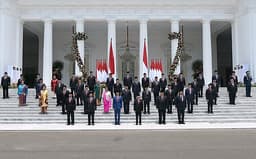
Mahfud MD
Politician · Modern
49.8Total
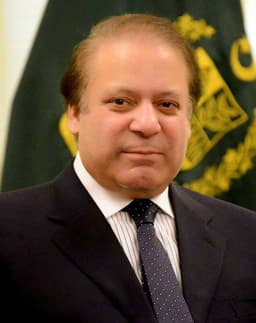
Nawaz Sharif
Politician · Modern
55.5Total
Basic Information
Born
1957
1949
Died
—
—
Era
Modern
Modern
Nationality
Indonesia
Pakistan
Occupation
Politician
Politician
Civilization
Eastern
Indian
Score Comparison
Military (10%)
13.2
28.9
Political (20%)
60.0
68.0
Influence (20%)
55.7
56.4
Legacy (20%)
45.0
45.0
Leadership (15%)
78.0
74.0
Strategy (15%)
26.3
60.0
TOTAL
49.8
55.5
Mahfud MD — Complete Timeline
2008 AD
Appointed Chief Justice of the Constitutional CourtPolitical Action◆ Major
Mahfud MD was appointed Chief Justice of Indonesia's Constitutional Court. During his tenure, he oversaw several landmark decisions, including rulings on electoral disputes and constitutional amendments, enhancing the court's independence and credibility.
JudiciaryConstitutional CourtLegal Reform
Impact: nationalconstructive
2013 AD
Resigned as Chief Justice to Run for Vice PresidentPolitical Action
Mahfud MD resigned as Chief Justice of the Constitutional Court to pursue a vice presidential candidacy. He was ultimately not selected as a running mate, but his resignation marked a transition from judicial to political ambitions.
ResignationPolitical AmbitionTransition
Impact: national
2019 AD
Appointed Coordinating Minister for Political, Legal, and Security AffairsPolitical Action◆ Major
Mahfud MD was appointed Coordinating Minister for Political, Legal, and Security Affairs in President Joko Widodo's second cabinet. He oversaw national security policies, including counter-terrorism efforts and handling of separatist movements in Papua.
CabinetSecurityPolicy
Impact: nationalconstructive
Nawaz Sharif — Complete Timeline
1990 AD
First Term as Prime Minister of PakistanPolitical Action◆ Major
Nawaz Sharif became Prime Minister of Pakistan for the first time, leading the Islami Jamhoori Ittehad coalition. He served three non-consecutive terms: 1990-1993, 1997-1999, and 2013-2017.
Prime MinisterCoalitionFirst Term
Impact: nationalconstructive
1993 AD
Ousted by Presidential OrderPolitical Action◆ Major
President Ghulam Ishaq Khan dismissed Sharif's government under Article 58(2)(b), citing corruption and mismanagement. The Supreme Court later reinstated Sharif, but he resigned after a compromise.
DismissalArticle 58(2)(b)Constitutional Crisis
Impact: nationaldestructive
1998 AD
Second Term and Nuclear TestsPolitical Action
During his second term, Sharif ordered Pakistan's nuclear tests in response to India's tests. Pakistan conducted six nuclear tests in the Chagai Hills, becoming a declared nuclear weapons state.
Nuclear TestsChagaiNuclear Weapons
Impact: globalconstructive
1999 AD
Ousted by the 1999 Military CoupPolitical Action
General Pervez Musharraf led a military coup, overthrowing Sharif's government. Sharif was arrested, tried for hijacking and terrorism, and sentenced to life imprisonment, later exiled to Saudi Arabia.
Military CoupArrestExile
Impact: nationaldestructive
2013 AD
Third Term as Prime MinisterPolitical Action◆ Major
Sharif returned to power for a third term after PML-N won the 2013 elections. His government focused on infrastructure projects like the China-Pakistan Economic Corridor (CPEC).
Third TermPML-NCPEC
Impact: nationalconstructive
2017 AD
Disqualified from Office by the Supreme CourtPolitical Action◆ Major
The Supreme Court of Pakistan disqualified Sharif from holding public office over the Panama Papers scandal, citing dishonesty. He resigned as prime minister and was later sentenced to prison.
DisqualificationPanama PapersSupreme Court
Impact: nationaldestructive
Expert Analysis
Origins
Mahfud MD was born on May 13, 1957, in Sampang, Madura, East Java, Indonesia. He came from a modest family; his father was a teacher. He studied law at the Islamic University of Indonesia and later earned a doctorate in constitutional law from Gadjah Mada University. His early career included teaching law and serving as a member of the People's Consultative Assembly from 1987 to 1992.
Nawaz Sharif was born on December 25, 1949, in Lahore, Pakistan, into a wealthy business family. His father, Muhammad Sharif, was a prominent industrialist. He studied law at the University of the Punjab and later at the University of London. He entered politics through the Pakistan Muslim League, influenced by his family's political connections.
Rise to Power
Mahfud MD rose to prominence as a constitutional law expert. He was appointed Chief Justice of Indonesia's Constitutional Court in 2008, a position he held until 2013. During this time, he presided over landmark cases, including judicial review of laws on corruption, elections, and regional autonomy. He gained national recognition for his integrity and independence.
Nawaz Sharif became Prime Minister of Pakistan for the first time in 1990, leading the Islami Jamhoori Ittehad coalition. He was elected again in 1997, winning a two-thirds majority. His third term began after the 2013 elections, with a focus on infrastructure. His rise was marked by strong business connections and support from the military establishment.
Leadership & Governance
Mahfud MD's leadership style was judicial and procedural. As chief justice, he emphasized the rule of law and constitutional supremacy. He oversaw the court's decisions on controversial issues, such as the legality of the Corruption Eradication Commission and the presidential election dispute. His approach was measured, focusing on legal reasoning rather than political expediency.
Nawaz Sharif's governance was more executive and development-oriented. In his third term, he launched major infrastructure projects, including the China-Pakistan Economic Corridor (CPEC). However, his tenure was marked by tensions with the military and judiciary. He was ousted by the Supreme Court in 2017 over the Panama Papers case, which highlighted corruption allegations.
Triumph & Tragedy
Mahfud MD's greatest success was strengthening the Constitutional Court's role in Indonesia's democracy. He scored 78.0 in leadership, reflecting his ability to maintain judicial independence. His tragedy came when he resigned as chief justice in 2013 to run for vice president, but was not selected. This move was seen as a misstep, as it removed him from a position of influence.
Nawaz Sharif's greatest triumph was ordering Pakistan's nuclear tests in 1998, which enhanced national security. He scored 60.0 in strategy for this bold move. His tragedy was the 1999 military coup that ousted him, leading to exile and prison. He also faced corruption allegations, culminating in his disqualification in 2017.
Character & Destiny
Mahfud MD was known for his integrity and calm demeanor. His decisiveness in the Constitutional Court earned him respect. However, his ambition to become vice president led to a career detour. His character shaped a legacy of judicial reform but limited his political impact.
Nawaz Sharif was pragmatic and resilient, returning to power multiple times. His confrontations with the military and judiciary ultimately defined his fate. His character drove him to pursue economic development but also made him vulnerable to institutional challenges.
Legacy
Mahfud MD's legacy lies in Indonesia's constitutional jurisprudence. His tenure at the Constitutional Court set precedents that continue to influence Indonesian law. He scored 45.0 in legacy, reflecting his focused but limited sphere of impact.
Nawaz Sharif's legacy is more mixed. He is credited with Pakistan's nuclear capability and economic growth during his terms. However, corruption scandals and instability mar his record. His legacy score of 45.0 matches Mahfud MD's, but his political influence was broader.
Conclusion
While Mahfud MD scored 49.8 overall and Nawaz Sharif scored 55.5, the gap is narrow. However, Nawaz Sharif had greater impact due to his role in nuclear tests and economic development. Mahfud MD's contributions to judicial independence are significant but less transformative. Thus, Nawaz Sharif edges ahead in historical impact.
Rankings
🥇
Nawaz SharifLeader
Mil: 28.9Pol: 68.0Inf: 56.4
55.5
🥈
Mahfud MD
Mil: 13.2Pol: 60.0Inf: 55.7
49.8
+5.7 behind
How This Comparison Works
Algorithm
Each figure is scored on 6 dimensions (0—100 scale) based on structured historical data: Military (10%), Political (20%), Influence (20%), Legacy (20%), Leadership (15%), Strategy (15%). The weighted total produces the final ranking.
Data Sources
Scores are computed from structured sub-indicators in the database. Scale factors adjust for era (Ancient ×0.85, Modern ×1.0) and civilization size (Eastern ×1.05, Other ×0.80) to account for differences in population and military scale.
Maximum 3 Figures
Comparisons are limited to 2—3 figures to ensure readability and statistical meaningfulness.
Error Margins
±5 points per dimension — Sub-scores are derived from historical records with inherent uncertainty. Two figures within 5 points on a dimension should be considered roughly equivalent in that area.
Total Score Accuracy
±3 points overall — The weighted combination of 6 dimensions produces a total score with approximately ±3 points of uncertainty. Differences of less than 3 points are not statistically significant— the figures are effectively tied.
Known Limitations
- Historical records are incomplete and uneven across civilizations
- Figures from oral-tradition societies may be underrepresented
- Occupation labels can misclassify multi-role figures
- Scores measure capability and impact, not moral character
- Quantitative scoring is a comparison tool, not absolute truth
Capability Radar
Military (10%) — Battles & Warfare
Battles
17
46
Win Rate
15
46
Expansion
20
51
Political (20%) — Governance & Reform
Reform
60
45
Diplomacy
55
50
Economy
50
55
Influence (20%) — Cultural & Global Reach
Cultural
40
35
Global
35
45
Legacy (20%) — Historical Impact
Historical
40
40
Longevity
30
30
Leadership (15%) — Power & Stability
Tenure
65
60
Stability
55
30
Strategy (15%) — Tactics & Innovation
Strategy
26
51
Tactics
28
55
Reform
27
59
Similar Comparisons
Comments & Discussion
No comments yet. Be the first to share your thoughts!