Loading...
Bidzina Ivanishvili vs Nawaz Sharif
Nawaz Sharif leads by 3.2 pts · 2 figures compared
…

Bidzina Ivanishvili
Politician · Modern
52.3Total
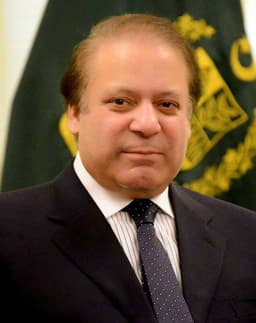
Nawaz Sharif
Politician · Modern
55.5Total
Basic Information
Born
1956
1949
Died
—
—
Era
Modern
Modern
Nationality
Georgia
Pakistan
Occupation
Politician
Politician
Civilization
Western
Indian
Score Comparison
Military (10%)
49.1
28.9
Political (20%)
68.0
68.0
Influence (20%)
52.5
56.4
Legacy (20%)
42.5
45.0
Leadership (15%)
62.2
74.0
Strategy (15%)
41.5
60.0
TOTAL
52.3
55.5
Bidzina Ivanishvili — Complete Timeline
2000 AD
Acquisition of Cartu Bank and PhilanthropyOther
Ivanishvili acquired Cartu Bank and built a vast business empire in Russia and Georgia, becoming one of the wealthiest individuals in the region. He used his fortune to fund philanthropic projects, including cultural and educational initiatives, which boosted his public image.
BusinessPhilanthropyWealth
Impact: nationalconstructive
2011 AD
Revocation of Georgian CitizenshipPolitical Action
The Georgian government under Mikheil Saakashvili revoked Ivanishvili's citizenship, citing his dual citizenship with Russia and France. This move was seen as politically motivated to prevent him from entering politics, but Ivanishvili successfully challenged the decision in court.
CitizenshipPolitical ConflictGeorgia
Impact: national
2012 AD
Founding of the Georgian Dream CoalitionPolitical Action◆ Major
Bidzina Ivanishvili founded the Georgian Dream coalition to challenge the ruling United National Movement of President Mikheil Saakashvili. The coalition won the parliamentary elections, ending Saakashvili's dominance and marking a major shift in Georgian politics.
Political CoalitionElectionGeorgia
Impact: nationalconstructive
Appointment as Prime Minister of GeorgiaPolitical Action◆ Major
Ivanishvili was appointed Prime Minister of Georgia after his coalition's electoral victory. He implemented reforms in the judiciary and economy, but his tenure was marked by tensions with the opposition and accusations of selective justice against former officials.
Prime MinisterReformGeorgia
Impact: national
2013 AD
Resignation as Prime MinisterPolitical Action◆ Major
Ivanishvili resigned as Prime Minister after one year in office, fulfilling a promise to step down after stabilizing the political situation. He remained influential as the leader of the Georgian Dream party, continuing to shape policy from behind the scenes.
ResignationPolitical InfluenceGeorgia
Impact: national
Nawaz Sharif — Complete Timeline
1990 AD
First Term as Prime Minister of PakistanPolitical Action◆ Major
Nawaz Sharif became Prime Minister of Pakistan for the first time, leading the Islami Jamhoori Ittehad coalition. He served three non-consecutive terms: 1990-1993, 1997-1999, and 2013-2017.
Prime MinisterCoalitionFirst Term
Impact: nationalconstructive
1993 AD
Ousted by Presidential OrderPolitical Action◆ Major
President Ghulam Ishaq Khan dismissed Sharif's government under Article 58(2)(b), citing corruption and mismanagement. The Supreme Court later reinstated Sharif, but he resigned after a compromise.
DismissalArticle 58(2)(b)Constitutional Crisis
Impact: nationaldestructive
1998 AD
Second Term and Nuclear TestsPolitical Action
During his second term, Sharif ordered Pakistan's nuclear tests in response to India's tests. Pakistan conducted six nuclear tests in the Chagai Hills, becoming a declared nuclear weapons state.
Nuclear TestsChagaiNuclear Weapons
Impact: globalconstructive
1999 AD
Ousted by the 1999 Military CoupPolitical Action
General Pervez Musharraf led a military coup, overthrowing Sharif's government. Sharif was arrested, tried for hijacking and terrorism, and sentenced to life imprisonment, later exiled to Saudi Arabia.
Military CoupArrestExile
Impact: nationaldestructive
2013 AD
Third Term as Prime MinisterPolitical Action◆ Major
Sharif returned to power for a third term after PML-N won the 2013 elections. His government focused on infrastructure projects like the China-Pakistan Economic Corridor (CPEC).
Third TermPML-NCPEC
Impact: nationalconstructive
2017 AD
Disqualified from Office by the Supreme CourtPolitical Action◆ Major
The Supreme Court of Pakistan disqualified Sharif from holding public office over the Panama Papers scandal, citing dishonesty. He resigned as prime minister and was later sentenced to prison.
DisqualificationPanama PapersSupreme Court
Impact: nationaldestructive
Expert Analysis
Origins
Bidzina Ivanishvili was born in 1956 in Sachkhere, Georgia, into a modest family. He studied economics at Tbilisi State University and later engineering at the Moscow State University of Railways. In the 1990s, he amassed a fortune in Russia through metals, banking, and telecommunications, becoming Georgia's richest man. Nawaz Sharif was born in 1949 in Lahore, Pakistan, into a wealthy industrialist family. He studied law at the University of the Punjab and later managed his family's steel business. Both came from backgrounds that provided resources and connections, but Ivanishvili's wealth was self-made in post-Soviet chaos, while Sharif inherited a business empire.
Rise to Power
Ivanishvili entered politics in 2011 by founding the Georgian Dream coalition to challenge President Mikheil Saakashvili's United National Movement. He used his fortune to fund the opposition, and in 2012, Georgian Dream won the parliamentary election, leading to his appointment as Prime Minister in October 2012. Sharif's rise began earlier: he became Chief Minister of Punjab in 1985, then Prime Minister in 1990 after the death of President Zia-ul-Haq. He lost power in 1993 but returned in 1997 with a landslide victory. Sharif's political trajectory was marked by alliances with the military establishment, while Ivanishvili's rise was a direct challenge to an entrenched incumbent.
Leadership & Governance
Ivanishvili's leadership style was technocratic and reformist. As Prime Minister, he focused on judicial independence, anti-corruption measures, and improving relations with the West. He released political prisoners and reduced presidential powers. However, he resigned after one year, leaving his coalition to govern. Sharif's governance was more conservative and development-oriented. During his third term (2013-2017), he launched infrastructure projects like the China-Pakistan Economic Corridor and improved energy supply. His political score of 68.0 matches Ivanishvili's, but Sharif's leadership score of 74.0 is higher due to his longer tenure and ability to navigate complex military-civilian relations. However, Sharif's governance was marred by corruption allegations and authoritarian tendencies, such as cracking down on media.
Triumph & Tragedy
Ivanishvili's greatest triumph was ousting Saakashvili's government through peaceful elections, a rare democratic transition in Georgia. His coalition implemented reforms that strengthened democratic institutions. His tragedy was his short tenure; by resigning in 2013, he left his party to struggle without him, leading to a gradual erosion of reforms. Sharif's triumph was ordering Pakistan's nuclear tests in 1998, making Pakistan a nuclear power and boosting national pride. His tragedy was being ousted by the 1999 military coup led by General Pervez Musharraf, followed by exile and a prison sentence in 2018 for corruption. Both faced setbacks from powerful institutions: Ivanishvili from the legacy of Saakashvili's strong presidency, Sharif from the military establishment.
Character & Destiny
Ivanishvili is described as reclusive and strategic, using his wealth as a political tool. His decision to resign suggests a preference for behind-the-scenes influence rather than direct power. Sharif is seen as a pragmatic leader who repeatedly clashed with the military. His character score is reflected in his persistence, returning to power thrice despite setbacks. However, his destiny was shaped by his inability to control the military, leading to his downfall. Ivanishvili's influence score of 52.5 is slightly lower than Sharif's 56.4, as Sharif's actions had national and regional impact.
Legacy
Ivanishvili's legacy is mixed: he is credited with Georgia's democratic transition but criticized for remaining a kingmaker through his wealth. His Cartu Foundation has funded education and healthcare projects. Sharif's legacy includes nuclear weapons, infrastructure development, and a controversial record on democracy. His legacy score of 45.0 is slightly higher than Ivanishvili's 42.5, primarily due to the nuclear program's enduring impact. However, both are overshadowed by more powerful figures: Ivanishvili by Saakashvili and later Georgian Dream leaders, Sharif by the military.
Conclusion
Nawaz Sharif had a greater impact on Pakistan and the region than Ivanishvili had on Georgia. Sharif's total score of 55.5 surpasses Ivanishvili's 52.3. While Ivanishvili's role in Georgia's democratic transition was significant, his impact was limited by his short tenure and the country's small size. Sharif's nuclear tests and long political career, despite failures, shaped Pakistan's trajectory and regional security. Therefore, Sharif's legacy is more substantial.
Rankings
🥇
Nawaz SharifLeader
Mil: 28.9Pol: 68.0Inf: 56.4
55.5
🥈
Bidzina Ivanishvili
Mil: 49.1Pol: 68.0Inf: 52.5
52.3
+3.2 behind
How This Comparison Works
Algorithm
Each figure is scored on 6 dimensions (0—100 scale) based on structured historical data: Military (10%), Political (20%), Influence (20%), Legacy (20%), Leadership (15%), Strategy (15%). The weighted total produces the final ranking.
Data Sources
Scores are computed from structured sub-indicators in the database. Scale factors adjust for era (Ancient ×0.85, Modern ×1.0) and civilization size (Eastern ×1.05, Other ×0.80) to account for differences in population and military scale.
Maximum 3 Figures
Comparisons are limited to 2—3 figures to ensure readability and statistical meaningfulness.
Error Margins
±5 points per dimension — Sub-scores are derived from historical records with inherent uncertainty. Two figures within 5 points on a dimension should be considered roughly equivalent in that area.
Total Score Accuracy
±3 points overall — The weighted combination of 6 dimensions produces a total score with approximately ±3 points of uncertainty. Differences of less than 3 points are not statistically significant— the figures are effectively tied.
Known Limitations
- Historical records are incomplete and uneven across civilizations
- Figures from oral-tradition societies may be underrepresented
- Occupation labels can misclassify multi-role figures
- Scores measure capability and impact, not moral character
- Quantitative scoring is a comparison tool, not absolute truth
Capability Radar
Military (10%) — Battles & Warfare
Battles
32
46
Win Rate
29
46
Expansion
36
51
Political (20%) — Governance & Reform
Reform
35
45
Diplomacy
45
50
Economy
60
55
Influence (20%) — Cultural & Global Reach
Cultural
30
35
Global
25
45
Legacy (20%) — Historical Impact
Historical
35
40
Longevity
20
30
Leadership (15%) — Power & Stability
Tenure
40
60
Stability
20
30
Strategy (15%) — Tactics & Innovation
Strategy
40
51
Tactics
38
55
Reform
42
59
Similar Comparisons
Comments & Discussion
No comments yet. Be the first to share your thoughts!