Loading...
Naoe Kanetsugu vs Pyotr Wrangel
Naoe Kanetsugu leads by 3.0 pts · 2 figures compared
…
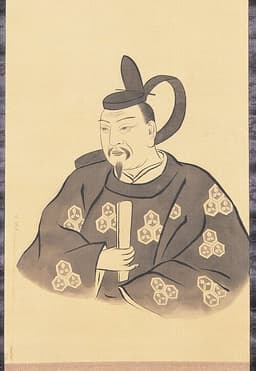
Naoe Kanetsugu
General · Modern
52.8Total

Pyotr Wrangel
General · Modern
49.8Total
Basic Information
Born
1560
1878
Died
1620
1928
Era
Modern
Modern
Nationality
Japan
Russia
Occupation
General
General
Civilization
Eastern
Western
Score Comparison
Military (10%)
10.0
55.0
Political (20%)
61.3
42.2
Influence (20%)
54.9
55.7
Legacy (20%)
48.3
45.8
Leadership (15%)
72.0
47.3
Strategy (15%)
60.0
55.0
TOTAL
52.8
49.8
Naoe Kanetsugu — Complete Timeline
1578 AD
Service under Uesugi KagekatsuPolitical Action
Naoe Kanetsugu served as the chief retainer of Uesugi Kagekatsu, the daimyo of the Uesugi clan. He was known for his loyalty and military skill, and famously wore a helmet adorned with a love letter from his wife, symbolizing his devotion.
RetainerUesugi ClanSengoku
Impact: regionalconstructive
1600 AD
Battle of SekigaharaWar◆ Major
Naoe Kanetsugu commanded the Uesugi clan forces at the Battle of Sekigahara, fighting on the side of the western coalition. However, the Uesugi army was delayed by engagements with Date Masamune and did not reach the main battlefield in time to influence the outcome.
SekigaharaUesugi ClanBattle
Impact: national
Defense of Aizu against Date MasamuneWar◆ Major
Naoe Kanetsugu led the defense of the Uesugi domain of Aizu against an invasion by Date Masamune during the Sekigahara campaign. He successfully repelled Date's forces, preventing the fall of the Uesugi stronghold, but this diversion kept him from joining the main battle.
DefenseUesugi ClanDate Masamune
Impact: regionalconstructive
1601 AD
Surrender to Tokugawa IeyasuPolitical Action◆ Major
After the Battle of Sekigahara, Naoe Kanetsugu negotiated the surrender of the Uesugi clan to Tokugawa Ieyasu. The Uesugi were allowed to retain their domain but were reduced in size, and Kanetsugu continued to serve the clan under the Tokugawa shogunate.
SurrenderTokugawa ShogunateUesugi Clan
Impact: regional
Pyotr Wrangel — Complete Timeline
1920 AD
Evacuation of CrimeaWar◆ Major
In November 1920, Wrangel organized the evacuation of approximately 150,000 White Army soldiers and civilians from Crimea to Constantinople and other locations. This operation marked the final defeat of the White movement in the Russian Civil War.
Russian Civil WarEvacuationDefeat
Impact: regionaltragic
Appointed Commander of the White Army in Southern RussiaPolitical Action◆ Major
In April 1920, Wrangel succeeded Denikin as commander of the White Armed Forces of South Russia. He reorganized the army and established a government in Crimea, attempting to consolidate anti-Bolshevik forces during the final phase of the Russian Civil War.
Russian Civil WarWhite MovementCommand
Impact: regional
1924 AD
Formation of the Russian All-Military UnionPolitical Action
Wrangel founded the Russian All-Military Union (ROVS) in exile, a organization uniting White Army veterans. The union aimed to preserve military structure and continue anti-Bolshevik activities from abroad, operating primarily from Yugoslavia and France.
ExileWhite MovementOrganization
Impact: regional
Expert Analysis
Origins
Naoe Kanetsugu was born in 1560 in Echigo Province, Japan, as the son of a samurai retainer of the Uesugi clan. His early life was shaped by the Sengoku period's constant warfare. He served under Uesugi Kagekatsu from a young age, becoming his chief retainer. Kanetsugu was known for his loyalty and literary skills, famously wearing a helmet with a love letter from his wife inside.
Pyotr Wrangel was born on August 27, 1878, in Mukuliai, Russian Empire (now Lithuania), into a Baltic German noble family. He studied mining engineering and later joined the Imperial Russian Army, serving in the Russo-Japanese War and World War I. His aristocratic background and military education prepared him for command.
Rise to Power
Naoe Kanetsugu rose through the ranks of the Uesugi clan due to his competence and unwavering loyalty. After the death of Uesugi Kenshin, Kanetsugu supported Kagekatsu in the succession struggle. He became the clan's chief retainer and military commander. His key role came during the Battle of Sekigahara in 1600, where he led the Uesugi forces as part of the western coalition. However, the battle ended in defeat for the western forces.
Pyotr Wrangel rose to prominence during the Russian Civil War. He initially served under Anton Denikin, commanding the Caucasian Volunteer Army. In April 1920, after Denikin's resignation, Wrangel was appointed Commander of the White Armed Forces of South Russia. He reorganized the army and established a government in Crimea, aiming to continue the fight against the Bolsheviks.
Leadership & Governance
Naoe Kanetsugu's leadership was characterized by feudal loyalty and strategic defense. He successfully repelled Date Masamune's invasion of Aizu in 1600, demonstrating tactical skill. After Sekigahara, he negotiated the Uesugi clan's surrender to Tokugawa Ieyasu, securing their survival. His governance focused on preserving the clan's domain under the new Tokugawa shogunate.
Pyotr Wrangel's leadership was more administrative and reform-oriented. He attempted to implement land reforms to win peasant support, but time was short. He scored 47.3 in leadership, lower than Kanetsugu's 72.0. Wrangel's military strategy, rated 55.0, was defensive, holding Crimea until the final evacuation.
Triumph & Tragedy
Naoe Kanetsugu's greatest success was the defense of Aizu against Date Masamune, preserving the Uesugi domain. His negotiation of surrender after Sekigahara allowed the clan to survive. However, his failure to win at Sekigahara contributed to the Uesugi's reduced status. His military score of 10.0 reflects limited battlefield victories.
Pyotr Wrangel's triumph was organizing the evacuation of Crimea in November 1920, saving about 150,000 people. He founded the Russian All-Military Union (ROVS) in exile, preserving White Army structure. His tragedy was the ultimate defeat of the White movement; his political score of 42.2 and legacy of 45.8 indicate limited long-term impact.
Character & Destiny
Naoe Kanetsugu was known for his loyalty and literary refinement, embodying the ideal samurai. His character led him to prioritize his clan's survival over personal glory. This shaped his destiny: he became a respected but not dominant figure in Japanese history, with an influence score of 54.9.
Pyotr Wrangel was a determined but inflexible leader, unable to adapt to the changing political landscape. His aristocratic background hindered his ability to connect with peasants. His character led to a tragic end: exile and death in 1928 in Brussels, Belgium.
Legacy
Naoe Kanetsugu is remembered in Japan as a symbol of samurai loyalty. His story is celebrated in popular culture, but his military impact was limited. His legacy score of 48.3 reflects this.
Pyotr Wrangel's legacy is as the last White Army commander. The evacuation of Crimea is a notable event in Russian history. The ROVS continued to exist in exile, but his influence waned after his death. His total score of 49.8 is slightly lower than Kanetsugu's 52.8.
Conclusion
Naoe Kanetsugu had a greater impact within his specific context, preserving his clan through loyalty and negotiation. His total score of 52.8 surpasses Wrangel's 49.8. While Wrangel faced a larger historical stage, his failure to secure a White victory limited his influence. Kanetsugu's successful defense of Aizu and survival of the Uesugi clan under the Tokugawa demonstrate a more effective leadership outcome.
Rankings
🥇
Naoe KanetsuguLeader
Mil: 10.0Pol: 61.3Inf: 54.9
52.8
🥈
Pyotr Wrangel
Mil: 55.0Pol: 42.2Inf: 55.7
49.8
+3.0 behind
How This Comparison Works
Algorithm
Each figure is scored on 6 dimensions (0—100 scale) based on structured historical data: Military (10%), Political (20%), Influence (20%), Legacy (20%), Leadership (15%), Strategy (15%). The weighted total produces the final ranking.
Data Sources
Scores are computed from structured sub-indicators in the database. Scale factors adjust for era (Ancient ×0.85, Modern ×1.0) and civilization size (Eastern ×1.05, Other ×0.80) to account for differences in population and military scale.
Maximum 3 Figures
Comparisons are limited to 2—3 figures to ensure readability and statistical meaningfulness.
Error Margins
±5 points per dimension — Sub-scores are derived from historical records with inherent uncertainty. Two figures within 5 points on a dimension should be considered roughly equivalent in that area.
Total Score Accuracy
±3 points overall — The weighted combination of 6 dimensions produces a total score with approximately ±3 points of uncertainty. Differences of less than 3 points are not statistically significant— the figures are effectively tied.
Known Limitations
- Historical records are incomplete and uneven across civilizations
- Figures from oral-tradition societies may be underrepresented
- Occupation labels can misclassify multi-role figures
- Scores measure capability and impact, not moral character
- Quantitative scoring is a comparison tool, not absolute truth
Capability Radar
Military (10%) — Battles & Warfare
Battles
45
65
Win Rate
40
40
Expansion
25
30
Political (20%) — Governance & Reform
Reform
30
25
Diplomacy
50
40
Economy
35
20
Influence (20%) — Cultural & Global Reach
Cultural
40
25
Global
20
20
Legacy (20%) — Historical Impact
Historical
45
45
Longevity
35
20
Leadership (15%) — Power & Stability
Tenure
55
30
Stability
45
15
Strategy (15%) — Tactics & Innovation
Strategy
50
65
Tactics
55
70
Reform
30
55
Similar Comparisons
Comments & Discussion
No comments yet. Be the first to share your thoughts!