Loading...
Min Aung Hlaing vs Naoe Kanetsugu
Naoe Kanetsugu leads by 8.9 pts · 2 figures compared
…

Min Aung Hlaing
General · Modern
43.9Total
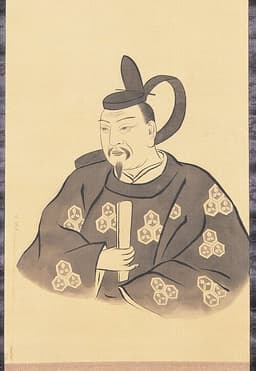
Naoe Kanetsugu
General · Modern
52.8Total
Basic Information
Born
1956
1560
Died
—
1620
Era
Modern
Modern
Nationality
Myanmar
Japan
Occupation
General
General
Civilization
Eastern
Eastern
Score Comparison
Military (10%)
46.7
10.0
Political (20%)
27.9
61.3
Influence (20%)
50.2
54.9
Legacy (20%)
40.8
48.3
Leadership (15%)
47.3
72.0
Strategy (15%)
51.7
60.0
TOTAL
43.9
52.8
Min Aung Hlaing — Complete Timeline
2011 AD
Appointed Commander-in-Chief of Myanmar Armed ForcesPolitical Action◆ Major
Min Aung Hlaing was appointed Commander-in-Chief of the Tatmadaw (Myanmar Armed Forces). He succeeded Than Shwe and became the most powerful military figure, overseeing the armed forces during the country's political transition.
MilitaryMyanmarLeadership
Impact: national
2017 AD
Rakhine State CrackdownWar
Under Min Aung Hlaing's command, the Myanmar military launched a brutal crackdown in Rakhine State following attacks by the Arakan Rohingya Salvation Army. The operation resulted in mass killings, rape, and the displacement of over 700,000 Rohingya Muslims to Bangladesh, leading to accusations of genocide.
RohingyaMyanmarHuman RightsGenocide
Impact: regionaldestructive
2021 AD
Led the 2021 Myanmar CoupPolitical Action
Min Aung Hlaing led a military coup that overthrew the democratically elected government of Aung San Suu Kyi. The coup was justified by unsubstantiated claims of election fraud, and it plunged Myanmar into a civil war and economic crisis.
CoupMyanmarDemocracy
Impact: nationaldestructive
Declared Himself Prime MinisterPolitical Action◆ Major
Following the coup, Min Aung Hlaing declared himself Prime Minister of the newly formed State Administration Council. He assumed executive power, reversing the country's democratic transition and consolidating military control.
CoupMyanmarLeadership
Impact: nationaldestructive
Imposed International SanctionsPolitical Action◆ Major
In response to the coup and human rights abuses, the United States, European Union, and other nations imposed sanctions on Min Aung Hlaing and his associates. The sanctions targeted his assets and restricted travel, but failed to force a return to civilian rule.
SanctionsMyanmarInternational Relations
Impact: global
Naoe Kanetsugu — Complete Timeline
1578 AD
Service under Uesugi KagekatsuPolitical Action
Naoe Kanetsugu served as the chief retainer of Uesugi Kagekatsu, the daimyo of the Uesugi clan. He was known for his loyalty and military skill, and famously wore a helmet adorned with a love letter from his wife, symbolizing his devotion.
RetainerUesugi ClanSengoku
Impact: regionalconstructive
1600 AD
Battle of SekigaharaWar◆ Major
Naoe Kanetsugu commanded the Uesugi clan forces at the Battle of Sekigahara, fighting on the side of the western coalition. However, the Uesugi army was delayed by engagements with Date Masamune and did not reach the main battlefield in time to influence the outcome.
SekigaharaUesugi ClanBattle
Impact: national
Defense of Aizu against Date MasamuneWar◆ Major
Naoe Kanetsugu led the defense of the Uesugi domain of Aizu against an invasion by Date Masamune during the Sekigahara campaign. He successfully repelled Date's forces, preventing the fall of the Uesugi stronghold, but this diversion kept him from joining the main battle.
DefenseUesugi ClanDate Masamune
Impact: regionalconstructive
1601 AD
Surrender to Tokugawa IeyasuPolitical Action◆ Major
After the Battle of Sekigahara, Naoe Kanetsugu negotiated the surrender of the Uesugi clan to Tokugawa Ieyasu. The Uesugi were allowed to retain their domain but were reduced in size, and Kanetsugu continued to serve the clan under the Tokugawa shogunate.
SurrenderTokugawa ShogunateUesugi Clan
Impact: regional
Expert Analysis
Origins
Min Aung Hlaing was born in 1956 in Tavoy, Myanmar (then Burma). His father was a civil engineer, and he attended the Defence Services Academy, graduating in 1977. He rose through the ranks of the Tatmadaw, the Myanmar Armed Forces, with a focus on military law and administration. His early career was marked by involvement in counter-insurgency operations against ethnic armed groups, shaping his view of the military as the guardian of national unity.
Naoe Kanetsugu (1559-1620) was born in Echigo Province, Japan. He was the son of a retainer of the Uesugi clan. His original name was Naoe Yamashiro-no-kami. He served as a page to Uesugi Kenshin, the famous warlord, and later became the chief retainer of Kenshin's successor, Uesugi Kagekatsu. Kanetsugu was known for his literacy and martial skill, a classic samurai combination.
Rise to Power
Min Aung Hlaing's rise was gradual within the military hierarchy. He became a lieutenant general in 2008 and was appointed Commander-in-Chief of the Tatmadaw in 2011, succeeding Than Shwe. His power was institutional, not charismatic. He oversaw the military's transition from direct rule to a quasi-civilian government under President Thein Sein, while retaining control over key ministries and the economy.
Naoe Kanetsugu rose to prominence through his service to Uesugi Kagekatsu. After Kenshin's death in 1578, the Uesugi clan faced internal strife. Kanetsugu supported Kagekatsu in a succession dispute, earning his trust. He became the clan's chief retainer, effectively the military and political leader of the Uesugi domain. His loyalty was symbolized by his famous helmet ornament, a love letter from his wife inscribed with the phrase "both in this life and the next."
Leadership & Governance
Min Aung Hlaing's leadership is autocratic and militaristic. He led the 2021 coup that overthrew the elected government of Aung San Suu Kyi, citing unsubstantiated election fraud. He then established the State Administration Council, declaring himself Prime Minister. His governance relies on force: suppression of protests, arrests of opponents, and a civil war with pro-democracy militias. He scores 47.3 in leadership and 46.7 in military, reflecting his command of the armed forces but failure to achieve political stability.
Naoe Kanetsugu governed as a samurai administrator. He managed the Uesugi domain's finances and military, implementing policies to strengthen the clan's autonomy. He is remembered for his diplomatic skill: after the Battle of Sekigahara (1600), he negotiated the Uesugi clan's surrender to Tokugawa Ieyasu, preserving their domain at the cost of reduced power. His leadership score is 72.0, reflecting his ability to adapt and preserve his lord's interests.
Triumph & Tragedy
Min Aung Hlaing's greatest triumph is his consolidation of power: he successfully ousted the civilian government and crushed initial protests, with the military retaining control over much of Myanmar. However, his tragedy is the resulting civil war: the country has fragmented, with ethnic armies and resistance groups controlling large areas. The economy has collapsed, and international sanctions have isolated Myanmar. His military score of 46.7 reflects the Tatmadaw's inability to secure victory.
Naoe Kanetsugu's triumph was his defense of Aizu against Date Masamune in 1600, where he repelled a larger invasion force. His tragedy was the eventual defeat at Sekigahara, where the Uesugi forces arrived too late to affect the battle outcome. His political score of 61.3 reflects his successful negotiation after the defeat, but his military score of 10.0 is low because he was not a field commander in decisive battles.
Character & Destiny
Min Aung Hlaing is seen as ruthless and inflexible. He has shown no willingness to compromise, pursuing a military solution to political problems. This has led to a deadlock where the military cannot win but refuses to negotiate. His character has isolated Myanmar and caused immense suffering.
Naoe Kanetsugu is remembered as a loyal and prudent retainer. His decisions were guided by duty to his lord and clan. His character allowed him to navigate the turbulent Sengoku period, preserving the Uesugi clan when many others were destroyed. His total score of 52.8 reflects a balanced but unspectacular career.
Legacy
Min Aung Hlaing's legacy is overwhelmingly negative. He will be remembered as the general who destroyed Myanmar's democratic transition and plunged the country into civil war. His influence score of 50.2 reflects his impact on Myanmar but in a destructive direction. His legacy is likely to be a cautionary tale of military overreach.
Naoe Kanetsugu's legacy is more positive. He is celebrated in Japanese culture as a model of samurai loyalty, appearing in novels, games, and TV dramas. His helmet with the love letter is iconic. His legacy score of 48.3 reflects his enduring cultural impact, though his political achievements were limited.
Conclusion
Naoe Kanetsugu achieved a higher total score (52.8 vs 43.9) due to his superior leadership (72.0) and political acumen (61.3). While Min Aung Hlaing had more raw military power, his disastrous governance and negative legacy lower his overall impact. Kanetsugu, though less famous globally, preserved his clan and left a cultural legacy that still resonates. Therefore, Naoe Kanetsugu had a greater positive impact, while Min Aung Hlaing's impact is significant but destructive.
Rankings
🥇
Naoe KanetsuguLeader
Mil: 10.0Pol: 61.3Inf: 54.9
52.8
🥈
Min Aung Hlaing
Mil: 46.7Pol: 27.9Inf: 50.2
43.9
+8.9 behind
How This Comparison Works
Algorithm
Each figure is scored on 6 dimensions (0—100 scale) based on structured historical data: Military (10%), Political (20%), Influence (20%), Legacy (20%), Leadership (15%), Strategy (15%). The weighted total produces the final ranking.
Data Sources
Scores are computed from structured sub-indicators in the database. Scale factors adjust for era (Ancient ×0.85, Modern ×1.0) and civilization size (Eastern ×1.05, Other ×0.80) to account for differences in population and military scale.
Maximum 3 Figures
Comparisons are limited to 2—3 figures to ensure readability and statistical meaningfulness.
Error Margins
±5 points per dimension — Sub-scores are derived from historical records with inherent uncertainty. Two figures within 5 points on a dimension should be considered roughly equivalent in that area.
Total Score Accuracy
±3 points overall — The weighted combination of 6 dimensions produces a total score with approximately ±3 points of uncertainty. Differences of less than 3 points are not statistically significant— the figures are effectively tied.
Known Limitations
- Historical records are incomplete and uneven across civilizations
- Figures from oral-tradition societies may be underrepresented
- Occupation labels can misclassify multi-role figures
- Scores measure capability and impact, not moral character
- Quantitative scoring is a comparison tool, not absolute truth
Capability Radar
Military (10%) — Battles & Warfare
Battles
35
45
Win Rate
30
40
Expansion
20
25
Political (20%) — Governance & Reform
Reform
10
30
Diplomacy
15
50
Economy
10
35
Influence (20%) — Cultural & Global Reach
Cultural
10
40
Global
20
20
Legacy (20%) — Historical Impact
Historical
20
45
Longevity
15
35
Leadership (15%) — Power & Stability
Tenure
40
55
Stability
5
45
Strategy (15%) — Tactics & Innovation
Strategy
45
50
Tactics
40
55
Reform
25
30
Similar Comparisons
Comments & Discussion
No comments yet. Be the first to share your thoughts!