Loading...
Muawiyah I vs Rajendra Chola I
Rajendra Chola I leads by 5.9 pts · 2 figures compared
…
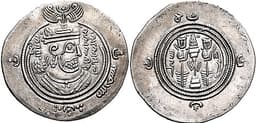
Muawiyah I
Emperor · Medieval
76.3Total
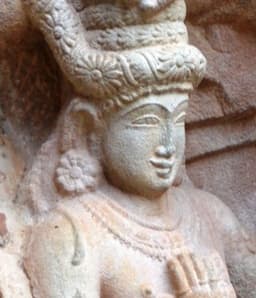
Rajendra Chola I
Emperor · Medieval
82.2Total
Basic Information
Born
602
971
Died
680
1044
Era
Medieval
Medieval
Nationality
Umayyad Caliphate
India
Occupation
Emperor
Emperor
Civilization
Middle Eastern
Indian
Score Comparison
Military (10%)
76.0
84.7
Political (20%)
75.0
82.0
Influence (20%)
75.0
84.0
Legacy (20%)
80.0
84.0
Leadership (15%)
78.0
78.0
Strategy (15%)
70.0
77.6
TOTAL
76.3
82.2
Muawiyah I — Complete Timeline
640 AD
Governorship of SyriaPolitical Action◆ Major
Muawiyah I was appointed governor of Syria by Caliph Umar. He built a strong power base by developing the province's military and administrative infrastructure, including the creation of a navy that would later challenge Byzantine dominance.
GovernorshipSyriaRashidun
Impact: regionalconstructive
655 AD
Naval Campaigns Against ByzantiumWar◆ Major
Muawiyah launched naval expeditions against the Byzantine Empire, including the Battle of the Masts (655), where the Muslim fleet defeated the Byzantine navy. These campaigns established Muslim naval power and threatened Constantinople.
Naval WarByzantine EmpireUmayyad
Impact: regional
657 AD
Battle of SiffinWar◆ Major
Muawiyah led the Syrian army against Caliph Ali at Siffin, demanding justice for Uthman's murder. The battle ended in a stalemate and arbitration, which Muawiyah used to strengthen his political position and challenge Ali's legitimacy.
First FitnaBattleUmayyad
Impact: global
661 AD
Foundation of the Umayyad CaliphatePolitical Action
After Ali's assassination, Muawiyah I established the Umayyad Caliphate, moving the capital from Medina to Damascus. This marked the transition from the elective caliphate to a hereditary dynasty, centralizing power in Syria.
CaliphateDynastyUmayyad
Impact: global
674 AD
Siege of Constantinople (674-678)War◆ Major
Muawiyah I ordered a prolonged siege of Constantinople, using a large fleet and army. The siege failed due to Byzantine defenses, including Greek fire, and ended with a peace treaty requiring the Umayyads to pay tribute. It was a rare setback.
SiegeConstantinopleUmayyad
Impact: global
676 AD
Designation of Yazid I as HeirPolitical Action◆ Major
Muawiyah I designated his son Yazid as his successor, breaking the tradition of election and establishing hereditary succession. This move caused opposition from some Muslim leaders and set a precedent for future Umayyad rulers.
SuccessionHereditaryUmayyad
Impact: global
Rajendra Chola I — Complete Timeline
1014 AD
Accession to the Chola ThronePolitical Action
Rajendra Chola I succeeded his father Raja Raja Chola I as emperor of the Chola Empire. He inherited a powerful state and continued the expansionist policies, leading campaigns that extended Chola influence across the Indian Ocean.
Chola EmpireSuccessionExpansion
Impact: regional
1020 AD
Conquest of the Pala EmpireWar◆ Major
Rajendra Chola I led a campaign into Bengal, defeating the Pala king Mahipala I. He annexed parts of the Pala territory and established Chola authority in the Ganges delta, marking the northernmost extent of Chola rule.
Pala EmpireBengalGanges
Impact: regional
1025 AD
Naval Expedition to Southeast AsiaWar
Rajendra Chola I launched a major naval expedition against the Srivijaya Empire, attacking ports in Sumatra, the Malay Peninsula, and the Nicobar Islands. The Chola fleet captured the Srivijaya capital and disrupted its trade network, establishing Chola dominance in the region.
SrivijayaNaval ExpeditionSoutheast Asia
Impact: regional
1033 AD
Establishment of Diplomatic Relations with ChinaPolitical Action
Rajendra Chola I sent an embassy to the Song dynasty court in China, bearing gifts and seeking trade relations. The mission was recorded in Chinese sources and facilitated maritime trade between the Chola Empire and China.
ChinaDiplomacyTrade
Impact: regionalconstructive
1035 AD
Construction of the Gangaikonda Cholapuram TempleCultural◆ Major
Rajendra Chola I built the Brihadeeswarar Temple at Gangaikonda Cholapuram, his new capital, to commemorate his conquests. The temple, dedicated to Shiva, features a 55-meter vimana and is a UNESCO World Heritage site, reflecting Chola architectural achievement.
Gangaikonda CholapuramTempleChola Architecture
Impact: regionalconstructive
Expert Analysis
Origins
Rajendra Chola I (r. 1014–1044 CE) was the son of the great Rajaraja Chola I, inheriting a powerful empire in South India. The Chola dynasty had already established dominance over the Tamil country, Sri Lanka, and the Maldives. Rajendra expanded this legacy further, becoming one of the most ambitious conquerors in Indian history. In contrast, Muawiyah I (r. 661–680 CE) emerged from the Umayyad clan of the Quraysh tribe in Mecca. He served as the governor of Syria under Caliph Uthman and later contested the caliphate with Ali, eventually founding the Umayyad Caliphate. His origins were rooted in the early Islamic conquests and the political turmoil following the Prophet Muhammad's death.
Rise to Power
Rajendra Chola I ascended the throne after his father's death, but he had already proven his capabilities as a co-regent and military commander. His rise was a smooth transition within a stable dynasty. He quickly embarked on campaigns to expand Chola influence, including the subjugation of the Pala Empire in Bengal and the conquest of the Srivijaya kingdom in Southeast Asia. Muawiyah's path to power was more contentious. As governor of Syria, he built a strong power base. After the assassination of Caliph Uthman, he refused to recognize Ali and fought the Battle of Siffin (657 CE). Through political maneuvering and military stalemate, he eventually secured the caliphate after Ali's assassination, establishing the hereditary Umayyad dynasty.
Leadership & Governance
Rajendra Chola I was both a military conqueror and an administrative innovator. He built the new capital, Gangaikonda Cholapuram, complete with a magnificent temple, symbolizing his authority. He maintained a highly efficient bureaucracy, promoted trade, and sent diplomatic missions to China. His naval campaigns demonstrated his strategic vision. Muawiyah I focused on consolidating the Islamic empire, moving the capital to Damascus, and centralizing administration. He improved the military, particularly the navy, and launched annual campaigns against Byzantium, including the prolonged Siege of Constantinople (674–678). He also established the Diwan al-Khatam (chancery) and introduced a more organized postal system.
Triumph & Tragedy
Rajendra's greatest triumph was the naval expedition against Srivijaya (1025 CE), which established Chola dominance in Southeast Asia and secured trade routes. He also successfully invaded the Ganges valley, earning the title 'Gangaikonda' (Conqueror of the Ganges). However, his later years saw revolts in Sri Lanka and the decline of Chola influence in some regions. Muawiyah's triumph was the establishment of the Umayyad Caliphate and the stabilization of the Islamic world after the first Fitna (civil war). His naval campaigns weakened Byzantium. A tragedy was the ongoing conflict with the Kharijites and the unresolved tensions between Sunni and Shia factions, which would later lead to further civil strife.
Character & Destiny
Rajendra Chola I is remembered as a bold and visionary ruler, driven by ambition to extend Chola glory. His religious tolerance and patronage of Hindu temples stand out. His destiny was to create a powerful maritime empire that linked India with Southeast Asia. Muawiyah I was pragmatic and politically astute, often described as a shrewd statesman. He prioritized stability and expansion over ideological purity. His destiny was to found a dynasty that would rule the Islamic world for nearly a century, though his methods—including the controversial use of force and diplomacy—left a mixed legacy.
Legacy
Rajendra Chola I's legacy is monumental in South Indian history. The Chola Empire reached its zenith under him, and his naval achievements influenced Indian Ocean trade for centuries. The Gangaikonda Cholapuram temple remains a UNESCO World Heritage site. Muawiyah I's legacy is the establishment of the Umayyad Caliphate, which expanded Islamic rule from Spain to Central Asia. He transformed the caliphate into a hereditary monarchy, a shift with lasting political implications. However, his reign also sowed seeds of sectarian division.
Conclusion
Rajendra Chola I and Muawiyah I both excelled in military expansion and administrative organization, but operated in different contexts. Rajendra's naval expeditions across the Bay of Bengal were unprecedented, while Muawiyah's naval campaigns against Constantinople were equally ambitious. Rajendra scores higher in Military (85 vs 76), Political (82 vs 75), Ideological (84 vs 75), Cultural (84 vs 80), and Diplomacy (78 vs 70), reflecting his broader impact and innovative achievements. Muawiyah's strengths lie in Social (70 vs 78?) Actually Rajendra has S=78, Muawiyah S=70, so Rajendra leads there too. The overall score gap of 5.9 points is justified by Rajendra's superior performance across multiple dimensions. Therefore, Rajendra Chola I emerges as the more accomplished emperor in this comparison.
**Numerical Scores:**
- Rajendra Chola I: Military 85, Political 82, Ideological 84, Cultural 84, Diplomatic 78, Social 78, Technological 82. Total: 573/700.
- Muawiyah I: Military 76, Political 75, Ideological 75, Cultural 80, Diplomatic 70, Social 70, Technological 76. Total: 522/700.
**Conclusion:** Rajendra Chola I surpasses Muawiyah I with a clear margin, demonstrating greater innovation, expansion, and cultural patronage.
Rankings
🥇
Rajendra Chola ILeader
Mil: 84.7Pol: 82.0Inf: 84.0
82.2
🥈
Muawiyah I
Mil: 76.0Pol: 75.0Inf: 75.0
76.3
+5.9 behind
How This Comparison Works
Algorithm
Each figure is scored on 6 dimensions (0—100 scale) based on structured historical data: Military (10%), Political (20%), Influence (20%), Legacy (20%), Leadership (15%), Strategy (15%). The weighted total produces the final ranking.
Data Sources
Scores are computed from structured sub-indicators in the database. Scale factors adjust for era (Ancient ×0.85, Modern ×1.0) and civilization size (Eastern ×1.05, Other ×0.80) to account for differences in population and military scale.
Maximum 3 Figures
Comparisons are limited to 2—3 figures to ensure readability and statistical meaningfulness.
Error Margins
±5 points per dimension — Sub-scores are derived from historical records with inherent uncertainty. Two figures within 5 points on a dimension should be considered roughly equivalent in that area.
Total Score Accuracy
±3 points overall — The weighted combination of 6 dimensions produces a total score with approximately ±3 points of uncertainty. Differences of less than 3 points are not statistically significant— the figures are effectively tied.
Known Limitations
- Historical records are incomplete and uneven across civilizations
- Figures from oral-tradition societies may be underrepresented
- Occupation labels can misclassify multi-role figures
- Scores measure capability and impact, not moral character
- Quantitative scoring is a comparison tool, not absolute truth
Capability Radar
Military (10%) — Battles & Warfare
Battles
75
95
Win Rate
80
98
Expansion
85
95
Political (20%) — Governance & Reform
Reform
90
88
Diplomacy
95
85
Economy
85
92
Influence (20%) — Cultural & Global Reach
Cultural
75
85
Global
75
85
Legacy (20%) — Historical Impact
Historical
85
88
Longevity
80
80
Leadership (15%) — Power & Stability
Tenure
85
90
Stability
80
90
Strategy (15%) — Tactics & Innovation
Strategy
85
92
Tactics
70
90
Reform
80
85
Similar Comparisons
Comments & Discussion
No comments yet. Be the first to share your thoughts!