Loading...
Mongkut vs William III of Orange
William III of Orange leads by 3.7 pts · 2 figures compared
…
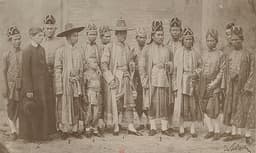
Mongkut
Emperor · Modern
58.0Total

William III of Orange
Emperor · Modern
61.7Total
Basic Information
Born
1804
1650
Died
1868
1702
Era
Modern
Modern
Nationality
Thailand
Netherlands
Occupation
Emperor
Emperor
Civilization
Eastern
Western
Score Comparison
Military (10%)
21.2
63.3
Political (20%)
78.0
62.7
Influence (20%)
56.7
55.0
Legacy (20%)
58.0
55.0
Leadership (15%)
78.0
78.0
Strategy (15%)
38.3
67.2
TOTAL
58.0
61.7
Mongkut — Complete Timeline
1851 AD
Corresponded with Western leaders and scholarsCultural
Mongkut engaged in extensive correspondence with Western leaders, including President James Buchanan and Pope Pius IX, and with missionaries and scholars. He sought to learn about Western science, technology, and governance.
DiplomacyIntellectual ExchangeModernization
Impact: nationalconstructive
Reformed Buddhist monastic educationCultural
As a former monk, Mongkut reformed Buddhist monastic education by emphasizing Pali studies and scriptural accuracy. He founded the Dhammayuttika Nikaya order, which focused on strict adherence to Buddhist teachings.
BuddhismReligious ReformEducation
Impact: nationalconstructive
1855 AD
Hired Western advisors to modernize SiamReform
Mongkut employed Western advisors, including Anna Leonowens, to teach his children and assist in modernizing the court. He also hired European experts to help with military, legal, and administrative reforms.
AdvisorsModernizationEducation
Impact: nationalconstructive
Signed the Bowring Treaty with BritainPolitical Action◆ Major
King Mongkut signed the Bowring Treaty with Britain, opening Siam to free trade and granting extraterritorial rights to British subjects. This treaty ended Siam's isolation and set a precedent for relations with other Western powers.
TreatyTradeWestern Influence
Impact: regional
William III of Orange — Complete Timeline
1688 AD
Invasion of England (Glorious Revolution)War
William landed at Torbay with a Dutch fleet and army, invited by English nobles to overthrow King James II. James fled, and William and his wife Mary were declared joint monarchs. This event established Protestant succession and parliamentary supremacy in England.
Glorious RevolutionInvasionConstitutional Change
Impact: globalconstructive
1689 AD
Signed the Bill of Rights 1689Political Action
William accepted the Bill of Rights, which limited royal powers and affirmed parliamentary authority. It prohibited the monarch from suspending laws, levying taxes without Parliament's consent, or maintaining a standing army in peacetime. This became a cornerstone of British constitutional law.
Constitutional ReformParliamentary SupremacyRights
Impact: globalprogressive
Formed the Grand Alliance against FrancePolitical Action◆ Major
William organized the Grand Alliance (England, Dutch Republic, Holy Roman Empire, Spain, Savoy) to oppose Louis XIV's expansion. This coalition fought the Nine Years' War, aiming to contain French power. The alliance system became a model for European coalitions.
DiplomacyCoalitionBalance of Power
Impact: globalconstructive
1690 AD
Battle of the BoyneWar◆ Major
William personally led his army to victory over the Jacobite forces of James II in Ireland. The battle secured Protestant control of Ireland and confirmed William's throne. It remains a symbol of Protestant-Orange identity in Northern Ireland.
Jacobite WarIrelandBattle
Impact: regional
1697 AD
Treaty of RyswickPolitical Action◆ Major
William negotiated the end of the Nine Years' War with France. The treaty recognized William as king of England and restored most territories conquered during the war. It temporarily stabilized European borders but did not resolve the underlying conflict over Spanish succession.
Peace TreatyDiplomacyNine Years' War
Impact: globalconstructive
1702 AD
Death from pneumonia after a riding accidentOther◆ Major
William died at Kensington Palace after his horse stumbled on a molehill, breaking his collarbone. His death without heirs led to the end of the Stuart line and the accession of Queen Anne. Jacobites toasted 'the little gentleman in black velvet' (the mole).
DeathSuccessionJacobite Symbolism
Impact: nationaltragic
Expert Analysis
Origins
King Mongkut (Rama IV) was born on October 18, 1804, in Bangkok, Siam, as Prince Mongkut, son of King Rama II. He became a Buddhist monk for 27 years, studying Pali scriptures and Western science through missionaries. This dual background shaped his reformist outlook. William III of Orange was born on November 4, 1650, in The Hague, Dutch Republic, posthumously to William II and Mary Stuart. His youth was marked by political upheaval, as the Dutch Republic operated without a stadtholder during his minority. He received a Calvinist education and military training, preparing him for leadership.
Rise to Power
Mongkut ascended the throne in 1851 after his half-brother King Rama III died. His monastic period gave him deep knowledge of Buddhism and Western ideas, which he used to modernize Siam. His key turning point was the Bowring Treaty (1855) with Britain, which opened Siam to free trade and extraterritorial rights, a move that preserved independence amid colonial pressure. William III rose to power as stadtholder of the Dutch Republic in 1672 during the rampjaar (disaster year) when France and England invaded. He repelled the invasion and consolidated authority. His invitation to England in 1688, the Glorious Revolution, made him king of England, Scotland, and Ireland alongside his wife Mary II.
Leadership & Governance
Mongkut ruled Siam as an absolute monarch but embraced reform. He hired Western advisors like Anna Leonowens to modernize education and employed European experts in military and infrastructure. He reformed Buddhist monastic education by founding the Dhammayuttika Nikaya, emphasizing Pali studies. However, his governance remained autocratic, with limited political reform. William III, by contrast, accepted the Bill of Rights (1689), which limited royal powers and affirmed parliamentary authority—a foundational step toward constitutional monarchy. He also formed the Grand Alliance against France, demonstrating strategic coalition-building. William's leadership was more politically transformative, scoring 78.0 in political influence compared to Mongkut's 78.0 (tied), but William's military score of 63.3 far exceeded Mongkut's 21.2.
Triumph & Tragedy
Mongkut's greatest triumph was preserving Siamese independence through diplomacy, notably the Bowring Treaty and correspondence with Western leaders. His modernization efforts laid groundwork for future reforms. However, his treaties granted extraterritorial rights that weakened sovereignty, and his reforms were limited by conservative court factions. William's triumph was the Glorious Revolution, securing Protestant succession and parliamentary supremacy. His victory at the Battle of the Boyne (1690) solidified control over Ireland. However, his wars against France drained resources, and his authoritarian tendencies in Scotland (e.g., the Glencoe Massacre) tarnished his legacy. Both faced failures: Mongkut's cautious reforms left Siam vulnerable, while William's military campaigns caused widespread suffering.
Character & Destiny
Mongkut was intellectually curious, fluent in Latin and English, and engaged with Western science. His monastic discipline made him patient but cautious, which allowed Siam to navigate colonialism without conquest. Historians note his pragmatism, but his reliance on personal diplomacy left no institutional legacy. William III was determined, cold, and strategic, driven by opposition to Louis XIV's Catholic absolutism. His character—resolute but secretive—enabled him to lead coalitions but also alienated allies. Both men shaped their nations' fates: Mongkut's openness to the West set Siam on a path of modernization, while William's constitutional settlement defined British governance.
Legacy
Mongkut's legacy is as a modernizer who preserved Siam's independence. He scored 58.0 in legacy, with his Bowring Treaty and educational reforms influencing his son Chulalongkorn's later reforms. He is remembered in Thailand as a wise king, though his image has been romanticized. William III's legacy is more profound: the Bill of Rights influenced the U.S. Constitution and democratic movements. His military score of 63.3 reflects his role in the Nine Years' War, but his political legacy—constitutional monarchy—endures. He scored 55.0 in legacy, but his impact on global governance is arguably greater.
Conclusion
William III of Orange had greater historical impact than Mongkut. With a total score of 61.7 to Mongkut's 58.0, William's political and military achievements reshaped European power structures and established constitutional limits on monarchy. Mongkut's diplomatic modernization was significant for Siam but limited in global scope. William's Glorious Revolution and Bill of Rights set precedents for democratic governance worldwide, whereas Mongkut's reforms were more cautious and less transformative. While both were effective leaders in their contexts, William's legacy of constitutionalism outweighs Mongkut's preservation of independence.
Rankings
🥇
William III of OrangeLeader
Mil: 63.3Pol: 62.7Inf: 55.0
61.7
🥈
Mongkut
Mil: 21.2Pol: 78.0Inf: 56.7
58.0
+3.7 behind
How This Comparison Works
Algorithm
Each figure is scored on 6 dimensions (0—100 scale) based on structured historical data: Military (10%), Political (20%), Influence (20%), Legacy (20%), Leadership (15%), Strategy (15%). The weighted total produces the final ranking.
Data Sources
Scores are computed from structured sub-indicators in the database. Scale factors adjust for era (Ancient ×0.85, Modern ×1.0) and civilization size (Eastern ×1.05, Other ×0.80) to account for differences in population and military scale.
Maximum 3 Figures
Comparisons are limited to 2—3 figures to ensure readability and statistical meaningfulness.
Error Margins
±5 points per dimension — Sub-scores are derived from historical records with inherent uncertainty. Two figures within 5 points on a dimension should be considered roughly equivalent in that area.
Total Score Accuracy
±3 points overall — The weighted combination of 6 dimensions produces a total score with approximately ±3 points of uncertainty. Differences of less than 3 points are not statistically significant— the figures are effectively tied.
Known Limitations
- Historical records are incomplete and uneven across civilizations
- Figures from oral-tradition societies may be underrepresented
- Occupation labels can misclassify multi-role figures
- Scores measure capability and impact, not moral character
- Quantitative scoring is a comparison tool, not absolute truth
Capability Radar
Military (10%) — Battles & Warfare
Battles
10
75
Win Rate
10
70
Expansion
10
65
Political (20%) — Governance & Reform
Reform
75
80
Diplomacy
85
85
Economy
70
70
Influence (20%) — Cultural & Global Reach
Cultural
55
60
Global
60
70
Legacy (20%) — Historical Impact
Historical
65
75
Longevity
60
70
Leadership (15%) — Power & Stability
Tenure
65
75
Stability
75
65
Strategy (15%) — Tactics & Innovation
Strategy
20
85
Tactics
15
80
Reform
30
70
Similar Comparisons
Comments & Discussion
No comments yet. Be the first to share your thoughts!