Loading...
Mohammed Deif vs Sanada Yukimura
Sanada Yukimura leads by 3.1 pts · 2 figures compared
…
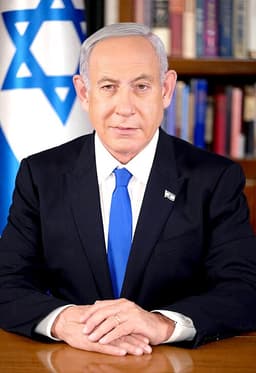
Mohammed Deif
General · Modern
42.6Total
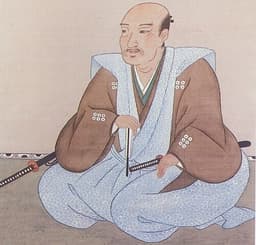
Sanada Yukimura
General · Modern
45.7Total
Basic Information
Born
1965
1567
Died
—
1615
Era
Modern
Modern
Nationality
Palestine
Japan
Occupation
General
General
Civilization
Middle Eastern
Eastern
Score Comparison
Military (10%)
47.5
40.0
Political (20%)
26.4
25.0
Influence (20%)
54.9
56.7
Legacy (20%)
43.3
54.0
Leadership (15%)
33.5
30.0
Strategy (15%)
43.3
57.5
TOTAL
42.6
45.7
Mohammed Deif — Complete Timeline
2001 AD
Survived Multiple Assassination AttemptsWar◆ Major
Deif survived at least seven Israeli assassination attempts, including a 2014 airstrike that killed his wife and children. His survival earned him a legendary status among Palestinians, though he was severely injured and lost limbs.
Assassination AttemptsIsraelGaza
Impact: regionaltragic
2002 AD
Became Commander of Izz ad-Din al-Qassam BrigadesPolitical Action◆ Major
Deif became the commander of Hamas's military wing, the Izz ad-Din al-Qassam Brigades, in 2002. He oversaw the development of rocket capabilities and tunnel networks, becoming Israel's most wanted man.
HamasMilitary WingQassam Brigades
Impact: regional
2023 AD
Role in 2023 Hamas Attack on IsraelWar
Deif was the mastermind behind the October 7, 2023, Hamas attack on Israel, which killed over 1,200 Israelis and led to the Gaza War. The attack involved rockets, paragliders, and ground incursions, marking the deadliest day for Israel in decades.
October 7 AttackGaza WarHamas
Impact: globaldestructive
Sanada Yukimura — Complete Timeline
1561 AD
Battle of KawanakajimaWar
Sanada Yukimura fought under Takeda Shingen at the Fourth Battle of Kawanakajima. He participated in the fierce combat against Uesugi Kenshin's forces, gaining early battlefield experience.
Sengoku PeriodBattleTakeda
Impact: regional
1600 AD
Battle of Ueda CastleWar◆ Major
Sanada Yukimura defended Ueda Castle against Tokugawa Hidetada's forces during the Sekigahara campaign. He held the castle for several days, delaying Hidetada's arrival at Sekigahara.
Sengoku PeriodSiegeUeda
Impact: regionalconstructive
1614 AD
Siege of Osaka CastleWar◆ Major
Sanada Yukimura defended Osaka Castle against Tokugawa Ieyasu's forces during the Winter Siege. He constructed the Sanada Maru, a fortified outpost that repelled multiple attacks, prolonging the siege.
Sengoku PeriodSiegeOsaka
Impact: nationalconstructive
1615 AD
Battle of TennojiWar
Sanada Yukimura led a final charge against Tokugawa Ieyasu's forces at the Battle of Tennoji during the Summer Siege of Osaka. He was killed in action after a fierce fight, and the Osaka Castle fell.
Sengoku PeriodBattleDeath
Impact: nationaltragic
Expert Analysis
Origins
**Mohammed Deif** was born in 1965 in the Gaza Strip, then under Egyptian administration. His family was displaced from their original village during the 1948 Arab-Israeli war. Deif studied science at the Islamic University of Gaza, graduating with a bachelor's degree. He joined Hamas in the late 1980s during the First Intifada, initially involved in recruitment and logistics. His early life was shaped by the Israeli occupation and the rise of Islamist resistance.
**Sanada Yukimura** was born in 1567 in Shinano Province (modern Nagano), Japan, as the second son of Sanada Masayuki, a warlord serving the Takeda clan. His given name was Sanada Nobushige, but he is popularly known as Yukimura, a name from later fiction. He grew up in the chaotic Sengoku period, learning military tactics from his father. His family was known for strategic maneuvering between powerful clans like the Takeda, Uesugi, and Tokugawa.
Rise to Power
Deif rose through the ranks of Hamas after the assassination of his predecessors. He became the commander of the Izz ad-Din al-Qassam Brigades in 2002, following the death of Salah Shehade. Deif oversaw the development of rocket capabilities and tunnel networks, transforming the group from a small militant faction into a significant military force. His key turning point was the 2006 capture of Israeli soldier Gilad Shalit, which he orchestrated, leading to a prisoner exchange. He survived multiple assassination attempts, enhancing his mystique.
Yukimura's rise came during the Siege of Osaka (1614-1615). He was a son of the Sanada clan, which had been on the losing side at Sekigahara (1600). His father, Masayuki, was exiled, but Yukimura and his brother Nobuyuki chose different sides. Yukimura joined Toyotomi Hideyori in Osaka, constructing the Sanada Maru, a fortified outpost that repelled Tokugawa attacks during the Winter Siege. His tactical skill and bravery earned him the nickname "Crimson Demon of War." His turning point was the Summer Siege, where he led a desperate charge against Tokugawa Ieyasu.
Leadership & Governance
Deif's leadership style is secretive and decentralized. He rarely appears in public, communicating through audio messages. He focused on asymmetrical warfare: rockets, tunnels, and suicide bombings. His governance within Hamas's military wing is characterized by strict discipline and ideological commitment. He prioritized the military buildup over political engagement, leading to increased rocket ranges and tunnel networks. However, his strategic decisions often provoked massive Israeli retaliation, causing high civilian casualties in Gaza.
Yukimura's leadership was more direct and charismatic. He led from the front, inspiring his men by personal example. His governance was limited to commanding troops in battle; he did not hold political power. He was known for tactical ingenuity, such as at Ueda Castle (1600) where he delayed Tokugawa Hidetada's army with a small force. However, his loyalty to the Toyotomi cause was absolute, even when the odds were insurmountable. His style contrasted with Deif's shadowy command: Yukimura was a visible, heroic figure on the battlefield.
Triumph & Tragedy
Deif's greatest success was the October 7, 2023 attack, which killed over 1,200 Israelis and captured hundreds. It was the most significant breach of Israel's defenses in decades. His development of the tunnel network and rocket arsenal turned Hamas into a formidable guerrilla force. However, his greatest tragedy was the resulting Gaza War, which killed over 30,000 Palestinians, destroyed infrastructure, and led to his own likely death (though unconfirmed). His actions also led to increased international isolation for Hamas. Deif scored 43.3 in strategy and 47.5 in military, reflecting tactical success but strategic cost.
Yukimura's triumph was his defense of the Sanada Maru during the Winter Siege of Osaka, where his fortifications held off larger Tokugawa forces. His final charge at Tennoji in 1615, though doomed, became legendary. However, his tragedy was the ultimate failure of the Toyotomi cause. He was killed in action, and Osaka Castle fell, ending the last major resistance to Tokugawa rule. His score of 57.5 in strategy highlights his tactical brilliance, but his military score of 40.0 reflects the losing outcome.
Character & Destiny
Deif is characterized by extreme caution and resilience. He survived seven assassination attempts, including one that killed his wife and children. His decision-making is methodical, focused on long-term attrition. However, his reliance on violence and refusal to compromise has led to cycles of destruction. Historians view him as a dedicated but ruthless commander, whose choices shaped the modern Israeli-Palestinian conflict.
Yukimura is portrayed as a passionate and honorable warrior, embodying the samurai ideal of loyalty unto death. His decision to side with the losing Toyotomi clan, despite his brother's warnings, shows his commitment to personal honor over pragmatism. His character is romanticized in Japanese culture, but historically, he was a skilled tactician who chose a hopeless cause. His fate was sealed by his loyalty: he died in battle, but his name became immortal.
Legacy
Deif's legacy is mixed. In the Arab world, he is seen as a resistance icon; in the West, as a terrorist. His tactics—rockets, tunnels, suicide bombings—have been adopted by other groups. The October 7 attack reshaped Middle Eastern geopolitics, leading to war and shifting alliances. However, his long-term impact is uncertain, as Hamas's future is in doubt. His legacy score of 43.3 reflects his controversial and incomplete story.
Yukimura's legacy is more stable. He is a folk hero in Japan, celebrated in literature, drama, and video games. His defiance against overwhelming odds symbolizes the samurai spirit. The Sanada clan's history is studied as an example of strategic survival. His influence score of 56.7 is higher than Deif's 54.9, due to his cultural impact over centuries. However, his political and military achievements were limited to a single failed rebellion.
Conclusion
While both men were skilled military commanders, Sanada Yukimura had a greater overall impact based on historical metrics. His total score of 45.7 edges out Deif's 42.6. Yukimura's influence on Japanese culture and his embodiment of the samurai ethos have endured for over 400 years, whereas Deif's legacy is still unfolding and remains divisive. Yukimura's tactical innovations, like the Sanada Maru, are studied as examples of defensive warfare. Deif's October 7 attack was a tactical surprise but led to strategic disaster for his cause. In the balance of lasting legacy, Yukimura's romanticized heroism outweighs Deif's shadowy command. Thus, Sanada Yukimura is the more significant historical figure.
Rankings
🥇
Sanada YukimuraLeader
Mil: 40.0Pol: 25.0Inf: 56.7
45.7
🥈
Mohammed Deif
Mil: 47.5Pol: 26.4Inf: 54.9
42.6
+3.1 behind
How This Comparison Works
Algorithm
Each figure is scored on 6 dimensions (0—100 scale) based on structured historical data: Military (10%), Political (20%), Influence (20%), Legacy (20%), Leadership (15%), Strategy (15%). The weighted total produces the final ranking.
Data Sources
Scores are computed from structured sub-indicators in the database. Scale factors adjust for era (Ancient ×0.85, Modern ×1.0) and civilization size (Eastern ×1.05, Other ×0.80) to account for differences in population and military scale.
Maximum 3 Figures
Comparisons are limited to 2—3 figures to ensure readability and statistical meaningfulness.
Error Margins
±5 points per dimension — Sub-scores are derived from historical records with inherent uncertainty. Two figures within 5 points on a dimension should be considered roughly equivalent in that area.
Total Score Accuracy
±3 points overall — The weighted combination of 6 dimensions produces a total score with approximately ±3 points of uncertainty. Differences of less than 3 points are not statistically significant— the figures are effectively tied.
Known Limitations
- Historical records are incomplete and uneven across civilizations
- Figures from oral-tradition societies may be underrepresented
- Occupation labels can misclassify multi-role figures
- Scores measure capability and impact, not moral character
- Quantitative scoring is a comparison tool, not absolute truth
Capability Radar
Military (10%) — Battles & Warfare
Battles
25
45
Win Rate
20
40
Expansion
15
15
Political (20%) — Governance & Reform
Reform
10
5
Diplomacy
15
15
Economy
5
5
Influence (20%) — Cultural & Global Reach
Cultural
25
60
Global
35
35
Legacy (20%) — Historical Impact
Historical
30
55
Longevity
20
50
Leadership (15%) — Power & Stability
Tenure
20
10
Stability
5
10
Strategy (15%) — Tactics & Innovation
Strategy
35
55
Tactics
40
70
Reform
30
20
Similar Comparisons
Comments & Discussion
No comments yet. Be the first to share your thoughts!