Loading...
Bernardino Caballero vs Sanada Yukimura
Bernardino Caballero leads by 9.3 pts · 2 figures compared
…

Bernardino Caballero
General · Modern
55.0Total
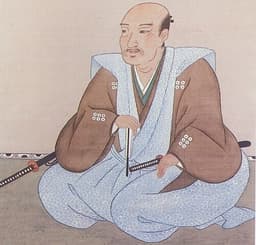
Sanada Yukimura
General · Modern
45.7Total
Basic Information
Born
1839
1567
Died
1912
1615
Era
Modern
Modern
Nationality
Paraguay
Japan
Occupation
General
General
Civilization
Western
Eastern
Score Comparison
Military (10%)
10.0
40.0
Political (20%)
68.0
25.0
Influence (20%)
60.0
56.7
Legacy (20%)
58.0
54.0
Leadership (15%)
65.0
30.0
Strategy (15%)
45.0
57.5
TOTAL
55.0
45.7
Bernardino Caballero — Complete Timeline
1865 AD
Fought in the War of the Triple AllianceWar◆ Major
Caballero served as a cavalry officer in the Paraguayan army under Francisco Solano L
War of the Triple AllianceMilitary ServiceOfficer
Impact: regional
1880 AD
Served as President of ParaguayPolitical Action◆ Major
Caballero served as President of Paraguay from 1880 to 1886. His administration focused on reconstruction after the War of the Triple Alliance, promoting immigration and economic development, but also consolidating the power of the military and the emerging Colorado Party.
PresidencyReconstructionColorado Party
Impact: nationalconstructive
1887 AD
Founded the Colorado PartyPolitical Action◆ Major
Caballero founded the National Republican Association (Colorado Party) in Asunci
Political PartyFoundingColorado Party
Impact: nationalconstructive
1904 AD
Exiled after Liberal RevolutionPolitical Action
After the Liberal Revolution of 1904 overthrew the Colorado government, Caballero was forced into exile in Argentina. He remained a symbolic leader of the Colorado Party until his death in 1912.
ExileLiberal RevolutionPolitical Defeat
Impact: nationaltragic
Sanada Yukimura — Complete Timeline
1561 AD
Battle of KawanakajimaWar
Sanada Yukimura fought under Takeda Shingen at the Fourth Battle of Kawanakajima. He participated in the fierce combat against Uesugi Kenshin's forces, gaining early battlefield experience.
Sengoku PeriodBattleTakeda
Impact: regional
1600 AD
Battle of Ueda CastleWar◆ Major
Sanada Yukimura defended Ueda Castle against Tokugawa Hidetada's forces during the Sekigahara campaign. He held the castle for several days, delaying Hidetada's arrival at Sekigahara.
Sengoku PeriodSiegeUeda
Impact: regionalconstructive
1614 AD
Siege of Osaka CastleWar◆ Major
Sanada Yukimura defended Osaka Castle against Tokugawa Ieyasu's forces during the Winter Siege. He constructed the Sanada Maru, a fortified outpost that repelled multiple attacks, prolonging the siege.
Sengoku PeriodSiegeOsaka
Impact: nationalconstructive
1615 AD
Battle of TennojiWar
Sanada Yukimura led a final charge against Tokugawa Ieyasu's forces at the Battle of Tennoji during the Summer Siege of Osaka. He was killed in action after a fierce fight, and the Osaka Castle fell.
Sengoku PeriodBattleDeath
Impact: nationaltragic
Expert Analysis
Origins
Bernardino Caballero was born in 1839 in Asunción, Paraguay, into a politically connected family. He received a military education and joined the Paraguayan army at a young age. His early career was shaped by the regime of Francisco Solano López, under whom he served as a cavalry officer. Caballero's formative experiences occurred during the devastating War of the Triple Alliance (1864-1870), where Paraguay fought against Argentina, Brazil, and Uruguay.
Sanada Yukimura was born in 1567 in Shinano Province, Japan, as the second son of the daimyo Sanada Masayuki. He belonged to the Sanada clan, a minor but strategically adept family. Yukimura was raised in the turbulent Sengoku period, characterized by constant warfare among feudal lords. He received rigorous training in martial arts and military strategy, likely under the guidance of his father and the Takeda clan.
Rise to Power
Caballero rose to prominence through his military service in the War of the Triple Alliance. He fought in key battles such as Tuyutí and Lomas Valentinas, earning recognition for his cavalry leadership. After Paraguay's defeat and the death of López, Caballero became a leading figure in the post-war reconstruction. He founded the National Republican Association (Colorado Party) on September 11, 1887, consolidating political power. He served as President of Paraguay from 1880 to 1886, focusing on rebuilding the nation.
Yukimura's rise began with his defense of Ueda Castle in 1600 against Tokugawa Hidetada's forces during the Sekigahara campaign. Despite being outnumbered, Yukimura's tactics delayed Hidetada's army, preventing them from joining the main battle. This feat elevated his reputation. He later became a key commander for the Toyotomi clan during the Siege of Osaka (1614-1615). His construction of the Sanada Maru, a fortified outpost, during the Winter Siege demonstrated his defensive ingenuity.
Leadership & Governance
Caballero's leadership was political and administrative. As president, he promoted infrastructure development, including railways and telegraphs, and encouraged immigration to repopulate Paraguay after the war. He centralized power under the Colorado Party, which became the dominant political force. His governance style was authoritarian but focused on stability and economic recovery. Caballero scored 65.0 in leadership and 68.0 in political acumen, reflecting his skill in navigating post-war politics.
Yukimura's leadership was military and inspirational. He commanded small forces with high morale, leading from the front. At the Summer Siege of Osaka, he led a final charge against Tokugawa Ieyasu's main camp, nearly reaching Ieyasu himself. His strategy score of 57.5 indicates tactical competence, particularly in defensive operations. However, his political score of 25.0 reflects his limited role in governance; he was a general serving under the Toyotomi, not a ruler.
Triumph & Tragedy
Caballero's greatest triumph was founding the Colorado Party, which shaped Paraguay's politics for over a century. His presidency oversaw reconstruction and modernization. His tragedy was the Liberal Revolution of 1904, which overthrew his party and forced him into exile in Argentina. He died in 1912, a symbolic leader but politically marginalized.
Yukimura's triumphs include his defense of Ueda Castle and the construction of the Sanada Maru, which withstood Tokugawa assaults. His tragedy was his death at the Battle of Tennoji in 1615, leading a desperate charge that failed to turn the tide. His legacy as the 'Crimson Demon of War' romanticizes his bravery but obscures his ultimate defeat.
Character & Destiny
Caballero was pragmatic and resilient, adapting to post-war realities by shifting from military to political power. His character drove him to create lasting institutions, but his authoritarian tendencies led to his downfall. Historians view him as a foundational but controversial figure.
Yukimura was bold and chivalrous, embodying the samurai ideal of loyalty and honor. His character inspired his troops but also led to his death in a hopeless charge. He is celebrated in Japanese folklore as a tragic hero, but his strategic decisions were not always sound.
Legacy
Caballero's legacy is institutional: the Colorado Party remained in power for most of Paraguay's history. His policies shaped the nation's development. He scored 58.0 in legacy and 60.0 in influence, reflecting his enduring impact on Paraguayan politics.
Yukimura's legacy is cultural: he is a symbol of samurai courage and defiance against overwhelming odds. His story appears in literature, games, and media. He scored 54.0 in legacy and 56.7 in influence, but his impact on Japan's political structure is minimal.
Conclusion
Bernardino Caballero had a greater impact on history than Sanada Yukimura. Caballero's total score of 55.0 surpasses Yukimura's 45.7, reflecting his tangible influence on Paraguay's political system. While Yukimura's heroism is legendary, it did not alter Japan's trajectory. Caballero's founding of the Colorado Party created a political dynasty that governed for over a century, a concrete legacy. Therefore, Caballero's historical significance is higher.
Rankings
🥇
Bernardino CaballeroLeader
Mil: 10.0Pol: 68.0Inf: 60.0
55.0
🥈
Sanada Yukimura
Mil: 40.0Pol: 25.0Inf: 56.7
45.7
+9.3 behind
How This Comparison Works
Algorithm
Each figure is scored on 6 dimensions (0—100 scale) based on structured historical data: Military (10%), Political (20%), Influence (20%), Legacy (20%), Leadership (15%), Strategy (15%). The weighted total produces the final ranking.
Data Sources
Scores are computed from structured sub-indicators in the database. Scale factors adjust for era (Ancient ×0.85, Modern ×1.0) and civilization size (Eastern ×1.05, Other ×0.80) to account for differences in population and military scale.
Maximum 3 Figures
Comparisons are limited to 2—3 figures to ensure readability and statistical meaningfulness.
Error Margins
±5 points per dimension — Sub-scores are derived from historical records with inherent uncertainty. Two figures within 5 points on a dimension should be considered roughly equivalent in that area.
Total Score Accuracy
±3 points overall — The weighted combination of 6 dimensions produces a total score with approximately ±3 points of uncertainty. Differences of less than 3 points are not statistically significant— the figures are effectively tied.
Known Limitations
- Historical records are incomplete and uneven across civilizations
- Figures from oral-tradition societies may be underrepresented
- Occupation labels can misclassify multi-role figures
- Scores measure capability and impact, not moral character
- Quantitative scoring is a comparison tool, not absolute truth
Capability Radar
Military (10%) — Battles & Warfare
Battles
45
45
Win Rate
40
40
Expansion
25
15
Political (20%) — Governance & Reform
Reform
45
5
Diplomacy
50
15
Economy
30
5
Influence (20%) — Cultural & Global Reach
Cultural
40
60
Global
30
35
Legacy (20%) — Historical Impact
Historical
55
55
Longevity
60
50
Leadership (15%) — Power & Stability
Tenure
60
10
Stability
20
10
Strategy (15%) — Tactics & Innovation
Strategy
30
55
Tactics
35
70
Reform
20
20
Similar Comparisons
Comments & Discussion
No comments yet. Be the first to share your thoughts!