Loading...
Matome Ugaki vs Sanada Yukimura
Sanada Yukimura leads by 4.8 pts · 2 figures compared
…

Matome Ugaki
General · Modern
40.9Total
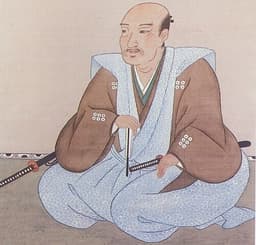
Sanada Yukimura
General · Modern
45.7Total
Basic Information
Born
1890
1567
Died
1945
1615
Era
Modern
Modern
Nationality
Japan
Japan
Occupation
General
General
Civilization
Eastern
Eastern
Score Comparison
Military (10%)
50.0
40.0
Political (20%)
25.0
25.0
Influence (20%)
50.2
56.7
Legacy (20%)
40.8
54.0
Leadership (15%)
36.9
30.0
Strategy (15%)
38.3
57.5
TOTAL
40.9
45.7
Matome Ugaki — Complete Timeline
1941 AD
Served as Chief of Staff to Admiral YamamotoPolitical Action◆ Major
Ugaki served as chief of staff to Admiral Isoroku Yamamoto, commander of the Combined Fleet. He was involved in planning major operations, including the Pearl Harbor attack and the Midway operation, and was a key advisor to Yamamoto.
Combined FleetWorld War IIStaff Officer
Impact: national
1943 AD
Survived the Downing of Yamamoto's AircraftWar◆ Major
Ugaki was flying in a second bomber when US P-38 fighters shot down Yamamoto's aircraft over Bougainville. Ugaki's plane was also attacked but crash-landed in the sea, and he survived with injuries. The incident killed Yamamoto and was a major blow to Japanese morale.
Operation VengeanceWorld War IIYamamoto's Death
Impact: regionaltragic
1945 AD
Led the Final Kamikaze Mission of the WarWar◆ Major
Ugaki personally led a kamikaze attack of 11 aircraft against US ships off Okinawa on August 15, 1945, after learning of Japan's surrender. He was killed in the attack, which was the last organized kamikaze mission of World War II.
KamikazeWorld War IIFinal Mission
Impact: regionaltragic
Sanada Yukimura — Complete Timeline
1561 AD
Battle of KawanakajimaWar
Sanada Yukimura fought under Takeda Shingen at the Fourth Battle of Kawanakajima. He participated in the fierce combat against Uesugi Kenshin's forces, gaining early battlefield experience.
Sengoku PeriodBattleTakeda
Impact: regional
1600 AD
Battle of Ueda CastleWar◆ Major
Sanada Yukimura defended Ueda Castle against Tokugawa Hidetada's forces during the Sekigahara campaign. He held the castle for several days, delaying Hidetada's arrival at Sekigahara.
Sengoku PeriodSiegeUeda
Impact: regionalconstructive
1614 AD
Siege of Osaka CastleWar◆ Major
Sanada Yukimura defended Osaka Castle against Tokugawa Ieyasu's forces during the Winter Siege. He constructed the Sanada Maru, a fortified outpost that repelled multiple attacks, prolonging the siege.
Sengoku PeriodSiegeOsaka
Impact: nationalconstructive
1615 AD
Battle of TennojiWar
Sanada Yukimura led a final charge against Tokugawa Ieyasu's forces at the Battle of Tennoji during the Summer Siege of Osaka. He was killed in action after a fierce fight, and the Osaka Castle fell.
Sengoku PeriodBattleDeath
Impact: nationaltragic
Expert Analysis
Origins
Matome Ugaki was born in 1890 in Okayama Prefecture, Japan, into a family of samurai lineage. He graduated from the Imperial Japanese Naval Academy in 1912 and later from the Naval War College, specializing in naval strategy. His early career included staff positions and command of battleships, shaping him as a product of the militaristic Japanese system. In contrast, Sanada Yukimura, born in 1567, was the son of the famed daimyo Sanada Masayuki. Raised in the Sengoku period's chaos, he trained in martial arts and military tactics under the Takeda clan, gaining firsthand experience in the brutal civil wars. His upbringing in a powerful samurai family instilled a fierce sense of loyalty and defensive warfare.
Rise to Power
Ugaki's rise came through his association with Admiral Isoroku Yamamoto. By 1941, he became Chief of Staff of the Combined Fleet, playing a key role in planning the attack on Pearl Harbor and subsequent operations. His meticulous staff work earned him respect, but he remained in Yamamoto's shadow. After Yamamoto's death in 1943, Ugaki survived the same attack and continued serving as a senior commander. His most notorious ascent was his decision to lead the final kamikaze mission on August 15, 1945. Yukimura's rise was marked by his defense of Ueda Castle in 1600 against Tokugawa Hidetada's 38,000 troops. With only 2,000 men, he held out for days, delaying Hidetada's arrival at Sekigahara. This feat made him a legend among the Toyotomi loyalists. His pivotal moment came during the Siege of Osaka (1614-1615), where he constructed the Sanada Maru fortification, repelling Tokugawa attacks and earning the moniker "Crimson Demon of War."
Leadership & Governance
Ugaki's leadership was bureaucratic and strategic, focused on planning and execution within the naval hierarchy. He scored 36.9 in Leadership, reflecting a command style that emphasized discipline and adherence to orders. His governance approach was top-down, with little room for innovation. In contrast, Yukimura scored 30.0 in Leadership, indicating a more hands-on, inspirational style. He led from the front, personally directing defenses and inspiring his troops through example. His governance was feudal, relying on personal bonds and tactical ingenuity rather than formal systems. While Ugaki operated within a modern military structure, Yukimura thrived in the chaotic Sengoku era, where individual valor could shift battles.
Triumph & Tragedy
Ugaki's greatest success was his role in the Pearl Harbor operation, which temporarily crippled the US Pacific Fleet. However, his failure was his inability to adapt to changing warfare; his planning contributed to the Midway disaster. His final tragedy was leading 11 kamikaze planes after Japan's surrender, resulting in his death and the deaths of his crew, with no significant military impact. Yukimura's triumph was the defense of Osaka Castle, where his Sanada Maru held off superior forces, allowing Toyotomi loyalists to survive the winter. His tragedy came in the summer of 1615 at the Battle of Tennoji, where his final charge against Tokugawa Ieyasu's army ended in his death. Though he nearly reached Ieyasu, his attack failed to change the war's outcome.
Character & Destiny
Ugaki was methodical, loyal, and fatalistic. His decision to lead the final kamikaze mission shows a deep commitment to bushido and imperial ideology. His character was shaped by the naval academy's rigid honor code, leading him to choose death over surrender. Yukimura was daring, charismatic, and fiercely independent. His reputation as a "demon" stemmed from his aggressive tactics and personal bravery. Historical assessments note his strategic mind (Strategy 57.5) but also his impulsive nature, which led to his death. Both men's destinies were sealed by their unwavering loyalty to lost causes: Ugaki to the Imperial Navy, Yukimura to the Toyotomi clan.
Legacy
Ugaki's legacy is mixed: he is remembered as a symbol of the kamikaze spirit, but his actions are criticized as futile. His influence score of 50.2 reflects his impact on Japanese military culture, though his legacy score of 40.8 shows limited enduring respect. Yukimura's legacy is far more positive: he is celebrated in Japanese folklore as a tragic hero, inspiring countless stories, games, and media. With an Influence of 56.7 and Legacy of 54.0, he remains a cultural icon. The Sanada Maru is a symbol of tactical brilliance, and his name is synonymous with loyalty and courage.
Conclusion
Sanada Yukimura had greater impact than Matome Ugaki. Despite Ugaki's role in Pearl Harbor, his actions were part of a larger machine, while Yukimura's individual feats shaped Sengoku history. Yukimura's total score of 45.7 surpasses Ugaki's 40.9, and his cultural legacy endures far beyond Ugaki's. Yukimura's defensive strategies at Osaka and Ueda Castle demonstrate tactical innovation (57.5 vs. 38.3) that influenced samurai warfare. While Ugaki's kamikaze mission reflects a tragic end, Yukimura's legend lives on. Thus, Yukimura stands as the more impactful figure.
Rankings
🥇
Sanada YukimuraLeader
Mil: 40.0Pol: 25.0Inf: 56.7
45.7
🥈
Matome Ugaki
Mil: 50.0Pol: 25.0Inf: 50.2
40.9
+4.8 behind
How This Comparison Works
Algorithm
Each figure is scored on 6 dimensions (0—100 scale) based on structured historical data: Military (10%), Political (20%), Influence (20%), Legacy (20%), Leadership (15%), Strategy (15%). The weighted total produces the final ranking.
Data Sources
Scores are computed from structured sub-indicators in the database. Scale factors adjust for era (Ancient ×0.85, Modern ×1.0) and civilization size (Eastern ×1.05, Other ×0.80) to account for differences in population and military scale.
Maximum 3 Figures
Comparisons are limited to 2—3 figures to ensure readability and statistical meaningfulness.
Error Margins
±5 points per dimension — Sub-scores are derived from historical records with inherent uncertainty. Two figures within 5 points on a dimension should be considered roughly equivalent in that area.
Total Score Accuracy
±3 points overall — The weighted combination of 6 dimensions produces a total score with approximately ±3 points of uncertainty. Differences of less than 3 points are not statistically significant— the figures are effectively tied.
Known Limitations
- Historical records are incomplete and uneven across civilizations
- Figures from oral-tradition societies may be underrepresented
- Occupation labels can misclassify multi-role figures
- Scores measure capability and impact, not moral character
- Quantitative scoring is a comparison tool, not absolute truth
Capability Radar
Military (10%) — Battles & Warfare
Battles
20
45
Win Rate
15
40
Expansion
10
15
Political (20%) — Governance & Reform
Reform
5
5
Diplomacy
15
15
Economy
5
5
Influence (20%) — Cultural & Global Reach
Cultural
15
60
Global
15
35
Legacy (20%) — Historical Impact
Historical
25
55
Longevity
10
50
Leadership (15%) — Power & Stability
Tenure
20
10
Stability
10
10
Strategy (15%) — Tactics & Innovation
Strategy
30
55
Tactics
25
70
Reform
10
20
Similar Comparisons
Comments & Discussion
No comments yet. Be the first to share your thoughts!