Loading...
Mohammed Deif vs Napoleon Bonaparte
Napoleon Bonaparte leads by 28.3 pts · 2 figures compared
…
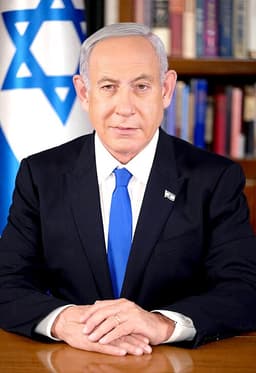
Mohammed Deif
General · Modern
42.6Total

Napoleon Bonaparte
General · Modern
70.9Total
Basic Information
Born
1965
1769
Died
—
1821
Era
Modern
Modern
Nationality
Palestine
France
Occupation
General
General
Civilization
Middle Eastern
Western
Score Comparison
Military (10%)
47.5
94.0
Political (20%)
26.4
72.0
Influence (20%)
54.9
40.0
Legacy (20%)
43.3
80.0
Leadership (15%)
33.5
78.0
Strategy (15%)
43.3
90.0
TOTAL
42.6
70.9
Mohammed Deif — Complete Timeline
2001 AD
Survived Multiple Assassination AttemptsWar◆ Major
Deif survived at least seven Israeli assassination attempts, including a 2014 airstrike that killed his wife and children. His survival earned him a legendary status among Palestinians, though he was severely injured and lost limbs.
Assassination AttemptsIsraelGaza
Impact: regionaltragic
2002 AD
Became Commander of Izz ad-Din al-Qassam BrigadesPolitical Action◆ Major
Deif became the commander of Hamas's military wing, the Izz ad-Din al-Qassam Brigades, in 2002. He oversaw the development of rocket capabilities and tunnel networks, becoming Israel's most wanted man.
HamasMilitary WingQassam Brigades
Impact: regional
2023 AD
Role in 2023 Hamas Attack on IsraelWar
Deif was the mastermind behind the October 7, 2023, Hamas attack on Israel, which killed over 1,200 Israelis and led to the Gaza War. The attack involved rockets, paragliders, and ground incursions, marking the deadliest day for Israel in decades.
October 7 AttackGaza WarHamas
Impact: globaldestructive
Napoleon Bonaparte — Complete Timeline
1799 AD
Coup of 18 BrumaireOther◆ Major
Napoleon Bonaparte, with support from his brother Lucien and key political figures, overthrew the Directory in a bloodless coup. He established the Consulate with himself as First Consul, effectively becoming the ruler of France. This event ended the French Revolution's most unstable period.
French RevolutionCoupRise to Power
Impact: regional
1804 AD
Promulgation of the Napoleonic CodeOther◆ Major
Napoleon enacted the Civil Code of the French, known as the Napoleonic Code, a comprehensive set of laws that replaced the fragmented feudal legal systems. The code established legal equality, protected property rights, and secularized law. It became the basis for legal systems in many European and world countries.
Legal ReformNapoleonic CodeCivil Law
Impact: globalconstructive
1805 AD
Battle of AusterlitzWar◆ Major
Napoleon's Grande Arm
Napoleonic WarsBattleDecisive Victory
Impact: global
1812 AD
Invasion of RussiaWar◆ Major
Napoleon led the Grande Arm
Napoleonic WarsInvasionDisaster
Impact: globaldestructive
1815 AD
Battle of WaterlooWar◆ Major
Napoleon's French army was defeated by the combined forces of the Duke of Wellington's Anglo-Allied army and Gebhard Leberecht von Bl
Napoleonic WarsBattleFinal Defeat
Impact: globaldestructive
Expert Analysis
mohammed-deif-vs-napoleon-bonaparte
# The General and the Ghost
On a June morning in 1815, Napoleon Bonaparte surveyed the muddy fields of Waterloo, his Grand Army arrayed in perfect formation, the sun breaking through clouds as if heaven itself awaited his command. On an October morning in 2023, Mohammed Deif sat in a tunnel beneath Gaza, listening to coded reports of his fighters breaching the most fortified border in the world. One man commanded the most powerful army in Europe; the other commanded shadows. Both sought to reshape history through violence. Why did one build an empire that still echoes in law codes and national boundaries, while the other remains a ghost haunting a conflict without end?
Origins
Napoleon was born in 1769 on Corsica, an island recently sold to France by Genoa. His family were minor nobles, but they were poor—his father a lawyer who had fought for Corsican independence before bending to French rule. Young Napoleon spoke Corsican Italian, not French, and was mocked at military school for his accent and provincial manners. He was an outsider who burned to prove himself, devouring books on military strategy and artillery, the new technology that would become his signature. The French Revolution, which erupted when he was twenty, shattered the old order and created opportunities unimaginable under the monarchy.
Mohammed Deif was born in 1965 in the Khan Younis refugee camp in Gaza. His family had been displaced from their village near Ashkelon during the 1948 Arab-Israeli war. He grew up in a world of concrete shacks, UN rations, and the constant presence of Israeli occupation. While Napoleon studied Caesar and Alexander, Deif studied the Quran and the tactics of guerrilla warfare. His father was a textile worker; his mother died when he was young. He was quiet, studious—a chemistry student at the Islamic University of Gaza. But the First Intifada in 1987 radicalized him, as it did so many of his generation. He joined Hamas, then a new Islamist movement, and soon left his textbooks for bomb-making.
Rise to Power
Napoleon rose through talent and timing. At twenty-four, he recaptured the port of Toulon from British and royalist forces, using artillery in ways no one had seen. At twenty-six, he put down a Parisian uprising with a "whiff of grapeshot"—a brutal, efficient act that caught the attention of the revolutionary government. Then came Italy. In 1796, he took command of a starving, mutinous army and turned it into a force that conquered the Italian peninsula in a single year. He was not just winning battles; he was rewriting the rules of war. Speed, concentration, and the ruthless exploitation of an enemy's weakness became his trademarks.
Deif rose through survival. In 2001, he survived his first assassination attempt—a missile strike that killed others but left him alive. In 2002, after Israel killed the previous commander of the Qassam Brigades, Deif took over. He became the most wanted man in Gaza, living underground, never appearing in public, never photographed clearly. Only two images of his face exist, both decades old. He communicated through couriers and coded messages. While Napoleon stood before his troops at Austerlitz, rallying them with his presence, Deif commanded through absence. His power came from the fact that Israel could not kill him—and he wanted them to keep trying, because each failed attempt became a propaganda victory.
Leadership & Governance
Napoleon was a builder. As First Consul and later Emperor, he reformed France from top to bottom. The Napoleonic Code standardized laws across Europe, establishing principles of equality before the law and secular governance. He created the Bank of France, stabilized the currency, and built roads and schools. He centralized the state, appointed prefects to run departments, and made merit—not birth—the path to advancement. His military system was equally revolutionary: the corps system, where armies moved in self-contained units that could converge at the decisive point. He won at Austerlitz in 1805 by luring the Russians and Austrians into a trap, then smashing their center. He won at Jena in 1806 by destroying the Prussian army in a single day.
Deif was a destroyer. He had no state to build, no civil service to create. His governance was the governance of resistance. He turned the Qassam Brigades from a collection of amateur fighters into a disciplined force with rockets, tunnels, and a sophisticated command structure. He pioneered the use of suicide bombers in the Second Intifada, then shifted to rockets as Israel built barriers. His tunnels—some reaching dozens of meters underground, equipped with electricity and ventilation—became a subterranean city designed to survive Israeli airstrikes. He did not seek to govern; he sought to make Gaza ungovernable for Israel. While Napoleon expanded, Deif dug deeper.
Triumph & Tragedy
Napoleon's triumph was Europe itself. By 1810, he controlled a continent from Spain to Poland. He married the daughter of the Austrian emperor, placed his brothers on thrones, and redrew borders with the stroke of a pen. But his tragedy was hubris. The invasion of Russia in 1812 was his Waterloo before Waterloo—600,000 men marched east, and fewer than 100,000 returned. The retreat through the snow, the Cossacks harrying the flanks, the frozen corpses lining the road: it was a catastrophe of his own making. He refused to compromise, refused to stop, refused to see that he had overreached. Exiled to Elba, he escaped and tried again, only to meet Wellington and Blücher at Waterloo in 1815. Final defeat. Exile to Saint Helena. Death in 1821 at age fifty-one.
Deif's triumph was October 7, 2023. His fighters breached the Gaza border in over a dozen places, overwhelming Israeli defenses, killing more than 1,200 people and taking over 200 hostages. It was the deadliest day for Jews since the Holocaust. For Palestinians, it was a moment of terrible, bewildering power—proof that decades of blockade and occupation had not broken them. But his tragedy was the response. Israel launched a war that leveled entire neighborhoods in Gaza, killed tens of thousands, and displaced nearly the entire population. Deif survived more assassination attempts—at least seven, including one that killed his wife, infant son, and daughter in 2014. But he did not build a state or secure a future. He ignited a firestorm that consumed his people.
Character & Destiny
Napoleon believed in destiny. "Impossible is a word to be found only in the dictionary of fools," he said. He was brilliant, tireless, and utterly convinced of his own greatness. He worked eighteen-hour days, dictated multiple letters simultaneously, and remembered the names of his soldiers. But he could not delegate, could not trust, could not share power. His character was his fate: the same ambition that drove him to the top pushed him over the edge.
Deif believed in martyrdom. He called his own death "inevitable" and spoke of it without fear. He was patient, paranoid, and methodical—a man who spent decades in tunnels, who never let himself be seen, who turned invisibility into a weapon. His character was also his fate: the same caution that kept him alive kept him from building anything that could outlast him. He was the perfect insurgent and the impossible statesman.
Legacy
Napoleon's legacy is written in the laws of Europe, the boundaries of nations, and the way wars are fought. The Napoleonic Code still governs France and influenced legal systems from Louisiana to Lebanon. He ended feudalism, spread nationalism, and created the modern state. He is remembered as both a liberator and a tyrant—a man who brought Enlightenment ideals on the points of bayonets.
Deif's legacy is still being written. To Israelis, he is a terrorist who killed civilians; to Palestinians, a resistance icon who struck a blow against occupation. He did not leave a code or a constitution. He left a technique: the tunnel, the rocket, the surprise attack. He proved that a man with no army, no air force, and no navy could still terrify a nuclear power. But he also proved that terror without politics leads only to more terror.
Conclusion
Napoleon and Deif are separated by two centuries, by continents, by religion, by the scale of their ambition. Yet both were outsiders who rose through violence, who believed that history could be bent to their will, who left behind worlds they had shattered. Napoleon wanted to remake Europe in his image; Deif wanted to make Israel pay for what it had done to Palestine. One succeeded, briefly, on a continental scale. The other succeeded, briefly, on a local one. Both failed in the end—because the men who command armies and the men who command ghosts are both, finally, at the mercy of the forces they unleash. The general dies in exile; the ghost remains underground. But the question each leaves behind is the same: was it worth it?
Rankings
🥇
Napoleon BonaparteLeader
Mil: 94.0Pol: 72.0Inf: 40.0
70.9
🥈
Mohammed Deif
Mil: 47.5Pol: 26.4Inf: 54.9
42.6
+28.3 behind
How This Comparison Works
Algorithm
Each figure is scored on 6 dimensions (0—100 scale) based on structured historical data: Military (10%), Political (20%), Influence (20%), Legacy (20%), Leadership (15%), Strategy (15%). The weighted total produces the final ranking.
Data Sources
Scores are computed from structured sub-indicators in the database. Scale factors adjust for era (Ancient ×0.85, Modern ×1.0) and civilization size (Eastern ×1.05, Other ×0.80) to account for differences in population and military scale.
Maximum 3 Figures
Comparisons are limited to 2—3 figures to ensure readability and statistical meaningfulness.
Error Margins
±5 points per dimension — Sub-scores are derived from historical records with inherent uncertainty. Two figures within 5 points on a dimension should be considered roughly equivalent in that area.
Total Score Accuracy
±3 points overall — The weighted combination of 6 dimensions produces a total score with approximately ±3 points of uncertainty. Differences of less than 3 points are not statistically significant— the figures are effectively tied.
Known Limitations
- Historical records are incomplete and uneven across civilizations
- Figures from oral-tradition societies may be underrepresented
- Occupation labels can misclassify multi-role figures
- Scores measure capability and impact, not moral character
- Quantitative scoring is a comparison tool, not absolute truth
Capability Radar
Military (10%) — Battles & Warfare
Battles
25
95
Win Rate
20
90
Expansion
15
95
Political (20%) — Governance & Reform
Reform
10
95
Diplomacy
15
80
Economy
5
85
Influence (20%) — Cultural & Global Reach
Cultural
25
85
Global
35
90
Legacy (20%) — Historical Impact
Historical
30
95
Longevity
20
90
Leadership (15%) — Power & Stability
Tenure
20
85
Stability
5
70
Strategy (15%) — Tactics & Innovation
Strategy
35
95
Tactics
40
98
Reform
30
92
Similar Comparisons
Comments & Discussion
No comments yet. Be the first to share your thoughts!