Loading...
This comparison has not been analyzed yet.
One-time AI generation (~1 minute). Scores and timeline are already available below.
Mohammad Zia-ul-Haq vs Oliver Cromwell
Oliver Cromwell leads by 14.2 pts · 2 figures compared
…

Mohammad Zia-ul-Haq
General · Modern
57.6Total
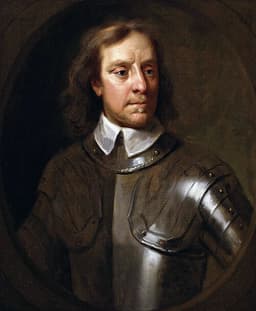
Oliver Cromwell
General · Modern
71.8Total
Basic Information
Born
1924
1599
Died
—
1658
Era
Modern
Modern
Nationality
Pakistan
England
Occupation
General
General
Civilization
Indian
Western
Score Comparison
Military (10%)
50.0
82.0
Political (20%)
68.0
55.0
Influence (20%)
55.0
82.0
Legacy (20%)
49.2
72.0
Leadership (15%)
80.0
62.0
Strategy (15%)
43.3
75.0
TOTAL
57.6
71.8
Mohammad Zia-ul-Haq — Complete Timeline
1977 AD
Coup d'État of 1977Political Action
General Mohammad Zia-ul-Haq led a military coup against Prime Minister Zulfikar Ali Bhutto, suspending the constitution and imposing martial law. He cited political instability and corruption as justification, beginning a decade of military rule.
CoupMartial LawBhutto Overthrow
Impact: nationaldestructive
1979 AD
Islamization of PakistanReform◆ Major
Zia-ul-Haq launched a comprehensive Islamization program, introducing Hudood ordinances, Islamic courts, and mandatory zakat. He aligned Pakistan's legal and educational systems with conservative Sunni interpretations, reshaping society for decades.
IslamizationHudood OrdinancesReligious Reform
Impact: nationaldestructive
Execution of Zulfikar Ali BhuttoPolitical Action◆ Major
Zia-ul-Haq oversaw the execution of former Prime Minister Zulfikar Ali Bhutto after a controversial murder trial. The execution was condemned internationally and deepened political divisions in Pakistan, leading to long-term instability.
Bhutto ExecutionPolitical RepressionControversy
Impact: nationaltragic
1980 AD
Support for Afghan MujahideenWar◆ Major
Zia-ul-Haq provided extensive military and financial support to Afghan mujahideen fighting the Soviet invasion. Pakistan became a key conduit for U.S. and Saudi aid, influencing the outcome of the Soviet-Afghan War and regional geopolitics.
Afghan WarMujahideenSoviet Union
Impact: regionalconstructive
1988 AD
Death in Plane CrashOther◆ Major
Zia-ul-Haq died in a mysterious plane crash near Bahawalpur along with several senior generals and the U.S. ambassador. The cause remains disputed, with theories ranging from mechanical failure to sabotage, ending his 11-year rule.
Plane CrashDeathMystery
Impact: nationaltragic
Oliver Cromwell — Complete Timeline
1644 AD
Battle of Marston MoorWar◆ Major
Cromwell, as a cavalry commander in the Parliamentarian army, played a key role in the decisive victory over Royalist forces at Marston Moor. This battle secured Parliament's control of northern England and boosted Cromwell's military reputation.
English Civil WarParliamentarianCavalry
Impact: national
1645 AD
Battle of NasebyWar
Cromwell led the New Model Army to a decisive victory over King Charles I's forces at Naseby. This battle effectively ended the First English Civil War, leading to the capture of the king and Parliament's supremacy.
English Civil WarNew Model ArmyRoyalist Defeat
Impact: national
1649 AD
Cromwellian Conquest of IrelandWar◆ Major
Cromwell led a brutal military campaign in Ireland to suppress the Irish Confederacy and Royalist alliance. His forces massacred garrisons at Drogheda and Wexford, resulting in widespread death and land confiscation, cementing English Protestant dominance.
IrelandConquestMassacre
Impact: regionaldestructive
Execution of King Charles IPolitical Action
Cromwell was a leading figure in the trial and execution of King Charles I for treason. This unprecedented act abolished the monarchy and established the Commonwealth of England, a republican government.
RegicideCommonwealthRepublic
Impact: globaldestructive
1653 AD
Appointment as Lord ProtectorPolitical Action◆ Major
Cromwell was installed as Lord Protector of the Commonwealth of England, Scotland, and Ireland, effectively becoming head of state. He ruled as a military dictator, dissolving parliaments and imposing Puritan moral laws.
Lord ProtectorCommonwealthDictatorship
Impact: national
This comparison has not been analyzed yet.
One-time AI generation (~1 minute). Scores and timeline are already available below.
Rankings
🥇
Oliver CromwellLeader
Mil: 82.0Pol: 55.0Inf: 82.0
71.8
🥈
Mohammad Zia-ul-Haq
Mil: 50.0Pol: 68.0Inf: 55.0
57.6
+14.2 behind
How This Comparison Works
Algorithm
Each figure is scored on 6 dimensions (0—100 scale) based on structured historical data: Military (10%), Political (20%), Influence (20%), Legacy (20%), Leadership (15%), Strategy (15%). The weighted total produces the final ranking.
Data Sources
Scores are computed from structured sub-indicators in the database. Scale factors adjust for era (Ancient ×0.85, Modern ×1.0) and civilization size (Eastern ×1.05, Other ×0.80) to account for differences in population and military scale.
Maximum 3 Figures
Comparisons are limited to 2—3 figures to ensure readability and statistical meaningfulness.
Error Margins
±5 points per dimension — Sub-scores are derived from historical records with inherent uncertainty. Two figures within 5 points on a dimension should be considered roughly equivalent in that area.
Total Score Accuracy
±3 points overall — The weighted combination of 6 dimensions produces a total score with approximately ±3 points of uncertainty. Differences of less than 3 points are not statistically significant— the figures are effectively tied.
Known Limitations
- Historical records are incomplete and uneven across civilizations
- Figures from oral-tradition societies may be underrepresented
- Occupation labels can misclassify multi-role figures
- Scores measure capability and impact, not moral character
- Quantitative scoring is a comparison tool, not absolute truth
Capability Radar
Military (10%) — Battles & Warfare
Battles
10
75
Win Rate
15
80
Expansion
10
60
Political (20%) — Governance & Reform
Reform
55
75
Diplomacy
50
60
Economy
40
65
Influence (20%) — Cultural & Global Reach
Cultural
55
65
Global
50
65
Legacy (20%) — Historical Impact
Historical
55
80
Longevity
40
70
Leadership (15%) — Power & Stability
Tenure
65
70
Stability
30
55
Strategy (15%) — Tactics & Innovation
Strategy
25
82
Tactics
20
78
Reform
60
85
Similar Comparisons
Comments & Discussion
No comments yet. Be the first to share your thoughts!