Loading...
Mohamed ElBaradei vs Nikita Khrushchev
Nikita Khrushchev leads by 16.7 pts · 2 figures compared
…
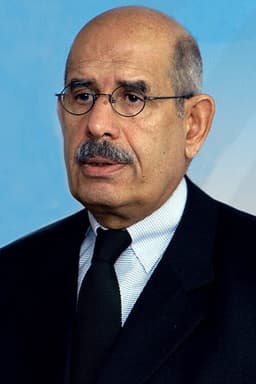
Mohamed ElBaradei
Politician · Modern
47.9Total
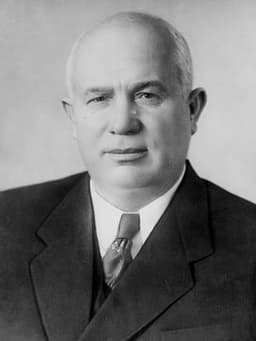
Nikita Khrushchev
Politician · Modern
64.6Total
Basic Information
Born
1942
1894
Died
—
1971
Era
Modern
Modern
Nationality
Egypt
Russia
Occupation
Politician
Politician
Civilization
Middle Eastern
Western
Score Comparison
Military (10%)
39.4
43.3
Political (20%)
48.0
70.0
Influence (20%)
55.0
82.0
Legacy (20%)
49.2
52.0
Leadership (15%)
41.5
72.0
Strategy (15%)
44.7
54.8
TOTAL
47.9
64.6
Mohamed ElBaradei — Complete Timeline
2003 AD
Opposed Iraq War as IAEA DirectorPolitical Action◆ Major
ElBaradei led IAEA inspections in Iraq prior to the 2003 US-led invasion. He publicly stated that the IAEA found no evidence of an active nuclear weapons program in Iraq, contradicting US and UK claims. His stance made him a controversial figure in the lead-up to the war.
Iraq WarIAEANuclear Inspections
Impact: global
2005 AD
Awarded Nobel Peace PrizeCultural◆ Major
ElBaradei, as Director General of the International Atomic Energy Agency (IAEA), was jointly awarded the Nobel Peace Prize with the IAEA for their efforts to prevent nuclear energy from being used for military purposes and to ensure safe use of nuclear energy. The award recognized his leadership in nuclear non-proliferation.
Nobel PrizeIAEANuclear Non-proliferation
Impact: globalconstructive
2010 AD
Returned to Egypt and Founded Opposition PartyPolitical Action◆ Major
After leaving the IAEA, ElBaradei returned to Egypt in February 2010 and became a leading opposition figure. He founded the National Association for Change, which called for democratic reforms. He played a key role in the 2011 Egyptian Revolution, though he did not hold a formal leadership position.
Egyptian RevolutionOppositionDemocratic Reform
Impact: nationalconstructive
2013 AD
Served as Interim Vice PresidentPolitical Action◆ Major
Following the 2013 Egyptian coup d'
2013 CoupMorsiPolitical Violence
Impact: nationaltragic
Nikita Khrushchev — Complete Timeline
1956 AD
Secret Speech on the Cult of PersonalityPolitical Action
Khrushchev delivered a closed-session speech to the 20th Congress of the Communist Party, denouncing Stalin's cult of personality and crimes. This speech initiated de-Stalinization, leading to political reforms and the release of political prisoners.
De-StalinizationSpeechCommunist Party
Impact: globalconstructive
1957 AD
Launch of Sputnik 1Invention◆ Major
Under Khrushchev's leadership, the Soviet Union launched Sputnik 1, the first artificial satellite to orbit Earth. This achievement sparked the Space Race and demonstrated Soviet technological superiority at the time.
Space RaceSatelliteTechnology
Impact: globalconstructive
1958 AD
Berlin UltimatumPolitical Action◆ Major
Khrushchev issued an ultimatum demanding the withdrawal of Western forces from West Berlin within six months. The ultimatum escalated Cold War tensions but was eventually dropped after negotiations, leading to the Berlin Crisis of 1961.
Cold WarBerlinUltimatum
Impact: global
1962 AD
Cuban Missile CrisisWar
Khrushchev authorized the placement of Soviet nuclear missiles in Cuba, leading to a 13-day confrontation with the United States. The crisis ended with a negotiated withdrawal of missiles from both Cuba and Turkey, averting nuclear war.
Cold WarNuclear CrisisCuba
Impact: global
1964 AD
Ouster from PowerPolitical Action◆ Major
Khrushchev was removed from his positions as First Secretary and Premier by the Communist Party leadership, led by Leonid Brezhnev. The ouster was due to his erratic policies, the Cuban Missile Crisis fallout, and agricultural failures.
CoupBrezhnevSoviet Union
Impact: nationaltragic
Expert Analysis
Origins
Mohamed ElBaradei was born in 1942 in Cairo, Egypt, into a legal family. His father was a lawyer and president of the Egyptian Bar Association. ElBaradei earned a law degree from Cairo University and a PhD in international law from New York University School of Law. He joined the Egyptian diplomatic service in 1964, later serving at the UN.
Nikita Khrushchev was born in 1894 in Kalinovka, Russia, into a peasant family. He had minimal formal education, working as a metal fitter in his youth. He joined the Bolsheviks in 1918 and fought in the Russian Civil War. His rise came through the Communist Party ranks, studying at the Industrial Academy in Moscow.
Rise to Power
ElBaradei rose to prominence as Director General of the International Atomic Energy Agency (IAEA) from 1997 to 2009. His key turning point was leading IAEA inspections in Iraq before the 2003 US-led invasion. He publicly stated that the IAEA found no evidence of an active nuclear weapons program, opposing the war. This stance earned him global respect and the 2005 Nobel Peace Prize jointly with the IAEA.
Khrushchev rose through the Soviet system under Stalin. He became First Secretary of the Communist Party in 1953 after Stalin's death, outmaneuvering rivals like Lavrentiy Beria. His secret speech in 1956 denouncing Stalin's cult of personality was a turning point, consolidating his power and initiating de-Stalinization. He survived the 1957 Anti-Party Group coup attempt, solidifying his leadership.
Leadership & Governance
ElBaradei's leadership style was diplomatic and legalistic. He emphasized international law, multilateralism, and evidence-based inspections. As IAEA chief, he sought to prevent nuclear proliferation through negotiation and verification. His governance approach was cautious and principled, often clashing with major powers. In Egypt, he founded the National Association for Change in 2010, advocating for democratic reforms. His political score of 48.0 reflects moderate political impact.
Khrushchev's leadership was bold and erratic. He initiated de-Stalinization, releasing political prisoners and reducing censorship. In agriculture, he promoted the Virgin Lands Campaign (1954-1960), which initially increased grain production but later caused environmental damage. His governance was marked by decentralization and emphasis on consumer goods. However, his impulsive decisions, like the Berlin Ultimatum (1958) and the Cuban Missile Crisis (1962), created dangerous confrontations. His leadership score of 72.0 indicates strong but flawed command.
Triumph & Tragedy
ElBaradei's greatest success was winning the Nobel Peace Prize in 2005 for his efforts to prevent nuclear energy from being used for military purposes. He also successfully negotiated the Additional Protocol to strengthen IAEA safeguards. However, his failure to prevent the 2003 Iraq War—despite accurate inspections—was a major setback. His return to Egyptian politics saw him serve briefly as interim Vice President in 2013, but he resigned in protest against the crackdown on Muslim Brotherhood supporters, damaging his domestic legacy.
Khrushchev's triumphs include launching Sputnik 1 in 1957, sparking the Space Age, and his role in the Cuban Missile Crisis resolution, which averted nuclear war. He also improved Soviet living standards and housing. His tragedies include the failed Berlin Ultimatum, which led to the construction of the Berlin Wall, and the Virgin Lands Campaign's long-term ecological damage. His ouster in 1964 by Leonid Brezhnev and others marked a humiliating end. His military score of 43.3 reflects mixed military decisions.
Character & Destiny
ElBaradei is described as principled, cautious, and diplomatic. His legal background shaped his approach to conflict resolution. He often spoke truth to power, but his reluctance to take decisive action in Egypt's volatile politics limited his influence. His destiny was to be a respected international figure rather than a transformative national leader.
Khrushchev was impulsive, energetic, and sometimes reckless. His willingness to take risks (e.g., placing missiles in Cuba) created crises, but his pragmatism allowed him to back down. His character led to both achievements and downfalls. He was ousted due to his erratic policies and alienation of allies. His influence score of 82.0 reflects his significant but unstable impact.
Legacy
ElBaradei's legacy is tied to nuclear non-proliferation and international law. His work at the IAEA strengthened the global nuclear watchdog. In Egypt, he is remembered as a symbol of the 2011 revolution, but his political career fizzled. His total score of 47.9 reflects moderate impact.
Khrushchev's legacy is complex. He is credited with de-Stalinization and easing Cold War tensions, but also criticized for his brinkmanship. The Cuban Missile Crisis is seen as his defining moment. His reforms in agriculture and space exploration had lasting effects. His total score of 64.6 indicates greater overall impact.
Conclusion
Nikita Khrushchev had greater historical impact than Mohamed ElBaradei. Khrushchev's actions directly shaped the Cold War, nuclear strategy, and the Space Race. His score of 64.6 exceeds ElBaradei's 47.9 by 16.7 points. While ElBaradei's contributions to nuclear non-proliferation are significant, they operate within a narrower sphere. Khrushchev's leadership affected billions and altered the course of global history.
Rankings
🥇
Nikita KhrushchevLeader
Mil: 43.3Pol: 70.0Inf: 82.0
64.6
🥈
Mohamed ElBaradei
Mil: 39.4Pol: 48.0Inf: 55.0
47.9
+16.7 behind
How This Comparison Works
Algorithm
Each figure is scored on 6 dimensions (0—100 scale) based on structured historical data: Military (10%), Political (20%), Influence (20%), Legacy (20%), Leadership (15%), Strategy (15%). The weighted total produces the final ranking.
Data Sources
Scores are computed from structured sub-indicators in the database. Scale factors adjust for era (Ancient ×0.85, Modern ×1.0) and civilization size (Eastern ×1.05, Other ×0.80) to account for differences in population and military scale.
Maximum 3 Figures
Comparisons are limited to 2—3 figures to ensure readability and statistical meaningfulness.
Error Margins
±5 points per dimension — Sub-scores are derived from historical records with inherent uncertainty. Two figures within 5 points on a dimension should be considered roughly equivalent in that area.
Total Score Accuracy
±3 points overall — The weighted combination of 6 dimensions produces a total score with approximately ±3 points of uncertainty. Differences of less than 3 points are not statistically significant— the figures are effectively tied.
Known Limitations
- Historical records are incomplete and uneven across civilizations
- Figures from oral-tradition societies may be underrepresented
- Occupation labels can misclassify multi-role figures
- Scores measure capability and impact, not moral character
- Quantitative scoring is a comparison tool, not absolute truth
Capability Radar
Military (10%) — Battles & Warfare
Battles
22
5
Win Rate
22
10
Expansion
29
20
Political (20%) — Governance & Reform
Reform
30
80
Diplomacy
75
70
Economy
15
55
Influence (20%) — Cultural & Global Reach
Cultural
40
60
Global
65
70
Legacy (20%) — Historical Impact
Historical
55
75
Longevity
30
55
Leadership (15%) — Power & Stability
Tenure
20
75
Stability
10
50
Strategy (15%) — Tactics & Innovation
Strategy
31
15
Tactics
32
10
Reform
36
30
Similar Comparisons
Comments & Discussion
No comments yet. Be the first to share your thoughts!