Loading...
Mohamed ElBaradei vs Qin Shi Huang
Qin Shi Huang leads by 37.3 pts · 2 figures compared
…
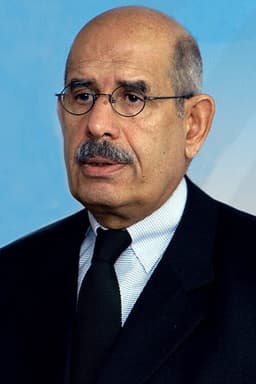
Mohamed ElBaradei
Politician · Modern
47.9Total
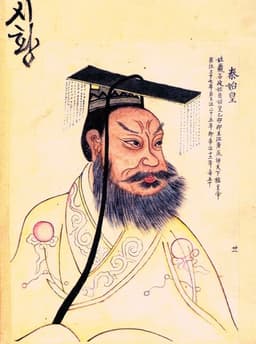
Qin Shi Huang
Emperor · Ancient
85.2Total
Basic Information
Born
1942
-259
Died
—
-210
Era
Modern
Ancient
Nationality
Egypt
China
Occupation
Politician
Emperor
Civilization
Middle Eastern
Eastern
Score Comparison
Military (10%)
39.4
80.0
Political (20%)
48.0
90.0
Influence (20%)
55.0
85.0
Legacy (20%)
49.2
90.0
Leadership (15%)
41.5
78.0
Strategy (15%)
44.7
82.0
TOTAL
47.9
85.2
Mohamed ElBaradei — Complete Timeline
2003 AD
Opposed Iraq War as IAEA DirectorPolitical Action◆ Major
ElBaradei led IAEA inspections in Iraq prior to the 2003 US-led invasion. He publicly stated that the IAEA found no evidence of an active nuclear weapons program in Iraq, contradicting US and UK claims. His stance made him a controversial figure in the lead-up to the war.
Iraq WarIAEANuclear Inspections
Impact: global
2005 AD
Awarded Nobel Peace PrizeCultural◆ Major
ElBaradei, as Director General of the International Atomic Energy Agency (IAEA), was jointly awarded the Nobel Peace Prize with the IAEA for their efforts to prevent nuclear energy from being used for military purposes and to ensure safe use of nuclear energy. The award recognized his leadership in nuclear non-proliferation.
Nobel PrizeIAEANuclear Non-proliferation
Impact: globalconstructive
2010 AD
Returned to Egypt and Founded Opposition PartyPolitical Action◆ Major
After leaving the IAEA, ElBaradei returned to Egypt in February 2010 and became a leading opposition figure. He founded the National Association for Change, which called for democratic reforms. He played a key role in the 2011 Egyptian Revolution, though he did not hold a formal leadership position.
Egyptian RevolutionOppositionDemocratic Reform
Impact: nationalconstructive
2013 AD
Served as Interim Vice PresidentPolitical Action◆ Major
Following the 2013 Egyptian coup d'
2013 CoupMorsiPolitical Violence
Impact: nationaltragic
Qin Shi Huang — Complete Timeline
246 BC
Construction of the Mausoleum and Terracotta ArmyOther◆ Major
Qin Shi Huang commissioned a vast mausoleum complex near Xi'an, guarded by thousands of life-sized terracotta soldiers, horses, and chariots. The project employed hundreds of thousands of workers and reflected his obsession with immortality and imperial power.
Impact: global
230 BC
Conquest of the Six Warring StatesWar
From 230 to 221 BCE, Ying Zheng led the Qin state in a series of campaigns that conquered the Han, Zhao, Wei, Chu, Yan, and Qi states. This unified China under a single ruler for the first time, ending the Warring States period.
Impact: global
221 BC
Standardization of Writing, Currency, and MeasurementsReform◆ Major
Qin Shi Huang ordered the standardization of Chinese script, currency, and weights and measures across the unified empire. This facilitated administration, trade, and cultural integration, laying a foundation for future dynasties.
Impact: globalconstructive
Proclamation of the Qin DynastyPolitical Action
After conquering the last independent state, Ying Zheng declared himself Shi Huangdi (First Emperor), founding the Qin Dynasty. He adopted a new title to signify his supreme authority and initiated centralized imperial rule.
Impact: global
214 BC
Initiation of the Great Wall ConstructionOther◆ Major
Qin Shi Huang ordered the connection and extension of existing northern fortifications to create a unified defensive wall against nomadic Xiongnu raids. This project involved massive conscripted labor and became the precursor to the later Great Wall.
Impact: regional
213 BC
Burning of Books and Burying of ScholarsPolitical Action◆ Major
On the advice of Li Si, Qin Shi Huang ordered the burning of historical records and philosophical texts not aligned with Legalist doctrine. He also had 460 Confucian scholars buried alive to suppress dissent and consolidate ideological control.
Impact: nationaldestructive
Expert Analysis
mohamed-elbaradei-vs-qin-shi-huang
# The Emperor and the Peacemaker: Two Visions of Power Across Two Millennia
In February 2010, Mohamed ElBaradei stepped off a plane in Cairo, returning to Egypt after two decades abroad. He was sixty-seven years old, a Nobel laureate, a man who had faced down superpowers from behind a diplomat's desk. In Xi'an, China, twenty-two centuries earlier, a thirteen-year-old boy named Ying Zheng inherited a kingdom riven by war, a realm of chaos where seven states fought for supremacy. One man sought to build walls; the other sought to tear them down. One commanded armies; the other commanded arguments. Yet both believed they could reshape the world. The question is not who was right, but why their paths diverged so dramatically—and what that tells us about the nature of power itself.
Origins
Qin Shi Huang was born into blood and iron. The year was 259 BC, and China was in the throes of the Warring States period—a brutal, centuries-long struggle where survival depended on conquest. His father was a Qin king, his mother a former concubine. The boy grew up in a court poisoned by intrigue, where assassination attempts were as common as banquets. He learned early that trust was a luxury, and that the only law that mattered was the law of the sword.
ElBaradei was born in 1942 in Cairo, into a different kind of aristocracy. His father was a lawyer, his family part of Egypt's educated elite. The world he inherited was one of institutions—the United Nations, international law, diplomatic protocols. Where Ying Zheng learned to command, ElBaradei learned to negotiate. Where the young prince saw enemies to be crushed, the young Egyptian saw problems to be solved. Their eras shaped them as surely as their parents did.
Rise to Power
Ying Zheng's rise was swift and merciless. At thirteen, he became king of Qin. By twenty-two, he had crushed a rebellion led by his own mother's lover. Between 230 and 221 BC, he unleashed a campaign of conquest that devoured the six rival states—Han, Zhao, Wei, Chu, Yan, and Qi. He did not merely defeat them; he erased them. Their kings were executed, their armies disbanded, their histories rewritten. In 221 BC, he declared himself *Shi Huangdi*—the First Emperor—and announced that his dynasty would last ten thousand generations.
ElBaradei's rise was slower, more measured. He studied law in Cairo, earned a doctorate in international law from New York University, and spent decades climbing the ladder of the International Atomic Energy Agency. In 1997, he became its director general. His power was not the power of armies but of information—of inspections, reports, and carefully worded resolutions. When he opposed the 2003 Iraq War, stating publicly that the IAEA had found no evidence of active nuclear weapons programs, he was not issuing a decree. He was making an argument. And the world listened.
Leadership & Governance
Qin Shi Huang governed as he conquered—absolutely. He standardized writing, currency, and measurements across his empire, forcing a fractured land into a single mold. He ordered the construction of roads and canals, and began linking northern fortifications into what would become the Great Wall. But his vision had a dark side. In 213 BC, on the advice of his chancellor Li Si, he ordered the burning of all historical records and philosophical texts not aligned with his Legalist ideology. Scholars who protested were buried alive. He believed that unity required uniformity, and that dissent was a cancer to be excised.
ElBaradei governed through persuasion. As IAEA director, he built coalitions, cultivated credibility, and used the moral authority of his office to push for nuclear non-proliferation. He was awarded the Nobel Peace Prize in 2005 for his efforts to prevent nuclear energy from being used for military purposes. But his leadership style had its own fragility. When he returned to Egypt in 2010 and founded an opposition party, he discovered that the skills of a diplomat are not the skills of a revolutionary. He could inspire crowds, but he could not command them.
Triumph & Tragedy
Qin Shi Huang's greatest triumph was the unification of China—a feat that had eluded every ruler before him. His greatest tragedy came from the same impulse. Obsessed with immortality, he consumed mercury pills prescribed by alchemists, believing they would grant eternal life. Instead, they killed him in 210 BC at the age of forty-nine. His empire, which he had forged with such terrible purpose, collapsed within four years of his death.
ElBaradei's triumph was the Nobel Peace Prize, a recognition that his patient, principled diplomacy had changed how the world thought about nuclear weapons. His tragedy came in 2013, when he accepted the position of interim vice president of Egypt after a military coup removed the elected president, Mohamed Morsi. He believed he could guide the transition to democracy. Instead, he found himself caught between an army that did not trust him and a public that accused him of betraying the revolution. He resigned after just a few months, his reputation scarred.
Character & Destiny
Qin Shi Huang was paranoid, brilliant, and ruthless. He saw the world as a battlefield and himself as the only general who mattered. His personality drove him to extraordinary achievements and extraordinary cruelties. He could not imagine a world where power was shared, because he had never seen one.
ElBaradei was principled, cautious, and perhaps too trusting of institutions. He believed that reason and law could tame power, because his entire career had been built on that belief. When he returned to Egypt, he expected a transition managed by rules. Instead, he found a revolution governed by raw force. His personality made him a great diplomat but a poor revolutionary.
Legacy
Qin Shi Huang's legacy is carved into China itself. The Great Wall, the Terracotta Army, the standardized script—these endure. He is remembered as a tyrant and a unifier, a man who crushed freedom to create order. His dynasty was short, but the imperial system he founded lasted for two thousand years.
ElBaradei's legacy is more ambiguous. He is remembered as a voice of reason in a time of war, a man who stood up to American power and won a Nobel Prize for it. But his political career in Egypt ended in disappointment. He is a symbol of what might have been—a reminder that even the best intentions cannot always overcome the weight of history.
Conclusion
Two men, two millennia apart. One built an empire with blood and iron; the other tried to build a democracy with words and law. Qin Shi Huang's China endured because he was willing to do terrible things. ElBaradei's Egypt crumbled because he was not. Perhaps that is the cruelest lesson of history: that the qualities that make a great ruler are not always the qualities that make a good one. The First Emperor understood power as domination. The Nobel laureate understood power as persuasion. Both were right. Both were wrong. And the world they left behind is still trying to decide which vision will finally prevail.
Rankings
🥇
Qin Shi HuangLeader
Mil: 80.0Pol: 90.0Inf: 85.0
85.2
🥈
Mohamed ElBaradei
Mil: 39.4Pol: 48.0Inf: 55.0
47.9
+37.3 behind
How This Comparison Works
Algorithm
Each figure is scored on 6 dimensions (0—100 scale) based on structured historical data: Military (10%), Political (20%), Influence (20%), Legacy (20%), Leadership (15%), Strategy (15%). The weighted total produces the final ranking.
Data Sources
Scores are computed from structured sub-indicators in the database. Scale factors adjust for era (Ancient ×0.85, Modern ×1.0) and civilization size (Eastern ×1.05, Other ×0.80) to account for differences in population and military scale.
Maximum 3 Figures
Comparisons are limited to 2—3 figures to ensure readability and statistical meaningfulness.
Error Margins
±5 points per dimension — Sub-scores are derived from historical records with inherent uncertainty. Two figures within 5 points on a dimension should be considered roughly equivalent in that area.
Total Score Accuracy
±3 points overall — The weighted combination of 6 dimensions produces a total score with approximately ±3 points of uncertainty. Differences of less than 3 points are not statistically significant— the figures are effectively tied.
Known Limitations
- Historical records are incomplete and uneven across civilizations
- Figures from oral-tradition societies may be underrepresented
- Occupation labels can misclassify multi-role figures
- Scores measure capability and impact, not moral character
- Quantitative scoring is a comparison tool, not absolute truth
Capability Radar
Military (10%) — Battles & Warfare
Battles
22
85
Win Rate
22
90
Expansion
29
90
Political (20%) — Governance & Reform
Reform
30
95
Diplomacy
75
75
Economy
15
90
Influence (20%) — Cultural & Global Reach
Cultural
40
95
Global
65
85
Legacy (20%) — Historical Impact
Historical
55
95
Longevity
30
95
Leadership (15%) — Power & Stability
Tenure
20
70
Stability
10
65
Strategy (15%) — Tactics & Innovation
Strategy
31
85
Tactics
32
80
Reform
36
95
Similar Comparisons
Comments & Discussion
WALLS AND WORDS6/17/2026
Qin Shi Huang understood the brutal arithmetic of power: 2,500 miles of connected walls, 7,000 terracotta soldiers guarding one tomb, and 460 scholars buried alive for dissent. ElBaradei’s Nobel Peace Prize couldn’t stop a single war in Iraq or Libya. History’s scoreboard is written in blood, not diplomacy. The emperor built an empire that lasted two millennia; ElBaradei couldn’t even stabilize his own country for two years. Strength wins. Talk loses.
铁血判官6/17/2026
拿一个靠IAEA谈判桌吃饭的法学博士,跟统一六国、焚书坑儒的始皇帝比?两千年前那个十三岁登基的少年,用十年灭掉六国,书同文车同轨,修长城御匈奴。老巴拉迪呢?2011年阿拉伯之春回国竞选总统,结果埃及军方直接政变,他就只能灰溜溜跑路。格局完全不对等:一个是改造世界的帝王,一个是开会发言的官僚。
DATA SCEPTIC6/17/2026
Let’s be real: the comparison cherry-picks romantic narratives over hard metrics. Qin Shi Huang’s China had maybe 20 million people, mostly illiterate farmers under feudal rule. ElBaradei negotiated the 2005 IAEA Iran reporting resolution that withstood 15+ years of geopolitical pressure. The emperor’s standardization of writing and currency sounds impressive, but it took 200 years of Han consolidation to stick. ElBaradei’s nuclear nonproliferation framework still governs international behavior
秦长城评论员6/17/2026
非要比较,最简单看死法:秦始皇五十岁暴毙沙丘,尸体发臭被混在咸鱼车里运回咸阳;巴拉迪现在还活蹦乱跳,2025年刚因批评俄罗斯入侵乌克兰上国际头条。谁的权力更真实?活着的批评比死了的铜车马更有分量。始皇帝修了万里长城防匈奴,结果大秦十五年就亡了;老巴拉迪建了核不扩散体制,六十年了还在运作。有形城墙脆弱,无形制度才持久。