Loading...
Boutros Boutros-Ghali vs Nikita Khrushchev
Nikita Khrushchev leads by 11.6 pts · 2 figures compared
…
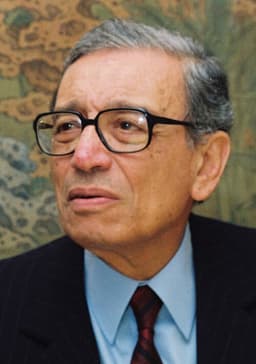
Boutros Boutros-Ghali
Politician · Modern
53.0Total
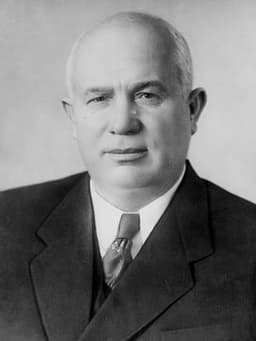
Nikita Khrushchev
Politician · Modern
64.6Total
Basic Information
Born
1922
1894
Died
—
1971
Era
Modern
Modern
Nationality
Egypt
Russia
Occupation
Politician
Politician
Civilization
Middle Eastern
Western
Score Comparison
Military (10%)
50.0
43.3
Political (20%)
45.0
70.0
Influence (20%)
55.0
82.0
Legacy (20%)
49.2
52.0
Leadership (15%)
72.0
72.0
Strategy (15%)
44.4
54.8
TOTAL
53.0
64.6
Boutros Boutros-Ghali — Complete Timeline
1992 AD
Elected Secretary-General of the United NationsPolitical Action◆ Major
Boutros Boutros-Ghali became the sixth Secretary-General of the United Nations, the first from Africa. His election came during a period of post-Cold War transition, and he focused on peacekeeping and conflict resolution.
UN Secretary-GeneralPeacekeepingPost-Cold War
Impact: globalconstructive
Published An Agenda for PeacePolitical Action◆ Major
Boutros-Ghali released An Agenda for Peace, a landmark report outlining preventive diplomacy, peacemaking, and peacekeeping strategies. The report influenced UN operations in conflicts like Somalia, Bosnia, and Rwanda.
PeacekeepingUN ReformDiplomacy
Impact: globalconstructive
1994 AD
Oversaw UN peacekeeping in the Rwandan GenocideWar◆ Major
During the Rwandan Genocide, Boutros-Ghali's UN peacekeeping mission failed to prevent the killing of an estimated 800,000 Tutsis and moderate Hutus. The UN's inaction drew widespread criticism and led to calls for reform.
RwandaGenocideUN Failure
Impact: globaltragic
1996 AD
Vetoed by the United States for a second termPolitical Action◆ Major
The United States vetoed Boutros-Ghali's bid for a second term as UN Secretary-General, citing disagreements over UN reform and peacekeeping operations. He was succeeded by Kofi Annan.
UN PoliticsUS VetoLeadership
Impact: globaldestructive
1997 AD
Served as Secretary-General of the FrancophoniePolitical Action
After leaving the UN, Boutros-Ghali became the first Secretary-General of the International Organisation of the Francophonie, promoting French language and cultural cooperation among member states.
FrancophonieCultural DiplomacyPost-UN
Impact: regionalconstructive
Nikita Khrushchev — Complete Timeline
1956 AD
Secret Speech on the Cult of PersonalityPolitical Action
Khrushchev delivered a closed-session speech to the 20th Congress of the Communist Party, denouncing Stalin's cult of personality and crimes. This speech initiated de-Stalinization, leading to political reforms and the release of political prisoners.
De-StalinizationSpeechCommunist Party
Impact: globalconstructive
1957 AD
Launch of Sputnik 1Invention◆ Major
Under Khrushchev's leadership, the Soviet Union launched Sputnik 1, the first artificial satellite to orbit Earth. This achievement sparked the Space Race and demonstrated Soviet technological superiority at the time.
Space RaceSatelliteTechnology
Impact: globalconstructive
1958 AD
Berlin UltimatumPolitical Action◆ Major
Khrushchev issued an ultimatum demanding the withdrawal of Western forces from West Berlin within six months. The ultimatum escalated Cold War tensions but was eventually dropped after negotiations, leading to the Berlin Crisis of 1961.
Cold WarBerlinUltimatum
Impact: global
1962 AD
Cuban Missile CrisisWar
Khrushchev authorized the placement of Soviet nuclear missiles in Cuba, leading to a 13-day confrontation with the United States. The crisis ended with a negotiated withdrawal of missiles from both Cuba and Turkey, averting nuclear war.
Cold WarNuclear CrisisCuba
Impact: global
1964 AD
Ouster from PowerPolitical Action◆ Major
Khrushchev was removed from his positions as First Secretary and Premier by the Communist Party leadership, led by Leonid Brezhnev. The ouster was due to his erratic policies, the Cuban Missile Crisis fallout, and agricultural failures.
CoupBrezhnevSoviet Union
Impact: nationaltragic
Expert Analysis
Origins
Boutros Boutros-Ghali was born on November 14, 1922, in Cairo, Egypt, into a prominent Coptic Christian family with a tradition of public service. His grandfather had been prime minister. He studied law at Cairo University and later earned a PhD in international law from the University of Paris, also studying at Sciences Po. His background was academic and diplomatic, steeped in international affairs.
Nikita Khrushchev was born on April 15, 1894, in Kalinovka, Russia, into a poor peasant family. He had little formal education, working as a metal fitter and participating in the Russian Revolution. He joined the Communist Party in 1918 and rose through its ranks. His early experiences were in industrial labor and party organization, far from the elite academic world of Boutros-Ghali.
Rise to Power
Boutros-Ghali served as a diplomat for Egypt, becoming Minister of State for Foreign Affairs in 1977. He played key roles in the Camp David Accords and peace treaties with Israel. His international stature grew, and in 1991 he was elected the sixth UN Secretary-General, the first African and first Arab to hold the post. His election came amid post-Cold War optimism.
Khrushchev's rise was through the Communist Party apparatus. He supported Stalin's purges but later rose to power after Stalin's death in 1953. He outmaneuvered rivals like Malenkov and Molotov, becoming First Secretary by 1953. His turning point was the 1956 Secret Speech denouncing Stalin, which solidified his control but also caused upheaval in the communist world.
Leadership & Governance
Boutros-Ghali's leadership style was intellectual and legalistic. He published "An Agenda for Peace" in 1992, proposing preventive diplomacy, peacekeeping, and post-conflict peacebuilding. He sought to expand UN involvement in internal conflicts. However, he faced criticism for micromanagement and lack of political acumen, especially with major powers.
Khrushchev was a volatile and impulsive leader. He de-Stalinized the Soviet Union, releasing political prisoners and reducing terror. He pursued agricultural reforms (Virgin Lands campaign) and housing construction. In foreign policy, he oscillated between confrontation (Berlin Ultimatum, Cuban Missile Crisis) and peaceful coexistence. His style was direct, often using shoes to pound UN tables.
Triumph & Tragedy
Boutros-Ghali's greatest success was articulating a new vision for the UN in the post-Cold War era, notably through "An Agenda for Peace." His greatest failure was the UN's inaction during the Rwandan Genocide in 1994, where he has been criticized for not mobilizing stronger intervention. He also failed to secure a second term due to US veto, partly over UN reform disputes.
Khrushchev's triumphs include launching Sputnik (1957), the first artificial satellite, and initiating de-Stalinization. He also avoided nuclear war during the Cuban Missile Crisis by backing down. His tragedies include the Virgin Lands failure (soil erosion, low yields) and the Berlin Ultimatum that failed. He was ousted in 1964 by Brezhnev due to his erratic policies and agricultural crises.
Character & Destiny
Boutros-Ghali was dignified, intellectual, and aloof. He believed in the power of international law but lacked the political skills to navigate great power interests. His destiny was shaped by the limits of the UN system and the unwillingness of major powers, especially the US, to support his reforms. His tenure ended in defeat.
Khrushchev was energetic, pragmatic, and crude. He took risks but also knew when to retreat (Cuban Missile Crisis). His character alienated many in the party, leading to his ouster. Historian William Taubman scored his leadership as bold but inconsistent. His scores: Political 70.0, Leadership 72.0, Strategy 54.8.
Legacy
Boutros-Ghali's legacy is mixed: he expanded UN peacekeeping but failed in Rwanda. His "Agenda for Peace" influenced later UN doctrine. He is remembered as a principled but ineffective leader. His scores: Influence 55.0, Legacy 49.2.
Khrushchev's legacy is more substantial: he ended Stalinist terror, launched the Space Age, and his secret speech reshaped communism. He is seen as a reformer who failed. His scores: Influence 82.0, Legacy 52.0. He ranks higher overall: TOTAL 64.6 vs 53.0.
Conclusion
Nikita Khrushchev had greater impact than Boutros Boutros-Ghali. Khrushchev's actions—de-Stalinization, Cuban Missile Crisis, Sputnik—altered global politics and the Cold War's trajectory. Boutros-Ghali, despite his intellectual contributions, was constrained by the UN's limited power and his own political shortcomings. Khrushchev's influence score (82.0) dwarfs Boutros-Ghali's (55.0), reflecting his deeper mark on history. While Boutros-Ghali's legacy is important, Khrushchev's decisions directly affected millions and shaped the modern world.
Rankings
🥇
Nikita KhrushchevLeader
Mil: 43.3Pol: 70.0Inf: 82.0
64.6
🥈
Boutros Boutros-Ghali
Mil: 50.0Pol: 45.0Inf: 55.0
53.0
+11.6 behind
How This Comparison Works
Algorithm
Each figure is scored on 6 dimensions (0—100 scale) based on structured historical data: Military (10%), Political (20%), Influence (20%), Legacy (20%), Leadership (15%), Strategy (15%). The weighted total produces the final ranking.
Data Sources
Scores are computed from structured sub-indicators in the database. Scale factors adjust for era (Ancient ×0.85, Modern ×1.0) and civilization size (Eastern ×1.05, Other ×0.80) to account for differences in population and military scale.
Maximum 3 Figures
Comparisons are limited to 2—3 figures to ensure readability and statistical meaningfulness.
Error Margins
±5 points per dimension — Sub-scores are derived from historical records with inherent uncertainty. Two figures within 5 points on a dimension should be considered roughly equivalent in that area.
Total Score Accuracy
±3 points overall — The weighted combination of 6 dimensions produces a total score with approximately ±3 points of uncertainty. Differences of less than 3 points are not statistically significant— the figures are effectively tied.
Known Limitations
- Historical records are incomplete and uneven across civilizations
- Figures from oral-tradition societies may be underrepresented
- Occupation labels can misclassify multi-role figures
- Scores measure capability and impact, not moral character
- Quantitative scoring is a comparison tool, not absolute truth
Capability Radar
Military (10%) — Battles & Warfare
Battles
24
5
Win Rate
24
10
Expansion
28
20
Political (20%) — Governance & Reform
Reform
55
80
Diplomacy
85
70
Economy
40
55
Influence (20%) — Cultural & Global Reach
Cultural
40
60
Global
65
70
Legacy (20%) — Historical Impact
Historical
55
75
Longevity
40
55
Leadership (15%) — Power & Stability
Tenure
60
75
Stability
50
50
Strategy (15%) — Tactics & Innovation
Strategy
31
15
Tactics
32
10
Reform
34
30
Similar Comparisons
Comments & Discussion
No comments yet. Be the first to share your thoughts!