Loading...
Juan Negrin vs Mohamed Boudiaf
Juan Negrin leads by 9.2 pts · 2 figures compared
…

Juan Negrin
Politician · Modern
51.2Total
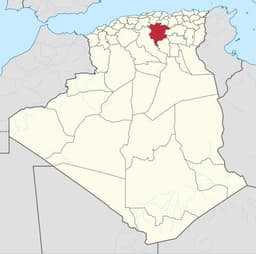
Mohamed Boudiaf
Politician · Modern
42.0Total
Basic Information
Born
1892
1919
Died
1956
1992
Era
Modern
Modern
Nationality
Spain
Algeria
Occupation
Politician
Politician
Civilization
Western
Middle Eastern
Score Comparison
Military (10%)
48.8
26.9
Political (20%)
45.0
37.9
Influence (20%)
54.9
52.5
Legacy (20%)
47.5
45.8
Leadership (15%)
65.0
31.2
Strategy (15%)
42.3
43.4
TOTAL
51.2
42.0
Juan Negrin — Complete Timeline
1937 AD
Became Prime Minister of the RepublicPolitical Action◆ Major
Negrin succeeded Largo Caballero as prime minister of the Second Spanish Republic on May 17, 1937. He formed a government dominated by the Spanish Communist Party and pursued a policy of centralizing war efforts and seeking Soviet support.
Prime MinisterCivil WarCommunist Influence
Impact: national
1938 AD
Oversaw the Battle of the EbroWar◆ Major
Negrin's government ordered the Battle of the Ebro, the largest Republican offensive of the Civil War, in July 1938. The battle lasted four months and ended in a costly Republican defeat, depleting the Republican army and leading to the final Nationalist advance.
Battle of the EbroMilitary OffensiveDefeat
Impact: nationaltragic
Implemented the Thirteen Points ProgramPolitical Action◆ Major
Negrin announced the Thirteen Points program on April 30, 1938, outlining the Republican war aims. The program called for independence, democracy, social justice, and amnesty, but failed to attract international support or negotiate a peace settlement with the Nationalists.
War AimsDiplomacyPropaganda
Impact: nationalconstructive
1939 AD
Fled into Exile After the Republican DefeatPolitical Action◆ Major
As Nationalist forces captured Barcelona and Madrid, Negrin fled to France in March 1939. He continued to lead the Republican government-in-exile until 1945, but was unable to secure international recognition or support for the restoration of the Republic.
ExileGovernment-in-ExileDefeat
Impact: nationaltragic
Mohamed Boudiaf — Complete Timeline
1954 AD
Co-founded the National Liberation Front (FLN)Political Action
Mohamed Boudiaf was a founding member of the National Liberation Front (FLN) in November 1954, the revolutionary organization that launched the Algerian War of Independence against French colonial rule. He helped organize the armed struggle and served as a key political leader.
Algerian WarIndependenceFLN
Impact: nationalconstructive
1956 AD
Arrested and imprisoned by French authoritiesPolitical Action◆ Major
Boudiaf was arrested by French authorities in 1956 along with other FLN leaders, including Ahmed Ben Bella. He was imprisoned in France for the duration of the war, spending nearly six years in detention until the Evian Accords in 1962.
ImprisonmentAlgerian WarFrench Colonialism
Impact: nationaltragic
1963 AD
Exiled and founded the Socialist Forces Front (FFS)Political Action◆ Major
After independence, Boudiaf opposed the authoritarian turn of the FLN under Ahmed Ben Bella. He went into exile in Morocco and founded the Socialist Forces Front (FFS) in 1963, a leftist opposition party that advocated for democratic socialism and multi-party politics.
OppositionExilePolitical Party
Impact: nationalconstructive
1992 AD
Returned from exile and became President of AlgeriaPolitical Action
Boudiaf returned from 27 years of exile in Morocco on January 16, 1992, to become President of the High State Council (HCE), Algeria's collective presidency. He was appointed after the military canceled the 1991 legislative elections to prevent an Islamist victory, tasked with restoring stability.
PresidencyAlgerian Civil WarHCE
Impact: national
Assassinated during a public speechPolitical Action
Boudiaf was assassinated on June 29, 1992, in Annaba while giving a speech at a cultural center. He was shot by a bodyguard, Lieutenant Larbi Belkheir, who was allegedly linked to Islamist extremists. His death deepened Algeria's civil war and removed a key moderate figure.
AssassinationAlgerian Civil WarPolitical Violence
Impact: nationaltragic
Expert Analysis
Origins
Juan Negrin López was born on February 3, 1892, in Las Palmas, Gran Canaria, to a wealthy family. His father was a merchant, allowing Negrin to study medicine in Germany, where he earned a PhD from the University of Leipzig in 1914. He later became a professor of physiology at the Complutense University of Madrid. His scientific background and international experience shaped his pragmatic approach to politics.
Mohamed Boudiaf was born on June 23, 1919, in Ouled Madhi, Algeria, to a peasant family. He received a French colonial education but left school early to work. Inspired by the nationalist movement, he joined the Algerian People's Party (PPA) in the 1940s. Unlike Negrin's academic path, Boudiaf's early life was marked by activism and clandestine organizing against French rule.
Rise to Power
Negrin entered politics in 1931 as a deputy for the Spanish Socialist Workers' Party (PSOE). He served as Minister of Finance under Prime Minister Francisco Largo Caballero from September 1936. After internal conflicts, Negrin succeeded Largo Caballero as prime minister on May 17, 1937, at the height of the Spanish Civil War. His rise was driven by his organizational skills and support from the Communist Party.
Boudiaf co-founded the National Liberation Front (FLN) in November 1954, which launched the Algerian War of Independence. He was arrested by French authorities in 1956 and imprisoned until 1962. After independence, he opposed the authoritarian turn of President Ahmed Ben Bella and went into exile in Morocco in 1964, founding the Socialist Forces Front (FFS). He remained in exile for 27 years until the Algerian army brought him back to become president of the High State Council on January 16, 1992, amid a civil war.
Leadership & Governance
Negrin's leadership focused on centralizing Republican war efforts. He implemented the Thirteen Points program on April 30, 1938, outlining war aims for independence and democracy. He also ordered the Battle of the Ebro in July 1938, the largest Republican offensive, which ultimately failed due to Nationalist air superiority. His governance was marked by reliance on Soviet aid and Communist allies, which alienated anarchist and socialist factions. Negrin scored 65.0 in leadership, reflecting his decisive but divisive style.
Boudiaf's leadership was brief: he served as president for only five months in 1992. He attempted to reform Algeria's political system, dissolving the National Assembly and proposing a new constitution to end the civil war. His approach was conciliatory, seeking dialogue with Islamists and secularists. However, his lack of a political base and reliance on the military limited his effectiveness. His leadership score of 31.2 indicates the challenges he faced.
Triumph & Tragedy
Negrin's greatest success was maintaining Republican resistance for nearly two years after his appointment, prolonging the war against Francisco Franco's Nationalists. However, his greatest failure was the defeat at the Battle of the Ebro, which cost over 60,000 Republican casualties and led to the final collapse in 1939. He fled into exile on March 5, 1939, as Barcelona and Madrid fell. His legacy is tied to the lost Republic.
Boudiaf's triumph was co-founding the FLN, which achieved Algerian independence in 1962. His tragedy was his assassination on June 29, 1992, during a speech in Annaba, shot by a bodyguard. The assassination cut short his reform efforts and plunged Algeria into a decade-long civil war. His death remains controversial, with suspicions of military involvement.
Character & Destiny
Negrin was pragmatic and authoritarian, willing to cooperate with Communists to win the war. His medical background gave him a methodical approach, but he lacked charisma and alienated many Republicans. His destiny was to be the last prime minister of the Republic, forever associated with its defeat.
Boudiaf was principled and stubborn, opposing both French colonialism and post-independence authoritarianism. His long exile demonstrated his commitment to democracy, but his return made him a pawn in the army's power struggle. His assassination was a direct result of his attempts to challenge the military's control.
Legacy
Negrin's legacy is mixed: he is remembered as a loyal Republican but often criticized for his dependence on the Soviet Union. His Thirteen Points program influenced later democratic transitions in Spain. His overall score is 51.2, with legacy at 47.5.
Boudiaf is honored as a founding father of Algeria, but his presidency is seen as a missed opportunity. His assassination symbolizes the failure of democratic reform in Algeria. His legacy score is 45.8, reflecting his incomplete impact.
Conclusion
Juan Negrin had a greater impact than Mohamed Boudiaf, as measured by his overall score of 51.2 versus 42.0. Negrin's leadership during the Spanish Civil War, despite its failure, shaped the course of Spanish history and the broader anti-fascist struggle. Boudiaf's role in founding the FLN is significant, but his brief presidency and assassination limited his direct influence. Negrin's decisions, such as the Battle of the Ebro, had lasting military and political consequences, while Boudiaf's legacy remains more symbolic than substantive.
Rankings
🥇
Juan NegrinLeader
Mil: 48.8Pol: 45.0Inf: 54.9
51.2
🥈
Mohamed Boudiaf
Mil: 26.9Pol: 37.9Inf: 52.5
42.0
+9.2 behind
How This Comparison Works
Algorithm
Each figure is scored on 6 dimensions (0—100 scale) based on structured historical data: Military (10%), Political (20%), Influence (20%), Legacy (20%), Leadership (15%), Strategy (15%). The weighted total produces the final ranking.
Data Sources
Scores are computed from structured sub-indicators in the database. Scale factors adjust for era (Ancient ×0.85, Modern ×1.0) and civilization size (Eastern ×1.05, Other ×0.80) to account for differences in population and military scale.
Maximum 3 Figures
Comparisons are limited to 2—3 figures to ensure readability and statistical meaningfulness.
Error Margins
±5 points per dimension — Sub-scores are derived from historical records with inherent uncertainty. Two figures within 5 points on a dimension should be considered roughly equivalent in that area.
Total Score Accuracy
±3 points overall — The weighted combination of 6 dimensions produces a total score with approximately ±3 points of uncertainty. Differences of less than 3 points are not statistically significant— the figures are effectively tied.
Known Limitations
- Historical records are incomplete and uneven across civilizations
- Figures from oral-tradition societies may be underrepresented
- Occupation labels can misclassify multi-role figures
- Scores measure capability and impact, not moral character
- Quantitative scoring is a comparison tool, not absolute truth
Capability Radar
Military (10%) — Battles & Warfare
Battles
27
20
Win Rate
35
22
Expansion
36
28
Political (20%) — Governance & Reform
Reform
55
40
Diplomacy
50
35
Economy
45
10
Influence (20%) — Cultural & Global Reach
Cultural
25
30
Global
35
25
Legacy (20%) — Historical Impact
Historical
45
45
Longevity
30
30
Leadership (15%) — Power & Stability
Tenure
40
10
Stability
20
5
Strategy (15%) — Tactics & Innovation
Strategy
37
33
Tactics
40
31
Reform
46
36
Similar Comparisons
Comments & Discussion
No comments yet. Be the first to share your thoughts!