Loading...
Mencius vs Socrates
Socrates leads by 7.0 pts · 2 figures compared
…

Mencius
Philosopher · Ancient
54.9Total
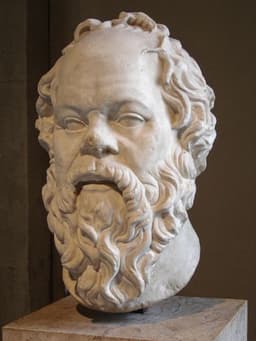
Socrates
Philosopher · Ancient
61.9Total
Basic Information
Born
-372
-470
Died
-289
-399
Era
Ancient
Ancient
Nationality
China
Greece
Occupation
Philosopher
Philosopher
Civilization
Eastern
Western
Score Comparison
Military (10%)
8.7
8.8
Political (20%)
35.0
35.0
Influence (20%)
88.0
88.0
Legacy (20%)
75.0
87.0
Leadership (15%)
24.4
51.7
Strategy (15%)
43.8
42.8
TOTAL
54.9
61.9
Mencius — Complete Timeline
320 BC
Debate with Gaozi on Human NatureCultural◆ Major
Mencius debated Gaozi on whether human nature is inherently good or neutral. Mencius argued that humans possess four innate sprouts of virtue (benevolence, righteousness, propriety, wisdom) that must be cultivated. This debate shaped Confucian moral psychology.
ConfucianismPhilosophyDebate
Impact: regionalconstructive
Advice to King Xuan of QiPolitical Action◆ Major
Mencius advised King Xuan of Qi on benevolent governance, arguing that a ruler's legitimacy depends on the people's welfare. He criticized the king for failing to implement humane policies. This encounter exemplified Mencius's political philosophy of the people's primacy.
ConfucianismPolitical philosophyAdvice
Impact: regionalconstructive
300 BC
Compilation of the MenciusCultural
Mencius's disciples compiled his dialogues and teachings into the Mencius, a text of seven chapters. The work argues for innate human goodness and the right of the people to overthrow unjust rulers. It became one of the Four Books of Neo-Confucianism.
ConfucianismPhilosophyText compilation
Impact: globalconstructive
Socrates — Complete Timeline
432 BC
Service in the Peloponnesian WarWar
Socrates served as a hoplite (heavy infantryman) in the Athenian army during the Peloponnesian War. He fought in the battles of Potidaea, Delium, and Amphipolis, where he was noted for his bravery and endurance, saving the life of Alcibiades at Potidaea.
Military ServiceWarBravery
430 BC
Development of the Socratic MethodCultural◆ Major
Socrates developed a method of inquiry through questioning, known as the Socratic method. He engaged Athenians in dialogues to expose contradictions in their beliefs and stimulate critical thinking. This method became a cornerstone of Western philosophy and education.
PhilosophyMethodDialectic
Impact: globalprogressive
404 BC
Refusal to Obey the Thirty TyrantsPolitical Action
During the reign of the Thirty Tyrants, Socrates was ordered to arrest Leon of Salamis for execution. He refused, risking his own life, because he considered the order unjust. This act demonstrated his commitment to moral principles over political authority.
Civil DisobedienceMoralityTyranny
constructive
399 BC
Trial and Execution of SocratesPolitical Action
Socrates was tried by an Athenian jury on charges of impiety and corrupting the youth. He was found guilty and sentenced to death by drinking hemlock. His refusal to escape and calm acceptance of death became a foundational example of philosophical integrity.
TrialDeathPhilosophy
Impact: globaltragic
Expert Analysis
Origins
Mencius (372–289 BCE) was born in the state of Zou, in what is now Shandong, China, during the Warring States period. He was a student of Confucius's grandson, Zisi, and thus inherited the Confucian tradition. His family background is obscure, but he became a wandering scholar, offering advice to various rulers. Socrates (c. 470–399 BCE) was born in Athens, Greece, to Sophroniscus, a sculptor, and Phaenarete, a midwife. He served as a hoplite in the Peloponnesian War and later devoted himself to philosophy, engaging citizens in dialogue.
Rise to Power
Mencius rose to prominence as a leading Confucian thinker, traveling between states to counsel rulers like King Hui of Liang and King Xuan of Qi. He argued for benevolent governance and the people's right to overthrow tyrants, but his ideas were not adopted during his lifetime. Socrates gained fame through his method of questioning, challenging Athenian citizens and sophists. He attracted a following of young aristocrats, including Plato, but also made enemies. His refusal to participate in unjust orders, such as the arrest of Leon of Salamis under the Thirty Tyrants, marked his integrity.
Leadership & Governance
Mencius's leadership was intellectual, not political. He advocated for a government based on virtue and the welfare of the people, emphasizing that a ruler's legitimacy depends on the Mandate of Heaven, which could be withdrawn if the ruler became unjust. He scored 24.4 in leadership and 35.0 in political impact. Socrates led through dialogue, never holding office. He believed in the examined life and moral virtue, but his method often exposed the ignorance of powerful Athenians, leading to his trial. His leadership score is 51.7, reflecting his influence on followers rather than governance.
Triumph & Tragedy
Mencius's triumph was the enduring influence of his philosophy. His work, the *Mencius*, became one of the Four Books of Confucianism, studied for centuries. His tragedy was his failure to implement his ideas in his own time; he died feeling unappreciated. Socrates's triumph was his unwavering commitment to truth, even at the cost of his life. His trial and execution became a symbol of intellectual integrity. His tragedy was his death, but his legacy was secured through Plato's writings. Socrates scored 87.0 in legacy, while Mencius scored 75.0.
Character & Destiny
Mencius was confident and uncompromising in his beliefs, often challenging rulers directly. He believed in the innate goodness of people, arguing that anyone could become a sage. Socrates was similarly relentless in his questioning, but his humility ("I know that I know nothing") and ironic demeanor defined him. Both faced resistance from authorities, but Socrates's destiny was sealed by his refusal to flee or compromise, while Mencius died naturally. Their characters shaped their fates: Mencius's pragmatism allowed him to survive, while Socrates's principled stance led to his death.
Legacy
Mencius's legacy is vast in East Asia. His ideas on human nature and just rule shaped Chinese political thought for over two millennia. He scored 88.0 in influence and 75.0 in legacy. Socrates, through Plato and Aristotle, founded Western philosophy. His method is still used in law and education. He scored 88.0 in influence and 87.0 in legacy. Both are foundational figures, but Socrates's impact on Western thought is more direct and universal, reflected in his higher total score of 61.9 versus Mencius's 54.9.
Conclusion
While both philosophers profoundly shaped their respective traditions, Socrates had a greater impact on global philosophy. His method of inquiry and emphasis on critical thinking transcend cultural boundaries, forming the basis of Western epistemology and ethics. Mencius's contributions, though immense, are more tied to Confucian orthodoxy. The score gap of 7.0 points in Socrates's favor reflects this broader reach. Thus, Socrates stands as the more influential figure in the history of ideas.
Rankings
🥇
SocratesLeader
Mil: 8.8Pol: 35.0Inf: 88.0
61.9
🥈
Mencius
Mil: 8.7Pol: 35.0Inf: 88.0
54.9
+7.0 behind
How This Comparison Works
Algorithm
Each figure is scored on 6 dimensions (0—100 scale) based on structured historical data: Military (10%), Political (20%), Influence (20%), Legacy (20%), Leadership (15%), Strategy (15%). The weighted total produces the final ranking.
Data Sources
Scores are computed from structured sub-indicators in the database. Scale factors adjust for era (Ancient ×0.85, Modern ×1.0) and civilization size (Eastern ×1.05, Other ×0.80) to account for differences in population and military scale.
Maximum 3 Figures
Comparisons are limited to 2—3 figures to ensure readability and statistical meaningfulness.
Error Margins
±5 points per dimension — Sub-scores are derived from historical records with inherent uncertainty. Two figures within 5 points on a dimension should be considered roughly equivalent in that area.
Total Score Accuracy
±3 points overall — The weighted combination of 6 dimensions produces a total score with approximately ±3 points of uncertainty. Differences of less than 3 points are not statistically significant— the figures are effectively tied.
Known Limitations
- Historical records are incomplete and uneven across civilizations
- Figures from oral-tradition societies may be underrepresented
- Occupation labels can misclassify multi-role figures
- Scores measure capability and impact, not moral character
- Quantitative scoring is a comparison tool, not absolute truth
Capability Radar
Military (10%) — Battles & Warfare
Battles
12
16
Win Rate
16
14
Expansion
22
22
Political (20%) — Governance & Reform
Reform
40
0
Diplomacy
30
10
Economy
20
0
Influence (20%) — Cultural & Global Reach
Cultural
85
95
Global
70
90
Legacy (20%) — Historical Impact
Historical
85
95
Longevity
90
95
Leadership (15%) — Power & Stability
Tenure
10
0
Stability
20
0
Strategy (15%) — Tactics & Innovation
Strategy
24
24
Tactics
25
25
Reform
30
27
Similar Comparisons
Comments & Discussion
No comments yet. Be the first to share your thoughts!