Loading...
Maxentius vs Prusias I
Prusias I leads by 4.4 pts · 2 figures compared
…
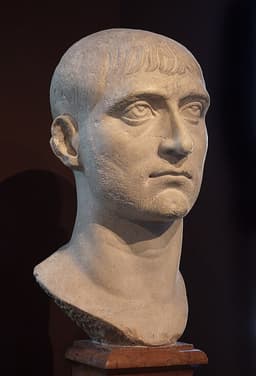
Maxentius
Emperor · Ancient
40.4Total

Prusias I
Emperor · Ancient
44.8Total
Basic Information
Born
278
-243
Died
312
-182
Era
Ancient
Ancient
Nationality
Roman Empire
Bithynia
Occupation
Emperor
Emperor
Civilization
Western
Western
Score Comparison
Military (10%)
45.0
46.7
Political (20%)
30.8
35.1
Influence (20%)
44.8
46.3
Legacy (20%)
35.8
38.3
Leadership (15%)
48.4
65.7
Strategy (15%)
38.6
38.3
TOTAL
40.4
44.8
Maxentius — Complete Timeline
306 AD
Proclamation as EmperorPolitical Action◆ Major
Maxentius was proclaimed emperor in Rome by the Praetorian Guard and the Roman populace, who resented the tax policies of Galerius. He initially ruled as a usurper but later claimed the title Augustus. His reign was centered in Italy and Africa, challenging the Tetrarchic system.
UsurpationTetrarchyImperial Proclamation
Impact: regional
307 AD
Alliance with MaximianPolitical Action
Maxentius allied with his father Maximian, who had come out of retirement to support him. Maximian married his daughter Fausta to Constantine to secure an alliance, but the alliance was short-lived. Maximian later betrayed Maxentius by attempting to usurp his throne.
AllianceTetrarchyFamily Politics
Impact: regional
308 AD
Construction of the Basilica of MaxentiusCultural◆ Major
Maxentius began construction of the Basilica Nova in the Roman Forum, a massive civic building with a vaulted ceiling. The basilica was completed by Constantine after Maxentius's death. It remains one of the largest ancient Roman structures and a symbol of Maxentius's building program.
ArchitectureBuilding ProgramRoman Forum
constructive
312 AD
Battle of the Milvian BridgeWar
Maxentius led his forces against Constantine at the Milvian Bridge near Rome. His army was defeated, and Maxentius drowned in the Tiber while attempting to retreat. The battle marked Constantine's rise as sole ruler of the West and was later associated with Constantine's conversion to Christianity.
Civil WarBattleConstantine
Impact: regionaltragic
Prusias I — Complete Timeline
220 BC
Siege of ByzantiumWar
Prusias I besieged the Greek city of Byzantium, forcing it to pay tribute and acknowledge Bithynian supremacy. This campaign expanded Bithynian influence along the Bosporus and the Black Sea coast.
SiegeByzantiumExpansion
Impact: regionalconstructive
186 BC
War with PergamonWar◆ Major
Prusias I waged war against Eumenes II of Pergamon, allying with the Galatians. The war ended with a Roman-brokered peace that forced Prusias to cede territory and pay indemnities, weakening Bithynia's position.
Bithynian-Pergamene WarRoman InterventionDefeat
Impact: regionaldestructive
183 BC
Hosting of HannibalPolitical Action◆ Major
Prusias I granted asylum to the Carthaginian general Hannibal, who had fled from the Seleucid court after the defeat at Magnesia. Hannibal served as a military advisor to Prusias, helping him in conflicts against Pergamon.
HannibalAsylumBithynia
Impact: regional
Expert Analysis
Origins
Maxentius (c. 278–312 AD) was the son of Emperor Maximian, born into a Roman imperial family. He grew up in a period of tetrarchic rule, receiving a traditional Roman education and military training. His father's abdication in 305 AD left him without immediate power, but his lineage gave him a claim to the throne. Prusias I (c. 228–182 BC) was the king of Bithynia, a Hellenistic kingdom in northwestern Anatolia. He inherited the throne from his father, Ziaelas, around 228 BC. Prusias was educated in Greek culture and diplomacy, essential for navigating the complex Hellenistic world.
Rise to Power
Maxentius rose to power in 306 AD when he was proclaimed emperor in Rome by the Praetorian Guard and the Roman populace, who resented the tax policies of Galerius. He initially ruled as Caesar, but soon took the title Augustus. His father Maximian came out of retirement to support him, marrying his daughter Fausta to Constantine to secure an alliance. Prusias I became king after his father's assassination. He quickly asserted Bithynian independence by expanding into Mysia and Ionia. His most notable move was granting asylum to the Carthaginian general Hannibal after the Battle of Magnesia in 190 BC, using Hannibal's military expertise against his rival Pergamon.
Leadership & Governance
Maxentius ruled as a traditional Roman emperor, focusing on building projects like the Basilica of Maxentius (Basilica Nova) in the Roman Forum. He maintained the support of Rome's populace through grain distributions and games. However, his rule was marked by heavy taxation to fund his military campaigns, leading to unrest. He scored 48.4 in leadership and 30.8 in political skill, indicating weaknesses in governance. Prusias I scored 65.7 in leadership, reflecting his effective diplomacy and military strategy. He waged war against Eumenes II of Pergamon, allying with the Galatians, but was eventually forced to cede territory under Roman pressure. His hosting of Hannibal shows his willingness to use foreign talent, though it also brought Roman suspicion.
Triumph & Tragedy
Maxentius's greatest triumph was his initial consolidation of power in Italy and Africa, defeating rival Severus in 307 AD. He also began the Basilica of Maxentius, a monumental building. His tragedy was the Battle of the Milvian Bridge in 312 AD, where he drowned in the Tiber while fleeing from Constantine's forces. His defeat ended his reign and marked the rise of Constantine. Prusias I's triumph was expanding Bithynian influence, forcing Byzantium to pay tribute and besieging the city successfully. He also hosted Hannibal, gaining military advice. His tragedy came after Hannibal's presence provoked Roman hostility; when the Romans demanded Hannibal's surrender, Prusias complied, leading to Hannibal's suicide. This act damaged his reputation and showed his subservience to Rome.
Character & Destiny
Maxentius was ambitious but ultimately overconfident. He relied on the Praetorian Guard and urban mob, but lacked strong military command. His decision to face Constantine in open battle at the Milvian Bridge, rather than defend Rome, was a strategic error. He scored 38.6 in strategy, reflecting poor tactical judgment. Prusias I was a pragmatic ruler, willing to use alliances and foreign expertise. His character was cautious, as seen in his eventual betrayal of Hannibal to avoid Roman wrath. He scored 38.3 in strategy, similar to Maxentius, but his higher leadership score (65.7 vs 48.4) suggests better management of his kingdom.
Legacy
Maxentius is remembered primarily as a usurper who lost to Constantine. His Basilica, completed by Constantine, stands as a reminder of his rule. He is often portrayed negatively by Constantine's propaganda. His total score is 40.4. Prusias I left a more positive legacy. He expanded Bithynia and maintained its independence during a period of Roman expansion. His hosting of Hannibal is a notable historical footnote. He scored 44.8 total, higher than Maxentius. However, neither figure had enduring influence; Bithynia was eventually annexed by Rome.
Conclusion
Prusias I had greater impact than Maxentius, evidenced by his higher total score (44.8 vs 40.4) and superior leadership (65.7 vs 48.4). While Maxentius's defeat at Milvian Bridge was a pivotal moment in Roman history, his personal impact was largely negative. Prusias successfully ruled a Hellenistic kingdom, expanded its territory, and navigated Roman power, even if ultimately subservient. His legacy as a capable king outweighs Maxentius's brief and failed imperial tenure.
Rankings
🥇
Prusias ILeader
Mil: 46.7Pol: 35.1Inf: 46.3
44.8
🥈
Maxentius
Mil: 45.0Pol: 30.8Inf: 44.8
40.4
+4.4 behind
How This Comparison Works
Algorithm
Each figure is scored on 6 dimensions (0—100 scale) based on structured historical data: Military (10%), Political (20%), Influence (20%), Legacy (20%), Leadership (15%), Strategy (15%). The weighted total produces the final ranking.
Data Sources
Scores are computed from structured sub-indicators in the database. Scale factors adjust for era (Ancient ×0.85, Modern ×1.0) and civilization size (Eastern ×1.05, Other ×0.80) to account for differences in population and military scale.
Maximum 3 Figures
Comparisons are limited to 2—3 figures to ensure readability and statistical meaningfulness.
Error Margins
±5 points per dimension — Sub-scores are derived from historical records with inherent uncertainty. Two figures within 5 points on a dimension should be considered roughly equivalent in that area.
Total Score Accuracy
±3 points overall — The weighted combination of 6 dimensions produces a total score with approximately ±3 points of uncertainty. Differences of less than 3 points are not statistically significant— the figures are effectively tied.
Known Limitations
- Historical records are incomplete and uneven across civilizations
- Figures from oral-tradition societies may be underrepresented
- Occupation labels can misclassify multi-role figures
- Scores measure capability and impact, not moral character
- Quantitative scoring is a comparison tool, not absolute truth
Capability Radar
Military (10%) — Battles & Warfare
Battles
35
30
Win Rate
20
30
Expansion
10
25
Political (20%) — Governance & Reform
Reform
25
20
Diplomacy
20
40
Economy
30
30
Influence (20%) — Cultural & Global Reach
Cultural
15
20
Global
10
15
Legacy (20%) — Historical Impact
Historical
25
30
Longevity
10
20
Leadership (15%) — Power & Stability
Tenure
40
50
Stability
20
35
Strategy (15%) — Tactics & Innovation
Strategy
20
30
Tactics
25
25
Reform
15
10
Similar Comparisons
Comments & Discussion
No comments yet. Be the first to share your thoughts!