Loading...
Carus vs Maxentius
Maxentius leads by 0.1 pts · 2 figures compared
…

Carus
Emperor · Ancient
40.3Total
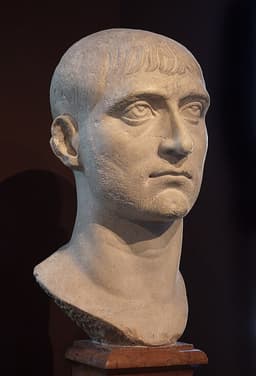
Maxentius
Emperor · Ancient
40.4Total
Basic Information
Born
222
278
Died
283
312
Era
Ancient
Ancient
Nationality
Roman Empire
Roman Empire
Occupation
Emperor
Emperor
Civilization
Western
Western
Score Comparison
Military (10%)
55.0
45.0
Political (20%)
27.9
30.8
Influence (20%)
47.1
44.8
Legacy (20%)
39.2
35.8
Leadership (15%)
31.2
48.4
Strategy (15%)
43.3
38.6
TOTAL
40.3
40.4
Carus — Complete Timeline
282 AD
Campaign against the SarmatiansWar
Carus launched a campaign against the Sarmatians along the Danube frontier. He defeated them in battle and forced them to sue for peace. This victory secured the Danube border and allowed him to turn his attention to the east.
Danube FrontierSarmatiansMilitary Victory
Impact: regional
Accession as EmperorPolitical Action◆ Major
Carus was proclaimed emperor by the legions in Pannonia after the assassination of Probus. He was a respected military commander and senator. His accession marked a brief period of stability and renewed military expansion.
Imperial AccessionMilitary CoupPannonia
Impact: national
283 AD
Invasion of PersiaWar◆ Major
Carus led a major invasion of the Sassanid Persian Empire. He advanced through Mesopotamia, capturing the cities of Seleucia and Ctesiphon, the Persian capital. This campaign restored Roman prestige after years of defeats by the Persians.
Persian WarMesopotamiaMilitary Campaign
Impact: regionalconstructive
Death under Mysterious CircumstancesOther◆ Major
Carus died suddenly during his Persian campaign, reportedly struck by lightning in his tent. Some sources suggest he was assassinated. His death ended the campaign, and his son Numerian succeeded him, but the empire soon fell into further turmoil.
DeathMysteryEnd of Campaign
Impact: nationaltragic
Maxentius — Complete Timeline
306 AD
Proclamation as EmperorPolitical Action◆ Major
Maxentius was proclaimed emperor in Rome by the Praetorian Guard and the Roman populace, who resented the tax policies of Galerius. He initially ruled as a usurper but later claimed the title Augustus. His reign was centered in Italy and Africa, challenging the Tetrarchic system.
UsurpationTetrarchyImperial Proclamation
Impact: regional
307 AD
Alliance with MaximianPolitical Action
Maxentius allied with his father Maximian, who had come out of retirement to support him. Maximian married his daughter Fausta to Constantine to secure an alliance, but the alliance was short-lived. Maximian later betrayed Maxentius by attempting to usurp his throne.
AllianceTetrarchyFamily Politics
Impact: regional
308 AD
Construction of the Basilica of MaxentiusCultural◆ Major
Maxentius began construction of the Basilica Nova in the Roman Forum, a massive civic building with a vaulted ceiling. The basilica was completed by Constantine after Maxentius's death. It remains one of the largest ancient Roman structures and a symbol of Maxentius's building program.
ArchitectureBuilding ProgramRoman Forum
constructive
312 AD
Battle of the Milvian BridgeWar
Maxentius led his forces against Constantine at the Milvian Bridge near Rome. His army was defeated, and Maxentius drowned in the Tiber while attempting to retreat. The battle marked Constantine's rise as sole ruler of the West and was later associated with Constantine's conversion to Christianity.
Civil WarBattleConstantine
Impact: regionaltragic
Expert Analysis
Origins
Carus, born around 224 AD in Narbo, Gaul, was a Roman senator and military commander. Little is known of his early life, but he rose through military ranks, possibly serving under Aurelian and Probus. His background was in the Illyrian military tradition. Maxentius, born around 278 AD in Rome, was the son of Emperor Maximian. He was raised in the imperial court, receiving an education in rhetoric and law. His early life was marked by privilege and political expectation.
Rise to Power
Carus was proclaimed emperor by the legions in Pannonia in 282 AD after the assassination of Probus. He was a respected commander, and his accession was relatively smooth, though he had to deal with potential rivals. He immediately appointed his sons Carinus and Numerian as co-emperors. Maxentius was proclaimed emperor in Rome in 306 AD by the Praetorian Guard and Roman populace, who resented Galerius' tax policies. He initially ruled as a usurper, but his father Maximian returned from retirement to support him. Maxentius secured Italy and Africa, but his legitimacy was challenged by Galerius and later Constantine.
Leadership & Governance
Carus' leadership was focused on military restoration. He campaigned against the Sarmatians on the Danube in 283 AD, defeating them and forcing peace. He then invaded Persia, advancing through Mesopotamia and capturing Seleucia and Ctesiphon. His governance style was that of a soldier-emperor, pragmatic and direct. He did not implement major domestic reforms, as his reign was short. Maxentius, by contrast, focused on consolidating power in Italy. He built the Basilica of Maxentius (Basilica Nova) in Rome, a massive civic building with a vaulted ceiling, completed by Constantine. He also restored the Temple of Venus and Roma. His governance was marked by heavy taxation to fund building projects and military campaigns, which alienated the populace. He scored 48.4 in leadership, while Carus scored 31.2.
Triumph & Tragedy
Carus' greatest success was his Persian campaign, which briefly restored Roman prestige. He advanced to the Persian capital, a feat not achieved since Trajan. His tragedy was his sudden death in 283 AD, possibly struck by lightning or assassinated. His death ended the campaign and led to the collapse of his dynasty. Maxentius' triumph was his survival as a usurper for six years, ruling Italy and Africa. He also left architectural monuments. His tragedy was his defeat at the Milvian Bridge in 312 AD, where he drowned in the Tiber. His military score of 45.0 was lower than Carus' 55.0, but his political score of 30.8 was slightly higher than Carus' 27.9.
Character & Destiny
Carus was seen as a capable but unlucky commander. His death under mysterious circumstances reflected the instability of the late Roman Empire. He was decisive in military matters but lacked the political acumen to secure his legacy. Maxentius was ambitious but indecisive in battle. He relied on fortifications and propaganda, but his strategic errors at the Milvian Bridge proved fatal. His character was shaped by his entitlement as the son of an emperor, which led to overconfidence. Historians note that Maxentius' strategy score of 38.6 was below Carus' 43.3.
Legacy
Carus' legacy is tied to his brief restoration of Roman military prestige. His Persian campaign set a precedent for later emperors like Galerius and Julian. However, his dynasty ended with his sons' deaths. Maxentius' legacy is more visible: the Basilica of Maxentius remains a landmark in Rome. His rule also demonstrated the power of the Praetorian Guard and the importance of Rome as a symbolic capital. In terms of influence, Maxentius scored 44.8 vs Carus' 47.1, and legacy 35.8 vs 39.2. Overall, Carus had a higher total score of 40.3 vs Maxentius' 40.4, a negligible gap of 0.1 points.
Conclusion
While both emperors had short reigns and limited impact, Carus' Persian campaign had more lasting consequences for Roman foreign policy. Maxentius' architectural contributions are tangible, but his defeat at Milvian Bridge was a turning point for Constantine's rise. Based on historical impact, Carus edges out Maxentius. His military achievements in Persia, though cut short, demonstrated Roman capability, while Maxentius' reign was largely defensive and ended in failure. Therefore, Carus is the more significant figure.
Rankings
🥇
MaxentiusLeader
Mil: 45.0Pol: 30.8Inf: 44.8
40.4
🥈
Carus
Mil: 55.0Pol: 27.9Inf: 47.1
40.3
+0.1 behind
How This Comparison Works
Algorithm
Each figure is scored on 6 dimensions (0—100 scale) based on structured historical data: Military (10%), Political (20%), Influence (20%), Legacy (20%), Leadership (15%), Strategy (15%). The weighted total produces the final ranking.
Data Sources
Scores are computed from structured sub-indicators in the database. Scale factors adjust for era (Ancient ×0.85, Modern ×1.0) and civilization size (Eastern ×1.05, Other ×0.80) to account for differences in population and military scale.
Maximum 3 Figures
Comparisons are limited to 2—3 figures to ensure readability and statistical meaningfulness.
Error Margins
±5 points per dimension — Sub-scores are derived from historical records with inherent uncertainty. Two figures within 5 points on a dimension should be considered roughly equivalent in that area.
Total Score Accuracy
±3 points overall — The weighted combination of 6 dimensions produces a total score with approximately ±3 points of uncertainty. Differences of less than 3 points are not statistically significant— the figures are effectively tied.
Known Limitations
- Historical records are incomplete and uneven across civilizations
- Figures from oral-tradition societies may be underrepresented
- Occupation labels can misclassify multi-role figures
- Scores measure capability and impact, not moral character
- Quantitative scoring is a comparison tool, not absolute truth
Capability Radar
Military (10%) — Battles & Warfare
Battles
45
35
Win Rate
50
20
Expansion
40
10
Political (20%) — Governance & Reform
Reform
15
25
Diplomacy
30
20
Economy
20
30
Influence (20%) — Cultural & Global Reach
Cultural
10
15
Global
10
10
Legacy (20%) — Historical Impact
Historical
20
25
Longevity
15
10
Leadership (15%) — Power & Stability
Tenure
20
40
Stability
15
20
Strategy (15%) — Tactics & Innovation
Strategy
45
20
Tactics
40
25
Reform
20
15
Similar Comparisons
Comments & Discussion
No comments yet. Be the first to share your thoughts!