Loading...
Prusias I vs Zenobia
Zenobia leads by 10.8 pts · 2 figures compared
…

Prusias I
Emperor · Ancient
44.8Total
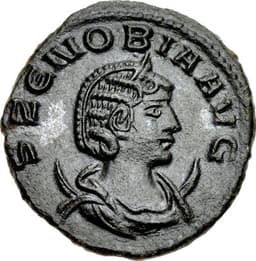
Zenobia
Emperor · Ancient
55.6Total
Basic Information
Born
-243
240
Died
-182
274
Era
Ancient
Ancient
Nationality
Bithynia
Palmyrene Empire
Occupation
Emperor
Emperor
Civilization
Western
Middle Eastern
Score Comparison
Military (10%)
46.7
61.7
Political (20%)
35.1
61.3
Influence (20%)
46.3
56.4
Legacy (20%)
38.3
48.3
Leadership (15%)
65.7
58.8
Strategy (15%)
38.3
52.5
TOTAL
44.8
55.6
Prusias I — Complete Timeline
220 BC
Siege of ByzantiumWar
Prusias I besieged the Greek city of Byzantium, forcing it to pay tribute and acknowledge Bithynian supremacy. This campaign expanded Bithynian influence along the Bosporus and the Black Sea coast.
SiegeByzantiumExpansion
Impact: regionalconstructive
186 BC
War with PergamonWar◆ Major
Prusias I waged war against Eumenes II of Pergamon, allying with the Galatians. The war ended with a Roman-brokered peace that forced Prusias to cede territory and pay indemnities, weakening Bithynia's position.
Bithynian-Pergamene WarRoman InterventionDefeat
Impact: regionaldestructive
183 BC
Hosting of HannibalPolitical Action◆ Major
Prusias I granted asylum to the Carthaginian general Hannibal, who had fled from the Seleucid court after the defeat at Magnesia. Hannibal served as a military advisor to Prusias, helping him in conflicts against Pergamon.
HannibalAsylumBithynia
Impact: regional
Zenobia — Complete Timeline
269 AD
Conquest of EgyptWar◆ Major
Zenobia, queen of Palmyra, led her army in conquering Egypt from the Roman Empire. She claimed descent from Cleopatra and presented herself as a liberator. The conquest gave Palmyra control of Egypt's grain supply and established Zenobia as a major power in the East.
Palmyrene EmpireEgyptConquest
Impact: regional
270 AD
Conquest of Anatolia and SyriaWar◆ Major
Zenobia expanded the Palmyrene Empire by conquering much of Anatolia and Syria, including the cities of Antioch and Tarsus. Her general Zabdas defeated the Roman prefect Tenagino Probus. By 271, Zenobia controlled a vast territory from Egypt to the Bosphorus.
Palmyrene EmpireConquestRoman Empire
Impact: regional
Declaration of independence from RomePolitical Action◆ Major
Zenobia declared Palmyra's independence from the Roman Empire, minting coins with her image and assuming the title of Augusta. She established a separate court and administration, challenging Roman authority in the East and creating the Palmyrene Empire.
Palmyrene EmpireIndependenceRoman Empire
Impact: regional
272 AD
Battle of EmesaWar◆ Major
Zenobia's army was defeated by the Roman emperor Aurelian at the Battle of Emesa. Despite initial success, the Palmyrene forces were routed. Zenobia fled to Palmyra, which was then besieged by Aurelian. This battle marked the beginning of the end of the Palmyrene Empire.
Palmyrene EmpireBattleRoman Empire
Impact: regionaltragic
Capture and exilePolitical Action◆ Major
Zenobia was captured by Aurelian while attempting to flee to the Sassanid Empire. She was taken to Rome and paraded in Aurelian's triumph in 274 AD. According to most accounts, she was granted a villa in Tibur (Tivoli) and lived out her life in comfortable exile.
CaptureExileRoman Empire
Impact: regionaltragic
Expert Analysis
Origins
Prusias I (c. 243–182 BC) was the son of King Nicomedes I of Bithynia, a Hellenistic kingdom in northwestern Anatolia. He inherited a stable realm and continued his father's policies of expanding Bithynian influence through diplomacy and warfare. Prusias was educated in Greek culture and maintained close ties with the Seleucid Empire and Rome. His reign began around 228 BC, and he focused on consolidating power and territorial expansion. In contrast, Zenobia (c. 240–274 AD) was born in Palmyra, a wealthy trading city in the Syrian desert. She was the second wife of Odaenathus, the Roman client king of Palmyra who had restored Roman authority in the East. After Odaenathus's assassination in 267 AD, Zenobia became regent for her young son Vaballathus, effectively ruling the Palmyrene Empire. She was highly educated, fluent in Greek, Latin, and Aramaic, and claimed descent from Cleopatra VII of Egypt. Zenobia's background as a queen in a client kingdom gave her a unique perspective on Roman power and the opportunities for rebellion.
Rise to Power
Prusias I rose to power through inheritance, but he quickly asserted his authority by engaging in conflicts with neighboring states. In the early years of his reign, he fought against the Seleucid Empire, but later shifted his focus to Pergamon. His most significant move was allying with the Galatians against Eumenes II of Pergamon in the 180s BC. This war, however, ended with a Roman-brokered peace that forced Prusias to cede territory. His rise was marked more by diplomatic maneuvering than military brilliance. Zenobia's rise was more dramatic. After Odaenathus's death, she consolidated power, claiming the titles of Augusta and Queen. In 269 AD, she launched a campaign into Egypt, defeating the Roman prefect Tenagino Probus and annexing the province. She then conquered much of Anatolia and Syria, including Antioch and Tarsus. Her general Zabdas defeated the Roman army under Heraclian. Zenobia's rise was rapid, based on military conquest and a clear challenge to Roman authority. She minted coins with her image and assumed imperial titles, effectively declaring independence from Rome.
Leadership & Governance
Prusias I governed Bithynia as a typical Hellenistic king, relying on a court of Greek advisors and a mercenary army. He was known for his cunning and duplicity, often shifting alliances to suit his interests. His hosting of Hannibal in 183 BC provided him with a military advisor, but he ultimately failed to fully utilize Hannibal's expertise, reportedly betraying him when Rome demanded his surrender. Prusias's governance was focused on short-term gains, such as extracting tribute from Byzantium, rather than building lasting institutions. Zenobia, in contrast, governed a multi-ethnic empire with a mix of Greek, Roman, and Persian elements. She maintained Palmyra's role as a trading hub and promoted religious tolerance. She appointed competent officials, including the philosopher Longinus as her advisor. Her administration was efficient, and she presented herself as a liberator of the East from Roman domination. However, her governance was ultimately fragile, dependent on continued military success. Her scores: Leadership 58.8, Political 61.3, while Prusias scored Leadership 65.7, Political 35.1. Despite Prusias's higher leadership score, Zenobia's political acumen was superior.
Triumph & Tragedy
Prusias I's greatest triumph was expanding Bithynian influence through the siege of Byzantium, forcing it to pay tribute. He also successfully hosted Hannibal, gaining prestige as a patron of a famous general. However, his greatest failure was his inability to defeat Pergamon decisively. The war with Eumenes II ended with a Roman-imposed peace that cost Bithynia territory. His betrayal of Hannibal, by agreeing to hand him over to Rome, tarnished his reputation. Zenobia's triumphs were spectacular: she conquered Egypt, Anatolia, and Syria, creating a Palmyrene Empire that challenged Rome at its height. She presented herself as a new Cleopatra, minting coins and declaring Augusta. However, her tragedy came at the Battle of Emesa in 272 AD, where she was defeated by Emperor Aurelian. Her attempt to flee to the Sassanids failed, and she was captured. She was paraded in Aurelian's triumph in Rome, and Palmyra was sacked. Her empire collapsed, and she lived out her life in exile. Zenobia's military score of 61.7 reflects her success, while Prusias's military score of 46.7 shows his limited achievements.
Character & Destiny
Prusias I was cautious and duplicitous, traits that allowed him to survive but limited his ambitions. He was more a diplomat than a warrior, and his character led him to avoid risks. His destiny was to be a minor king in the shadow of Rome and Pergamon. He died in 182 BC, leaving a modest legacy. Zenobia was ambitious, intelligent, and bold. She had a clear vision of an independent Eastern empire and acted decisively. However, her overconfidence and underestimation of Rome's resilience led to her downfall. Her character drove her to challenge Rome, but also to a tragic end. Historians note that she was a capable ruler who lacked the resources to sustain her empire. Her scores: Strategy 52.5, Influence 56.4, compared to Prusias's Strategy 38.3, Influence 46.3. Zenobia's character was more suited to grand ambitions, but it also sealed her fate.
Legacy
Prusias I's legacy is modest. He is remembered primarily for hosting Hannibal, a story that has been retold by ancient historians like Polybius. Bithynia itself was eventually absorbed into the Roman Republic. His reign had no lasting impact on the region. Zenobia's legacy is far greater. She became a symbol of female power and resistance to Rome. Her story inspired later queens and leaders, and she is celebrated in Palmyra's history. The Palmyrene Empire, though short-lived, demonstrated the fragility of Roman control in the East. Zenobia's coins and inscriptions survive, and she is remembered as a warrior queen. Her legacy score of 48.3 is higher than Prusias's 38.3, reflecting her enduring fame.
Conclusion
Zenobia clearly had a greater impact than Prusias I. Her total score of 55.6 surpasses his 44.8 by 10.8 points. While Prusias was a competent local king, Zenobia challenged the Roman Empire and briefly carved out a vast domain. Her military and political achievements, though ultimately undone, were more significant. Prusias's reign was marked by caution and limited expansion, while Zenobia's was a bold bid for power. In historical terms, Zenobia's story resonates more strongly, and her influence on later perceptions of female leadership is notable. Therefore, Zenobia is the more impactful figure.
Rankings
🥇
ZenobiaLeader
Mil: 61.7Pol: 61.3Inf: 56.4
55.6
🥈
Prusias I
Mil: 46.7Pol: 35.1Inf: 46.3
44.8
+10.8 behind
How This Comparison Works
Algorithm
Each figure is scored on 6 dimensions (0—100 scale) based on structured historical data: Military (10%), Political (20%), Influence (20%), Legacy (20%), Leadership (15%), Strategy (15%). The weighted total produces the final ranking.
Data Sources
Scores are computed from structured sub-indicators in the database. Scale factors adjust for era (Ancient ×0.85, Modern ×1.0) and civilization size (Eastern ×1.05, Other ×0.80) to account for differences in population and military scale.
Maximum 3 Figures
Comparisons are limited to 2—3 figures to ensure readability and statistical meaningfulness.
Error Margins
±5 points per dimension — Sub-scores are derived from historical records with inherent uncertainty. Two figures within 5 points on a dimension should be considered roughly equivalent in that area.
Total Score Accuracy
±3 points overall — The weighted combination of 6 dimensions produces a total score with approximately ±3 points of uncertainty. Differences of less than 3 points are not statistically significant— the figures are effectively tied.
Known Limitations
- Historical records are incomplete and uneven across civilizations
- Figures from oral-tradition societies may be underrepresented
- Occupation labels can misclassify multi-role figures
- Scores measure capability and impact, not moral character
- Quantitative scoring is a comparison tool, not absolute truth
Capability Radar
Military (10%) — Battles & Warfare
Battles
30
65
Win Rate
30
60
Expansion
25
70
Political (20%) — Governance & Reform
Reform
20
40
Diplomacy
40
55
Economy
30
50
Influence (20%) — Cultural & Global Reach
Cultural
20
45
Global
15
35
Legacy (20%) — Historical Impact
Historical
30
50
Longevity
20
40
Leadership (15%) — Power & Stability
Tenure
50
45
Stability
35
30
Strategy (15%) — Tactics & Innovation
Strategy
30
65
Tactics
25
60
Reform
10
30
Similar Comparisons
Comments & Discussion
No comments yet. Be the first to share your thoughts!