Loading...
Matthias Corvinus vs Qapaghan Qaghan
Matthias Corvinus leads by 1.6 pts · 2 figures compared
…
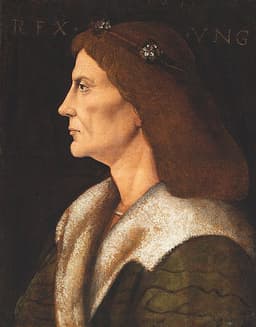
Matthias Corvinus
Emperor · Medieval
60.7Total
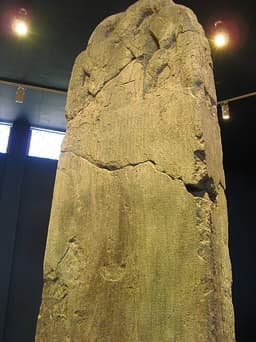
Qapaghan Qaghan
Emperor · Medieval
59.1Total
Basic Information
Born
1443
664
Died
1490
716
Era
Medieval
Medieval
Nationality
Hungary
Gokturk Khaganate
Occupation
Emperor
Emperor
Civilization
Western
Eastern
Score Comparison
Military (10%)
80.0
72.0
Political (20%)
59.3
68.0
Influence (20%)
55.0
59.0
Legacy (20%)
52.0
49.2
Leadership (15%)
66.0
53.2
Strategy (15%)
72.0
66.3
TOTAL
60.7
59.1
Matthias Corvinus — Complete Timeline
1458 AD
Coronation as King of HungaryPolitical Action◆ Major
Matthias Corvinus was elected and crowned King of Hungary at the age of 14, following the death of his father John Hunyadi. His coronation was supported by the Hungarian nobility, who expected him to be a figurehead.
CoronationHungaryHunyadi
Impact: nationalconstructive
1460 AD
Establishment of the Black ArmyReform◆ Major
Matthias created a professional standing army, the Black Army, composed of mercenaries and paid soldiers. This force became one of the most effective in Europe, enabling his military campaigns and reducing reliance on feudal levies.
Military ReformBlack ArmyMercenaries
Impact: regionalconstructive
1470 AD
Foundation of the Bibliotheca CorvinianaCultural◆ Major
Matthias established one of the largest and most renowned libraries in Renaissance Europe, the Bibliotheca Corviniana in Buda. The library housed thousands of manuscripts and printed books, attracting scholars from across Europe.
LibraryRenaissanceCulture
Impact: regionalconstructive
1477 AD
War with Frederick III of HabsburgWar◆ Major
Matthias waged a war against Holy Roman Emperor Frederick III over claims to the Hungarian throne and Austrian territories. The conflict ended with the Peace of Pressburg, which recognized Matthias's conquests but failed to secure the imperial crown.
WarHabsburgAustria
Impact: regional
1485 AD
Conquest of ViennaWar◆ Major
Matthias captured Vienna after a prolonged siege, making it his new capital. This conquest marked the peak of Hungarian power, extending his rule over much of Austria and challenging the Habsburgs.
ConquestViennaHabsburg
Impact: regional
Qapaghan Qaghan — Complete Timeline
690 AD
Expansion of the Gokturk KhaganateWar◆ Major
Qapaghan Qaghan led military campaigns that expanded the Gokturk Khaganate's territory from the Great Wall of China to the Caspian Sea. He subjugated the Kyrgyz, Turgesh, and other steppe tribes, establishing Gokturk dominance over the eastern steppes.
ExpansionSteppe EmpireMilitary Campaign
Impact: regional
695 AD
Submission of the Khitans and TatarsWar
Qapaghan Qaghan forced the Khitan and Tatar confederations to submit to Gokturk authority. He incorporated their cavalry into his army and used them as vassals in campaigns against China and other steppe peoples.
SubjugationSteppe PoliticsVassalage
Impact: regional
698 AD
Defeat of the Tang Dynasty at the Battle of QarabaliqWar◆ Major
Qapaghan Qaghan defeated a Tang Chinese army near Qarabaliq, forcing the Tang to recognize Gokturk suzerainty over the Tarim Basin. This victory secured Gokturk control over the Silk Road trade routes for a decade.
Tang-Gokturk WarBattleSilk Road
Impact: regional
716 AD
Death in Battle against the BasmylWar◆ Major
Qapaghan Qaghan was killed in a battle against the Basmyl tribe, a former vassal that rebelled. His death led to a succession crisis and the eventual decline of the Gokturk Khaganate, as his son was unable to maintain control.
DeathBattleSuccession Crisis
Impact: regionaltragic
Expert Analysis
Origins
Matthias Corvinus was born in 1443 in Kolozsvár, Kingdom of Hungary, the second son of John Hunyadi, a leading military figure and regent. His father's death in 1456 thrust Matthias into a turbulent political landscape. He was elected King of Hungary at age 14 in 1458, but his early reign was marked by a power struggle with the Hungarian nobility and the Holy Roman Emperor Frederick III. Matthias's education was overseen by humanist scholars, giving him a deep appreciation for Renaissance culture.
Qapaghan Qaghan, born around 665 AD, was a member of the Ashina clan, the ruling dynasty of the Gokturk Khaganate. He rose to power as a military commander under his brother Ilterish Qaghan, who rebuilt the Gokturk state after its subjugation by the Tang dynasty. Qapaghan was likely born in the steppes of Central Asia, with a traditional nomadic upbringing focused on horsemanship and warfare. His early experiences involved raiding and skirmishing against Chinese and other nomadic tribes.
Rise to Power
Matthias's rise was swift but contested. After his father's death, the Hungarian nobility elected him king, but Frederick III claimed the throne and even crowned himself king. Matthias consolidated power by defeating internal rivals, such as the Garai family, and securing support from the lesser nobility. A key turning point was his marriage to Catherine of Poděbrady, daughter of the King of Bohemia, which strengthened his position. By 1463, he forced Frederick to renounce his claim, securing his rule.
Qapaghan Qaghan's rise was more gradual. He served as a general under his brother Ilterish, leading campaigns against the Tang and other steppe peoples. When Ilterish died in 691, Qapaghan succeeded him as khagan. He quickly asserted dominance by crushing revolts among subject tribes, such as the Oghuz and Khitans. His military prowess earned him the loyalty of the Gokturk aristocracy, allowing him to expand the khaganate to its greatest extent.
Leadership & Governance
Matthias Corvinus was a Renaissance monarch who centralized power and promoted culture. He established a professional standing army, the Black Army, funded by heavy taxation of peasants and towns. He reformed the legal system, issuing a law code that strengthened royal authority. Matthias was a patron of the arts and learning, founding the Bibliotheca Corviniana, one of Europe's finest libraries. However, his centralization alienated the nobility, leading to constant tensions.
Qapaghan Qaghan ruled as a traditional steppe khagan, relying on a confederation of tribes. His military strategy involved fast cavalry raids and tribute extraction from settled neighbors. He maintained control through a combination of personal charisma, rewards for loyal followers, and ruthless suppression of revolts. Unlike Matthias, Qapaghan did not build administrative institutions; his governance was personal and decentralized. He subjugated the Khitans and Tatars, incorporating their warriors into his army.
Triumph & Tragedy
Matthias's greatest triumph was the conquest of Vienna in 1485, making it his capital and extending Hungarian rule over Austria and parts of the Holy Roman Empire. His library and patronage of humanists made Buda a center of Renaissance culture. However, his failures included overreliance on the Black Army, which became a financial burden. His death in 1490 without a legitimate heir led to a succession crisis and the rapid decline of Hungarian power.
Qapaghan's triumph was the expansion of the Gokturk Khaganate from China to the Caspian Sea, defeating Tang armies and forcing them to pay tribute. He also subdued the Khitans and Tatars. His tragedy was his death in 716 at the hands of the Basmyl tribe, a former vassal. His death triggered a civil war between his son and nephew, leading to the khaganate's fragmentation and eventual collapse.
Character & Destiny
Matthias was intelligent, ambitious, and culturally refined, but also ruthless and untrusting. He centralized power at the expense of the nobility, which ultimately weakened the kingdom after his death. His personality shaped his fate: his Renaissance ideals brought cultural glory, but his authoritarian methods sowed discord. Historians note his score of 66.0 in leadership reflects his ability to command but his failure to build lasting institutions.
Qapaghan was a pragmatic and fearsome warrior, known for his strategic acumen (score 66.3). He maintained power through force and personal loyalty, but his lack of institutional framework meant his empire crumbled without him. His character as a traditional steppe conqueror ensured immediate success but long-term fragility. His leadership score of 53.2 indicates his reliance on coercion rather than governance.
Legacy
Matthias Corvinus is remembered as a national hero in Hungary, a symbol of independence and cultural flourishing. His Bibliotheca Corviniana became a symbol of Renaissance learning, though most of the library was destroyed after his death. His military innovations, especially the Black Army, influenced later European warfare. However, his legacy is limited by the rapid decline of Hungary after his reign. His overall score is 60.7, with influence at 55.0 and legacy at 52.0.
Qapaghan Qaghan's legacy is more diffuse. He is remembered in Turkic history as a great conqueror who revived the Gokturk state. His campaigns weakened the Tang dynasty and reshaped Central Asian geopolitics. However, his empire did not survive him, and his name is less known outside specialist circles. His legacy score is 49.2, reflecting the ephemeral nature of his achievements. His military score of 72.0 and political score of 68.0 highlight his effectiveness as a conqueror.
Conclusion
While Matthias Corvinus scores slightly higher overall (60.7 vs 59.1), Qapaghan Qaghan had a more direct impact on the course of history. Matthias's achievements were impressive but largely confined to his lifetime; his kingdom collapsed soon after his death. Qapaghan, despite his lower legacy score, temporarily checked Chinese expansion and shaped the balance of power in Central Asia. However, Matthias's cultural contributions and institutional innovations give him a more enduring legacy. Therefore, Matthias Corvinus had a greater impact, as his Renaissance patronage and military reforms left a lasting mark on European history, whereas Qapaghan's empire was transient.
Rankings
🥇
Matthias CorvinusLeader
Mil: 80.0Pol: 59.3Inf: 55.0
60.7
🥈
Qapaghan Qaghan
Mil: 72.0Pol: 68.0Inf: 59.0
59.1
+1.6 behind
How This Comparison Works
Algorithm
Each figure is scored on 6 dimensions (0—100 scale) based on structured historical data: Military (10%), Political (20%), Influence (20%), Legacy (20%), Leadership (15%), Strategy (15%). The weighted total produces the final ranking.
Data Sources
Scores are computed from structured sub-indicators in the database. Scale factors adjust for era (Ancient ×0.85, Modern ×1.0) and civilization size (Eastern ×1.05, Other ×0.80) to account for differences in population and military scale.
Maximum 3 Figures
Comparisons are limited to 2—3 figures to ensure readability and statistical meaningfulness.
Error Margins
±5 points per dimension — Sub-scores are derived from historical records with inherent uncertainty. Two figures within 5 points on a dimension should be considered roughly equivalent in that area.
Total Score Accuracy
±3 points overall — The weighted combination of 6 dimensions produces a total score with approximately ±3 points of uncertainty. Differences of less than 3 points are not statistically significant— the figures are effectively tied.
Known Limitations
- Historical records are incomplete and uneven across civilizations
- Figures from oral-tradition societies may be underrepresented
- Occupation labels can misclassify multi-role figures
- Scores measure capability and impact, not moral character
- Quantitative scoring is a comparison tool, not absolute truth
Capability Radar
Military (10%) — Battles & Warfare
Battles
75
85
Win Rate
80
80
Expansion
75
85
Political (20%) — Governance & Reform
Reform
80
55
Diplomacy
70
65
Economy
75
60
Influence (20%) — Cultural & Global Reach
Cultural
75
45
Global
55
50
Legacy (20%) — Historical Impact
Historical
70
55
Longevity
60
40
Leadership (15%) — Power & Stability
Tenure
70
70
Stability
65
50
Strategy (15%) — Tactics & Innovation
Strategy
80
80
Tactics
85
75
Reform
85
60
Similar Comparisons
Comments & Discussion
No comments yet. Be the first to share your thoughts!