Loading...
John I of Portugal vs Matthias Corvinus
Matthias Corvinus leads by 0.4 pts · 2 figures compared
…
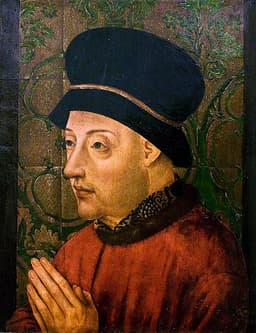
John I of Portugal
Emperor · Medieval
60.3Total
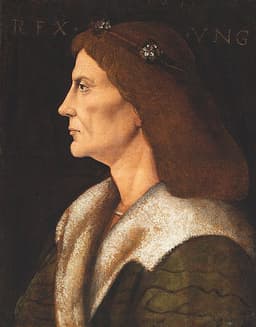
Matthias Corvinus
Emperor · Medieval
60.7Total
Basic Information
Born
1357
1443
Died
1433
1490
Era
Medieval
Medieval
Nationality
Portugal
Hungary
Occupation
Emperor
Emperor
Civilization
Western
Western
Score Comparison
Military (10%)
65.0
80.0
Political (20%)
55.0
59.3
Influence (20%)
56.7
55.0
Legacy (20%)
58.0
52.0
Leadership (15%)
72.0
66.0
Strategy (15%)
60.7
72.0
TOTAL
60.3
60.7
John I of Portugal — Complete Timeline
1385 AD
Battle of AljubarrotaWar
John I led Portuguese forces to a decisive victory over the Castilian army at Aljubarrota. This battle secured Portuguese independence and solidified John's claim to the throne.
BattleIndependenceCastile
Impact: regionalconstructive
Accession to the thronePolitical Action
John I became King of Portugal after the 1383-1385 Crisis, being elected by the Cortes of Coimbra. His accession ended the Burgundian dynasty and founded the House of Aviz.
SuccessionDynastyAviz
Impact: nationalconstructive
1386 AD
Treaty of WindsorPolitical Action◆ Major
John I signed the Treaty of Windsor with England, establishing a perpetual alliance between Portugal and England. This alliance, the oldest in the world, has endured to the present day.
TreatyAllianceEngland
Impact: globalconstructive
1415 AD
Conquest of CeutaWar◆ Major
John I led the conquest of Ceuta in North Africa, marking the beginning of Portuguese overseas expansion. The capture of the city opened the era of European colonialism.
ConquestColonialismNorth Africa
Impact: global
Matthias Corvinus — Complete Timeline
1458 AD
Coronation as King of HungaryPolitical Action◆ Major
Matthias Corvinus was elected and crowned King of Hungary at the age of 14, following the death of his father John Hunyadi. His coronation was supported by the Hungarian nobility, who expected him to be a figurehead.
CoronationHungaryHunyadi
Impact: nationalconstructive
1460 AD
Establishment of the Black ArmyReform◆ Major
Matthias created a professional standing army, the Black Army, composed of mercenaries and paid soldiers. This force became one of the most effective in Europe, enabling his military campaigns and reducing reliance on feudal levies.
Military ReformBlack ArmyMercenaries
Impact: regionalconstructive
1470 AD
Foundation of the Bibliotheca CorvinianaCultural◆ Major
Matthias established one of the largest and most renowned libraries in Renaissance Europe, the Bibliotheca Corviniana in Buda. The library housed thousands of manuscripts and printed books, attracting scholars from across Europe.
LibraryRenaissanceCulture
Impact: regionalconstructive
1477 AD
War with Frederick III of HabsburgWar◆ Major
Matthias waged a war against Holy Roman Emperor Frederick III over claims to the Hungarian throne and Austrian territories. The conflict ended with the Peace of Pressburg, which recognized Matthias's conquests but failed to secure the imperial crown.
WarHabsburgAustria
Impact: regional
1485 AD
Conquest of ViennaWar◆ Major
Matthias captured Vienna after a prolonged siege, making it his new capital. This conquest marked the peak of Hungarian power, extending his rule over much of Austria and challenging the Habsburgs.
ConquestViennaHabsburg
Impact: regional
Expert Analysis
Origins
John I of Portugal was born in 1357 as the illegitimate son of King Peter I and a Galician noblewoman, Teresa Lourenço. Growing up as the Master of the Order of Aviz, he received a military and religious education. His illegitimacy initially excluded him from succession, but the 1383-1385 Crisis opened a path to the throne after the death of his half-brother King Ferdinand I without a male heir.
Matthias Corvinus was born in 1443 in Cluj-Napoca, Transylvania, the second son of John Hunyadi, Regent of Hungary, and Erzsébet Szilágyi. His father was a leading military commander against the Ottomans. Matthias received a humanist education, studying Latin, history, and military strategy. After his father's death in 1456, Matthias was elected King of Hungary at age 14 in 1458, following the death of King Ladislaus V.
Rise to Power
John I's rise began during the 1383-1385 Crisis, when Portugal faced a succession war after Ferdinand I's death. John led the resistance against Castilian claims, being elected King by the Cortes of Coimbra in April 1385. His decisive victory at the Battle of Aljubarrota on August 14, 1385, against John I of Castile secured Portuguese independence and his throne. The victory was achieved with English archers supporting Portuguese infantry, using a defensive position on a hill.
Matthias Corvinus was crowned King of Hungary on January 24, 1458, after a period of turmoil. His early reign was challenged by Frederick III of Habsburg, who claimed the Hungarian throne. Matthias secured his position by defeating Frederick's forces and negotiating the Treaty of Wiener Neustadt in 1463, which recognized Matthias as king and returned the Holy Crown of Hungary. He also faced internal opposition from the Hungarian nobility, whom he subdued by building a centralized monarchy.
Leadership & Governance
John I governed Portugal as a medieval monarch, relying on the nobility and the Cortes. He strengthened the crown by rewarding loyal supporters, such as the Constable Nuno Álvares Pereira, who led his armies. John promoted trade and navigation, sponsoring early voyages along the African coast. His signing of the Treaty of Windsor in 1386 with England established a perpetual alliance that influenced Portuguese foreign policy for centuries. He also expanded the kingdom's territory by conquering Ceuta in 1415, initiating Portuguese overseas expansion.
Matthias Corvinus ruled as a Renaissance king, centralizing power and reducing the influence of the nobility. He created a professional standing army, the Black Army (Fekete Sereg), composed of mercenaries, which numbered up to 30,000 men. He reformed the legal system, establishing a supreme court in Buda and codifying laws. Matthias patronized arts and learning, founding the Bibliotheca Corviniana in Buda, one of the largest libraries in Europe with over 2,000 manuscripts. He invited Italian humanists and artists to his court, making Hungary a center of Renaissance culture.
Triumph & Tragedy
John I's greatest triumph was securing Portuguese independence and founding the Aviz dynasty, which lasted until 1580. His conquest of Ceuta in 1415 opened the Age of Discovery, though the city required costly maintenance. His tragedy was the failure to fully integrate the nobility, leading to later conflicts. The alliance with England, while durable, sometimes dragged Portugal into European wars.
Matthias Corvinus's triumphs include conquering Vienna in 1485, making it his capital, and expanding Hungary's territory to its greatest extent. His Black Army was a formidable force, scoring a military score of 80.0. However, his tragedy was the lack of a legitimate heir; his son John Corvinus was illegitimate and could not secure the throne after Matthias's death in 1490. The Black Army was disbanded, and Hungary's power collapsed, leading to the Ottoman victory at Mohács in 1526.
Character & Destiny
John I was pragmatic and cautious, known as "John the Good" or "John of Good Memory." He consolidated power through alliances and strategic marriages, such as marrying Philippa of Lancaster, daughter of John of Gaunt. His character shaped Portugal's destiny as an independent nation and a maritime power.
Matthias Corvinus was ambitious and cultured, but also ruthless and autocratic. He suppressed noble revolts with force and taxed heavily to fund his wars and patronage. His character drove Hungary to greatness but also created resentment that unraveled after his death. His total score of 60.7 edges out John I's 60.3, reflecting his greater military and strategic achievements.
Legacy
John I's legacy is foundational for Portugal. He established the House of Aviz, secured independence, and began the Age of Discovery. The Treaty of Windsor remains in effect today. His influence score of 56.7 reflects his role in shaping Portugal's national identity.
Matthias Corvinus left a cultural legacy with the Bibliotheca Corviniana, though the library was destroyed after his death. His military innovations influenced later European armies. However, his legacy score of 52.0 is lower because his achievements did not endure; Hungary fell into decline soon after his reign.
Conclusion
While Matthias Corvinus had a higher total score (60.7 vs 60.3) and superior military and strategic scores (80.0 and 72.0 vs 65.0 and 60.7), John I's impact was more lasting. John I secured Portuguese independence and set the stage for a global empire that lasted centuries. Matthias's kingdom collapsed within a generation. Therefore, John I had greater long-term impact, despite the narrow score gap.
Rankings
🥇
Matthias CorvinusLeader
Mil: 80.0Pol: 59.3Inf: 55.0
60.7
🥈
John I of Portugal
Mil: 65.0Pol: 55.0Inf: 56.7
60.3
+0.4 behind
How This Comparison Works
Algorithm
Each figure is scored on 6 dimensions (0—100 scale) based on structured historical data: Military (10%), Political (20%), Influence (20%), Legacy (20%), Leadership (15%), Strategy (15%). The weighted total produces the final ranking.
Data Sources
Scores are computed from structured sub-indicators in the database. Scale factors adjust for era (Ancient ×0.85, Modern ×1.0) and civilization size (Eastern ×1.05, Other ×0.80) to account for differences in population and military scale.
Maximum 3 Figures
Comparisons are limited to 2—3 figures to ensure readability and statistical meaningfulness.
Error Margins
±5 points per dimension — Sub-scores are derived from historical records with inherent uncertainty. Two figures within 5 points on a dimension should be considered roughly equivalent in that area.
Total Score Accuracy
±3 points overall — The weighted combination of 6 dimensions produces a total score with approximately ±3 points of uncertainty. Differences of less than 3 points are not statistically significant— the figures are effectively tied.
Known Limitations
- Historical records are incomplete and uneven across civilizations
- Figures from oral-tradition societies may be underrepresented
- Occupation labels can misclassify multi-role figures
- Scores measure capability and impact, not moral character
- Quantitative scoring is a comparison tool, not absolute truth
Capability Radar
Military (10%) — Battles & Warfare
Battles
65
75
Win Rate
70
80
Expansion
60
75
Political (20%) — Governance & Reform
Reform
70
80
Diplomacy
75
70
Economy
70
75
Influence (20%) — Cultural & Global Reach
Cultural
60
75
Global
55
55
Legacy (20%) — Historical Impact
Historical
65
70
Longevity
60
60
Leadership (15%) — Power & Stability
Tenure
75
70
Stability
65
65
Strategy (15%) — Tactics & Innovation
Strategy
65
80
Tactics
60
85
Reform
55
85
Similar Comparisons
Comments & Discussion
No comments yet. Be the first to share your thoughts!