Loading...
Matteo Renzi vs Zhu Rongji
Zhu Rongji leads by 14.8 pts · 2 figures compared
…
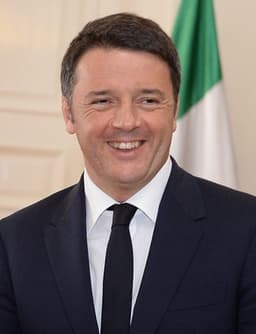
Matteo Renzi
Politician · Modern
50.4Total

Zhu Rongji
Politician · Modern
65.2Total
Basic Information
Born
1975
1928
Died
—
—
Era
Modern
Modern
Nationality
Italy
China
Occupation
Politician
Politician
Civilization
Western
Eastern
Score Comparison
Military (10%)
13.3
12.5
Political (20%)
68.0
84.4
Influence (20%)
56.4
82.0
Legacy (20%)
42.5
65.0
Leadership (15%)
67.0
72.0
Strategy (15%)
41.1
37.0
TOTAL
50.4
65.2
Matteo Renzi — Complete Timeline
2013 AD
Elected Secretary of the Democratic PartyPolitical Action◆ Major
Renzi was elected Secretary of the Democratic Party in a primary election, defeating the incumbent Pier Luigi Bersani. His victory signaled a shift towards a more centrist and reformist agenda within the party.
Party LeadershipDemocratic PartyPrimary
Impact: nationalconstructive
2014 AD
Passed the Jobs Act Labor ReformReform◆ Major
Renzi's government passed the Jobs Act, a major labor market reform that relaxed dismissal rules and expanded temporary contracts. The reform aimed to reduce unemployment but was criticized for increasing job precarity.
Labor ReformEconomic PolicyJobs Act
Impact: national
Appointed Prime Minister of ItalyPolitical Action◆ Major
Renzi became the youngest Prime Minister in Italian history at age 39, succeeding Enrico Letta. He promised sweeping reforms and a new political style, initially enjoying high popularity and media attention.
YouthReform AgendaPolitical Change
Impact: nationalconstructive
2016 AD
Lost Constitutional Referendum and ResignedPolitical Action◆ Major
Renzi staked his premiership on a constitutional referendum to reduce the Senate's power and streamline legislation. The proposal was rejected by 59% of voters, leading to his resignation and a political crisis.
ReferendumConstitutional ReformPolitical Defeat
Impact: nationaldestructive
Zhu Rongji — Complete Timeline
1987 AD
Became Mayor of ShanghaiPolitical Action◆ Major
Zhu Rongji was appointed Mayor of Shanghai, where he implemented market-oriented reforms and improved infrastructure. His success in transforming Shanghai's economy earned him national recognition.
ShanghaiEconomic ReformUrban Development
Impact: regionalconstructive
1991 AD
Appointed Vice Premier for economic affairsPolitical Action◆ Major
Zhu Rongji was promoted to Vice Premier, tasked with tackling inflation and reforming state-owned enterprises. He implemented tight monetary policies and began restructuring the banking system.
Economic ReformVice PremierInflation Control
Impact: nationalconstructive
1998 AD
Became Premier of the People's Republic of ChinaPolitical Action◆ Major
Zhu Rongji became Premier, succeeding Li Peng. He accelerated economic reforms, including joining the World Trade Organization, privatizing state enterprises, and reducing tariffs.
PremierEconomic ReformWTO Accession
Impact: globalconstructive
2001 AD
Oversaw China's accession to the WTOPolitical Action
Under Zhu Rongji's leadership, China joined the World Trade Organization, committing to extensive trade liberalization. This integration into the global economy spurred rapid economic growth and foreign investment.
WTOGlobalizationEconomic Growth
Impact: globalconstructive
2003 AD
Retired from politicsPolitical Action
Zhu Rongji stepped down as Premier after two terms, retiring from public life. He was succeeded by Wen Jiabao, and his reforms continued to shape China's economy.
RetirementPolitical TransitionEconomic Legacy
Impact: national
Expert Analysis
Origins
Matteo Renzi was born in 1975 in Florence, Italy, into a middle-class family. His father was a local politician and his mother a teacher. Renzi studied law at the University of Florence and became involved in Catholic youth movements. He worked in marketing before entering politics full-time, rising through the ranks of the center-left Democratic Party.
Zhu Rongji was born in 1928 in Changsha, China, into a scholarly family. He studied electrical engineering at Tsinghua University, graduating in 1951. His early career was marked by political turmoil: labeled a "rightist" during the Anti-Rightist Campaign, he was purged and spent years in labor camps. He rehabilitated later, working in economic planning roles.
Rise to Power
Renzi's rise was rapid: he became mayor of Florence in 2009 at age 34, then Secretary of the Democratic Party in 2013. In February 2014, he maneuvered to become Prime Minister at 39, the youngest in Italian history, by forcing out his predecessor Enrico Letta. His political score of 68.0 reflects his ability to seize power quickly.
Zhu's path was longer. After rehabilitation, he became deputy mayor of Shanghai in 1983, then mayor in 1987, implementing market reforms. In 1991, he was appointed Vice Premier, tasked with curbing inflation and restructuring state enterprises. In 1998, he became Premier, succeeding Li Peng. His political score of 84.4 underscores his steady ascent within the Chinese system.
Leadership & Governance
Renzi governed with a charismatic, media-savvy style, bypassing traditional party structures. He pushed the "Jobs Act" in 2014-2015, which relaxed dismissal rules and expanded temporary contracts, aiming to reduce unemployment. However, the reform faced union opposition and had mixed results: unemployment fell from 12.7% to 11.9% but youth unemployment remained high. His leadership score of 67.0 reflects his energetic but often unilateral approach.
Zhu Rongji was a forceful economic reformer, known for his bluntness and efficiency. As Premier, he spearheaded China's accession to the WTO in 2001, committing to trade liberalization and attracting foreign investment. He also restructured state-owned enterprises, closing unprofitable plants and laying off millions of workers, while creating a social safety net. His leadership score of 72.0 reflects his decisive, top-down style. Zhu scored 37.0 in strategy, lower than expected, possibly due to the top-down nature of his reforms.
Triumph & Tragedy
Renzi's greatest triumph was the Jobs Act, which gave firms more flexibility and temporarily boosted employment. His greatest failure was the 2016 constitutional referendum, which he staked his premiership on. The reform was rejected by 59% of voters, leading to his resignation. This defeat ended his reform agenda and weakened the Democratic Party. Renzi's legacy score of 42.5 reflects the ephemeral nature of his achievements.
Zhu's triumph was overseeing China's WTO accession, which integrated China into the global economy and fueled a decade of double-digit growth. He also tamed inflation from 24% in 1994 to near zero by 1998. His tragedy was the human cost of state-owned enterprise reform: an estimated 30 million workers were laid off with minimal compensation, causing social unrest. Zhu's legacy score of 65.0 reflects the enduring impact of his economic transformation.
Character & Destiny
Renzi's character was bold and impatient, often bypassing consensus for rapid change. This led to early successes but also alienated allies and voters. His decision to tie his fate to the referendum was a gamble that backfired, ending his premiership after less than three years. His influence score of 56.4 reflects his limited long-term impact.
Zhu was known for his integrity and determination, often clashing with vested interests. His directness earned him respect but also enemies. His retirement in 2003 was graceful, and his reforms continued under successors. His influence score of 82.0 reflects his role as the architect of China's modern economy.
Legacy
Renzi's legacy is mixed. The Jobs Act remains but was partially rolled back by later governments. His style inspired imitation but also backlash. He is remembered as a reformer who failed to consolidate power, leaving Italy's structural problems largely unsolved. His total score of 50.4 places him as a moderate figure in Italian politics.
Zhu's legacy is profound. China's WTO accession reshaped global trade, and his economic reforms laid the groundwork for China's rise as an economic superpower. He is revered in China as a principled reformer. His total score of 65.2 reflects his substantial and lasting impact.
Conclusion
Zhu Rongji had far greater impact than Matteo Renzi. Zhu's reforms transformed a nation of 1.3 billion people, integrating China into the global economy and lifting hundreds of millions from poverty. Renzi's reforms were limited to a single European country and were partially reversed. The score gap of 14.8 points (50.4 vs 65.2) underscores this disparity. While Renzi's political and leadership scores are respectable, Zhu's influence and legacy dwarf his. In the balance of historical significance, Zhu Rongji stands as a world-historical figure, while Renzi remains a footnote in Italian politics.
Rankings
🥇
Zhu RongjiLeader
Mil: 12.5Pol: 84.4Inf: 82.0
65.2
🥈
Matteo Renzi
Mil: 13.3Pol: 68.0Inf: 56.4
50.4
+14.8 behind
How This Comparison Works
Algorithm
Each figure is scored on 6 dimensions (0—100 scale) based on structured historical data: Military (10%), Political (20%), Influence (20%), Legacy (20%), Leadership (15%), Strategy (15%). The weighted total produces the final ranking.
Data Sources
Scores are computed from structured sub-indicators in the database. Scale factors adjust for era (Ancient ×0.85, Modern ×1.0) and civilization size (Eastern ×1.05, Other ×0.80) to account for differences in population and military scale.
Maximum 3 Figures
Comparisons are limited to 2—3 figures to ensure readability and statistical meaningfulness.
Error Margins
±5 points per dimension — Sub-scores are derived from historical records with inherent uncertainty. Two figures within 5 points on a dimension should be considered roughly equivalent in that area.
Total Score Accuracy
±3 points overall — The weighted combination of 6 dimensions produces a total score with approximately ±3 points of uncertainty. Differences of less than 3 points are not statistically significant— the figures are effectively tied.
Known Limitations
- Historical records are incomplete and uneven across civilizations
- Figures from oral-tradition societies may be underrepresented
- Occupation labels can misclassify multi-role figures
- Scores measure capability and impact, not moral character
- Quantitative scoring is a comparison tool, not absolute truth
Capability Radar
Military (10%) — Battles & Warfare
Battles
21
14
Win Rate
24
16
Expansion
27
23
Political (20%) — Governance & Reform
Reform
55
95
Diplomacy
50
75
Economy
45
98
Influence (20%) — Cultural & Global Reach
Cultural
30
50
Global
40
80
Legacy (20%) — Historical Impact
Historical
35
85
Longevity
20
70
Leadership (15%) — Power & Stability
Tenure
40
70
Stability
30
80
Strategy (15%) — Tactics & Innovation
Strategy
29
20
Tactics
35
24
Reform
39
30
Similar Comparisons
Comments & Discussion
No comments yet. Be the first to share your thoughts!