Loading...
Margaret of Parma vs Matteo Renzi
Margaret of Parma leads by 5.4 pts · 2 figures compared
…

Margaret of Parma
Politician · Modern
55.8Total
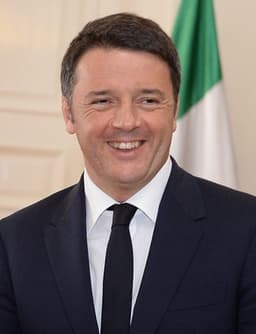
Matteo Renzi
Politician · Modern
50.4Total
Basic Information
Born
1522
1975
Died
1586
—
Era
Modern
Modern
Nationality
Netherlands
Italy
Occupation
Politician
Politician
Civilization
Western
Western
Score Comparison
Military (10%)
39.9
13.3
Political (20%)
68.0
68.0
Influence (20%)
54.9
56.4
Legacy (20%)
45.8
42.5
Leadership (15%)
74.0
67.0
Strategy (15%)
53.8
41.1
TOTAL
55.8
50.4
Margaret of Parma — Complete Timeline
1559 AD
Appointed Governor of the NetherlandsPolitical Action◆ Major
Margaret of Parma was appointed Governor of the Netherlands by her half-brother King Philip II of Spain. She governed during the early stages of the Dutch Revolt, implementing policies that sought to suppress Protestantism and maintain Spanish control.
Dutch RevoltSpanish NetherlandsGovernorship
Impact: regional
1566 AD
Issued the Edict of 1566Political Action◆ Major
Margaret issued an edict moderating the anti-heresy laws in the Netherlands, allowing limited Protestant worship in an attempt to quell unrest. This concession failed to satisfy Calvinist radicals and contributed to the outbreak of the Iconoclastic Fury later that year.
Religious PolicyDutch RevoltCompromise
Impact: regional
Iconoclastic Fury (Beeldenstorm)Other◆ Major
Calvinist mobs destroyed Catholic church art and statues across the Netherlands. Margaret's government was unable to prevent the widespread destruction, which deepened the religious divide and prompted Philip II to send the Duke of Alba with an army to restore order.
IconoclasmDutch RevoltReligious Violence
Impact: regionaldestructive
1567 AD
Resigned as GovernorPolitical Action◆ Major
Margaret resigned as Governor of the Netherlands after the arrival of the Duke of Alba, who was sent by Philip II to suppress the revolt. She opposed Alba's harsh policies and left the Netherlands, returning to Italy.
Dutch RevoltResignationAlba
Impact: regional
Matteo Renzi — Complete Timeline
2013 AD
Elected Secretary of the Democratic PartyPolitical Action◆ Major
Renzi was elected Secretary of the Democratic Party in a primary election, defeating the incumbent Pier Luigi Bersani. His victory signaled a shift towards a more centrist and reformist agenda within the party.
Party LeadershipDemocratic PartyPrimary
Impact: nationalconstructive
2014 AD
Passed the Jobs Act Labor ReformReform◆ Major
Renzi's government passed the Jobs Act, a major labor market reform that relaxed dismissal rules and expanded temporary contracts. The reform aimed to reduce unemployment but was criticized for increasing job precarity.
Labor ReformEconomic PolicyJobs Act
Impact: national
Appointed Prime Minister of ItalyPolitical Action◆ Major
Renzi became the youngest Prime Minister in Italian history at age 39, succeeding Enrico Letta. He promised sweeping reforms and a new political style, initially enjoying high popularity and media attention.
YouthReform AgendaPolitical Change
Impact: nationalconstructive
2016 AD
Lost Constitutional Referendum and ResignedPolitical Action◆ Major
Renzi staked his premiership on a constitutional referendum to reduce the Senate's power and streamline legislation. The proposal was rejected by 59% of voters, leading to his resignation and a political crisis.
ReferendumConstitutional ReformPolitical Defeat
Impact: nationaldestructive
Expert Analysis
Origins
Margaret of Parma (1522–1586) was born in Oudenaarde, Flanders, as the illegitimate daughter of Holy Roman Emperor Charles V. Raised in the Habsburg court, she received a Catholic education and married Alessandro de' Medici, then Ottavio Farnese, Duke of Parma. Her upbringing in the imperial family gave her direct access to power but also exposed her to the religious and political tensions of the 16th century.
Matteo Renzi (born 1975) grew up in Florence, Italy, in a middle-class family. His father was a Christian Democrat and his mother a teacher. Renzi studied law at the University of Florence and became involved in Catholic scouting and local politics. His early career included work in marketing and as a provincial councilor, before rising through the ranks of the Democratic Party.
Rise to Power
Margaret's rise came through family connections: in 1559, her half-brother King Philip II of Spain appointed her Governor of the Netherlands. She was the first female governor of the region, tasked with managing the increasingly restive provinces. Her authority was limited by Philip's distant control and the growing influence of Calvinist nobles.
Renzi's ascent was meteoric: he became mayor of Florence in 2009 at age 34, then secretary of the Democratic Party in 2013 after defeating Pier Luigi Bersani. In February 2014, he became Prime Minister at 39, the youngest in Italian history, after forcing out Enrico Letta. His rise was fueled by a promise of sweeping reforms and a break from the old political class.
Leadership & Governance
Margaret governed with a blend of conciliation and firmness. She issued the Edict of 1566, moderating anti-heresy laws to allow limited Protestant worship, aiming to pacify the growing unrest. However, the Edict failed to prevent the Iconoclastic Fury (Beeldenstorm) of 1566, when Calvinist mobs destroyed church art across the Netherlands. Her government could not stop the violence, and she was forced to resign in 1567 when Philip II sent the Duke of Alba with an army to restore order.
Renzi's leadership was characterized by aggressive reformism. He passed the Jobs Act in 2014, a labor market reform that relaxed dismissal rules and expanded temporary contracts, aiming to boost employment. He also pushed for constitutional reform to reduce the Senate's power and streamline legislation. However, his style was often criticized as imperious, and he staked his premiership on the 2016 constitutional referendum, which was rejected by 59% of voters. He subsequently resigned.
Triumph & Tragedy
Margaret's triumph was maintaining relative stability for several years in a fractious region, despite limited military resources (Military score 39.9). Her moderation delayed full revolt. Her tragedy was her inability to prevent the Iconoclastic Fury and her resignation as the revolt escalated. She opposed Alba's harsh repression but was overruled.
Renzi's triumph was passing the Jobs Act, which contributed to a temporary reduction in unemployment. His tragedy was the failed referendum, which ended his premiership and weakened the Democratic Party. His political score is 68.0, equal to Margaret's, but his legacy score is lower (42.5 vs 45.8).
Character & Destiny
Margaret was pragmatic and cautious, seeking compromise between Catholic orthodoxy and Protestant demands. Her character shaped her fate: her willingness to negotiate was seen as weakness by Philip II, leading to her replacement. She scored 74.0 in Leadership, reflecting her ability to manage a diverse coalition.
Renzi was bold and self-confident, often described as 'il rottamatore' (the demolisher) for his desire to dismantle old political structures. His character led to rapid reforms but also to overreach; the referendum defeat was a direct result of his gamble. His Leadership score is 67.0.
Legacy
Margaret's legacy is as a capable governor who tried to avert the Dutch Revolt but was caught between Spanish intransigence and local demands. Her moderate policies are noted by historians but overshadowed by the subsequent war. Her total score is 55.8.
Renzi's legacy is mixed: the Jobs Act remains in place, but his broader reform agenda stalled. He is remembered as a reformer who failed to achieve lasting change. His total score is 50.4.
Conclusion
Margaret of Parma had a greater impact than Matteo Renzi, as reflected in her higher total score (55.8 vs 50.4). While both governed during turbulent times, Margaret faced a more existential challenge—the Dutch Revolt—and her actions influenced the course of a major European conflict. Renzi's reforms were significant but did not fundamentally alter Italy's political trajectory. Margaret's leadership score (74.0) and political score (68.0) edge out Renzi's, and her legacy, though modest, endures in the history of the Netherlands. Renzi's failure to secure constitutional reform limits his long-term influence. Thus, Margaret of Parma stands as the more consequential figure.
Rankings
🥇
Margaret of ParmaLeader
Mil: 39.9Pol: 68.0Inf: 54.9
55.8
🥈
Matteo Renzi
Mil: 13.3Pol: 68.0Inf: 56.4
50.4
+5.4 behind
How This Comparison Works
Algorithm
Each figure is scored on 6 dimensions (0—100 scale) based on structured historical data: Military (10%), Political (20%), Influence (20%), Legacy (20%), Leadership (15%), Strategy (15%). The weighted total produces the final ranking.
Data Sources
Scores are computed from structured sub-indicators in the database. Scale factors adjust for era (Ancient ×0.85, Modern ×1.0) and civilization size (Eastern ×1.05, Other ×0.80) to account for differences in population and military scale.
Maximum 3 Figures
Comparisons are limited to 2—3 figures to ensure readability and statistical meaningfulness.
Error Margins
±5 points per dimension — Sub-scores are derived from historical records with inherent uncertainty. Two figures within 5 points on a dimension should be considered roughly equivalent in that area.
Total Score Accuracy
±3 points overall — The weighted combination of 6 dimensions produces a total score with approximately ±3 points of uncertainty. Differences of less than 3 points are not statistically significant— the figures are effectively tied.
Known Limitations
- Historical records are incomplete and uneven across civilizations
- Figures from oral-tradition societies may be underrepresented
- Occupation labels can misclassify multi-role figures
- Scores measure capability and impact, not moral character
- Quantitative scoring is a comparison tool, not absolute truth
Capability Radar
Military (10%) — Battles & Warfare
Battles
10
21
Win Rate
10
24
Expansion
5
27
Political (20%) — Governance & Reform
Reform
40
55
Diplomacy
55
50
Economy
45
45
Influence (20%) — Cultural & Global Reach
Cultural
30
30
Global
30
40
Legacy (20%) — Historical Impact
Historical
45
35
Longevity
30
20
Leadership (15%) — Power & Stability
Tenure
60
40
Stability
30
30
Strategy (15%) — Tactics & Innovation
Strategy
15
29
Tactics
10
35
Reform
10
39
Similar Comparisons
Comments & Discussion
No comments yet. Be the first to share your thoughts!