Loading...
Hassan Sheikh Mohamud vs Matteo Renzi
Hassan Sheikh Mohamud leads by 1.5 pts · 2 figures compared
…

Hassan Sheikh Mohamud
Politician · Modern
51.9Total
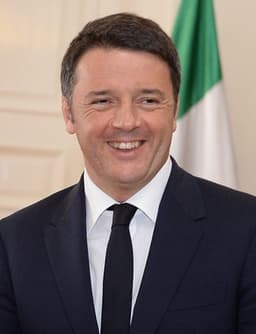
Matteo Renzi
Politician · Modern
50.4Total
Basic Information
Born
1955
1975
Died
—
—
Era
Modern
Modern
Nationality
Somalia
Italy
Occupation
Politician
Politician
Civilization
Other
Western
Score Comparison
Military (10%)
47.6
13.3
Political (20%)
54.7
68.0
Influence (20%)
53.3
56.4
Legacy (20%)
42.5
42.5
Leadership (15%)
74.0
67.0
Strategy (15%)
38.4
41.1
TOTAL
51.9
50.4
Hassan Sheikh Mohamud — Complete Timeline
2012 AD
Elected President of SomaliaPolitical Action
Hassan Sheikh Mohamud was elected President of Somalia in September 2012 by the Federal Parliament, becoming the first president elected since the end of the transitional period. His election marked a milestone in Somalia's efforts to rebuild state institutions after decades of civil war.
ElectionState BuildingTransition
Impact: nationalconstructive
2013 AD
Launched Federalism and State FormationReform◆ Major
Hassan Sheikh Mohamud's government initiated the formation of federal member states, including Jubaland, South West, and Hirshabelle, between 2013 and 2016. This process aimed to decentralize power and stabilize regions, but faced challenges from clan rivalries and Al-Shabaab.
FederalismState FormationDecentralization
Impact: nationalconstructive
2017 AD
Lost Re-election Bid in 2017Political Action◆ Major
Hassan Sheikh Mohamud lost his re-election bid in February 2017 to Mohamed Abdullahi Farmajo, after a single term. His defeat was attributed to corruption allegations and failure to improve security, but he peacefully transferred power, a rare event in Somali politics.
ElectionPower TransferDemocracy
Impact: national
2022 AD
Re-elected President of SomaliaPolitical Action◆ Major
Hassan Sheikh Mohamud was re-elected President of Somalia in May 2022, defeating incumbent Mohamed Abdullahi Farmajo in a runoff vote. His return to power came amid a political crisis and ongoing insurgency, with a mandate to address security and electoral reforms.
ElectionReturn to PowerPolitical Crisis
Impact: national
Matteo Renzi — Complete Timeline
2013 AD
Elected Secretary of the Democratic PartyPolitical Action◆ Major
Renzi was elected Secretary of the Democratic Party in a primary election, defeating the incumbent Pier Luigi Bersani. His victory signaled a shift towards a more centrist and reformist agenda within the party.
Party LeadershipDemocratic PartyPrimary
Impact: nationalconstructive
2014 AD
Passed the Jobs Act Labor ReformReform◆ Major
Renzi's government passed the Jobs Act, a major labor market reform that relaxed dismissal rules and expanded temporary contracts. The reform aimed to reduce unemployment but was criticized for increasing job precarity.
Labor ReformEconomic PolicyJobs Act
Impact: national
Appointed Prime Minister of ItalyPolitical Action◆ Major
Renzi became the youngest Prime Minister in Italian history at age 39, succeeding Enrico Letta. He promised sweeping reforms and a new political style, initially enjoying high popularity and media attention.
YouthReform AgendaPolitical Change
Impact: nationalconstructive
2016 AD
Lost Constitutional Referendum and ResignedPolitical Action◆ Major
Renzi staked his premiership on a constitutional referendum to reduce the Senate's power and streamline legislation. The proposal was rejected by 59% of voters, leading to his resignation and a political crisis.
ReferendumConstitutional ReformPolitical Defeat
Impact: nationaldestructive
Expert Analysis
Origins
Hassan Sheikh Mohamud was born in 1955 in Jalalaqsi, central Somalia. He studied at Somali National University and later earned a master's in education from a US university. Before politics, he worked as a teacher, university dean, and co-founded the Somali Institute of Management and Administration Development. He was also a civil society activist, leading the local peace process in Mogadishu.
Matteo Renzi was born in 1975 in Florence, Italy. He studied law at the University of Florence and began his political career early, joining the Italian People's Party. He worked in his family's marketing company before becoming a full-time politician. His father was a local politician, and Renzi's early exposure to politics shaped his ambitions.
Rise to Power
Mohamud rose to prominence through his involvement in peace and reconciliation efforts after the collapse of the Somali state. In 2011, he founded the Peace and Development Party. In September 2012, he was elected President by the Federal Parliament, becoming the first president elected since the end of the transitional government. His election was seen as a victory for civil society.
Renzi rose quickly in the Democratic Party. He was elected mayor of Florence in 2009 at age 34, gaining national attention. In 2013, he challenged the party's incumbent secretary and won, becoming party leader. In February 2014, he became Prime Minister at age 39, the youngest in Italian history, after forcing out his predecessor Enrico Letta.
Leadership & Governance
Mohamud's leadership focused on state-building in a fragile environment. He launched the federalization process, forming federal member states like Jubaland (2013), South West (2014), and Hirshabelle (2016). His government also began security sector reform, though progress was slow. He faced criticism for corruption and inability to extend government control beyond Mogadishu. His political score of 54.7 reflects mixed results.
Renzi's governance was reformist and energetic. He passed the Jobs Act in 2014, which relaxed dismissal rules and expanded temporary contracts, aiming to boost employment. He also reformed the education system and introduced civil unions. However, his confrontational style alienated allies. His political score of 68.0 indicates stronger domestic political maneuvering but his legacy score of 42.5 matches Mohamud's.
Triumph & Tragedy
Mohamud's greatest success was overseeing the first peaceful transfer of power in 2017, when he lost to Mohamed Abdullahi Farmajo. This was a milestone for Somali democracy. However, his failure to defeat al-Shabaab or significantly reduce corruption marked his first term. He was re-elected in 2022, but his second term faces similar challenges.
Renzi's triumph was the Jobs Act, which reduced unemployment from 12.7% in 2014 to 11.2% in 2016. However, his tragic mistake was staking his premiership on a constitutional referendum in 2016, which he lost 59% to 41%, forcing his resignation. This ended his reform agenda prematurely.
Character & Destiny
Mohamud is a consensus-builder, patient and pragmatic. His background in civil society made him adept at negotiating with clan elders and international partners. However, his cautious approach sometimes led to stagnation. His leadership score of 74.0 reflects his ability to maintain unity in a divided country.
Renzi is charismatic and aggressive, often described as a "demolition man" for his desire to break old structures. His impatience and overconfidence led him to call the referendum, a gamble that failed. His strategy score of 41.1 suggests poor risk assessment.
Legacy
Mohamud's legacy is tied to the federal system he helped create. If Somalia stabilizes, he will be seen as a founding father. Currently, his legacy score of 42.5 reflects the incomplete state-building process.
Renzi's legacy is mixed: the Jobs Act remains, but his broader reforms were halted. He is remembered as a youthful reformer who failed to deliver lasting change. His legacy score also stands at 42.5.
Conclusion
While Renzi scored higher in political skill (68.0 vs 54.7), Mohamud's impact is more profound given the context. Renzi operated in a stable democracy; his failures were self-inflicted. Mohamud, despite a lower total score (51.9 vs 50.4), achieved state-building in a failed state, a harder task. Therefore, Hassan Sheikh Mohamud had greater impact relative to circumstances.
Rankings
🥇
Hassan Sheikh MohamudLeader
Mil: 47.6Pol: 54.7Inf: 53.3
51.9
🥈
Matteo Renzi
Mil: 13.3Pol: 68.0Inf: 56.4
50.4
+1.5 behind
How This Comparison Works
Algorithm
Each figure is scored on 6 dimensions (0—100 scale) based on structured historical data: Military (10%), Political (20%), Influence (20%), Legacy (20%), Leadership (15%), Strategy (15%). The weighted total produces the final ranking.
Data Sources
Scores are computed from structured sub-indicators in the database. Scale factors adjust for era (Ancient ×0.85, Modern ×1.0) and civilization size (Eastern ×1.05, Other ×0.80) to account for differences in population and military scale.
Maximum 3 Figures
Comparisons are limited to 2—3 figures to ensure readability and statistical meaningfulness.
Error Margins
±5 points per dimension — Sub-scores are derived from historical records with inherent uncertainty. Two figures within 5 points on a dimension should be considered roughly equivalent in that area.
Total Score Accuracy
±3 points overall — The weighted combination of 6 dimensions produces a total score with approximately ±3 points of uncertainty. Differences of less than 3 points are not statistically significant— the figures are effectively tied.
Known Limitations
- Historical records are incomplete and uneven across civilizations
- Figures from oral-tradition societies may be underrepresented
- Occupation labels can misclassify multi-role figures
- Scores measure capability and impact, not moral character
- Quantitative scoring is a comparison tool, not absolute truth
Capability Radar
Military (10%) — Battles & Warfare
Battles
24
21
Win Rate
24
24
Expansion
27
27
Political (20%) — Governance & Reform
Reform
40
55
Diplomacy
50
50
Economy
35
45
Influence (20%) — Cultural & Global Reach
Cultural
30
30
Global
30
40
Legacy (20%) — Historical Impact
Historical
30
35
Longevity
25
20
Leadership (15%) — Power & Stability
Tenure
55
40
Stability
30
30
Strategy (15%) — Tactics & Innovation
Strategy
32
29
Tactics
35
35
Reform
39
39
Similar Comparisons
Comments & Discussion
No comments yet. Be the first to share your thoughts!