Loading...
This comparison has not been analyzed yet.
One-time AI generation (~1 minute). Scores and timeline are already available below.
Masayoshi Ohira vs Norodom Ranariddh
Masayoshi Ohira leads by 4.8 pts · 2 figures compared
…
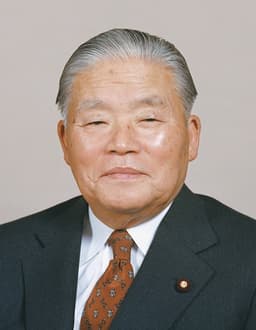
Masayoshi Ohira
Politician · Modern
49.8Total

Norodom Ranariddh
Politician · Modern
45.0Total
Basic Information
Born
1910
1944
Died
1980
—
Era
Modern
Modern
Nationality
Japan
Cambodia
Occupation
Politician
Politician
Civilization
Eastern
Eastern
Score Comparison
Military (10%)
14.6
50.0
Political (20%)
59.3
35.1
Influence (20%)
56.4
50.2
Legacy (20%)
45.0
40.0
Leadership (15%)
72.0
48.4
Strategy (15%)
33.1
49.2
TOTAL
49.8
45.0
Masayoshi Ohira — Complete Timeline
1978 AD
Appointed Prime Minister of JapanPolitical Action◆ Major
Masayoshi Ohira became Prime Minister of Japan on December 7, 1978, succeeding Takeo Fukuda. His election followed a close LDP presidential race. Ohira's government focused on economic management and foreign policy, including strengthening ties with the United States.
Prime MinisterLDPJapan
Impact: national
1979 AD
Hosted the 5th G7 Summit in TokyoPolitical Action◆ Major
Ohira hosted the 5th G7 Summit in Tokyo from June 28-29, 1979. The summit addressed the global oil crisis, inflation, and energy policy. Ohira played a key role in coordinating Western responses to the second oil shock following the Iranian Revolution.
G7 SummitDiplomacyOil Crisis
Impact: global
1980 AD
Died in OfficeOther◆ Major
Ohira died of a heart attack on June 12, 1980, while in office as Prime Minister. His death occurred during a general election campaign, triggering a sympathy vote that led to a landslide victory for the LDP. He was the first Japanese prime minister to die in office since 1945.
Death in OfficeLDPJapan
Impact: nationaltragic
Norodom Ranariddh — Complete Timeline
1981 AD
Founded FUNCINPEC political partyPolitical Action◆ Major
Prince Norodom Ranariddh founded the FUNCINPEC party (National United Front for an Independent, Neutral, Peaceful, and Cooperative Cambodia) as a royalist resistance movement against the Vietnamese-backed government. The party became a major political force.
Political PartyRoyalistCambodia
Impact: nationalconstructive
1993 AD
Became Prime Minister of Cambodia after UN electionsPolitical Action◆ Major
Following the 1993 UN-supervised elections, Norodom Ranariddh became First Prime Minister of Cambodia in a coalition government with the CPP's Hun Sen as Second Prime Minister. This marked the restoration of constitutional monarchy.
Prime MinisterElectionCambodia
Impact: nationalconstructive
1997 AD
Ousted in a coup by Hun SenPolitical Action
Norodom Ranariddh was overthrown in a violent coup led by Hun Sen, who accused him of plotting with the Khmer Rouge. Ranariddh fled to exile, and the coup led to international condemnation and a temporary suspension of aid.
CoupExileCambodia
Impact: nationaldestructive
1998 AD
Returned from exile and resumed political rolePolitical Action
After international mediation, Norodom Ranariddh returned to Cambodia and was elected President of the National Assembly. He continued to lead FUNCINPEC in a weakened coalition with the CPP.
ReturnParliamentCambodia
Impact: national
This comparison has not been analyzed yet.
One-time AI generation (~1 minute). Scores and timeline are already available below.
Rankings
🥇
Masayoshi OhiraLeader
Mil: 14.6Pol: 59.3Inf: 56.4
49.8
🥈
Norodom Ranariddh
Mil: 50.0Pol: 35.1Inf: 50.2
45.0
+4.8 behind
How This Comparison Works
Algorithm
Each figure is scored on 6 dimensions (0—100 scale) based on structured historical data: Military (10%), Political (20%), Influence (20%), Legacy (20%), Leadership (15%), Strategy (15%). The weighted total produces the final ranking.
Data Sources
Scores are computed from structured sub-indicators in the database. Scale factors adjust for era (Ancient ×0.85, Modern ×1.0) and civilization size (Eastern ×1.05, Other ×0.80) to account for differences in population and military scale.
Maximum 3 Figures
Comparisons are limited to 2—3 figures to ensure readability and statistical meaningfulness.
Error Margins
±5 points per dimension — Sub-scores are derived from historical records with inherent uncertainty. Two figures within 5 points on a dimension should be considered roughly equivalent in that area.
Total Score Accuracy
±3 points overall — The weighted combination of 6 dimensions produces a total score with approximately ±3 points of uncertainty. Differences of less than 3 points are not statistically significant— the figures are effectively tied.
Known Limitations
- Historical records are incomplete and uneven across civilizations
- Figures from oral-tradition societies may be underrepresented
- Occupation labels can misclassify multi-role figures
- Scores measure capability and impact, not moral character
- Quantitative scoring is a comparison tool, not absolute truth
Capability Radar
Military (10%) — Battles & Warfare
Battles
13
35
Win Rate
19
33
Expansion
18
36
Political (20%) — Governance & Reform
Reform
65
20
Diplomacy
70
40
Economy
75
15
Influence (20%) — Cultural & Global Reach
Cultural
30
20
Global
40
20
Legacy (20%) — Historical Impact
Historical
40
25
Longevity
30
15
Leadership (15%) — Power & Stability
Tenure
60
30
Stability
60
10
Strategy (15%) — Tactics & Innovation
Strategy
24
44
Tactics
27
43
Reform
28
49
Similar Comparisons
Comments & Discussion
No comments yet. Be the first to share your thoughts!