Loading...
Boris Yeltsin vs Masayoshi Ohira
Boris Yeltsin leads by 1.4 pts · 2 figures compared
…
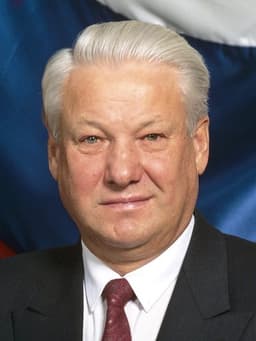
Boris Yeltsin
Politician · Modern
51.2Total
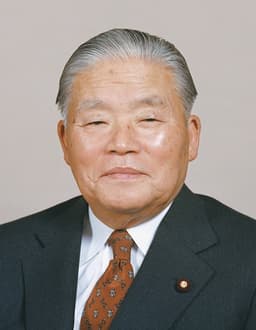
Masayoshi Ohira
Politician · Modern
49.8Total
Basic Information
Born
1931
1910
Died
—
1980
Era
Modern
Modern
Nationality
Russia
Japan
Occupation
Politician
Politician
Civilization
Western
Eastern
Score Comparison
Military (10%)
10.0
14.6
Political (20%)
53.8
59.3
Influence (20%)
55.0
56.4
Legacy (20%)
54.0
45.0
Leadership (15%)
74.0
72.0
Strategy (15%)
38.3
33.1
TOTAL
51.2
49.8
Boris Yeltsin — Complete Timeline
1991 AD
Elected President of the Russian Soviet Federative Socialist RepublicOther◆ Major
Yeltsin was elected President of the Russian SFSR in a direct popular election on June 12, 1991, winning 57% of the vote. This made him the first popularly elected leader in Russian history and gave him a democratic mandate separate from Soviet President Mikhail Gorbachev.
Russian PresidencyDemocracySoviet Union
Impact: nationalconstructive
Led Resistance to August 1991 CoupPolitical Action◆ Major
During the August 1991 coup attempt by hardline Communist Party members against Gorbachev, Yeltsin famously climbed onto a tank outside the Russian White House and called for resistance. His defiance rallied opposition to the coup, which collapsed within days, accelerating the dissolution of the Soviet Union.
Soviet CoupRussian ResistanceDemocracy
Impact: globalconstructive
Signed Belavezha Accords Dissolving Soviet UnionOther◆ Major
Yeltsin, along with leaders of Ukraine and Belarus, signed the Belavezha Accords on December 8, 1991, declaring the Soviet Union dissolved and establishing the Commonwealth of Independent States (CIS). This effectively ended the USSR and created the Russian Federation as an independent state.
Soviet DissolutionCISRussian Independence
Impact: global
1993 AD
Ordered Shelling of Russian ParliamentOther◆ Major
Yeltsin ordered the Russian army to shell the White House (parliament building) on October 4, 1993, to end a constitutional crisis where the Supreme Soviet had refused to accept his decrees. The attack killed hundreds and led to the adoption of a new constitution with strong presidential powers.
Constitutional CrisisRussian ParliamentAuthoritarianism
Impact: nationaldestructive
1994 AD
Launched First Chechen WarOther◆ Major
Yeltsin ordered Russian troops into Chechnya on December 11, 1994, to suppress the separatist government of Dzhokhar Dudayev. The war resulted in massive casualties, destruction of Grozny, and a humiliating Russian withdrawal in 1996, severely damaging Yeltsin's popularity and military reputation.
Chechen WarRussian MilitarySeparatism
Impact: regionaldestructive
1999 AD
Resigned as President of RussiaPolitical Action◆ Major
Yeltsin announced his resignation on December 31, 1999, in a televised address, appointing Prime Minister Vladimir Putin as acting president. The resignation was unexpected and allowed Putin to consolidate power before the 2000 election, marking the end of Yeltsin's tumultuous decade in power.
Russian PresidencySuccessionPutin
Impact: national
Masayoshi Ohira — Complete Timeline
1978 AD
Appointed Prime Minister of JapanPolitical Action◆ Major
Masayoshi Ohira became Prime Minister of Japan on December 7, 1978, succeeding Takeo Fukuda. His election followed a close LDP presidential race. Ohira's government focused on economic management and foreign policy, including strengthening ties with the United States.
Prime MinisterLDPJapan
Impact: national
1979 AD
Hosted the 5th G7 Summit in TokyoPolitical Action◆ Major
Ohira hosted the 5th G7 Summit in Tokyo from June 28-29, 1979. The summit addressed the global oil crisis, inflation, and energy policy. Ohira played a key role in coordinating Western responses to the second oil shock following the Iranian Revolution.
G7 SummitDiplomacyOil Crisis
Impact: global
1980 AD
Died in OfficeOther◆ Major
Ohira died of a heart attack on June 12, 1980, while in office as Prime Minister. His death occurred during a general election campaign, triggering a sympathy vote that led to a landslide victory for the LDP. He was the first Japanese prime minister to die in office since 1945.
Death in OfficeLDPJapan
Impact: nationaltragic
Expert Analysis
Origins
Boris Yeltsin was born on February 1, 1931, in Butka, a rural village in the Ural region of the Soviet Union. His family were peasant farmers; his grandfather was exiled for opposing collectivization. Yeltsin studied construction at the Ural Polytechnic Institute and worked in the building industry, joining the Communist Party in 1961. His early career was in the Sverdlovsk region, where he became First Secretary of the Sverdlovsk Oblast committee in 1976.
Masayoshi Ohira was born on March 12, 1910, in Kan'onji, Kagawa Prefecture, Japan, into a farming family. He graduated from Tokyo University of Commerce (now Hitotsubashi University) in 1936 and entered the Ministry of Finance. Ohira served as a bureaucrat during World War II and later entered politics in 1952 as a member of the Liberal Democratic Party (LDP). He held various ministerial posts, including Foreign Minister and Finance Minister.
Rise to Power
Yeltsin's rise to power in the 1980s was marked by his populist style and criticism of the Soviet establishment. In 1985, Mikhail Gorbachev brought him to Moscow as a reformer, appointing him First Secretary of the Moscow City Committee. However, Yeltsin soon clashed with the party elite, and in 1987 he was removed from his post after a speech criticizing Gorbachev's pace of reform. This made him a political martyr and opposition figure. In 1989, he won a seat in the Congress of People's Deputies, and in 1990 he became chairman of the Russian Supreme Soviet. On June 12, 1991, he was elected President of the Russian Soviet Federative Socialist Republic with 57% of the vote, the first direct presidential election in Russia.
Ohira rose through the LDP ranks, serving as Chief Cabinet Secretary under Prime Minister Eisaku Sato (1964-1972), playing a key role in the 1972 Okinawa reversion. He was a close ally of Prime Minister Kakuei Tanaka, and later served as Minister of Foreign Affairs (1972-1974) and Minister of Finance (1974-1976). In 1978, he defeated Takeo Fukuda in the LDP presidential election and became Prime Minister on December 7, 1978.
Leadership & Governance
Yeltsin's leadership was characterized by a confrontational, often chaotic style. As president of Russia, he pushed for radical economic reforms (shock therapy) in 1992, which included price liberalization and mass privatization. This led to hyperinflation, a collapse in living standards, and the rise of oligarchs. Politically, he faced a power struggle with the Russian parliament, which culminated in the 1993 constitutional crisis. Yeltsin ordered the military to shell the parliament building (the White House) on October 4, 1993, resulting in hundreds of deaths. He then pushed through a new constitution granting strong presidential powers.
Ohira's governance was more consensus-driven, typical of Japanese politics. He focused on fiscal consolidation and energy policy after the 1979 oil crisis. He hosted the 5th G7 Summit in Tokyo in June 1979, which addressed inflation and energy security. Ohira also strengthened Japan's relationship with China, signing a peace treaty in 1978, and promoted administrative reform. However, his tenure was short (18 months) and he struggled with a divided LDP.
Triumph & Tragedy
Yeltsin's greatest triumph was presiding over the peaceful dissolution of the Soviet Union in December 1991, ending the Cold War. He signed the Belavezha Accords with Ukraine and Belarus, declaring the USSR dissolved. His resistance to the August 1991 coup attempt, famously climbing a tank to rally opposition, solidified his image as a defender of democracy. However, his tragedies include the disastrous First Chechen War (1994-1996), which caused tens of thousands of casualties and ended in a humiliating withdrawal. His economic reforms led to a severe depression, with GDP falling by 40% in the 1990s, and widespread poverty.
Ohira's triumph was hosting the G7 summit and managing Japan's energy policy during the oil crisis. He also oversaw the signing of the Treaty of Peace and Friendship with China in 1978. His tragedy was his sudden death in office on June 12, 1980, from a heart attack during an election campaign. This left Japan without a leader and caused political uncertainty. His legacy is overshadowed by his short tenure and the LDP's subsequent dominance.
Character & Destiny
Yeltsin was impulsive, charismatic, and risk-taking. His decision to shell the parliament in 1993 demonstrated his willingness to use force to maintain power. His heavy drinking and health problems in the 1990s affected his leadership. He scored 74.0 in leadership but only 38.3 in strategy, reflecting his reactive style. His character shaped the chaotic transition of Russia from communism to a market economy.
Ohira was known as a cautious, pragmatic bureaucrat. He was reserved and intellectual, earning the nickname 'the philosopher'. His strategy score of 33.1 suggests a careful but sometimes indecisive approach. His death in office prevented him from implementing long-term reforms, but his character of steady management fit the LDP's factional politics.
Legacy
Yeltsin's legacy is mixed. He is credited with dismantling the Soviet Union and introducing democracy and a market economy, but his tenure also saw state collapse, corruption, and a decline in Russian power. His scores: influence 55.0, legacy 54.0. He is remembered as a tragic figure who failed to consolidate democracy, paving the way for Vladimir Putin. The 1993 constitution he enacted remains in force, concentrating power in the presidency.
Ohira's legacy is more modest. He is remembered as a capable finance minister and a prime minister who died in office. His influence score is 56.4, legacy 45.0. His policies on energy and fiscal discipline were continued by successors, and the 1978 China peace treaty remains a cornerstone of Japan's foreign policy. However, he is not widely known outside Japan.
Conclusion
Boris Yeltsin had a greater impact than Masayoshi Ohira. Yeltsin's actions directly ended the Soviet Union, a superpower, and reshaped global geopolitics. Despite his failures, his influence on world history is immense. Ohira's impact was limited to Japan's domestic politics and foreign policy within a stable system. Yeltsin's total score of 51.2 slightly edges Ohira's 49.8, but the gap in historical significance is wider. Yeltsin's decisions affected billions, while Ohira's tenure was too short to leave a lasting mark. Therefore, Yeltsin is the more consequential figure.
Rankings
🥇
Boris YeltsinLeader
Mil: 10.0Pol: 53.8Inf: 55.0
51.2
🥈
Masayoshi Ohira
Mil: 14.6Pol: 59.3Inf: 56.4
49.8
+1.4 behind
How This Comparison Works
Algorithm
Each figure is scored on 6 dimensions (0—100 scale) based on structured historical data: Military (10%), Political (20%), Influence (20%), Legacy (20%), Leadership (15%), Strategy (15%). The weighted total produces the final ranking.
Data Sources
Scores are computed from structured sub-indicators in the database. Scale factors adjust for era (Ancient ×0.85, Modern ×1.0) and civilization size (Eastern ×1.05, Other ×0.80) to account for differences in population and military scale.
Maximum 3 Figures
Comparisons are limited to 2—3 figures to ensure readability and statistical meaningfulness.
Error Margins
±5 points per dimension — Sub-scores are derived from historical records with inherent uncertainty. Two figures within 5 points on a dimension should be considered roughly equivalent in that area.
Total Score Accuracy
±3 points overall — The weighted combination of 6 dimensions produces a total score with approximately ±3 points of uncertainty. Differences of less than 3 points are not statistically significant— the figures are effectively tied.
Known Limitations
- Historical records are incomplete and uneven across civilizations
- Figures from oral-tradition societies may be underrepresented
- Occupation labels can misclassify multi-role figures
- Scores measure capability and impact, not moral character
- Quantitative scoring is a comparison tool, not absolute truth
Capability Radar
Military (10%) — Battles & Warfare
Battles
0
13
Win Rate
0
19
Expansion
0
18
Political (20%) — Governance & Reform
Reform
75
65
Diplomacy
60
70
Economy
40
75
Influence (20%) — Cultural & Global Reach
Cultural
50
30
Global
60
40
Legacy (20%) — Historical Impact
Historical
65
40
Longevity
40
30
Leadership (15%) — Power & Stability
Tenure
70
60
Stability
20
60
Strategy (15%) — Tactics & Innovation
Strategy
0
24
Tactics
0
27
Reform
10
28
Similar Comparisons
Comments & Discussion
No comments yet. Be the first to share your thoughts!