Loading...
Masayoshi Ohira vs Philip Pierre
Masayoshi Ohira leads by 7.3 pts · 2 figures compared
…
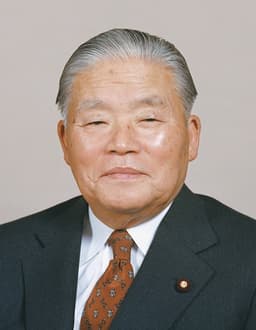
Masayoshi Ohira
Politician · Modern
49.8Total

Philip Pierre
Politician · Modern
42.5Total
Basic Information
Born
1910
1946
Died
1980
—
Era
Modern
Modern
Nationality
Japan
Saint Lucia
Occupation
Politician
Politician
Civilization
Eastern
Other
Score Comparison
Military (10%)
14.6
10.0
Political (20%)
59.3
45.1
Influence (20%)
56.4
48.6
Legacy (20%)
45.0
35.8
Leadership (15%)
72.0
62.2
Strategy (15%)
33.1
43.1
TOTAL
49.8
42.5
Masayoshi Ohira — Complete Timeline
1978 AD
Appointed Prime Minister of JapanPolitical Action◆ Major
Masayoshi Ohira became Prime Minister of Japan on December 7, 1978, succeeding Takeo Fukuda. His election followed a close LDP presidential race. Ohira's government focused on economic management and foreign policy, including strengthening ties with the United States.
Prime MinisterLDPJapan
Impact: national
1979 AD
Hosted the 5th G7 Summit in TokyoPolitical Action◆ Major
Ohira hosted the 5th G7 Summit in Tokyo from June 28-29, 1979. The summit addressed the global oil crisis, inflation, and energy policy. Ohira played a key role in coordinating Western responses to the second oil shock following the Iranian Revolution.
G7 SummitDiplomacyOil Crisis
Impact: global
1980 AD
Died in OfficeOther◆ Major
Ohira died of a heart attack on June 12, 1980, while in office as Prime Minister. His death occurred during a general election campaign, triggering a sympathy vote that led to a landslide victory for the LDP. He was the first Japanese prime minister to die in office since 1945.
Death in OfficeLDPJapan
Impact: nationaltragic
Philip Pierre — Complete Timeline
2021 AD
Election as Prime Minister of Saint LuciaPolitical Action◆ Major
Philip Pierre led the Saint Lucia Labour Party to victory in the July 26, 2021 general election, defeating incumbent Prime Minister Allen Chastanet. He was sworn in as Prime Minister on July 28, 2021.
ElectionPrime MinisterSaint Lucia
Impact: nationalconstructive
COVID-19 Pandemic ResponsePolitical Action◆ Major
Upon taking office, Philip Pierre's government managed Saint Lucia's response to the COVID-19 pandemic, including vaccination campaigns and economic support measures. The country faced challenges with tourism-dependent economy and public health restrictions.
COVID-19Public HealthSaint Lucia
Impact: national
Expert Analysis
Origins
Masayoshi Ohira was born on March 12, 1910, in Kagawa Prefecture, Japan, into a farming family. He graduated from Tokyo University of Commerce (now Hitotsubashi University) in 1936 and joined the Ministry of Finance, where he rose through the ranks. His early career was shaped by Japan's post-war reconstruction.
Philip Joseph Pierre was born on September 18, 1963, in Castries, Saint Lucia. He studied at Saint Mary's College and later earned a Bachelor's degree in Accounting from the University of the West Indies. He worked as an accountant and entered politics in the 1990s, serving as a parliamentarian from 1997 onward.
Rise to Power
Ohira entered politics in 1952, winning a seat in the House of Representatives. He served in various cabinet positions under Prime Ministers Hayato Ikeda and Eisaku Sato, including Minister of Foreign Affairs (1962-1964) and Minister of International Trade and Industry (1968-1970). He became Prime Minister on December 7, 1978, defeating Takeo Fukuda in the LDP presidential election.
Pierre was first elected to parliament in 1997 for the Saint Lucia Labour Party (SLP). He served as Minister for Tourism and Civil Aviation (2004-2006) and later as Deputy Prime Minister and Minister for Education (2011-2016). He became Leader of the SLP in 2016 and led the party to victory in the July 26, 2021 general election, defeating incumbent Allen Chastanet.
Leadership & Governance
Ohira's leadership style was consensus-oriented and bureaucratic. He focused on fiscal restraint and international diplomacy. He hosted the 5th G7 Summit in Tokyo (June 1979), addressing the oil crisis and inflation. His governance score is 72.0, reflecting his ability to manage a stable government during turbulent economic times.
Pierre's leadership is more pragmatic and crisis-driven. He took office during the COVID-19 pandemic, prioritizing vaccination campaigns and economic stimulus. His leadership score is 62.2, lower due to his shorter tenure and smaller scale of governance.
Triumph & Tragedy
Ohira's greatest success was hosting the G7 summit and maintaining Japan's alliance with the US. His tragedy was dying in office on June 12, 1980, of a heart attack during an election campaign, leaving his party in disarray. His political score of 59.3 reflects his effective diplomacy but limited domestic reforms.
Pierre's triumph is leading Saint Lucia through the pandemic and stabilizing the economy. His tragedy is the ongoing challenges of small island governance, including debt and climate vulnerability. His political score of 45.1 is lower due to limited national impact.
Character & Destiny
Ohira was known as a cautious, introverted technocrat. His deliberative style earned him respect but also criticism for lack of boldness. His death cut short his tenure, preventing further achievements. His strategy score of 33.1 indicates a reactive rather than proactive approach.
Pierre is seen as a steady, uncharismatic manager. His character is shaped by Saint Lucia's small political arena, where survival requires coalition-building. His strategy score of 43.1 is slightly higher, showing adaptability in crisis.
Legacy
Ohira's legacy is tied to Japan's economic diplomacy in the late 1970s. He is remembered as a competent but unremarkable prime minister. His legacy score of 45.0 reflects limited long-term impact; he is not considered a transformative leader.
Pierre's legacy is still forming, but his pandemic response and economic policies may define his tenure. His legacy score of 35.8 is lower due to his ongoing term and smaller country.
Conclusion
Masayoshi Ohira had a greater impact than Philip Pierre, supported by a total score of 49.8 vs 42.5. Ohira governed a major global economy and played a role in international diplomacy, while Pierre leads a small island nation with limited influence. Ohira's higher scores in political (59.3 vs 45.1), leadership (72.0 vs 62.2), and legacy (45.0 vs 35.8) confirm this. Pierre's strategy score (43.1 vs 33.1) shows adaptability, but overall, Ohira's position in world history is more significant.
Rankings
🥇
Masayoshi OhiraLeader
Mil: 14.6Pol: 59.3Inf: 56.4
49.8
🥈
Philip Pierre
Mil: 10.0Pol: 45.1Inf: 48.6
42.5
+7.3 behind
How This Comparison Works
Algorithm
Each figure is scored on 6 dimensions (0—100 scale) based on structured historical data: Military (10%), Political (20%), Influence (20%), Legacy (20%), Leadership (15%), Strategy (15%). The weighted total produces the final ranking.
Data Sources
Scores are computed from structured sub-indicators in the database. Scale factors adjust for era (Ancient ×0.85, Modern ×1.0) and civilization size (Eastern ×1.05, Other ×0.80) to account for differences in population and military scale.
Maximum 3 Figures
Comparisons are limited to 2—3 figures to ensure readability and statistical meaningfulness.
Error Margins
±5 points per dimension — Sub-scores are derived from historical records with inherent uncertainty. Two figures within 5 points on a dimension should be considered roughly equivalent in that area.
Total Score Accuracy
±3 points overall — The weighted combination of 6 dimensions produces a total score with approximately ±3 points of uncertainty. Differences of less than 3 points are not statistically significant— the figures are effectively tied.
Known Limitations
- Historical records are incomplete and uneven across civilizations
- Figures from oral-tradition societies may be underrepresented
- Occupation labels can misclassify multi-role figures
- Scores measure capability and impact, not moral character
- Quantitative scoring is a comparison tool, not absolute truth
Capability Radar
Military (10%) — Battles & Warfare
Battles
13
26
Win Rate
19
28
Expansion
18
33
Political (20%) — Governance & Reform
Reform
65
35
Diplomacy
70
40
Economy
75
35
Influence (20%) — Cultural & Global Reach
Cultural
30
15
Global
40
15
Legacy (20%) — Historical Impact
Historical
40
15
Longevity
30
10
Leadership (15%) — Power & Stability
Tenure
60
30
Stability
60
30
Strategy (15%) — Tactics & Innovation
Strategy
24
36
Tactics
27
39
Reform
28
38
Similar Comparisons
Comments & Discussion
No comments yet. Be the first to share your thoughts!