Loading...
Manuel Azana vs Norodom Ranariddh
Manuel Azana leads by 4.7 pts · 2 figures compared
…
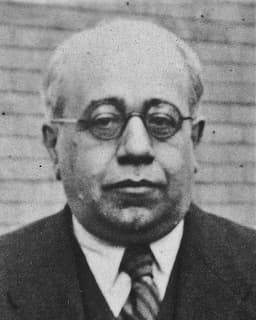
Manuel Azana
Politician · Modern
49.7Total

Norodom Ranariddh
Politician · Modern
45.0Total
Basic Information
Born
1880
1944
Died
1940
—
Era
Modern
Modern
Nationality
Spain
Cambodia
Occupation
Politician
Politician
Civilization
Western
Eastern
Score Comparison
Military (10%)
10.0
50.0
Political (20%)
68.0
35.1
Influence (20%)
53.3
50.2
Legacy (20%)
45.0
40.0
Leadership (15%)
67.0
48.4
Strategy (15%)
38.3
49.2
TOTAL
49.7
45.0
Manuel Azana — Complete Timeline
1931 AD
Prime Minister and Azaña ReformsReform◆ Major
As Prime Minister from 1931 to 1933, Azana implemented major reforms including military reduction, land redistribution, and secularization of education. These reforms aimed to modernize Spain but faced opposition from conservatives and the military.
ReformsModernizationSecond Republic
Impact: nationalprogressive
1933 AD
Casas Viejas IncidentPolitical Action
During Azana's premiership, the Guardia Civil violently suppressed an anarchist uprising in Casas Viejas, killing 24 villagers. The incident caused a political scandal, damaged Azana's reputation, and contributed to his government's fall.
RepressionAnarchismScandal
Impact: nationaldestructive
1936 AD
President of the Second Spanish RepublicPolitical Action◆ Major
Azana was elected President of the Second Spanish Republic in May 1936, succeeding Niceto Alcala-Zamora. His presidency coincided with increasing political polarization and the outbreak of the Spanish Civil War in July 1936.
PresidencySpanish RepublicCivil War
Impact: national
1939 AD
Exile and Death in FrancePolitical Action◆ Major
After the Republican defeat in the Spanish Civil War, Azana fled to France in February 1939. He resigned as President in March 1939 and died in exile in Montauban in November 1940, never returning to Spain.
ExileSpanish Civil WarDeath
Impact: nationaltragic
Norodom Ranariddh — Complete Timeline
1981 AD
Founded FUNCINPEC political partyPolitical Action◆ Major
Prince Norodom Ranariddh founded the FUNCINPEC party (National United Front for an Independent, Neutral, Peaceful, and Cooperative Cambodia) as a royalist resistance movement against the Vietnamese-backed government. The party became a major political force.
Political PartyRoyalistCambodia
Impact: nationalconstructive
1993 AD
Became Prime Minister of Cambodia after UN electionsPolitical Action◆ Major
Following the 1993 UN-supervised elections, Norodom Ranariddh became First Prime Minister of Cambodia in a coalition government with the CPP's Hun Sen as Second Prime Minister. This marked the restoration of constitutional monarchy.
Prime MinisterElectionCambodia
Impact: nationalconstructive
1997 AD
Ousted in a coup by Hun SenPolitical Action
Norodom Ranariddh was overthrown in a violent coup led by Hun Sen, who accused him of plotting with the Khmer Rouge. Ranariddh fled to exile, and the coup led to international condemnation and a temporary suspension of aid.
CoupExileCambodia
Impact: nationaldestructive
1998 AD
Returned from exile and resumed political rolePolitical Action
After international mediation, Norodom Ranariddh returned to Cambodia and was elected President of the National Assembly. He continued to lead FUNCINPEC in a weakened coalition with the CPP.
ReturnParliamentCambodia
Impact: national
Expert Analysis
Origins
Manuel Azana was born on January 10, 1880, in Alcalá de Henares, Spain, into a middle-class family. His father was a lawyer and his mother came from a landowning family. He studied law at the University of Madrid, later becoming a civil servant and intellectual. Azana was deeply influenced by the liberal and anti-clerical currents of early 20th-century Spain, and he became a prominent writer and orator. Norodom Ranariddh was born on January 2, 1944, in Phnom Penh, Cambodia, as the second son of King Norodom Sihanouk. He was raised in the royal palace and educated in France, earning a doctorate in law from the University of Paris. Ranariddh's early life was shaped by his father's political maneuvering and the turbulence of Cambodian politics, including the rise of the Khmer Rouge.
Rise to Power
Azana's rise began with his election to the Cortes in 1918 as a member of the Republican faction. He gained prominence as Minister of War in 1931 under the provisional government, where he pushed for military reform. In October 1931, he became Prime Minister, leading a leftist coalition. His key turning point was the 1936 election, which brought the Popular Front to power, and he was elected President in May 1936. Ranariddh's rise was tied to his royal lineage. In 1981, he founded FUNCINPEC, a royalist resistance movement against the Vietnamese-backed People's Republic of Kampuchea. After the 1991 Paris Peace Accords, he led the party in the 1993 UN-supervised elections, winning 58 of 120 seats. He became First Prime Minister in a coalition with Hun Sen's CPP.
Leadership & Governance
Azana's leadership was marked by intellectual rigor and a commitment to secular, democratic reform. As Prime Minister, he implemented the 'Azana Reforms': reducing the army's size from 120,000 to 80,000 officers, redistributing land to peasants, and secularizing education. His governance, however, was criticized for being too idealistic and alienating conservative and military factions. Ranariddh's leadership was more pragmatic, focused on restoring the monarchy and navigating Cambodia's complex political landscape. As First Prime Minister, he struggled to assert authority over Hun Sen's CPP, which controlled the security forces. His governance was hampered by corruption and factionalism within FUNCINPEC.
Triumph & Tragedy
Azana's greatest triumph was guiding the Second Spanish Republic through its early years and implementing progressive reforms. His greatest tragedy was the Casas Viejas incident in January 1933, where Guardia Civil killed 24 anarchist villagers, leading to a crisis that forced his resignation. The Spanish Civil War (1936-1939) ended his presidency and forced him into exile in France, where he died in 1940. Ranariddh's triumph was winning the 1993 elections and becoming Prime Minister, a key step in Cambodia's transition to peace. His tragedy was the 1997 coup by Hun Sen, which ousted him and forced him into exile. He returned in 1998 but never regained power, and FUNCINPEC declined.
Character & Destiny
Azana was a principled intellectual, often described as aloof and stubborn. His commitment to secularism and republicanism made him a target for both the far-right and anarchists. His character shaped his fate: he refused to compromise with the military, leading to the coup of 1936. Historians note his score of 68.0 in political skill, but his military score of 10.0 reflects his inability to control armed forces. Ranariddh was a charismatic royal but a naive politician. He trusted Hun Sen despite warnings, leading to his downfall. His political score of 35.1 indicates poor strategic judgment. His military score of 50.0 reflects his role leading a guerrilla force.
Legacy
Azana's legacy is as a symbol of Spanish republicanism and democracy. His reforms influenced later Spanish politics, but his failure to prevent civil war is a cautionary tale. He is remembered in Spain as a tragic figure of the Republic. Ranariddh's legacy is mixed: he helped restore the monarchy and peace, but his political missteps weakened FUNCINPEC. He is remembered as a prince who tried to democratize Cambodia but was outmaneuvered by Hun Sen. His influence score of 50.2 reflects moderate impact.
Conclusion
Manuel Azana, with a total score of 49.7, had a greater historical impact than Norodom Ranariddh (45.0). Azana's reforms and role in the Second Spanish Republic shaped Spain's political trajectory, while Ranariddh's impact was more limited due to his political failures. Azana's intellectual legacy and the tragedy of the Spanish Civil War give him a more enduring place in history. Ranariddh, despite his royal status, could not overcome Hun Sen's authoritarianism. Thus, Azana's influence on democratic ideals in Spain outweighs Ranariddh's contributions to Cambodian peace.
Rankings
🥇
Manuel AzanaLeader
Mil: 10.0Pol: 68.0Inf: 53.3
49.7
🥈
Norodom Ranariddh
Mil: 50.0Pol: 35.1Inf: 50.2
45.0
+4.7 behind
How This Comparison Works
Algorithm
Each figure is scored on 6 dimensions (0—100 scale) based on structured historical data: Military (10%), Political (20%), Influence (20%), Legacy (20%), Leadership (15%), Strategy (15%). The weighted total produces the final ranking.
Data Sources
Scores are computed from structured sub-indicators in the database. Scale factors adjust for era (Ancient ×0.85, Modern ×1.0) and civilization size (Eastern ×1.05, Other ×0.80) to account for differences in population and military scale.
Maximum 3 Figures
Comparisons are limited to 2—3 figures to ensure readability and statistical meaningfulness.
Error Margins
±5 points per dimension — Sub-scores are derived from historical records with inherent uncertainty. Two figures within 5 points on a dimension should be considered roughly equivalent in that area.
Total Score Accuracy
±3 points overall — The weighted combination of 6 dimensions produces a total score with approximately ±3 points of uncertainty. Differences of less than 3 points are not statistically significant— the figures are effectively tied.
Known Limitations
- Historical records are incomplete and uneven across civilizations
- Figures from oral-tradition societies may be underrepresented
- Occupation labels can misclassify multi-role figures
- Scores measure capability and impact, not moral character
- Quantitative scoring is a comparison tool, not absolute truth
Capability Radar
Military (10%) — Battles & Warfare
Battles
0
35
Win Rate
0
33
Expansion
0
36
Political (20%) — Governance & Reform
Reform
60
20
Diplomacy
30
40
Economy
20
15
Influence (20%) — Cultural & Global Reach
Cultural
30
20
Global
20
20
Legacy (20%) — Historical Impact
Historical
40
25
Longevity
20
15
Leadership (15%) — Power & Stability
Tenure
40
30
Stability
10
10
Strategy (15%) — Tactics & Innovation
Strategy
0
44
Tactics
0
43
Reform
10
49
Similar Comparisons
Comments & Discussion
No comments yet. Be the first to share your thoughts!