Loading...
Martin Luther vs Tarmashirin
Martin Luther leads by 12.6 pts · 2 figures compared
…

Martin Luther
Religious Leader · Medieval
61.0Total
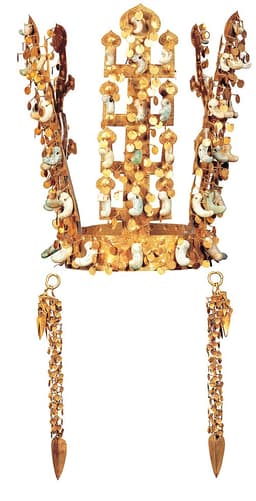
Tarmashirin
Emperor · Medieval
48.4Total
Basic Information
Born
1483
1280
Died
1546
1334
Era
Medieval
Medieval
Nationality
Germany
Chagatai Khanate
Occupation
Religious Leader
Emperor
Civilization
Western
Eastern
Score Comparison
Military (10%)
18.0
55.0
Political (20%)
35.1
40.8
Influence (20%)
85.0
54.9
Legacy (20%)
90.0
41.7
Leadership (15%)
34.6
55.3
Strategy (15%)
50.2
43.3
TOTAL
61.0
48.4
Martin Luther — Complete Timeline
1517 AD
Publication of the 95 ThesesPolitical Action
Martin Luther posted 95 theses on the door of the Wittenberg Castle Church, criticizing the sale of indulgences and papal authority. This act initiated the Protestant Reformation, leading to the fragmentation of Western Christianity and the rise of Protestant denominations.
ReformationChurchIndulgences
Impact: globalconstructive
1521 AD
Diet of WormsPolitical Action◆ Major
Luther was summoned before the Holy Roman Emperor Charles V at the Diet of Worms and ordered to recant his writings. He refused, stating 'Here I stand, I can do no other.' The Edict of Worms declared him an outlaw and heretic.
ReformationImperial DietExcommunication
Impact: regional
1522 AD
Translation of the New Testament into GermanCultural◆ Major
While in hiding at Wartburg Castle, Luther translated the New Testament from Greek into German. This translation made the Bible accessible to common people, standardized the German language, and promoted lay literacy and individual interpretation of scripture.
Bible TranslationLanguageLiteracy
Impact: regionalconstructive
1525 AD
Marriage to Katharina von BoraPolitical Action
Luther married Katharina von Bora, a former nun, publicly rejecting clerical celibacy. This marriage served as a model for Protestant clergy and challenged the Catholic Church's requirement of priestly celibacy, reshaping the social role of ministers.
MarriageClergyReformation
Impact: regionalconstructive
1530 AD
Publication of the Augsburg ConfessionPolitical Action◆ Major
Luther's colleague Philipp Melanchthon presented the Augsburg Confession to Emperor Charles V, outlining the core doctrines of the Lutheran movement. This document became the foundational confession of the Lutheran Church and defined the theological split from Catholicism.
LutheranismConfessionDoctrine
Impact: regionalconstructive
Tarmashirin — Complete Timeline
1326 AD
Conversion to IslamCultural◆ Major
Tarmashirin converted to Islam, becoming the first Chagatai khan to adopt the religion. This conversion influenced the religious orientation of the Chagatai Khanate and led to tensions with traditionalist Mongol factions who opposed Islamic influence.
Religious ConversionIslamizationChagatai Khanate
Impact: regional
1334 AD
Deposition and DeathPolitical Action◆ Major
Tarmashirin was deposed and killed by a rebellion led by traditionalist Mongol nobles who opposed his Islamic policies and perceived abandonment of Mongol customs. His death ended his reign and marked a period of instability in the Chagatai Khanate.
DepositionRebellionChagatai Khanate
Impact: regionaltragic
Expert Analysis
Origins
**Martin Luther** was born on November 10, 1483, in Eisleben, Germany, into a family of modest means. His father, Hans Luther, was a miner and leaseholder of copper mines. Luther studied at the University of Erfurt, earning a Master's degree in 1505, before entering an Augustinian monastery. His rigorous theological training at the University of Wittenberg, where he earned a Doctorate in Theology in 1512, shaped his later critiques of Church practices.
**Tarmashirin**, whose birth date is uncertain (early 14th century), was a grandson of Duwa, a Chagatai khan. He belonged to the Borjigin clan, the ruling family of the Mongol Empire. Little is known of his early life, but he was raised in the traditional Mongol shamanistic and Buddhist environment of the Chagatai Khanate. His rise occurred during a period of fragmentation and conflict among Mongol successor states.
Rise to Power
Luther's rise began with his **95 Theses** on October 31, 1517, which he posted on the door of the Wittenberg Castle Church. The theses criticized the sale of indulgences and questioned papal authority. Using the recent invention of the printing press, the theses spread rapidly across Europe, gaining widespread support. By 1520, Luther had published three major treatises—'To the Christian Nobility of the German Nation', 'On the Babylonian Captivity of the Church', and 'On the Freedom of a Christian'—which solidified his break with Rome. His refusal to recant at the **Diet of Worms** in 1521, where he famously declared 'Here I stand,' turned him into a symbol of resistance.
Tarmashirin became khan of the Chagatai Khanate around 1326, after the death of his brother Kebek. He initially continued the policies of his predecessors, but his significant turning point was his **conversion to Islam** around 1330. This made him the first Chagatai khan to adopt Islam, aligning the khanate with the Islamic world and breaking from traditional Mongol religious practices. His conversion was likely influenced by the growing Muslim population in Transoxiana and the need to consolidate power among settled Muslim subjects.
Leadership & Governance
Luther's leadership was theological and ideological. He rejected papal supremacy and advocated for salvation by faith alone, scripture as the sole authority, and the priesthood of all believers. He translated the Bible into German, making it accessible to laypeople, and simplified the liturgy. His governance style was decentralized: he worked with German princes who supported his reforms, leading to the establishment of state churches. He married Katharina von Bora in 1525, rejecting clerical celibacy and setting a new model for Protestant clergy.
Tarmashirin's governance was pragmatic and adaptive. As a Mongol ruler, he maintained the traditional military structure but introduced Islamic law (sharia) and customs. He built mosques, patronized Islamic scholars, and sought closer ties with Muslim states such as the Mamluk Sultanate and the Delhi Sultanate. However, his pro-Islamic policies alienated the traditionalist Mongol nobility, who valued the Yassa (Mongol law) and shamanistic rituals. His leadership score of 55.3 reflects his ability to implement change but also his failure to manage internal dissent.
Triumph & Tragedy
Luther's greatest triumph was the **Protestant Reformation**, which permanently fractured Western Christianity. His translation of the New Testament (1522) and the entire Bible (1534) standardized the German language and promoted literacy. His influence score of 85.0 reflects his role in shaping modern Christianity. His tragedy was the **Peasants' War** (1524-1525), where he sided with the princes against the rebelling peasants, leading to thousands of deaths and tarnishing his legacy. He also failed to unite the Protestant movement, leading to divisions among Lutherans, Calvinists, and Anabaptists.
Tarmashirin's triumph was his **conversion to Islam**, which accelerated the Islamization of the Chagatai Khanate and influenced later Mongol rulers like Timur. His political score of 40.8 indicates modest success in governance. His tragedy was his **deposition and death** around 1334, when traditionalist Mongol nobles rebelled against his Islamic policies. He was killed, and the khanate reverted to a more secular stance under his successors. His legacy score of 41.7 reflects his limited long-term impact compared to Luther.
Character & Destiny
Luther was dogmatic, courageous, and often confrontational. His refusal to compromise at the Diet of Worms and his harsh writings against Jews and peasants reveal a man driven by conviction but prone to extremism. His character shaped his destiny: his steadfastness sparked a movement, but his rigidity also created enemies and schisms. Historical assessments note his role as a catalyst for religious change, but also his authoritarian tendencies.
Tarmashirin was pragmatic and reformist, but his conversion alienated the traditional power base. His decision to favor Islam over Mongol customs was a strategic gamble that ultimately failed due to internal resistance. His character was less documented, but his actions suggest a ruler trying to modernize a nomadic empire by adopting a sedentary religion. His destiny was cut short by the very forces he sought to change.
Legacy
Luther's legacy is immense: he sparked the Reformation, leading to the emergence of Protestantism, which now comprises over 800 million adherents. His translation of the Bible influenced German literature and national identity. The principle of sola scriptura underpins modern biblical criticism. His total score of 61.0 reflects his enduring impact on religion, culture, and politics. The Lutheran Church, named after him, remains a major Christian denomination.
Tarmashirin's legacy is more localized. His conversion set a precedent for later Mongol khans to adopt Islam, but his deposition prevented lasting institutional change. The Chagatai Khanate remained divided, and the full Islamization of Central Asia was completed later by Timur and his successors. His influence score of 54.9 indicates a moderate impact, but his name is less known outside specialist circles.
Conclusion
While Tarmashirin's conversion to Islam was a significant event for the Chagatai Khanate, its impact was limited in scale and duration. Martin Luther, with a total score of 61.0 compared to Tarmashirin's 48.4, had a far greater impact on world history. Luther's Reformation reshaped European society, politics, and religion, leading to centuries of religious conflict and the rise of modernity. Tarmashirin's legacy is confined to Central Asian history, whereas Luther's influence is global. Therefore, Martin Luther is the more consequential figure.
Rankings
🥇
Martin LutherLeader
Mil: 18.0Pol: 35.1Inf: 85.0
61.0
🥈
Tarmashirin
Mil: 55.0Pol: 40.8Inf: 54.9
48.4
+12.6 behind
How This Comparison Works
Algorithm
Each figure is scored on 6 dimensions (0—100 scale) based on structured historical data: Military (10%), Political (20%), Influence (20%), Legacy (20%), Leadership (15%), Strategy (15%). The weighted total produces the final ranking.
Data Sources
Scores are computed from structured sub-indicators in the database. Scale factors adjust for era (Ancient ×0.85, Modern ×1.0) and civilization size (Eastern ×1.05, Other ×0.80) to account for differences in population and military scale.
Maximum 3 Figures
Comparisons are limited to 2—3 figures to ensure readability and statistical meaningfulness.
Error Margins
±5 points per dimension — Sub-scores are derived from historical records with inherent uncertainty. Two figures within 5 points on a dimension should be considered roughly equivalent in that area.
Total Score Accuracy
±3 points overall — The weighted combination of 6 dimensions produces a total score with approximately ±3 points of uncertainty. Differences of less than 3 points are not statistically significant— the figures are effectively tied.
Known Limitations
- Historical records are incomplete and uneven across civilizations
- Figures from oral-tradition societies may be underrepresented
- Occupation labels can misclassify multi-role figures
- Scores measure capability and impact, not moral character
- Quantitative scoring is a comparison tool, not absolute truth
Capability Radar
Military (10%) — Battles & Warfare
Battles
24
30
Win Rate
26
30
Expansion
30
30
Political (20%) — Governance & Reform
Reform
90
40
Diplomacy
20
40
Economy
10
30
Influence (20%) — Cultural & Global Reach
Cultural
85
40
Global
85
20
Legacy (20%) — Historical Impact
Historical
90
30
Longevity
90
20
Leadership (15%) — Power & Stability
Tenure
0
40
Stability
10
30
Strategy (15%) — Tactics & Innovation
Strategy
32
30
Tactics
32
30
Reform
36
20
Similar Comparisons
Comments & Discussion
No comments yet. Be the first to share your thoughts!