Loading...
Mao Zedong vs Pedro I of Brazil
Mao Zedong leads by 10.7 pts · 2 figures compared
…
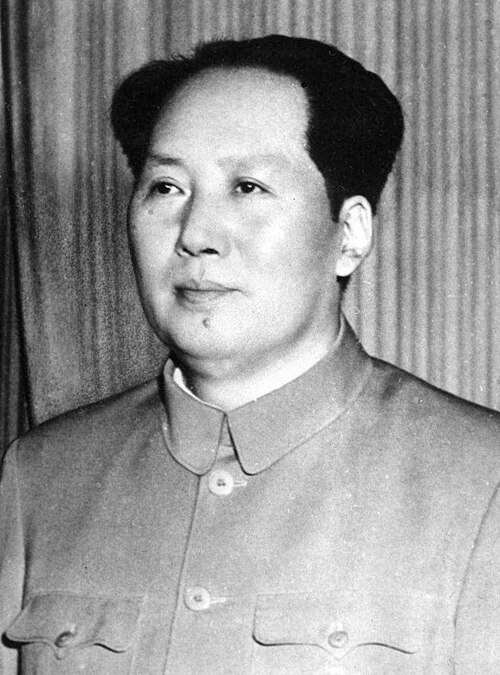
Mao Zedong
Politician · Modern
76.4Total
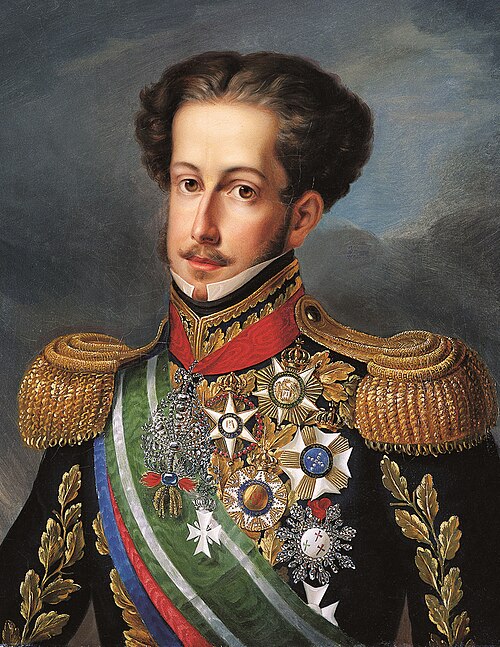
Pedro I of Brazil
Emperor · Modern
65.7Total
Basic Information
Born
1893
1798
Died
1976
1834
Era
Modern
Modern
Nationality
China
Brazil
Occupation
Politician
Emperor
Civilization
Eastern
Western
Score Comparison
Military (10%)
65.0
65.0
Political (20%)
82.0
60.2
Influence (20%)
79.7
72.3
Legacy (20%)
69.9
70.0
Leadership (15%)
80.6
74.5
Strategy (15%)
76.5
50.0
TOTAL
76.4
65.7
Rankings
🥇
Mao ZedongLeader
Mil: 65.0Pol: 82.0Inf: 79.7
76.4
🥈
Pedro I of Brazil
Mil: 65.0Pol: 60.2Inf: 72.3
65.7
+10.7 behind
How This Comparison Works
Algorithm
Each figure is scored on 6 dimensions (0—100 scale) based on structured historical data: Military (10%), Political (20%), Influence (20%), Legacy (20%), Leadership (15%), Strategy (15%). The weighted total produces the final ranking.
Data Sources
Scores are computed from structured sub-indicators in the database. Scale factors adjust for era (Ancient ×0.85, Modern ×1.0) and civilization size (Eastern ×1.05, Other ×0.80) to account for differences in population and military scale.
Maximum 3 Figures
Comparisons are limited to 2—3 figures to ensure readability and statistical meaningfulness.
Error Margins
±5 points per dimension — Sub-scores are derived from historical records with inherent uncertainty. Two figures within 5 points on a dimension should be considered roughly equivalent in that area.
Total Score Accuracy
±3 points overall — The weighted combination of 6 dimensions produces a total score with approximately ±3 points of uncertainty. Differences of less than 3 points are not statistically significant— the figures are effectively tied.
Known Limitations
- Historical records are incomplete and uneven across civilizations
- Figures from oral-tradition societies may be underrepresented
- Occupation labels can misclassify multi-role figures
- Scores measure capability and impact, not moral character
- Quantitative scoring is a comparison tool, not absolute truth
Capability Radar
Military (10%) — Battles & Warfare
Battles
85
35
Win Rate
80
40
Expansion
85
30
Political (20%) — Governance & Reform
Reform
95
45
Diplomacy
80
50
Economy
70
30
Influence (20%) — Cultural & Global Reach
Cultural
90
40
Global
90
45
Legacy (20%) — Historical Impact
Historical
95
55
Longevity
85
50
Leadership (15%) — Power & Stability
Tenure
95
55
Stability
60
25
Strategy (15%) — Tactics & Innovation
Strategy
85
35
Tactics
75
30
Reform
90
20
Expert Analysis
Mao Zedong vs Pedro I of Brazil
**The Emperor and the Chairman: Two Paths to Modernity**
On a September morning in 1822, a young Portuguese prince stood beside the Ipiranga River in São Paulo, tore the blue-and-white insignia of his own royal house from his uniform, and shouted “Independence or Death!” Across the globe and more than a century later, another revolutionary leader stood on the Gate of Heavenly Peace in Beijing, his voice carrying across a sea of red flags as he declared the birth of a new China. Both men broke with old empires. Both remade nations in their own image. But Pedro I of Brazil and Mao Zedong took such radically different roads that their stories read less like parallel histories than like mirror images—one a tragic aristocrat who could not finish what he began, the other a peasant’s son who bent an entire civilization to his will.
**Origins**
Pedro de Alcântara was born in 1798 inside the gilded cage of the Portuguese court. His father, King João VI, had fled Napoleon’s armies and moved the entire monarchy to Rio de Janeiro, making Brazil the temporary heart of a transatlantic empire. Young Pedro grew up not in a palace of ancient protocol but on horseback in the tropical hills, learning Portuguese from his nurse and a casual informality that would never leave him. He was charming, impulsive, and utterly convinced of his own divine right to rule.
Mao Zedong came into the world in 1893 in the village of Shaoshan, Hunan province, the son of a prosperous peasant who beat him for reading books. Where Pedro inherited a throne, Mao inherited a China that had been humiliated by foreign powers, gutted by opium wars, and torn apart by warlords. He left home at sixteen, carrying only an umbrella and a copy of a reformist pamphlet. His education was not in courtly manners but in the brutal realities of rural poverty and the radical ideas of Marx and Lenin.
**Rise to Power**
Pedro’s path was almost accidental. When his father returned to Portugal in 1821, leaving him as regent in Brazil, the Portuguese parliament tried to reduce Brazil back to a colony. The Brazilian elites, terrified of losing their autonomy, pushed Pedro to stay. He hesitated, then chose rebellion. On September 7, 1822, he declared independence and was crowned emperor three months later. His power came not from conquest but from a crown placed on his head by a coalition of landowners and merchants who needed a figurehead.
Mao’s rise was a long, bloody climb. He was not the favorite of the Communist Party’s early leaders; he was a provincial organizer who understood that China’s revolution would not come from urban workers but from landless peasants. The Long March of 1934–35, a 6,000-mile strategic retreat through some of the world’s most hostile terrain, transformed him from a party functionary into a living legend. By the time he proclaimed the People’s Republic in 1949, he had fought a civil war, survived purges within his own ranks, and emerged as the undisputed ruler of a quarter of humanity.
**Leadership & Governance**
Pedro governed as an enlightened despot, but he was never truly in control. He wrote a liberal constitution in 1824, then dissolved the Constituent Assembly when it tried to limit his powers. He fought the War of Independence against Portuguese loyalists in Bahia and Maranhão, but his military score of 65.0 reflects a commander who relied more on British mercenaries and local militias than on strategic genius. His political score of 60.2 tells the story of a ruler who could not manage the factions around him—Portuguese-born absolutists versus Brazilian liberals, slave-owning planters versus abolitionist intellectuals. He tried to please everyone and satisfied no one.
Mao’s leadership was absolute, terrifying, and transformative. His political score of 82.0 and leadership score of 80.6 reflect a man who understood power not as a gift but as a weapon. He launched the Great Leap Forward in 1958 to industrialize China overnight, a campaign that ended in a famine that killed tens of millions. He initiated the Cultural Revolution in 1966 to purge his enemies and remake Chinese society, unleashing the Red Guards and a decade of chaos. Yet he also opened relations with the United States through Ping-Pong diplomacy in 1971, a masterstroke of strategic pragmatism. His strategy score of 76.5 shows a mind that could think in decades, not months.
**Triumph & Tragedy**
Pedro’s greatest moment was the Grito do Ipiranga—the cry for independence that made Brazil a nation. His greatest failure was his inability to hold it together. By 1831, after nine years of mounting unpopularity, a disastrous war with Argentina, and the murder of his mistress’s lover by an angry mob, he abdicated in favor of his five-year-old son and sailed back to Portugal. He died three years later at thirty-five, a king without a kingdom.
Mao’s triumph was the creation of a unified, independent China that could never again be carved up by foreign powers. His tragedy was the human cost of that vision. The Great Leap Forward and the Cultural Revolution left scars that still run deep. He died in 1976 at eighty-two, having outlived most of his enemies and many of his dreams.
**Character & Destiny**
Pedro was a man of passion, not of iron. He loved music, women, and the open road. He once rode from Rio to São Paulo in four days, changing horses every few hours, driven by sheer restlessness. He could not bear the tedium of administration or the compromises of politics. His destiny was to break a chain, not to forge a new one.
Mao was a man of ice and fire. He was a poet who wrote about the beauty of snow-covered mountains and a revolutionary who sacrificed millions for a future he would never see. He believed that power grew from the barrel of a gun, but also that the human spirit could be remade through struggle. His destiny was to shatter an ancient civilization and weld its pieces into something unrecognizable.
**Legacy**
Pedro I is remembered as the father of Brazilian independence, but his legacy is overshadowed by his son, Pedro II, who reigned for nearly half a century and turned Brazil into a stable empire. Today, the first emperor is a figure in textbooks, not a living force in Brazilian politics.
Mao’s legacy is vast, contested, and still alive. In China, he is revered as the founding father, his portrait still hanging on Tiananmen. In the West, he is debated as a tyrant, a visionary, or both. His total score of 76.4 against Pedro’s 65.7 reflects not just a difference in achievement but a difference in scale—one man built a nation, the other remade a world.
**Conclusion**
Standing at the Ipiranga River, Pedro I had the courage to say no. Standing at Tiananmen Gate, Mao Zedong had the will to say yes—yes to everything, no matter the cost. One was a prince who became a rebel, then a ghost. The other was a rebel who became a prince, then a monument. Their stories remind us that the same historical forces—nationalism, revolution, the hunger for independence—can produce vastly different outcomes depending on the character of the man holding the reins. Pedro’s tragedy was that he was not ruthless enough. Mao’s tragedy was that he was.
Frequently Asked Questions
Who ranks highest among Mao Zedong, Pedro I of Brazil?
Our six-dimension data-driven scoring system compares Military, Political, Influence, Legacy, Leadership, and Strategy to determine the ranking among Mao Zedong, Pedro I of Brazil. See the full score breakdown on this page.
How accurate is this historical comparison?
Scores are computed from structured historical sub-indicators with era and civilization scale factors. The system has approximately ±3 points of uncertainty per dimension. Differences under 3 points are not statistically significant.
Mao Zedong — Complete Timeline
1934 AD
Long MarchWar
Mao Zedong led the Chinese Red Army on a strategic retreat from Nationalist forces, covering approximately 6,000 miles over 370 days. The march solidified Mao's leadership within the Chinese Communist Party and became a foundational myth of the Communist revolution.
Chinese Civil WarCommunist RevolutionRetreat
Impact: national
1949 AD
Proclamation of the People's Republic of ChinaPolitical Action
Mao Zedong declared the founding of the People's Republic of China from Tiananmen Gate in Beijing. This ended the Chinese Civil War and established Communist rule over mainland China, with Mao as Chairman of the Central People's Government.
Founding of PRCCommunist VictoryRevolution
Impact: global
1958 AD
Great Leap ForwardReform◆ Major
Mao launched a campaign to rapidly industrialize China and collectivize agriculture. The policy led to widespread mismanagement, resulting in a famine that caused an estimated 15-45 million deaths between 1959 and 1961.
FamineIndustrializationCollectivization
Impact: nationaldestructive
1960 AD
Sino-Soviet SplitPolitical Action◆ Major
Mao's ideological differences with Soviet leader Nikita Khrushchev led to a breakdown in relations between China and the Soviet Union. The split ended the Sino-Soviet alliance and reshaped global Cold War dynamics, with China pursuing an independent path.
Cold WarIdeological ConflictAlliance Breakdown
Impact: global
1966 AD
Cultural RevolutionPolitical Action
Mao initiated a sociopolitical movement to purge capitalist and traditional elements from Chinese society. The Red Guard youth groups attacked intellectuals and officials, leading to widespread violence, destruction of cultural artifacts, and an estimated 1-2 million deaths.
Political PurgeSocial UpheavalRed Guard
Impact: nationaldestructive
1971 AD
Ping-Pong DiplomacyCultural◆ Major
Mao approved an invitation for the U.S. table tennis team to visit China, initiating a thaw in Sino-American relations. This cultural exchange paved the way for President Nixon's visit to China in 1972 and the eventual normalization of diplomatic ties.
DiplomacyU.S.-China RelationsCultural Exchange
Impact: globalconstructive
Pedro I of Brazil — Complete Timeline
1822 AD
Declaration of Independence of BrazilPolitical Action
Pedro I declared Brazil's independence from Portugal on September 7, 1822, at the Ipiranga River in S
Impact: globalprogressive
Coronation as Emperor of BrazilPolitical Action◆ Major
Pedro I was crowned Emperor of Brazil on December 1, 1822, in Rio de Janeiro. The coronation formalized the new imperial government, with Pedro I as constitutional monarch, though he retained significant executive powers.
Impact: nationalconstructive
1823 AD
War of Independence of BrazilWar◆ Major
Pedro I led Brazilian forces against Portuguese loyalists in the War of Independence. Key battles occurred in Bahia, Maranh
Impact: national
Dissolution of the Constituent AssemblyPolitical Action◆ Major
Pedro I dissolved the Constituent Assembly after conflicts over the constitution's limits on imperial power. He then imposed the 1824 Constitution, which granted the emperor extensive powers, including the Moderating Power, centralizing authority.
Impact: nationaldestructive
1831 AD
Abdication of the Brazilian ThronePolitical Action
Pedro I abdicated the Brazilian throne in favor of his five-year-old son Pedro II on April 7, 1831. He returned to Portugal to claim the Portuguese throne, leaving Brazil under a regency until his son came of age.
Impact: national
Similar Comparisons
Comments & Discussion
红太阳观察员6/16/2026
老蒋日记:一个“斗而不破”,一个“跑路欧洲”。毛把农村包围城市玩成了全球教科书,佩德罗一世却把巴西帝国搞成了君主制试验田——一个穿着补丁布鞋蹬出新中国,一个带着葡萄牙公主跳恰恰却把国会解散三次。结果呢?一个留下八亿人民八亿兵,一个留下独立日却失了王位。唯心史观?这叫实践出真知。