Loading...
Catherine the Great vs Mao Zedong
Mao Zedong leads by 12.6 pts · 2 figures compared
…
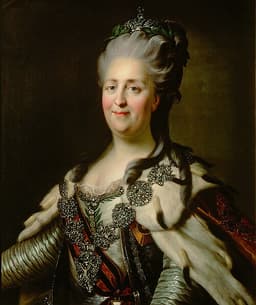
Catherine the Great
Emperor · Modern
66.8Total
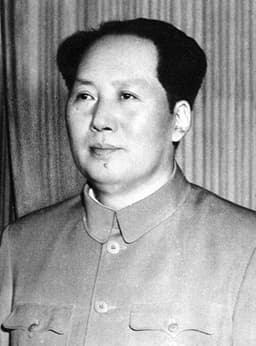
Mao Zedong
Politician · Modern
79.4Total
Basic Information
Born
1729
1893
Died
1796
1976
Era
Modern
Modern
Nationality
Russia
China
Occupation
Emperor
Politician
Civilization
Western
Eastern
Score Comparison
Military (10%)
78.5
75.0
Political (20%)
90.0
88.0
Influence (20%)
65.0
85.0
Legacy (20%)
40.0
70.0
Leadership (15%)
80.0
85.0
Strategy (15%)
72.0
72.0
TOTAL
66.8
79.4
Catherine the Great — Complete Timeline
1762 AD
Coup d'État of 1762Political Action
Catherine II led a coup d'
CoupAccessionPower
Impact: national
1764 AD
Hermitage Museum FoundedCultural◆ Major
Catherine the Great founded the Hermitage Museum in St. Petersburg by purchasing a large collection of paintings from Berlin. The museum grew into one of the world's largest art collections, reflecting her patronage of Enlightenment culture.
ArtMuseumEnlightenment
Impact: globalconstructive
1768 AD
Russo-Turkish War (1768-1774)War◆ Major
Catherine the Great initiated a war against the Ottoman Empire, resulting in Russian victory. The Treaty of K
WarOttoman EmpireExpansion
Impact: regional
1783 AD
Annexation of CrimeaPolitical Action◆ Major
Catherine the Great formally annexed the Crimean Peninsula from the Ottoman Empire. This strategic acquisition gave Russia a dominant position in the Black Sea and a warm-water port, fulfilling a long-standing imperial ambition.
AnnexationCrimeaBlack Sea
Impact: regional
1785 AD
Charter to the Gentry GrantedReform◆ Major
Catherine the Great issued the Charter to the Gentry, which codified the rights and privileges of the Russian nobility. It exempted nobles from taxation and military service, solidifying their social status and support for her rule.
NobilityReformSocial Structure
Impact: nationalconstructive
Mao Zedong — Complete Timeline
1934 AD
Long MarchWar
Mao Zedong led the Chinese Red Army on a strategic retreat from Nationalist forces, covering approximately 6,000 miles over 370 days. The march solidified Mao's leadership within the Chinese Communist Party and became a foundational myth of the Communist revolution.
Chinese Civil WarCommunist RevolutionRetreat
Impact: national
1949 AD
Proclamation of the People's Republic of ChinaPolitical Action
Mao Zedong declared the founding of the People's Republic of China from Tiananmen Gate in Beijing. This ended the Chinese Civil War and established Communist rule over mainland China, with Mao as Chairman of the Central People's Government.
Founding of PRCCommunist VictoryRevolution
Impact: global
1958 AD
Great Leap ForwardReform◆ Major
Mao launched a campaign to rapidly industrialize China and collectivize agriculture. The policy led to widespread mismanagement, resulting in a famine that caused an estimated 15-45 million deaths between 1959 and 1961.
FamineIndustrializationCollectivization
Impact: nationaldestructive
1960 AD
Sino-Soviet SplitPolitical Action◆ Major
Mao's ideological differences with Soviet leader Nikita Khrushchev led to a breakdown in relations between China and the Soviet Union. The split ended the Sino-Soviet alliance and reshaped global Cold War dynamics, with China pursuing an independent path.
Cold WarIdeological ConflictAlliance Breakdown
Impact: global
1966 AD
Cultural RevolutionPolitical Action
Mao initiated a sociopolitical movement to purge capitalist and traditional elements from Chinese society. The Red Guard youth groups attacked intellectuals and officials, leading to widespread violence, destruction of cultural artifacts, and an estimated 1-2 million deaths.
Political PurgeSocial UpheavalRed Guard
Impact: nationaldestructive
1971 AD
Ping-Pong DiplomacyCultural◆ Major
Mao approved an invitation for the U.S. table tennis team to visit China, initiating a thaw in Sino-American relations. This cultural exchange paved the way for President Nixon's visit to China in 1972 and the eventual normalization of diplomatic ties.
DiplomacyU.S.-China RelationsCultural Exchange
Impact: globalconstructive
Expert Analysis
Mao Zedong vs Catherine the Great
# The Philosopher and the Revolutionary
On a winter morning in 1762, a German-born princess rode through the frozen streets of St. Petersburg at the head of a regiment of guards, her husband the emperor cowering in a palace not yet aware that his reign had ended. Two centuries later, in the autumn of 1949, a peasant’s son from Hunan stood atop Tiananmen Gate and declared to a million souls that China had finally stood up. Both moments were seizures of absolute power. Both leaders would reshape vast empires. Yet Catherine the Great and Mao Zedong, though receiving nearly identical scores in political acumen and leadership, took such different paths that their stories read like rival parables of what power can achieve—and what it can destroy.
Origins
Catherine was born Sophia Augusta Fredericka, a minor German princess in the court of Anhalt-Zerbst. Her childhood was neither wealthy nor powerful, but it was steeped in the Enlightenment—she devoured Voltaire, Montesquieu, and the French philosophes who dreamed of rational kings. When she arrived in Russia at age fifteen to marry the future Peter III, she understood that her only path to survival lay in becoming more Russian than the Russians themselves: she learned the language, converted to Orthodoxy, and buried her German past.
Mao Zedong was born into a peasant family in Shaoshan, a rural village in Hunan province. His father was a harsh, frugal farmer who beat his son; his mother was a devout Buddhist who taught him compassion. Unlike Catherine, Mao had no exposure to European philosophy as a child. He read Chinese classics and revolutionary pamphlets, and his early years were marked not by court intrigue but by hunger, banditry, and the slow collapse of the Qing dynasty. Where Catherine learned to charm, Mao learned to resist.
Rise to Power
Catherine’s rise was a palace drama. Her husband, Peter III, was erratic, pro-Prussian, and openly contemptuous of Russian traditions. He threatened to divorce her and send her to a convent. With the help of her lover Grigory Orlov and his brothers in the Imperial Guard, Catherine staged the Coup d’État of 1762, overthrowing Peter with barely a drop of blood. She was crowned Empress of all Russia, and Peter died days later—officially from a stroke, though history suspects otherwise. Catherine had learned that power in an autocracy comes not from the people but from the army, the nobility, and the willingness to act without mercy.
Mao’s rise was a long march through fire. He was a founding member of the Chinese Communist Party in 1921, but for years he was a marginal figure, dismissed by Moscow-trained rivals as a “mountain guerrilla.” His turning point came during the Long March of 1934–1935, a desperate six-thousand-mile retreat from Chiang Kai-shek’s Nationalist forces. Mao turned catastrophe into legend: he wrote poetry, reorganized the party, and emerged at the Zunyi Conference as the undisputed leader. Unlike Catherine, who seized power in a night, Mao earned it over a decade of war, famine, and betrayal.
Leadership & Governance
Catherine ruled as an enlightened autocrat. She corresponded with Voltaire, founded the Hermitage Museum in 1764, and issued the Charter to the Gentry in 1785, codifying noble privileges in exchange for loyalty. She expanded Russia’s borders through the Russo-Turkish War of 1768–1774 and the annexation of Crimea in 1783, giving Russia its first warm-water ports on the Black Sea. Yet her reforms were shallow: she never touched serfdom, and Pugachev’s Rebellion showed that the peasants saw her not as a liberator but as another tyrant. Her military score of 65.0 reflects competent but not brilliant generalship; her political score of 82.0 reflects her genius for managing the nobility.
Mao ruled as a revolutionary prophet. He believed that perpetual struggle was necessary to prevent the restoration of capitalism. The Great Leap Forward of 1958 aimed to industrialize China overnight, but mismanagement and forced collectivization led to the deadliest famine in human history, with estimates of 15 to 45 million deaths. The Cultural Revolution, launched in 1966, was a campaign to purge “capitalist roaders” and traditional culture—it destroyed temples, books, and the lives of millions. Yet Mao also achieved genuine unification of China, land reform that broke the power of landlords, and the Sino-Soviet Split of 1960 that asserted Chinese independence. His political score of 82.0 matches Catherine’s, but his legacy score of 69.9 lags behind her 72.0—because his achievements came at a cost she never contemplated.
Triumph & Tragedy
Catherine’s greatest triumph was the annexation of Crimea in 1783, which she called “the key to the Russian house.” Her Potemkin villages—rumored fake settlements built to impress her—symbolize both her ambition and her theatricality. Her greatest tragedy was that she could not reform serfdom without destroying her own power base. She died in 1796, still on the throne, still admired by Europe, but leaving a Russia whose problems would explode in the next century.
Mao’s greatest triumph was the Proclamation of the People’s Republic of China in 1949, ending a century of foreign humiliation. His greatest tragedy was the Great Leap Forward, a famine so vast that even today, the Chinese government does not fully acknowledge its scale. He died in 1976, a revered but feared figure, leaving a nation exhausted by revolution.
Character & Destiny
Catherine was pragmatic, sensual, and calculating. She had many lovers, but none controlled her; she used them as she used the nobles, the generals, and the philosophers. Her personality was that of a manager—she wanted order, stability, and glory within the existing structure.
Mao was ascetic, visionary, and ruthless. He slept little, read constantly, and believed that will could overcome material reality. His personality was that of a destroyer—he wanted to smash the old world and build a new one from the ashes. Catherine tried to polish the Russian empire; Mao tried to melt down China and recast it.
Legacy
Catherine is remembered as Catherine the Great, one of the few women in history to earn that title. The Hermitage Museum stands as her monument, a testament to her belief that culture could civilize power. She expanded Russia’s borders and its identity, but she also deepened the gap between the Westernized elite and the serf masses.
Mao is remembered as the founder of modern China, his portrait still hanging in Tiananmen Square. His policies caused immense suffering, yet he also lifted China from a semi-colonial state to a nuclear power. The Chinese government today celebrates his victory in 1949 but quietly distances itself from his later disasters.
Conclusion
Both Catherine and Mao received a political score of 82.0 and a leadership score near 80.0. Yet one is remembered as a builder, the other as a destroyer. The difference lies not in their intelligence or ambition, but in their relationship with the past. Catherine wanted to improve the old world; Mao wanted to erase it. History judges not only what leaders achieve, but what they are willing to break along the way. In the end, the philosopher and the revolutionary both reshaped their empires—but the philosopher left a museum, and the revolutionary left a graveyard.
Rankings
🥇
Mao ZedongLeader
Mil: 75.0Pol: 88.0Inf: 85.0
79.4
🥈
Catherine the Great
Mil: 78.5Pol: 90.0Inf: 65.0
66.8
+12.6 behind
How This Comparison Works
Algorithm
Each figure is scored on 6 dimensions (0—100 scale) based on structured historical data: Military (10%), Political (20%), Influence (20%), Legacy (20%), Leadership (15%), Strategy (15%). The weighted total produces the final ranking.
Data Sources
Scores are computed from structured sub-indicators in the database. Scale factors adjust for era (Ancient ×0.85, Modern ×1.0) and civilization size (Eastern ×1.05, Other ×0.80) to account for differences in population and military scale.
Maximum 3 Figures
Comparisons are limited to 2—3 figures to ensure readability and statistical meaningfulness.
Error Margins
±5 points per dimension — Sub-scores are derived from historical records with inherent uncertainty. Two figures within 5 points on a dimension should be considered roughly equivalent in that area.
Total Score Accuracy
±3 points overall — The weighted combination of 6 dimensions produces a total score with approximately ±3 points of uncertainty. Differences of less than 3 points are not statistically significant— the figures are effectively tied.
Known Limitations
- Historical records are incomplete and uneven across civilizations
- Figures from oral-tradition societies may be underrepresented
- Occupation labels can misclassify multi-role figures
- Scores measure capability and impact, not moral character
- Quantitative scoring is a comparison tool, not absolute truth
Capability Radar
Military (10%) — Battles & Warfare
Battles
85
85
Win Rate
80
80
Expansion
90
85
Political (20%) — Governance & Reform
Reform
90
95
Diplomacy
85
80
Economy
85
70
Influence (20%) — Cultural & Global Reach
Cultural
85
90
Global
80
90
Legacy (20%) — Historical Impact
Historical
85
95
Longevity
80
85
Leadership (15%) — Power & Stability
Tenure
95
95
Stability
80
60
Strategy (15%) — Tactics & Innovation
Strategy
85
85
Tactics
75
75
Reform
90
90
Similar Comparisons
Comments & Discussion
军事数据控6/16/2026
比战绩?毛泽东用小米加步枪打赢了蒋美联军和联合国军,三年解放战争加抗美援朝直接让中国重回强国桌。凯瑟琳二世打了六次俄土战争,勉强拿个克里米亚,还让波兰三次被瓜分。论领土扩张可能平手,但论军事逆境翻盘,几个凯瑟琳绑一块也不如毛爷爷的用兵如神。数据说话,不服来辩。
历史碎片收集者6/16/2026
说句大实话,凯瑟琳搞过"无代表不纳税"的立法委员会,被骂成笑话;毛泽东搞过文革,至今争议滔天。但俩人共同特点:都是权力狂人,都爱搞个人崇拜。凯瑟琳自称"狄德罗女友",实则把民主当装饰;毛语录红遍世界,说白了也是政治洗脑。别比谁更伟大了,比谁对老百姓更狠吧,这局我投凯瑟琳——她至少没饿死几百万人。
RedFlagRealist6/16/2026
You armchair historians romanticize Mao’s peasant roots but forget he starved millions in the Great Leap Forward while chanting about collectivism. Catherine, a German interloper, at least gave Russia the Smolny Institute for noblewomen and expanded education—even if for elites only. Both were power-hungry autocrats, sure, but Catherine's reign actually modernized Russia’s infrastructure and law code. Mao burned books and scientists. I'd rather have an enlightened dictator than a revolutionary w
HistoryBuff426/16/2026
Catherine was a true Enlightenment experimenter—she corresponded with Voltaire and Diderot while expanding serfdom and crushing Pugachev’s revolt. Mao at least tried to break China's feudal chains with land reform, even if it got bloody. Catherine's "enlightened" facade never fooled the peasants who died in her wars or the serfs she traded like cattle. Give me Mao’s brutal honesty over Catherine’s polished hypocrisy any day.
ClassicsFanatic6/16/2026
Catherine fancied herself a modern-day Augustus, expanding Russia's borders and patronizing the arts like a northern Medici. But Mao? He was more like a Qin Shi Huang with Red Books—burning the old world to forge a new one. Catherine preserved and co-opted; Mao obliterated and rebuilt. I'll take Catherine's clever pragmatism over Mao's scorched-earth utopianism. Let's not pretend peasant suffering under either was pretty, but at least Catherine's legacy left Russia with culture, not just ashes.
OceanPetal6/15/2026
两人都重塑了国家边界,但一个视角被忽略:叶卡捷琳娜通过与欧洲文化联姻来巩固合法性,毛则用“自力更生”切断外援依赖,这种文化战略的对比才是关键。
SteppeFire6/15/2026
我质疑评分的公正性。毛领导的中国从农业国迈向工业国,牺牲了一代人,叶卡捷琳娜扩张领土却维持农奴制,她的“开明”不过是镀金马车,底层痛苦被粉饰。