Loading...
This comparison has not been analyzed yet.
One-time AI generation (~1 minute). Scores and timeline are already available below.
Malik Ambar vs Rafael Trujillo
Malik Ambar leads by 12.4 pts · 2 figures compared
…

Malik Ambar
General · Modern
67.9Total
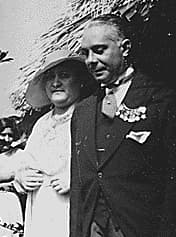
Rafael Trujillo
General · Modern
55.5Total
Basic Information
Born
1548
1891
Died
1626
1961
Era
Modern
Modern
Nationality
India
Dominican Republic
Occupation
General
General
Civilization
Indian
Western
Score Comparison
Military (10%)
72.0
50.0
Political (20%)
72.0
45.0
Influence (20%)
68.0
57.2
Legacy (20%)
55.0
45.8
Leadership (15%)
78.0
80.0
Strategy (15%)
74.4
60.0
TOTAL
67.9
55.5
Malik Ambar — Complete Timeline
1600 AD
Siege of AhmadnagarWar◆ Major
Malik Ambar participated in the defense of Ahmadnagar fort against the Mughal army under Prince Daniyal and Khan-i-Khanan. The fort fell after a prolonged siege, leading to the temporary collapse of the Nizam Shahi dynasty.
SiegeMughal ConquestAhmadnagar
Impact: regionaltragic
Appointed Regent of AhmadnagarPolitical Action◆ Major
Following the Mughal capture of Ahmadnagar fort and the death of Chand Bibi, Malik Ambar was appointed regent for the young Nizam Shahi prince. He established a new capital at Khadki and organized resistance against the Mughal Empire.
Ahmadnagar SultanateRegencyMughal Conflict
Impact: regionalconstructive
1610 AD
Introduced Revenue ReformsReform◆ Major
Malik Ambar implemented a land revenue system based on measurement and assessment of crop yields. This system, later adopted by the Marathas, stabilized the Ahmadnagar economy and provided reliable funding for his military campaigns.
Revenue ReformAdministrationEconomy
Impact: regionalconstructive
1615 AD
Alliance with Maratha ChiefsPolitical Action◆ Major
Malik Ambar forged alliances with Maratha leaders including Shahaji Bhonsle. This coalition provided Ahmadnagar with a skilled cavalry force and laid the groundwork for the later Maratha Empire's rise in the Deccan.
AllianceMarathaDeccan Politics
Impact: regionalconstructive
1624 AD
Battle of BhatvadiWar◆ Major
Malik Ambar's forces decisively defeated a combined Mughal and Bijapur army at Bhatvadi. This victory secured Ahmadnagar's independence for another decade and demonstrated his military skill against superior numbers.
BattleMughal ConflictDeccan Wars
Impact: regional
Rafael Trujillo — Complete Timeline
1930 AD
1930 Dominican Republic coup d'étatPolitical Action
Trujillo, as commander of the National Army, staged a coup against President Horacio V
CoupDictatorshipPower Seizure
Impact: nationaldestructive
1937 AD
Parsley MassacreWar◆ Major
Trujillo ordered the massacre of Haitians living in the Dominican border region. Soldiers killed an estimated 20,000 to 30,000 people using machetes. The event was named for the shibboleth used to distinguish Haitians from Dominicans.
MassacreGenocideEthnic Cleansing
Impact: regionaldestructive
1952 AD
Nationalization of the Dominican sugar industryReform
Trujillo used state power to acquire control over the sugar industry, the country's main economic sector. He and his family became the largest landowners and sugar producers, enriching themselves while the state managed the industry.
Economic ControlCorruptionSugar Industry
Impact: nationaldestructive
1961 AD
Assassination of Rafael TrujilloPolitical Action
Trujillo was ambushed and killed by a group of Dominican dissidents on a highway near Ciudad Trujillo. The assassination was aided by the U.S. Central Intelligence Agency, which provided weapons. His death ended the dictatorship.
AssassinationRegime ChangeCIA Involvement
Impact: national
This comparison has not been analyzed yet.
One-time AI generation (~1 minute). Scores and timeline are already available below.
Rankings
🥇
Malik AmbarLeader
Mil: 72.0Pol: 72.0Inf: 68.0
67.9
🥈
Rafael Trujillo
Mil: 50.0Pol: 45.0Inf: 57.2
55.5
+12.4 behind
How This Comparison Works
Algorithm
Each figure is scored on 6 dimensions (0—100 scale) based on structured historical data: Military (10%), Political (20%), Influence (20%), Legacy (20%), Leadership (15%), Strategy (15%). The weighted total produces the final ranking.
Data Sources
Scores are computed from structured sub-indicators in the database. Scale factors adjust for era (Ancient ×0.85, Modern ×1.0) and civilization size (Eastern ×1.05, Other ×0.80) to account for differences in population and military scale.
Maximum 3 Figures
Comparisons are limited to 2—3 figures to ensure readability and statistical meaningfulness.
Error Margins
±5 points per dimension — Sub-scores are derived from historical records with inherent uncertainty. Two figures within 5 points on a dimension should be considered roughly equivalent in that area.
Total Score Accuracy
±3 points overall — The weighted combination of 6 dimensions produces a total score with approximately ±3 points of uncertainty. Differences of less than 3 points are not statistically significant— the figures are effectively tied.
Known Limitations
- Historical records are incomplete and uneven across civilizations
- Figures from oral-tradition societies may be underrepresented
- Occupation labels can misclassify multi-role figures
- Scores measure capability and impact, not moral character
- Quantitative scoring is a comparison tool, not absolute truth
Capability Radar
Military (10%) — Battles & Warfare
Battles
85
15
Win Rate
80
20
Expansion
75
10
Political (20%) — Governance & Reform
Reform
82
60
Diplomacy
85
50
Economy
78
55
Influence (20%) — Cultural & Global Reach
Cultural
60
40
Global
55
35
Legacy (20%) — Historical Impact
Historical
70
45
Longevity
65
30
Leadership (15%) — Power & Stability
Tenure
80
85
Stability
75
70
Strategy (15%) — Tactics & Innovation
Strategy
88
30
Tactics
90
25
Reform
85
40
Similar Comparisons
Comments & Discussion
No comments yet. Be the first to share your thoughts!