Loading...
Malik Ambar vs Qin Shi Huang
Qin Shi Huang leads by 17.3 pts · 2 figures compared
…

Malik Ambar
General · Modern
67.9Total
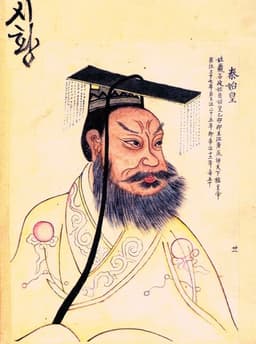
Qin Shi Huang
Emperor · Ancient
85.2Total
Basic Information
Born
1548
-259
Died
1626
-210
Era
Modern
Ancient
Nationality
India
China
Occupation
General
Emperor
Civilization
Indian
Eastern
Score Comparison
Military (10%)
72.0
80.0
Political (20%)
72.0
90.0
Influence (20%)
68.0
85.0
Legacy (20%)
55.0
90.0
Leadership (15%)
78.0
78.0
Strategy (15%)
74.4
82.0
TOTAL
67.9
85.2
Malik Ambar — Complete Timeline
1600 AD
Siege of AhmadnagarWar◆ Major
Malik Ambar participated in the defense of Ahmadnagar fort against the Mughal army under Prince Daniyal and Khan-i-Khanan. The fort fell after a prolonged siege, leading to the temporary collapse of the Nizam Shahi dynasty.
SiegeMughal ConquestAhmadnagar
Impact: regionaltragic
Appointed Regent of AhmadnagarPolitical Action◆ Major
Following the Mughal capture of Ahmadnagar fort and the death of Chand Bibi, Malik Ambar was appointed regent for the young Nizam Shahi prince. He established a new capital at Khadki and organized resistance against the Mughal Empire.
Ahmadnagar SultanateRegencyMughal Conflict
Impact: regionalconstructive
1610 AD
Introduced Revenue ReformsReform◆ Major
Malik Ambar implemented a land revenue system based on measurement and assessment of crop yields. This system, later adopted by the Marathas, stabilized the Ahmadnagar economy and provided reliable funding for his military campaigns.
Revenue ReformAdministrationEconomy
Impact: regionalconstructive
1615 AD
Alliance with Maratha ChiefsPolitical Action◆ Major
Malik Ambar forged alliances with Maratha leaders including Shahaji Bhonsle. This coalition provided Ahmadnagar with a skilled cavalry force and laid the groundwork for the later Maratha Empire's rise in the Deccan.
AllianceMarathaDeccan Politics
Impact: regionalconstructive
1624 AD
Battle of BhatvadiWar◆ Major
Malik Ambar's forces decisively defeated a combined Mughal and Bijapur army at Bhatvadi. This victory secured Ahmadnagar's independence for another decade and demonstrated his military skill against superior numbers.
BattleMughal ConflictDeccan Wars
Impact: regional
Qin Shi Huang — Complete Timeline
246 BC
Construction of the Mausoleum and Terracotta ArmyOther◆ Major
Qin Shi Huang commissioned a vast mausoleum complex near Xi'an, guarded by thousands of life-sized terracotta soldiers, horses, and chariots. The project employed hundreds of thousands of workers and reflected his obsession with immortality and imperial power.
Impact: global
230 BC
Conquest of the Six Warring StatesWar
From 230 to 221 BCE, Ying Zheng led the Qin state in a series of campaigns that conquered the Han, Zhao, Wei, Chu, Yan, and Qi states. This unified China under a single ruler for the first time, ending the Warring States period.
Impact: global
221 BC
Standardization of Writing, Currency, and MeasurementsReform◆ Major
Qin Shi Huang ordered the standardization of Chinese script, currency, and weights and measures across the unified empire. This facilitated administration, trade, and cultural integration, laying a foundation for future dynasties.
Impact: globalconstructive
Proclamation of the Qin DynastyPolitical Action
After conquering the last independent state, Ying Zheng declared himself Shi Huangdi (First Emperor), founding the Qin Dynasty. He adopted a new title to signify his supreme authority and initiated centralized imperial rule.
Impact: global
214 BC
Initiation of the Great Wall ConstructionOther◆ Major
Qin Shi Huang ordered the connection and extension of existing northern fortifications to create a unified defensive wall against nomadic Xiongnu raids. This project involved massive conscripted labor and became the precursor to the later Great Wall.
Impact: regional
213 BC
Burning of Books and Burying of ScholarsPolitical Action◆ Major
On the advice of Li Si, Qin Shi Huang ordered the burning of historical records and philosophical texts not aligned with Legalist doctrine. He also had 460 Confucian scholars buried alive to suppress dissent and consolidate ideological control.
Impact: nationaldestructive
Expert Analysis
malik-ambar-vs-qin-shi-huang
# The First Emperor and the Ethiopian Regent: Two Paths to Power in the Ancient World
On a spring morning in 221 BC, a 38-year-old king stood before his assembled army in the Wei River valley and declared himself *Shi Huangdi*—the First Emperor of all China. Eighteen centuries later, in the scorched Deccan plateau of 1600 AD, an Ethiopian-born slave named Malik Ambar took the reins of a dying sultanate and became its regent. Both men rose from obscurity to wield supreme power, yet their journeys could hardly have been more different. One was born a king who conquered a civilization; the other was born a slave who saved one.
Origins
Ying Zheng entered the world in 259 BC as the son of a Qin prince and a concubine, inheriting a state already poised for domination. The Warring States period had fractured China into seven kingdoms locked in a 250-year struggle, and the Qin state, with its Legalist philosophy of strict laws and harsh punishments, was the most ruthless of them all. Young Zheng grew up surrounded by ministers who schemed for power, learning early that trust was a luxury no ruler could afford.
Malik Ambar's origins were the stuff of epic poetry—if the poets had bothered to write it. Born in 1548 in the Horn of Africa, likely in present-day Ethiopia, he was captured as a child and sold into slavery. The slave markets of the Middle East and India were filled with African boys like him, destined for lives as soldiers or eunuchs. But Ambar possessed something beyond muscle: a mind that could read men and situations with uncanny precision. He was purchased by a merchant who recognized this intelligence and trained him in military arts and administration. By the time he arrived in the Deccan, he was no longer property—he was a weapon waiting for a wielder.
Rise to Power
Qin Shi Huang's ascent was a matter of inheritance and aggression. At thirteen, he became king of Qin, though real power lay with his regent Lü Buwei. By 238 BC, the young king had seized control, exiling his mother's lovers and executing rivals with chilling efficiency. Then came the conquests: from 230 to 221 BC, his armies devoured the six other kingdoms one by one—Han, Zhao, Wei, Chu, Yan, and finally Qi. Each campaign was a masterstroke of strategy and terror. When the last king surrendered, Ying Zheng renamed himself and his dynasty, erasing the past and declaring a new age.
Malik Ambar's rise was slower, harder, and far more precarious. The Ahmadnagar Sultanate, one of the Deccan's five Muslim kingdoms, was crumbling under Mughal pressure. After the heroic queen Chand Bibi was killed in 1600, the sultanate fell into chaos. Ambar, then a middle-aged general in his fifties, emerged as regent for the infant sultan. He had no royal blood, no divine mandate—only his reputation as a commander who could outthink the Mughals. Within a decade, he transformed a lost cause into a fighting state.
Leadership & Governance
Qin Shi Huang ruled through absolute control. He standardized writing, currency, and measurements across his empire, creating the administrative skeleton that China would wear for two millennia. He connected the northern walls into what would become the Great Wall, and he commissioned a mausoleum of staggering ambition: a subterranean army of seven thousand terracotta soldiers, each face unique, to guard him in death. But his methods were brutal. In 213 BC, he ordered the burning of all books not related to medicine, agriculture, or divination, and buried 460 scholars alive for criticizing his rule. His Legalist philosophy left no room for dissent—only obedience.
Malik Ambar governed with a lighter hand, perhaps because he had to. He introduced a land revenue system in 1610 that measured fields and assessed crops based on actual yields, a reform so sensible that the Mughals themselves would later adopt it under Shah Jahan. He built alliances with Maratha chiefs, including the father of Shivaji, recognizing that local loyalty mattered more than imperial decree. In war, he was a master of guerrilla tactics, using the Deccan's rugged terrain to bleed Mughal armies dry. His greatest triumph came in 1624 at the Battle of Bhatvadi, where his outnumbered forces crushed a combined Mughal-Bijapur army, securing Ahmadnagar's survival for another generation.
Triumph & Tragedy
Qin Shi Huang's triumph was the unification itself—the creation of China. His tragedy came in his obsession with immortality. He sent expeditions for the elixir of life, consumed mercury pills prescribed by alchemists, and died in 210 BC at age 49, probably poisoned by the very potions meant to save him. Within three years, his dynasty collapsed, destroyed by the harshness of his own laws.
Malik Ambar's tragedy was that he fought for a kingdom that could never truly be saved. He died in 1626 at age 78, still regent, still fighting. His son succeeded him but lacked his genius; within a decade, the Mughals absorbed Ahmadnagar. Yet Ambar had kept the flame alive for twenty-six years against the greatest empire of the age—a feat that seemed impossible when he began.
Character & Destiny
Qin Shi Huang was a man possessed by the future. He believed he could reshape the world through will alone, and to a remarkable degree, he succeeded. But his paranoia and cruelty doomed his dynasty. He trusted no one, and so no one trusted him.
Malik Ambar was a man who understood limits. Born a slave, he knew what it meant to have nothing, and this gave him a patience that Qin Shi Huang never possessed. He built slowly, allied carefully, and never overreached. His destiny was not to found a dynasty but to prove that a man could rise from the lowest station to command kings.
Legacy
Qin Shi Huang's name is etched into Chinese identity. He is the First Emperor, the unifier, the tyrant who made China possible. The terracotta army still stands, a silent monument to his ambition. His standardized script and measurements outlasted his dynasty by two thousand years.
Malik Ambar is nearly forgotten outside the Deccan. But in Indian history, he represents something rare: the outsider who became a savior. He is remembered as a just ruler, a brilliant general, and proof that merit could overcome birth. His revenue system shaped land administration for centuries, and his Maratha alliances laid the groundwork for the empire that would eventually topple the Mughals.
Conclusion
What separates these two men is not ability but circumstance. Qin Shi Huang inherited a war machine and built an empire. Malik Ambar inherited a corpse and kept it breathing. One ruled through terror, the other through cunning. One's dynasty died with him; the other's legacy lived in the institutions he created. In the end, both men understood the same truth: power is not given. It is taken, held, and shaped by those who understand that history belongs not to the righteous, but to the relentless.
Rankings
🥇
Qin Shi HuangLeader
Mil: 80.0Pol: 90.0Inf: 85.0
85.2
🥈
Malik Ambar
Mil: 72.0Pol: 72.0Inf: 68.0
67.9
+17.3 behind
How This Comparison Works
Algorithm
Each figure is scored on 6 dimensions (0—100 scale) based on structured historical data: Military (10%), Political (20%), Influence (20%), Legacy (20%), Leadership (15%), Strategy (15%). The weighted total produces the final ranking.
Data Sources
Scores are computed from structured sub-indicators in the database. Scale factors adjust for era (Ancient ×0.85, Modern ×1.0) and civilization size (Eastern ×1.05, Other ×0.80) to account for differences in population and military scale.
Maximum 3 Figures
Comparisons are limited to 2—3 figures to ensure readability and statistical meaningfulness.
Error Margins
±5 points per dimension — Sub-scores are derived from historical records with inherent uncertainty. Two figures within 5 points on a dimension should be considered roughly equivalent in that area.
Total Score Accuracy
±3 points overall — The weighted combination of 6 dimensions produces a total score with approximately ±3 points of uncertainty. Differences of less than 3 points are not statistically significant— the figures are effectively tied.
Known Limitations
- Historical records are incomplete and uneven across civilizations
- Figures from oral-tradition societies may be underrepresented
- Occupation labels can misclassify multi-role figures
- Scores measure capability and impact, not moral character
- Quantitative scoring is a comparison tool, not absolute truth
Capability Radar
Military (10%) — Battles & Warfare
Battles
85
85
Win Rate
80
90
Expansion
75
90
Political (20%) — Governance & Reform
Reform
82
95
Diplomacy
85
75
Economy
78
90
Influence (20%) — Cultural & Global Reach
Cultural
60
95
Global
55
85
Legacy (20%) — Historical Impact
Historical
70
95
Longevity
65
95
Leadership (15%) — Power & Stability
Tenure
80
70
Stability
75
65
Strategy (15%) — Tactics & Innovation
Strategy
88
85
Tactics
90
80
Reform
85
95
Similar Comparisons
Comments & Discussion
WarhammerChariot6/17/2026
Comparing these two is madness. Qin Shi Huang wasn't some scrappy slave; he was a *king* who finished a 250-year war of annihilation. Legalist methods were his hammer, and he smashed 6 states into one empire. Malik Ambar was a brilliant field commander who played faction politics in a decaying sultanate. One reshaped East Asia forever; the other stalled a Mughal invasion for a decade. They're not equals—Qin is a tectonic shift, Ambar is a tactical storm.
数据屠夫6/17/2026
把秦始皇和马尔克·安巴尔放在一起比数据,根本就是陷阱。一个统一了数百个城邦和七国的人口、农业、兵器库,另一个只是窃取了一个垂死苏丹国的残骸当摄政王。论统治面积,秦朝是240万平方公里,艾哈迈德讷格尔才8万。论人口,三千万对三百万。这不是“奴隶到皇帝”的浪漫故事——这是拿喜马拉雅山跟小土丘比高度。
PhiloxeniaScholar6/17/2026
What strikes me is the cultural amnesia here. We canonize Qin for the Terracotta Army but forget that same man burned books, buried scholars alive, and crushed any rival thought. Malik Ambar made no such war on knowledge—he was a slave who became regent by merit, not by blood purges. The analysis tries to equalize them by calling both “obscure,” but one was born royal and merely ruthless; the other was born property and still built a state. That's not symmetry—that's a moral chasm.
古风铁粉6/17/2026
讨论“秦始皇与非洲奴隶”?别闹了。始皇帝之父是嬴子楚,虽为质子却仍是王族血脉;马尔克是战俘,从哈勒尔被卖到印度当马穆鲁克。这两人起点、格局、时间跨度都不在同一星球。一个是大一统的开端,一个是地方政权的苟延残喘。修长城、建驰道、统一文字度量衡,这些硬核功绩,安巴尔靠那几万骑兵和阿比西尼亚弓箭手能比吗?别过度浪漫化外籍雇佣兵了。
RevisionistAxis6/17/2026
The real issue is that both men are treated as heroes in their national mythologies despite being quintessential authoritarians. Qin Shi Huang's "unification" was genocide with Chinese characteristics—total war that razed cities, killed millions, and erased entire noble lines. Malik Ambar's "rise from slave" story conveniently ignores that he kept the Deccan's caste-based slavery intact and himself owned human property. The analysis romanticizes them. Let's be honest: Qin was a war criminal; Amb