Loading...
Horatio Nelson vs Qin Shi Huang
Qin Shi Huang leads by 21.6 pts · 2 figures compared
…

Horatio Nelson
General · Modern
63.6Total
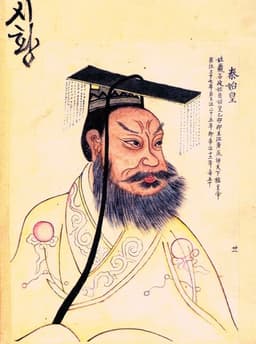
Qin Shi Huang
Emperor · Ancient
85.2Total
Basic Information
Born
1758
-259
Died
1805
-210
Era
Modern
Ancient
Nationality
United Kingdom
China
Occupation
General
Emperor
Civilization
Western
Eastern
Score Comparison
Military (10%)
78.0
80.0
Political (20%)
42.2
90.0
Influence (20%)
71.0
85.0
Legacy (20%)
75.0
90.0
Leadership (15%)
36.9
78.0
Strategy (15%)
74.4
82.0
TOTAL
63.6
85.2
Horatio Nelson — Complete Timeline
1797 AD
Battle of Cape St. VincentWar◆ Major
Nelson, as captain of HMS Captain, played a key role in the British victory over the Spanish fleet at Cape St. Vincent. His bold actions, including boarding enemy ships, earned him promotion to rear admiral.
French Revolutionary WarsNaval BattleSpain
Impact: regional
1798 AD
Battle of the NileWar◆ Major
Nelson destroyed the French fleet at Aboukir Bay, Egypt, trapping Napoleon's army. The victory cut French supply lines and established British naval dominance in the Mediterranean.
Napoleonic WarsNaval BattleEgypt
Impact: global
1801 AD
Battle of CopenhagenWar◆ Major
Nelson led a British fleet to attack the Danish fleet at Copenhagen. He famously ignored a signal to retreat, pressing the attack and forcing a Danish surrender, breaking the League of Armed Neutrality.
Napoleonic WarsNaval BattleDenmark
Impact: regional
1805 AD
Battle of TrafalgarWar
Nelson commanded the British fleet to a decisive victory over the combined French and Spanish fleets off Cape Trafalgar. He was killed during the battle, but the victory ended Napoleon's naval threat and secured British naval supremacy for a century.
Napoleonic WarsNaval BattleDeath
Impact: globaltragic
Qin Shi Huang — Complete Timeline
246 BC
Construction of the Mausoleum and Terracotta ArmyOther◆ Major
Qin Shi Huang commissioned a vast mausoleum complex near Xi'an, guarded by thousands of life-sized terracotta soldiers, horses, and chariots. The project employed hundreds of thousands of workers and reflected his obsession with immortality and imperial power.
Impact: global
230 BC
Conquest of the Six Warring StatesWar
From 230 to 221 BCE, Ying Zheng led the Qin state in a series of campaigns that conquered the Han, Zhao, Wei, Chu, Yan, and Qi states. This unified China under a single ruler for the first time, ending the Warring States period.
Impact: global
221 BC
Standardization of Writing, Currency, and MeasurementsReform◆ Major
Qin Shi Huang ordered the standardization of Chinese script, currency, and weights and measures across the unified empire. This facilitated administration, trade, and cultural integration, laying a foundation for future dynasties.
Impact: globalconstructive
Proclamation of the Qin DynastyPolitical Action
After conquering the last independent state, Ying Zheng declared himself Shi Huangdi (First Emperor), founding the Qin Dynasty. He adopted a new title to signify his supreme authority and initiated centralized imperial rule.
Impact: global
214 BC
Initiation of the Great Wall ConstructionOther◆ Major
Qin Shi Huang ordered the connection and extension of existing northern fortifications to create a unified defensive wall against nomadic Xiongnu raids. This project involved massive conscripted labor and became the precursor to the later Great Wall.
Impact: regional
213 BC
Burning of Books and Burying of ScholarsPolitical Action◆ Major
On the advice of Li Si, Qin Shi Huang ordered the burning of historical records and philosophical texts not aligned with Legalist doctrine. He also had 460 Confucian scholars buried alive to suppress dissent and consolidate ideological control.
Impact: nationaldestructive
Expert Analysis
horatio-nelson-vs-qin-shi-huang
# The First Emperor and the Sea King: Two Titans Who Forged Worlds
On a windswept October morning in 1805, Horatio Nelson stood on the deck of HMS *Victory*, his one eye scanning the horizon where the combined French and Spanish fleet stretched in a crescent line. He knew he would likely die that day. Across the centuries and half a world away, in 221 BC, a young king named Ying Zheng stood before the walls of a conquered city, surveying a realm that no single ruler had ever commanded. Both men were about to change history forever—but in profoundly different ways. Nelson would shatter navies and die in the smoke of a single battle, leaving a legend that would never fade. Qin Shi Huang would unify a civilization, burn its books, bury its scholars, and build a wall that still snakes across the earth. Why did one become a martyr of the sea and the other the architect of an empire? The answer lies not just in their deeds, but in the worlds they were born to remake.
Origins
Qin Shi Huang entered the world in 259 BC, a prince of a frontier state perched on the western edge of warring China. His childhood was a crucible of violence and intrigue: his father was a hostage in another kingdom, his mother a former concubine, and his early years were shadowed by the threat of assassination. The China of his youth was a land of seven rival states locked in ceaseless conflict, a chaos that had endured for centuries. From his earliest moments, Ying Zheng absorbed the brutal logic of survival—that power was won by iron, not by virtue.
Horatio Nelson was born in 1758 in Norfolk, England, the sixth of eleven children of a village rector. His world was ordered, stable, and Protestant. At twelve, he joined the Royal Navy as a midshipman, a common path for boys of modest means. His era was one of imperial expansion and global warfare, where Britain and France fought for control of the seas. Nelson’s England was a rising maritime power, confident and commercial. Where Qin Shi Huang grew up in a land of crumbling walls and endless war, Nelson grew up on a ship, learning that the sea was both a highway and a battlefield.
Rise to Power
Ying Zheng’s ascent was methodical and merciless. At thirteen, he became king of Qin, but real power lay in the hands of regents and eunuchs. He bided his time. In 238 BC, at twenty-one, he crushed a rebellion led by his mother’s lover, then exiled her and executed her paramour. From that moment, he ruled alone. His grand strategy was the conquest of the six other Chinese states, a campaign he launched in 230 BC. Over nine years, his armies swept through Han, Zhao, Wei, Chu, Yan, and Qi, using a combination of overwhelming force, bribery, and psychological warfare. He did not merely defeat them—he erased their identities, destroyed their histories, and absorbed their peoples.
Nelson’s rise was different: it was forged in fire, not in court. He won his first command at twenty, but his true ascent began in 1797 at the Battle of Cape St. Vincent. As captain of HMS *Captain*, he ignored standard tactics, broke the enemy line, and boarded two Spanish ships in succession. It was audacious, reckless, and brilliant. Promoted to rear admiral, he was sent to destroy Napoleon’s fleet in the Mediterranean. In 1798, at the Battle of the Nile, he caught the French anchored in Aboukir Bay and annihilated them, cutting off Napoleon’s army in Egypt. Nelson did not conquer kingdoms—he destroyed fleets. His path was not about building an empire but about preserving one.
Leadership & Governance
Qin Shi Huang governed as he conquered: with absolute, centralized control. In 221 BC, he declared himself Shi Huangdi—the First Emperor—and immediately set about remaking China. He standardized writing, currency, and weights and measures across his new realm, creating a unified administrative language. He built a network of roads and canals, linking his empire as never before. He initiated the construction of the Great Wall in 214 BC, ordering the connection of existing fortifications into a single defensive line. But his governance had a dark side. In 213 BC, on the advice of his chancellor Li Si, he ordered the burning of all historical records and philosophical texts not aligned with Legalist doctrine. Scholars who resisted were buried alive. He sought to erase the past to control the future.
Nelson governed ships, not empires. His leadership style was personal, charismatic, and often insubordinate. He earned the fierce loyalty of his men by sharing their dangers and rewards. At the Battle of Copenhagen in 1801, when his superior signaled retreat, Nelson famously put his telescope to his blind eye and declared, “I really do not see the signal.” He pressed the attack and won. His political wisdom was limited—he was a poor courtier and an even worse husband—but on the quarterdeck, he was a genius. He understood that naval warfare was about morale, timing, and breaking the enemy’s will.
Triumph & Tragedy
Qin Shi Huang’s greatest triumph was the unification of China itself, a feat that had seemed impossible. He created a single state from a fractured land and laid the foundations for an imperial system that would endure for over two thousand years. His greatest tragedy was the fragility of his achievement. He died in 210 BC, during a tour of his empire, poisoned, some say, by mercury pills he took in search of immortality. Within three years, the Qin Dynasty collapsed in rebellion, its harsh laws and forced labor having sown the seeds of its own destruction. His terracotta army, buried to guard him in the afterlife, stood silent witness to a dream that crumbled almost as soon as it was realized.
Nelson’s triumph was the Battle of Trafalgar on October 21, 1805. With twenty-seven ships against the thirty-three of the combined Franco-Spanish fleet, he divided his force into two columns and broke the enemy line, a tactic of breathtaking risk. The victory was total: the French and Spanish lost twenty-two ships, the British none. But Nelson was shot by a French sniper and died below decks, his last words a repetition of “Thank God I have done my duty.” His tragedy was his death at the moment of his greatest glory. Unlike Qin Shi Huang, he did not outlive his achievement—he became it.
Character & Destiny
Qin Shi Huang was driven by an obsession with control and immortality. He believed he could shape the world to his will, and he nearly did. His paranoia led him to hide his palaces and build secret tunnels, to seek elixirs of eternal life, and to trust no one. His personality—cold, calculating, and ruthless—was the engine of his rise but also the cause of his fall. He could not delegate, could not forgive, could not imagine a future without him.
Nelson was driven by ambition and a sense of duty, but also by a deep need for recognition. He was vain, theatrical, and prone to melodrama. He wore his medals into battle, courted fame, and wrote passionate letters to his mistress, Lady Hamilton. Yet he was also genuinely brave, generous to his men, and willing to sacrifice himself for his country. His character made him a hero; his flaws made him human.
Legacy
Qin Shi Huang’s legacy is the Chinese empire itself. The name “China” derives from “Qin.” The Great Wall, the standardized script, the unified measurements—all survive in some form. He is remembered as both a unifier and a tyrant, a figure of awe and horror. His tomb, with its terracotta army, remains one of the greatest archaeological wonders of the world, a silent monument to his ambition.
Nelson’s legacy is the Royal Navy’s dominance for a century after Trafalgar. He is commemorated in Trafalgar Square, in the name of countless ships, in the enduring myth of the British naval hero. He is remembered not as a ruler but as a warrior, not as a builder but as a destroyer of enemies. His legacy is one of courage and sacrifice, of a single day that changed the course of history.
Conclusion
Qin Shi Huang and Horatio Nelson were both men of war, but they fought for different worlds. The First Emperor fought to create a world; the Sea Lord fought to defend one. One built a wall that still stands; the other won a battle that is still celebrated. One died in secret, his empire crumbling around him; the other died in glory, his name immortal. Their differences are not merely about time and place—they are about the very nature of power. Qin Shi Huang believed that power meant controlling everything; Nelson believed that power meant inspiring others. In the end, both were right, and both were wrong. But the worlds they shaped are still with us, reminding us that history is not made by ideas alone, but by the men who dare to act.
Rankings
🥇
Qin Shi HuangLeader
Mil: 80.0Pol: 90.0Inf: 85.0
85.2
🥈
Horatio Nelson
Mil: 78.0Pol: 42.2Inf: 71.0
63.6
+21.6 behind
How This Comparison Works
Algorithm
Each figure is scored on 6 dimensions (0—100 scale) based on structured historical data: Military (10%), Political (20%), Influence (20%), Legacy (20%), Leadership (15%), Strategy (15%). The weighted total produces the final ranking.
Data Sources
Scores are computed from structured sub-indicators in the database. Scale factors adjust for era (Ancient ×0.85, Modern ×1.0) and civilization size (Eastern ×1.05, Other ×0.80) to account for differences in population and military scale.
Maximum 3 Figures
Comparisons are limited to 2—3 figures to ensure readability and statistical meaningfulness.
Error Margins
±5 points per dimension — Sub-scores are derived from historical records with inherent uncertainty. Two figures within 5 points on a dimension should be considered roughly equivalent in that area.
Total Score Accuracy
±3 points overall — The weighted combination of 6 dimensions produces a total score with approximately ±3 points of uncertainty. Differences of less than 3 points are not statistically significant— the figures are effectively tied.
Known Limitations
- Historical records are incomplete and uneven across civilizations
- Figures from oral-tradition societies may be underrepresented
- Occupation labels can misclassify multi-role figures
- Scores measure capability and impact, not moral character
- Quantitative scoring is a comparison tool, not absolute truth
Capability Radar
Military (10%) — Battles & Warfare
Battles
85
85
Win Rate
95
90
Expansion
70
90
Political (20%) — Governance & Reform
Reform
15
95
Diplomacy
60
75
Economy
10
90
Influence (20%) — Cultural & Global Reach
Cultural
80
95
Global
75
85
Legacy (20%) — Historical Impact
Historical
85
95
Longevity
80
95
Leadership (15%) — Power & Stability
Tenure
20
70
Stability
10
65
Strategy (15%) — Tactics & Innovation
Strategy
90
85
Tactics
98
80
Reform
75
95
Similar Comparisons
Comments & Discussion
NelsonBane6/17/2026
Sure, Nelson was a brilliant tactician but Qin Shi Huang literally built the template for centralized governance that China still follows today. One victorious battle doesn't compare to standardizing writing, currency, and weights across a civilization. Trafalgar was a moment; the First Emperor created a system that outlasted his dynasty by millennia. Context matters—Nelson fought in established naval tradition, Qin created statecraft from scratch.
铁血书吏6/17/2026
拿什么比?秦始皇统一度量衡、车同轨、书同文,这些制度性遗产你今天还能看到痕迹。纳尔逊不过是在既有海战规则里玩得漂亮,一个战术天才而已。而始皇帝是规则制定者,烧书坑儒固然残忍,但那是建立帝国秩序的成本。把皇帝和一个舰队司令放一起比,本身就是对文明的降维。
SeaWolfSkeptic6/17/2026
Stop romanticizing. Nelson’s victory at Trafalgar didn’t end Napoleonic wars for another decade, and his "genius" mostly relied on superior British gunnery and rotten Franco-Spanish command. Compare actual impact: Qin’s reforms affected hundreds of millions for two thousand years. Nelson’s legacy? Some statues and a column in London. The numbers don’t lie—one man shaped a continent, the other won a naval engagement.
古俑见证6/17/2026
纳尔逊的残暴常被美化——特拉法尔加海战死了四千人,而秦始皇统一过程中死亡人数以十万计。但重点是:始皇帝把战争理性化了。长城、驰道、灵渠,这些是建设性暴力。纳尔逊的胜利不过让英国多当了几年海上霸主。说穿了,一个是在已有棋盘上下棋,另一个是直接造了新棋盘。
ClassicsContrarian6/17/2026
Everyone ignores that Qin Shi Huang was obsessed with immortality and died from mercury pills—talk about irony. Meanwhile Nelson’s last words ("Kiss me, Hardy") became genuinely iconic. But here’s the real distinction: Nelson’s legend is personal, human, fleeting. Qin’s legacy is structural, inhuman, eternal. One’s a tragic hero, the other’s a civilizational force. Apples and oranges, but the apple is sweeter and the orange built the orchard.
朱衣评史6/17/2026
别被西方叙事骗了。秦制不是暴政,是在战乱废墟上建立秩序的唯一出路。纳尔逊保住了英国海上霸权,但这霸权后来变成了殖民掠夺。而秦始皇留下的郡县制、法治框架,直到今天还在运转。一个为帝国燃烧,一个为帝国航海。但建房子的人永远比装修工人伟大,这不是偏好,是历史事实。