Loading...
Qin Shi Huang vs Stefan Potocki
Qin Shi Huang leads by 48.7 pts · 2 figures compared
…
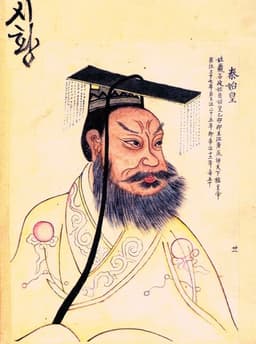
Qin Shi Huang
Emperor · Ancient
85.2Total

Stefan Potocki
General · Modern
36.5Total
Basic Information
Born
-259
1624
Died
-210
1648
Era
Ancient
Modern
Nationality
China
Poland-Lithuania
Occupation
Emperor
General
Civilization
Eastern
Western
Score Comparison
Military (10%)
80.0
21.2
Political (20%)
90.0
26.4
Influence (20%)
85.0
47.1
Legacy (20%)
90.0
37.5
Leadership (15%)
78.0
35.4
Strategy (15%)
82.0
39.6
TOTAL
85.2
36.5
Qin Shi Huang — Complete Timeline
246 BC
Construction of the Mausoleum and Terracotta ArmyOther◆ Major
Qin Shi Huang commissioned a vast mausoleum complex near Xi'an, guarded by thousands of life-sized terracotta soldiers, horses, and chariots. The project employed hundreds of thousands of workers and reflected his obsession with immortality and imperial power.
Impact: global
230 BC
Conquest of the Six Warring StatesWar
From 230 to 221 BCE, Ying Zheng led the Qin state in a series of campaigns that conquered the Han, Zhao, Wei, Chu, Yan, and Qi states. This unified China under a single ruler for the first time, ending the Warring States period.
Impact: global
221 BC
Standardization of Writing, Currency, and MeasurementsReform◆ Major
Qin Shi Huang ordered the standardization of Chinese script, currency, and weights and measures across the unified empire. This facilitated administration, trade, and cultural integration, laying a foundation for future dynasties.
Impact: globalconstructive
Proclamation of the Qin DynastyPolitical Action
After conquering the last independent state, Ying Zheng declared himself Shi Huangdi (First Emperor), founding the Qin Dynasty. He adopted a new title to signify his supreme authority and initiated centralized imperial rule.
Impact: global
214 BC
Initiation of the Great Wall ConstructionOther◆ Major
Qin Shi Huang ordered the connection and extension of existing northern fortifications to create a unified defensive wall against nomadic Xiongnu raids. This project involved massive conscripted labor and became the precursor to the later Great Wall.
Impact: regional
213 BC
Burning of Books and Burying of ScholarsPolitical Action◆ Major
On the advice of Li Si, Qin Shi Huang ordered the burning of historical records and philosophical texts not aligned with Legalist doctrine. He also had 460 Confucian scholars buried alive to suppress dissent and consolidate ideological control.
Impact: nationaldestructive
Stefan Potocki — Complete Timeline
1648 AD
Battle of Zhovti VodyWar◆ Major
Stefan Potocki commanded a Polish force sent by his father Mikolaj to confront Bohdan Khmelnytsky at Zhovti Vody. The Polish force was defeated by the combined Cossack and Tatar army. Potocki was captured and died in Tatar captivity.
Khmelnytsky UprisingBattleDefeatDeath
Impact: regionaltragic
Expert Analysis
qin-shi-huang-vs-stefan-potocki
# The Emperor and the General: Two Men Who Shaped History in Opposite Ways
On a spring morning in 221 BC, a thirty-eight-year-old king stood before his assembled generals in the city of Xianyang. After twenty-five years of relentless warfare, Ying Zheng had done what no ruler before him had achieved: he had conquered all six warring states and unified China under a single crown. That day, he declared himself *Shi Huangdi*—the First Emperor—and set in motion a transformation that would echo across two millennia.
Fourteen hundred miles to the west, in the fertile steppes of what is now central Ukraine, another young commander faced his own moment of truth. In the spring of 1648, Stefan Potocki, barely twenty-four years old, led a Polish-Lithuanian army against a Cossack uprising. Unlike the First Emperor, Potocki would not conquer—he would be defeated, captured, and die in Tatar captivity before the year was out. Between these two men lies not merely a difference in outcome, but a chasm in historical destiny.
Origins
Qin Shi Huang was born into a world of chaos and opportunity. The Warring States period (475–221 BC) had fragmented China into seven rival kingdoms, each fighting for supremacy. Ying Zheng's father was king of Qin, a western state that had already begun to centralize power and adopt Legalist philosophy—a ruthless doctrine that valued order over morality. The young prince grew up surrounded by ambitious ministers, most notably Lü Buwei, who shaped his understanding of power. By thirteen, when he ascended the throne, Ying Zheng had learned that survival meant absolute control.
Stefan Potocki, by contrast, was born into a family already crowned with glory. The Potocki family was one of the wealthiest and most powerful magnate clans in the Polish-Lithuanian Commonwealth. Stefan's father, Mikołaj Potocki, was the Grand Hetman of the Crown—the highest military commander in the kingdom. The young Stefan inherited not only wealth and connections but also the expectation of command. Yet the Commonwealth he served was a different beast from the Qin state: a decentralized noble republic where the king's power was checked by the *szlachta* (nobility) and where personal ambition often trumped national interest.
Rise to Power
The First Emperor's path was forged in blood and strategy. From 230 to 221 BC, he directed a series of military campaigns that systematically dismantled one rival state after another: Han, Zhao, Wei, Chu, Yan, and finally Qi. Each conquest added territory, resources, and prestige. But Ying Zheng was not merely a conqueror—he was a builder. After each victory, he integrated the defeated elites into his administration, standardized laws, and imposed Qin's Legalist system. His rise was methodical, calculated, and total.
Stefan Potocki's rise was far more conventional. As the son of a hetman, he was given command of a regiment at a young age. In 1648, when the Cossack leader Bohdan Khmelnytsky raised a rebellion against Polish rule, Stefan was dispatched with a force of several thousand men to confront him. The young general was confident—his father had crushed Cossack uprisings before. But this time, the circumstances were different. Khmelnytsky had allied with the Crimean Tatars, and the Polish army was poorly supplied and divided in command.
Leadership & Governance
Qin Shi Huang ruled with an iron grip. He standardized writing, currency, and measurements across his empire, creating a unified administrative system that would outlast his dynasty. He ordered the construction of roads and canals, and he connected existing defensive walls into what would become the Great Wall. But his governance was also brutal. On the advice of his chancellor Li Si, he ordered the burning of historical records and philosophical texts that contradicted Legalist doctrine, and buried scholars alive who resisted. His mausoleum, guarded by thousands of life-sized terracotta soldiers, was a monument to his obsession with immortality.
Stefan Potocki never had the chance to govern. His leadership was tested only on the battlefield, and there he failed. At the Battle of Zhovti Vody in May 1648, his forces were surrounded and overwhelmed by a combined Cossack-Tatar army. Potocki himself was captured. Unlike the First Emperor, who died in his bed after thirty-seven years of rule, Potocki perished in captivity, a forgotten casualty of a war that would eventually tear the Commonwealth apart.
Triumph & Tragedy
The First Emperor's greatest triumph was unification itself. In just over a decade, he transformed a collection of warring kingdoms into a single empire that would last, in various forms, for over two thousand years. His standardization of script and currency created a shared cultural identity that survives to this day. Yet his tragedy was equally profound: his obsession with immortality led him to consume mercury pills, which likely hastened his death. His dynasty collapsed within four years of his passing, destroyed by the very harshness of his rule.
Stefan Potocki's tragedy was his defeat. He was not a bad commander by the standards of his time—he was simply outmatched. Khmelnytsky was a brilliant strategist, and the Tatar cavalry gave the Cossacks a mobility the Poles could not match. Potocki's death in captivity was a humiliation for his family and a symbol of the Commonwealth's declining power.
Character & Destiny
Qin Shi Huang was a visionary who saw the world in terms of systems. He understood that power came not from military might alone but from the ability to control information, currency, and even thought itself. His paranoia and ruthlessness were the price of his ambition. Stefan Potocki was a product of his class—brave, loyal, but ultimately limited by the aristocratic culture that valued honor over strategy. The First Emperor shaped history; Potocki was shaped by it.
Legacy
Today, Qin Shi Huang is remembered as the founder of China. His terracotta army is a UNESCO World Heritage site, visited by millions each year. His name is synonymous with unification and standardization. Stefan Potocki is remembered, if at all, as a footnote in the Khmelnytsky Uprising—a young man who died so that others might learn from his mistakes.
Conclusion
History does not judge men equally. Qin Shi Huang and Stefan Potocki were both born into positions of power, both commanded armies, both sought to leave their mark on the world. One succeeded beyond measure; the other failed utterly. But their stories remind us that greatness is not merely a matter of talent or ambition. It depends on timing, on the structure of the societies they served, and on the willingness to do what is necessary—for better or worse. The First Emperor built an empire that would define a civilization. Stefan Potocki built nothing. Yet both men, in their own ways, illuminate the eternal truth that power, like history itself, is never evenly distributed.
Rankings
🥇
Qin Shi HuangLeader
Mil: 80.0Pol: 90.0Inf: 85.0
85.2
🥈
Stefan Potocki
Mil: 21.2Pol: 26.4Inf: 47.1
36.5
+48.7 behind
How This Comparison Works
Algorithm
Each figure is scored on 6 dimensions (0—100 scale) based on structured historical data: Military (10%), Political (20%), Influence (20%), Legacy (20%), Leadership (15%), Strategy (15%). The weighted total produces the final ranking.
Data Sources
Scores are computed from structured sub-indicators in the database. Scale factors adjust for era (Ancient ×0.85, Modern ×1.0) and civilization size (Eastern ×1.05, Other ×0.80) to account for differences in population and military scale.
Maximum 3 Figures
Comparisons are limited to 2—3 figures to ensure readability and statistical meaningfulness.
Error Margins
±5 points per dimension — Sub-scores are derived from historical records with inherent uncertainty. Two figures within 5 points on a dimension should be considered roughly equivalent in that area.
Total Score Accuracy
±3 points overall — The weighted combination of 6 dimensions produces a total score with approximately ±3 points of uncertainty. Differences of less than 3 points are not statistically significant— the figures are effectively tied.
Known Limitations
- Historical records are incomplete and uneven across civilizations
- Figures from oral-tradition societies may be underrepresented
- Occupation labels can misclassify multi-role figures
- Scores measure capability and impact, not moral character
- Quantitative scoring is a comparison tool, not absolute truth
Capability Radar
Military (10%) — Battles & Warfare
Battles
85
10
Win Rate
90
5
Expansion
90
5
Political (20%) — Governance & Reform
Reform
95
5
Diplomacy
75
10
Economy
90
5
Influence (20%) — Cultural & Global Reach
Cultural
95
5
Global
85
5
Legacy (20%) — Historical Impact
Historical
95
10
Longevity
95
5
Leadership (15%) — Power & Stability
Tenure
70
10
Stability
65
5
Strategy (15%) — Tactics & Innovation
Strategy
85
10
Tactics
80
10
Reform
95
5
Similar Comparisons
Comments & Discussion
The Iron Analyst6/17/2026
Comparing a universal emperor to a failed Polish nobleman is like comparing a tsunami to a garden sprinkler. Qin Shi Huang unified weights, measures, and script across a population of 20 million – that's infrastructure that lasted 2,000 years. Potocki couldn't even hold a riverbank against Bohdan Khmelnytsky's Cossacks. His "legacy" is getting routed by peasants. If we're weighing historical impact by body count alone, Potocki barely registers. This isn't a comparison, it's a category error.
骑射无双6/17/2026
波托茨基连哥萨克都打不过,还敢跟始皇帝比?始皇帝修长城打匈奴,统一六国车同轨书同文,哪个不是千秋功业?你波托茨基呢?被赫梅利尼茨基活捉,死得窝窝囊囊,就像个笑话。数据不会撒谎——一个帝国奠基人,一个地方战败者。别把铜钱当金币,这对比根本站不住脚。
Herodotus Reborn6/17/2026
两位将领的时代背景天差地别,这才是关键。始皇帝继承的是军功爵制、商鞅变法打造的战争机器,背后是百年积累。而波托茨基面对的是哥萨克起义与全欧洲的火药革命,他麾下贵族的骑兵战术已然过时。一个在系统巅峰,一个在系统崩塌前夕。别只比输赢,要比时代洪流怎么推人。
Subaltern Scribe6/17/2026
Every comparison of Qin Shi Huang whitewashes the brutality. He consolidated power by burying 460 Confucian scholars alive and forcing millions into conscript labor for his tomb and wall. Potocki may have lost, but he didn't annihilate entire class of intellectuals. Let's not measure "greatness" by how efficiently a ruler crushed dissent. The First Emperor's unification was written in blood and standard-issue terror – Potocki's fleeting moment was at least free of that particular stain.
鹤唳华亭6/17/2026
你们争功业、争胜负,我只看这两个人的命运。始皇帝终其一生求长生,却五十岁暴毙,连尸体都腐烂在巡游车上。波托茨基二十四岁战死,至少死于战场而非脓疮。一个统一了山河,却躲不过一枚铅丹;一个失了战役,却留下了少年名将的传说。人生百年,谁知道谁赢在终点?