Loading...
Mahatma Gandhi vs Suleiman the Magnificent
Suleiman the Magnificent leads by 4.5 pts · 2 figures compared
…
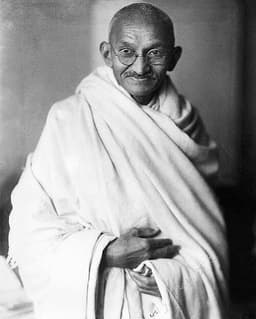
Mahatma Gandhi
Politician · Modern
68.7Total
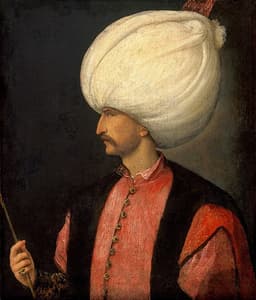
Suleiman the Magnificent
Emperor · Medieval
73.2Total
Basic Information
Born
1869
1494
Died
1948
1566
Era
Modern
Medieval
Nationality
India
Ottoman Empire
Occupation
Politician
Emperor
Civilization
Indian
Middle Eastern
Score Comparison
Military (10%)
42.3
85.0
Political (20%)
65.0
78.0
Influence (20%)
80.0
72.0
Legacy (20%)
75.0
68.0
Leadership (15%)
70.0
72.0
Strategy (15%)
55.0
72.0
TOTAL
68.7
73.2
Mahatma Gandhi — Complete Timeline
1917 AD
Champaran SatyagrahaPolitical Action
Gandhi led his first nonviolent protest in India, supporting indigo farmers in Champaran, Bihar, against exploitative British planters. He organized a campaign of civil disobedience and negotiations, resulting in the abolition of the oppressive tinkathia system.
Civil disobedienceFarmers' rightsBritish Raj
Impact: nationalprogressive
1919 AD
Jallianwala Bagh massacre aftermathPolitical Action◆ Major
After British troops killed hundreds of unarmed civilians in Amritsar, Gandhi organized a nationwide hartal (strike) and nonviolent protests. He returned his medals and launched the Rowlatt Satyagraha, marking a shift from cooperation to non-cooperation with British rule.
ProtestBritish RajMassacre
Impact: nationaltragic
1930 AD
Salt MarchPolitical Action
Gandhi led a 240-mile march from Sabarmati to Dandi, Gujarat, to defy the British salt monopoly. Thousands joined him, making salt from seawater. This act of civil disobedience sparked mass protests across India and drew global attention to the independence movement.
Civil disobedienceSalt taxIndependence movement
Impact: globalprogressive
1942 AD
Quit India Movement launchPolitical Action◆ Major
Gandhi launched the Quit India Movement, calling for an end to British rule with the slogan 'Do or Die'. The British arrested him and other leaders, but the movement led to widespread protests and repression, accelerating the end of colonial rule.
IndependenceCivil disobedienceBritish Raj
Impact: nationalprogressive
1948 AD
AssassinationPolitical Action
Gandhi was shot and killed by Nathuram Godse, a Hindu nationalist, during a prayer meeting in New Delhi. His assassination shocked the world and led to a wave of grief and violence, but also reinforced his legacy as a martyr for nonviolence.
AssassinationMartyrdomNonviolence
Impact: globaltragic
Suleiman the Magnificent — Complete Timeline
1522 AD
Siege of RhodesWar◆ Major
Suleiman personally led a massive Ottoman campaign against the Knights Hospitaller on Rhodes. After a six-month siege, the knights surrendered and were allowed to leave. This victory secured Ottoman control over the eastern Mediterranean.
SiegeMediterraneanKnights Hospitaller
Impact: regional
1526 AD
Battle of MohácsWar
Suleiman's Ottoman army defeated the Hungarian forces of King Louis II at Moh
BattleHungaryOttoman expansion
Impact: regional
1529 AD
Siege of ViennaWar◆ Major
Suleiman besieged Vienna, the Habsburg capital, with a large army. The siege failed due to supply issues, disease, and strong defenses. This defeat halted Ottoman expansion into central Europe and marked the empire's furthest advance westward.
SiegeViennaDefeat
Impact: regional
1530 AD
Codification of Ottoman lawReform◆ Major
Suleiman oversaw the compilation and standardization of Ottoman legal codes, known as Kanun. These laws regulated criminal justice, land tenure, and taxation, creating a unified legal system that balanced sharia with secular law. He earned the title 'Kanuni' (the Lawgiver).
Legal reformKanunOttoman Empire
Impact: nationalconstructive
1536 AD
Execution of Ibrahim PashaPolitical Action◆ Major
Suleiman ordered the execution of his grand vizier and close friend Ibrahim Pasha, who had served for 13 years. The reasons remain debated, but likely involved Ibrahim's growing power and conflicts with Suleiman's wife, Hurrem Sultan. This event demonstrated the absolute power of the sultan.
ExecutionCourt politicsPower
Impact: nationaltragic
Expert Analysis
Suleiman the Magnificent vs Mahatma Gandhi
# The Saint and the Sultan
On a dusty road in Gujarat, an old man in a loincloth bent down to pick up a grain of salt from the shore. Half a world away, a sultan in a jeweled turban watched his armies storm the walls of a fortress. One would die at the hands of a fellow countryman, the other in his bed while commanding a siege. Both changed the course of history, yet they inhabited universes so different that comparing them seems almost absurd—until you realize that each, in his own way, was trying to answer the same question: How does one man bend the arc of an empire?
Origins
Mohandas Karamchand Gandhi was born in 1869 in Porbandar, a coastal town in western India, into a merchant-caste family. His father was a chief minister in a small princely state, his mother a devout Hindu who worshipped daily. Young Mohandas was a mediocre student, painfully shy, terrified of ghosts and darkness. He married at thirteen, studied law in London, and spent twenty years in South Africa, where he first encountered the raw edge of racial discrimination when he was thrown off a train for refusing to leave a first-class compartment.
Suleiman, born in 1494 in Trabzon on the Black Sea coast, was the only son of Sultan Selim I. His childhood was a preparation for absolute power. He studied goldsmithing, history, poetry, and the Quran. His father had doubled the size of the Ottoman Empire, and the young prince was groomed from birth to rule it. By the time he was seventeen, he was governing a province. There was no shyness here, no self-doubt—only the calm certainty of a man who knew he would one day command millions.
The difference in their origins was not merely one of wealth or status. Gandhi grew up in a world of colonial subjugation, where Indians were second-class citizens in their own land. Suleiman grew up in a world where his people were the masters. One spent his life trying to earn respect; the other was born demanding it.
Rise to Power
Gandhi returned to India in 1915, aged forty-five, already famous for his work in South Africa. But he was not yet a leader. He spent a year traveling the country, listening, learning. His first major intervention came in 1917 in Champaran, Bihar, where indigo farmers were forced to grow cash crops under exploitative contracts. Gandhi did not arrive with a political manifesto. He arrived with a lawyer's brief and a willingness to be arrested. When the British ordered him to leave, he refused. That defiance, simple and stubborn, became his method.
Suleiman ascended the throne in 1520 at the age of twenty-six, after his father's death. There was no gradual rise, no apprenticeship in dissent. He inherited the most powerful military machine in the world and immediately began using it. Within a year, he had captured Belgrade. Within two, he had taken Rhodes after a six-month siege that became the stuff of legend. The Knights Hospitaller, who had held the island for two centuries, were allowed to leave with their lives—a mercy unusual for the time, but characteristic of Suleiman's early reign.
Gandhi's path was one of slow accumulation of moral authority. Suleiman's was one of swift consolidation of military power. One built influence from the bottom up; the other commanded it from the top down.
Leadership & Governance
Gandhi's leadership was rooted in the idea of *Satyagraha*—truth-force, or soul-force. He believed that oppression could be defeated not by meeting violence with violence, but by refusing to cooperate with injustice. In 1930, when he led the Salt March—240 miles from Sabarmati to Dandi—he was not marching to capture territory. He was marching to make salt, defying a British monopoly. Thousands joined him. The British arrested him, but the message had spread: the empire could be challenged by a man with a handful of salt.
Suleiman governed through law. In 1530, he oversaw the codification of Ottoman legal codes, known as *Kanun*, which standardized criminal, land, and tax laws across a vast empire. He was called "the Lawgiver" by his own people, though Europeans called him "the Magnificent." He built mosques, bridges, and hospitals. He patronized poets and architects. His court was a center of culture and learning.
Yet both men had their shadows. Gandhi's insistence on nonviolence alienated many who wanted more direct action. His economic ideas—village-based, anti-industrial—seemed backward to some. Suleiman, for all his legal reforms, executed his closest friend, Grand Vizier Ibrahim Pasha, in 1536, after thirteen years of partnership. The reasons remain murky—jealousy, fear of power, or perhaps just the loneliness of absolute rule. The Sultan who codified law was also the Sultan who could break it on a whim.
Triumph & Tragedy
Gandhi's greatest triumph was also his most painful. In 1947, India gained independence from British rule. But the victory was marred by the Partition of India and Pakistan, and by the violence that followed—perhaps a million dead, millions more displaced. Gandhi had opposed Partition; he had wanted a united India. He spent the last months of his life walking through riot-torn villages, fasting for peace, trying to stop the bloodshed. He succeeded in some places, failed in others. On January 30, 1948, while walking to a prayer meeting in New Delhi, he was shot three times by Nathuram Godse, a Hindu nationalist who blamed him for being too sympathetic to Muslims.
Suleiman's greatest triumph was the Battle of Mohács in 1526, where his army destroyed the Hungarian forces and killed King Louis II. The victory opened central Europe to Ottoman expansion. But his greatest failure came three years later, at the Siege of Vienna in 1529. The city held. Disease and supply shortages forced the Ottoman army to retreat. It was the farthest west the empire would ever reach. Suleiman would try again, and again fail, but the failure was not military—it was strategic. He had overreached, and the Habsburgs would remain a thorn in the Ottoman side for centuries.
Both men experienced the tragedy of seeing their life's work incomplete. Gandhi died before he could see the India he dreamed of—secular, peaceful, self-reliant. Suleiman died in 1566, aged seventy-one, while besieging the fortress of Szigetvár in Hungary. He never returned to Constantinople. His body was brought back in secret, his death hidden from the army until his successor could secure the throne.
Character & Destiny
Gandhi was a man of contradictions. He was a lawyer who preached simplicity, a politician who distrusted politics, a leader who claimed to be a servant. He wrote constantly, fasted often, and slept in the same room as his grandnieces, a practice that baffled and disturbed his followers. He was not a saint, and he never claimed to be one. He was a man wrestling with his own demons while trying to free a nation.
Suleiman was equally complex. He was a warrior who wrote poetry, a ruler who loved his wife Hurrem Sultan so deeply that it scandalized his court. He executed his sons—or allowed them to be executed—to secure the succession. He was capable of great mercy and great cruelty, often to the same person.
Their characters shaped their destinies. Gandhi's moral absolutism gave him the strength to resist an empire, but it also made him inflexible. Suleiman's pragmatism allowed him to rule a vast and diverse empire, but it also made him ruthless. One died poor, his possessions fitting into a small box. The other died commanding the wealth of the known world.
Legacy
Gandhi's influence is immeasurable. Martin Luther King Jr. studied him. Nelson Mandela was inspired by him. The idea of nonviolent resistance—of fighting oppression without weapons—has become a global tool for change. But India today is not the India Gandhi wanted. It is industrialized, nuclear-armed, and increasingly divided along religious lines. His legacy is invoked but not always followed.
Suleiman's legacy is more tangible. The laws he codified remained in effect for centuries. The mosques he built still stand. The Ottoman Empire, at its height, was one of the most sophisticated states in the world. But it, too, is gone. The sultanate was abolished in 1922. Suleiman's name lives on in history books and tourist brochures, but the world he ruled has vanished.
Conclusion
What drove Gandhi and Suleiman to such different outcomes? Not talent—both were brilliant. Not opportunity—both had it. What drove them was the worlds they were born into. Gandhi faced an empire he could not defeat by force, so he invented a way to defeat it without force. Suleiman inherited an empire that demanded constant expansion, so he expanded it until he could expand no more. One man changed the rules of the game. The other played the game so well that his name became its definition. In the end, both were defeated by what they could not control—Gandhi by the hatred in his own countrymen, Suleiman by the limits of geography and human endurance. But their defeats, like their victories, taught us something about the nature of power: that it can be challenged by a handful of salt, and that it can be lost at the gates of a city that refuses to fall.
Rankings
🥇
Suleiman the MagnificentLeader
Mil: 85.0Pol: 78.0Inf: 72.0
73.2
🥈
Mahatma Gandhi
Mil: 42.3Pol: 65.0Inf: 80.0
68.7
+4.5 behind
How This Comparison Works
Algorithm
Each figure is scored on 6 dimensions (0—100 scale) based on structured historical data: Military (10%), Political (20%), Influence (20%), Legacy (20%), Leadership (15%), Strategy (15%). The weighted total produces the final ranking.
Data Sources
Scores are computed from structured sub-indicators in the database. Scale factors adjust for era (Ancient ×0.85, Modern ×1.0) and civilization size (Eastern ×1.05, Other ×0.80) to account for differences in population and military scale.
Maximum 3 Figures
Comparisons are limited to 2—3 figures to ensure readability and statistical meaningfulness.
Error Margins
±5 points per dimension — Sub-scores are derived from historical records with inherent uncertainty. Two figures within 5 points on a dimension should be considered roughly equivalent in that area.
Total Score Accuracy
±3 points overall — The weighted combination of 6 dimensions produces a total score with approximately ±3 points of uncertainty. Differences of less than 3 points are not statistically significant— the figures are effectively tied.
Known Limitations
- Historical records are incomplete and uneven across civilizations
- Figures from oral-tradition societies may be underrepresented
- Occupation labels can misclassify multi-role figures
- Scores measure capability and impact, not moral character
- Quantitative scoring is a comparison tool, not absolute truth
Capability Radar
Military (10%) — Battles & Warfare
Battles
45
95
Win Rate
46
90
Expansion
51
95
Political (20%) — Governance & Reform
Reform
85
90
Diplomacy
80
88
Economy
40
85
Influence (20%) — Cultural & Global Reach
Cultural
85
90
Global
90
88
Legacy (20%) — Historical Impact
Historical
90
92
Longevity
85
85
Leadership (15%) — Power & Stability
Tenure
60
95
Stability
55
85
Strategy (15%) — Tactics & Innovation
Strategy
52
92
Tactics
56
85
Reform
55
80
Similar Comparisons
Comments & Discussion
No comments yet. Be the first to share your thoughts!