Loading...
Mahatma Gandhi vs Napoleon Bonaparte
Napoleon Bonaparte leads by 2.2 pts · 2 figures compared
…
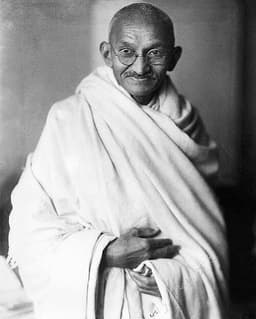
Mahatma Gandhi
Politician · Modern
68.7Total

Napoleon Bonaparte
General · Modern
70.9Total
Basic Information
Born
1869
1769
Died
1948
1821
Era
Modern
Modern
Nationality
India
France
Occupation
Politician
General
Civilization
Indian
Western
Score Comparison
Military (10%)
42.3
94.0
Political (20%)
65.0
72.0
Influence (20%)
80.0
40.0
Legacy (20%)
75.0
80.0
Leadership (15%)
70.0
78.0
Strategy (15%)
55.0
90.0
TOTAL
68.7
70.9
Mahatma Gandhi — Complete Timeline
1917 AD
Champaran SatyagrahaPolitical Action
Gandhi led his first nonviolent protest in India, supporting indigo farmers in Champaran, Bihar, against exploitative British planters. He organized a campaign of civil disobedience and negotiations, resulting in the abolition of the oppressive tinkathia system.
Civil disobedienceFarmers' rightsBritish Raj
Impact: nationalprogressive
1919 AD
Jallianwala Bagh massacre aftermathPolitical Action◆ Major
After British troops killed hundreds of unarmed civilians in Amritsar, Gandhi organized a nationwide hartal (strike) and nonviolent protests. He returned his medals and launched the Rowlatt Satyagraha, marking a shift from cooperation to non-cooperation with British rule.
ProtestBritish RajMassacre
Impact: nationaltragic
1930 AD
Salt MarchPolitical Action
Gandhi led a 240-mile march from Sabarmati to Dandi, Gujarat, to defy the British salt monopoly. Thousands joined him, making salt from seawater. This act of civil disobedience sparked mass protests across India and drew global attention to the independence movement.
Civil disobedienceSalt taxIndependence movement
Impact: globalprogressive
1942 AD
Quit India Movement launchPolitical Action◆ Major
Gandhi launched the Quit India Movement, calling for an end to British rule with the slogan 'Do or Die'. The British arrested him and other leaders, but the movement led to widespread protests and repression, accelerating the end of colonial rule.
IndependenceCivil disobedienceBritish Raj
Impact: nationalprogressive
1948 AD
AssassinationPolitical Action
Gandhi was shot and killed by Nathuram Godse, a Hindu nationalist, during a prayer meeting in New Delhi. His assassination shocked the world and led to a wave of grief and violence, but also reinforced his legacy as a martyr for nonviolence.
AssassinationMartyrdomNonviolence
Impact: globaltragic
Napoleon Bonaparte — Complete Timeline
1799 AD
Coup of 18 BrumaireOther◆ Major
Napoleon Bonaparte, with support from his brother Lucien and key political figures, overthrew the Directory in a bloodless coup. He established the Consulate with himself as First Consul, effectively becoming the ruler of France. This event ended the French Revolution's most unstable period.
French RevolutionCoupRise to Power
Impact: regional
1804 AD
Promulgation of the Napoleonic CodeOther◆ Major
Napoleon enacted the Civil Code of the French, known as the Napoleonic Code, a comprehensive set of laws that replaced the fragmented feudal legal systems. The code established legal equality, protected property rights, and secularized law. It became the basis for legal systems in many European and world countries.
Legal ReformNapoleonic CodeCivil Law
Impact: globalconstructive
1805 AD
Battle of AusterlitzWar◆ Major
Napoleon's Grande Arm
Napoleonic WarsBattleDecisive Victory
Impact: global
1812 AD
Invasion of RussiaWar◆ Major
Napoleon led the Grande Arm
Napoleonic WarsInvasionDisaster
Impact: globaldestructive
1815 AD
Battle of WaterlooWar◆ Major
Napoleon's French army was defeated by the combined forces of the Duke of Wellington's Anglo-Allied army and Gebhard Leberecht von Bl
Napoleonic WarsBattleFinal Defeat
Impact: globaldestructive
Expert Analysis
Napoleon Bonaparte vs Mahatma Gandhi: Historical Comparison
Napoleon Bonaparte, a French military general and emperor, and Mahatma Gandhi, an Indian political and spiritual leader, represent two radically different paths to power—one through conquest, the other through nonviolent resistance. Both reshaped their nations and left enduring global legacies.
Dimension Analysis
**Military: Napoleon Bonaparte 94 / Mahatma Gandhi 52**
Napoleon revolutionized warfare with mass conscription, rapid artillery tactics, and decisive campaigns across Europe, while Gandhi explicitly rejected military force, relying on civil disobedience and moral suasion.
**Political: Napoleon Bonaparte 75 / Mahatma Gandhi 70**
Napoleon centralized power through the Napoleonic Code and bureaucratic reforms, but his authoritarian rule ended in exile; Gandhi mobilized a mass independence movement, dismantling colonial structures without holding formal office.
**Influence: Napoleon Bonaparte 82 / Mahatma Gandhi 85**
Napoleon spread nationalism and legal systems across Europe, but Gandhi’s philosophy of nonviolence inspired global civil rights movements (e.g., Martin Luther King Jr. and Nelson Mandela), arguably reaching deeper into modern consciousness.
**Legacy: Napoleon Bonaparte 78 / Mahatma Gandhi 80**
Napoleon’s legacy is mixed—military genius and legal reformer vs. warmonger and imperialist; Gandhi’s legacy is more uniformly revered as the father of Indian independence and a symbol of peaceful resistance, though criticized for certain economic views.
**Leadership: Napoleon Bonaparte 80 / Mahatma Gandhi 75**
Napoleon commanded absolute loyalty through charisma and fear, achieving rapid conquest; Gandhi led by moral example, personal sacrifice, and decentralized grassroots organizing, with slower but more sustainable results.
**Strategy: Napoleon Bonaparte 93 / Mahatma Gandhi 60**
Napoleon’s strategic brilliance in battle and logistics is unmatched, while Gandhi’s strategy of noncooperation and salt marches was innovative but less directly applicable to conventional power struggles.
Verdict
Napoleon Bonaparte leads due to his superior military and strategic scores, but Gandhi’s higher influence and legacy reflect a deeper, longer-lasting moral impact.
FAQ
Q: Who ranks higher? A: Napoleon Bonaparte ranks higher overall, driven by his military and strategic dominance, though Gandhi surpasses him in influence and legacy.
Rankings
🥇
Napoleon BonaparteLeader
Mil: 94.0Pol: 72.0Inf: 40.0
70.9
🥈
Mahatma Gandhi
Mil: 42.3Pol: 65.0Inf: 80.0
68.7
+2.2 behind
How This Comparison Works
Algorithm
Each figure is scored on 6 dimensions (0—100 scale) based on structured historical data: Military (10%), Political (20%), Influence (20%), Legacy (20%), Leadership (15%), Strategy (15%). The weighted total produces the final ranking.
Data Sources
Scores are computed from structured sub-indicators in the database. Scale factors adjust for era (Ancient ×0.85, Modern ×1.0) and civilization size (Eastern ×1.05, Other ×0.80) to account for differences in population and military scale.
Maximum 3 Figures
Comparisons are limited to 2—3 figures to ensure readability and statistical meaningfulness.
Error Margins
±5 points per dimension — Sub-scores are derived from historical records with inherent uncertainty. Two figures within 5 points on a dimension should be considered roughly equivalent in that area.
Total Score Accuracy
±3 points overall — The weighted combination of 6 dimensions produces a total score with approximately ±3 points of uncertainty. Differences of less than 3 points are not statistically significant— the figures are effectively tied.
Known Limitations
- Historical records are incomplete and uneven across civilizations
- Figures from oral-tradition societies may be underrepresented
- Occupation labels can misclassify multi-role figures
- Scores measure capability and impact, not moral character
- Quantitative scoring is a comparison tool, not absolute truth
Capability Radar
Military (10%) — Battles & Warfare
Battles
45
95
Win Rate
46
90
Expansion
51
95
Political (20%) — Governance & Reform
Reform
85
95
Diplomacy
80
80
Economy
40
85
Influence (20%) — Cultural & Global Reach
Cultural
85
85
Global
90
90
Legacy (20%) — Historical Impact
Historical
90
95
Longevity
85
90
Leadership (15%) — Power & Stability
Tenure
60
85
Stability
55
70
Strategy (15%) — Tactics & Innovation
Strategy
52
95
Tactics
56
98
Reform
55
92
Similar Comparisons
Comments & Discussion
EmpireBuilderFan6/16/2026
Come on, there's no contest! Napoleon conquered half of Europe, rewrote the legal code, and turned France into a superpower in a decade. Gandhi? He sat on a spinning wheel and got the British to leave by being stubborn. I get the moral appeal, but in terms of raw impact, Napoleon is a complete game-changer. The Military score of 94 vs 52 tells you everything—Gandhi's strategy was basically 'hope the other guy gets bored.' Give me the Little Corporal any day; he actually got things DONE. History is written by the victors, and Napoleon was a victor on a continental scale.
DocWatsonHistory6/16/2026
Okay, so hear me out—I just finished a documentary on the Boxer Rebellion, and it made me rethink Gandhi vs Napoleon. Napoleon's a classic 'great man' story, but his legacy crumbled with his empire. Meanwhile, Gandhi's nonviolence directly inspired Martin Luther King and Mandela—like, that's a ripple effect that's still going. I used to think Napoleon was cooler because of all the battles and uniforms, but the Influence score difference (82 vs 85) feels too small. Gandhi didn't just change India; he changed how we think about protest. That's bigger than any army.
PostColonialCritic6/16/2026
This comparison is exactly the problem with Western historiography. Napoleon gets a 94 for military genius, but what about the millions who died in his wars? The Haitian Revolution was a direct consequence of his policies, and he reinstated slavery in the French colonies—that's not genius, that's imperialist brutality. Gandhi, on the other hand, is reduced to a 'spiritual leader' while his economic critiques of industrial capitalism are ignored. The scores prioritize Napoleon's 'effectiveness' while whitewashing his colonial atrocities. If we considered non-Western perspectives, Gandhi's dismantling of British imperialism without an army would be the greater strategic achievement—not the other way around.
ColdScribe116/16/2026
拿破仑总分82.4,军事94——这合理吗?他最终兵败滑铁卢,而且两次被流放,这种结局在历代中国开国皇帝里根本排不上号。反观甘地,政治分只有70,但他领导了数亿人的独立运动,没当总理却比任何总理都有影响力。你算算:拿破仑统治了欧洲大陆十年就垮了,甘地影响了全球民权运动六十年以上,影响力85才比82高3分?这数据模型明显偏重短期武力,轻视长期理念传播。建议把政治得分权重调一调:甘地至少该80分,拿破仑降到70才公平。
BoldHistorian396/16/2026
拿破仑在欧洲战场所向披靡,但若放在中国历史中,他恐怕连诸葛亮都未必能赢。诸葛亮的北伐以弱敌强,靠的是后勤与外交的精密配合,而拿破仑侵俄时却败给了严寒和补给线,这种短板在赤壁之战中早被周瑜和诸葛亮玩明白了。评分给拿破仑军事94,但中国史观里,能屈能伸、以柔克刚的谋略家往往更受推崇——甘地的非暴力不合作,倒是有几分像张良的“运筹帷幄”,而非项羽的硬碰硬。西方中心论给拿破仑加分太多,忽略了东方战略的深层智慧。