Loading...
This comparison has not been analyzed yet.
One-time AI generation (~1 minute). Scores and timeline are already available below.
Mah Bow Tan vs Malcolm Fraser
Malcolm Fraser leads by 11.5 pts · 2 figures compared
…

Mah Bow Tan
Politician · Modern
45.9Total
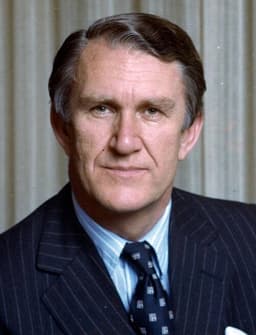
Malcolm Fraser
Politician · Modern
57.4Total
Basic Information
Born
1948
1930
Died
—
—
Era
Modern
Modern
Nationality
Singapore
Australia
Occupation
Politician
Politician
Civilization
Eastern
Western
Score Comparison
Military (10%)
12.1
48.2
Political (20%)
68.0
72.0
Influence (20%)
47.1
59.0
Legacy (20%)
36.7
48.3
Leadership (15%)
72.0
72.0
Strategy (15%)
27.4
41.3
TOTAL
45.9
57.4
Mah Bow Tan — Complete Timeline
1995 AD
Appointed Minister for TransportPolitical Action◆ Major
Mah was appointed Minister for Transport, overseeing land transport policies and the development of the MRT system. He implemented measures to improve public transport efficiency.
Cabinet AppointmentTransport Policy
Impact: nationalconstructive
1999 AD
Appointed Minister for National DevelopmentPolitical Action◆ Major
Mah Bow Tan was appointed Minister for National Development, overseeing housing, urban planning, and infrastructure. He led the development of public housing policies and the HDB estate.
Cabinet AppointmentHousing Policy
Impact: nationalconstructive
2001 AD
Introduced the Build-to-Order (BTO) system for public housingReform◆ Major
Mah introduced the Build-to-Order system for HDB flats, replacing the registration system. The BTO system aimed to better match supply with demand and reduce waiting times.
Housing ReformPolicy Change
Impact: nationalconstructive
2011 AD
Lost his parliamentary seat in the 2011 General ElectionPolitical Action◆ Major
Mah lost his seat in the Tampines GRC to the Workers' Party in the 2011 general election, a major upset. He was the first cabinet minister to lose a GRC seat.
ElectionDefeat
Impact: nationaldestructive
Malcolm Fraser — Complete Timeline
1975 AD
Appointed Prime Minister After DismissalPolitical Action◆ Major
Fraser was appointed caretaker prime minister by Governor-General Sir John Kerr after the dismissal of Gough Whitlam. He led the Liberal-National coalition to a landslide victory in the subsequent election, winning 91 of 127 seats.
Constitutional CrisisElectionLiberal Party
Impact: national
1977 AD
Opposed Apartheid in South AfricaPolitical Action◆ Major
Fraser's government took a strong stance against apartheid, supporting economic sanctions against South Africa and opposing sporting contacts. He played a key role in the Commonwealth's Gleneagles Agreement, which discouraged sporting ties with South Africa.
ApartheidForeign PolicyCommonwealth
Impact: globalprogressive
1978 AD
Introduced Multiculturalism PolicyReform◆ Major
Fraser's government formally adopted a policy of multiculturalism, establishing the Australian Institute of Multicultural Affairs and funding ethnic community organizations. This marked a shift from the previous assimilationist approach to immigration.
MulticulturalismImmigrationSocial Policy
Impact: nationalprogressive
1979 AD
Accepted Vietnamese RefugeesPolitical Action◆ Major
Fraser's government significantly increased the intake of Vietnamese boat people, resettling over 70,000 refugees. This humanitarian response set a precedent for Australia's refugee program and diversified the nation's cultural makeup.
RefugeesHumanitarianVietnam
Impact: nationalprogressive
1983 AD
Defeated in 1983 ElectionPolitical Action◆ Major
Fraser called a snap election in March 1983, but was defeated by Bob Hawke's Labor Party. The election ended Fraser's seven-year tenure as prime minister and marked the beginning of a long period of Labor government.
ElectionDefeatLabor Party
Impact: national
This comparison has not been analyzed yet.
One-time AI generation (~1 minute). Scores and timeline are already available below.
Rankings
🥇
Malcolm FraserLeader
Mil: 48.2Pol: 72.0Inf: 59.0
57.4
🥈
Mah Bow Tan
Mil: 12.1Pol: 68.0Inf: 47.1
45.9
+11.5 behind
How This Comparison Works
Algorithm
Each figure is scored on 6 dimensions (0—100 scale) based on structured historical data: Military (10%), Political (20%), Influence (20%), Legacy (20%), Leadership (15%), Strategy (15%). The weighted total produces the final ranking.
Data Sources
Scores are computed from structured sub-indicators in the database. Scale factors adjust for era (Ancient ×0.85, Modern ×1.0) and civilization size (Eastern ×1.05, Other ×0.80) to account for differences in population and military scale.
Maximum 3 Figures
Comparisons are limited to 2—3 figures to ensure readability and statistical meaningfulness.
Error Margins
±5 points per dimension — Sub-scores are derived from historical records with inherent uncertainty. Two figures within 5 points on a dimension should be considered roughly equivalent in that area.
Total Score Accuracy
±3 points overall — The weighted combination of 6 dimensions produces a total score with approximately ±3 points of uncertainty. Differences of less than 3 points are not statistically significant— the figures are effectively tied.
Known Limitations
- Historical records are incomplete and uneven across civilizations
- Figures from oral-tradition societies may be underrepresented
- Occupation labels can misclassify multi-role figures
- Scores measure capability and impact, not moral character
- Quantitative scoring is a comparison tool, not absolute truth
Capability Radar
Military (10%) — Battles & Warfare
Battles
17
32
Win Rate
17
32
Expansion
19
35
Political (20%) — Governance & Reform
Reform
55
60
Diplomacy
50
70
Economy
55
55
Influence (20%) — Cultural & Global Reach
Cultural
10
40
Global
10
55
Legacy (20%) — Historical Impact
Historical
10
50
Longevity
10
40
Leadership (15%) — Power & Stability
Tenure
60
65
Stability
50
60
Strategy (15%) — Tactics & Innovation
Strategy
25
36
Tactics
27
40
Reform
30
44
Similar Comparisons
Comments & Discussion
No comments yet. Be the first to share your thoughts!