Loading...
Lord Canning vs Malcolm Fraser
Lord Canning leads by 1.7 pts · 2 figures compared
…

Lord Canning
Politician · Modern
59.1Total
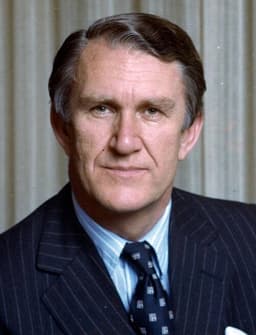
Malcolm Fraser
Politician · Modern
57.4Total
Basic Information
Born
1812
1930
Died
1862
—
Era
Modern
Modern
Nationality
United Kingdom
Australia
Occupation
Politician
Politician
Civilization
Western
Western
Score Comparison
Military (10%)
48.4
48.2
Political (20%)
72.0
72.0
Influence (20%)
61.0
59.0
Legacy (20%)
56.0
48.3
Leadership (15%)
66.0
72.0
Strategy (15%)
42.9
41.3
TOTAL
59.1
57.4
Lord Canning — Complete Timeline
1857 AD
Indian Rebellion of 1857War
Lord Canning was Governor-General during the Indian Rebellion of 1857, a widespread uprising against British rule. He oversaw the British military response, which included the recapture of Delhi, Lucknow, and other cities. The rebellion was brutally suppressed, leading to the end of the East India Company's rule and the beginning of direct British Crown control.
Rebellion1857British Raj
Impact: globaltragic
Punishment of Rebels and ClemencyPolitical Action
Canning faced criticism for his policy of clemency toward Indian rebels, earning the nickname 'Clemency Canning.' While some British officials demanded harsh reprisals, Canning insisted on fair trials and limited executions. His approach was controversial but helped stabilize the situation and prevent further unrest.
ClemencyRebellionPolicy
Impact: regional
1858 AD
Government of India Act 1858Reform◆ Major
Canning implemented the Government of India Act 1858, which transferred control of India from the East India Company to the British Crown. He became the first Viceroy of India. The act established the India Office in London and a Secretary of State for India, centralizing British authority over the subcontinent.
LegislationGovernmentViceroy
Impact: regional
Proclamation of Queen Victoria as Empress of IndiaPolitical Action◆ Major
Canning read Queen Victoria's Proclamation in 1858, which announced the end of Company rule and promised religious tolerance, non-interference in Indian traditions, and equal opportunity for Indians in public service. The proclamation aimed to reconcile Indian opinion after the rebellion and set the tone for the British Raj.
ProclamationQueen VictoriaBritish Raj
Impact: regionalconstructive
Malcolm Fraser — Complete Timeline
1975 AD
Appointed Prime Minister After DismissalPolitical Action◆ Major
Fraser was appointed caretaker prime minister by Governor-General Sir John Kerr after the dismissal of Gough Whitlam. He led the Liberal-National coalition to a landslide victory in the subsequent election, winning 91 of 127 seats.
Constitutional CrisisElectionLiberal Party
Impact: national
1977 AD
Opposed Apartheid in South AfricaPolitical Action◆ Major
Fraser's government took a strong stance against apartheid, supporting economic sanctions against South Africa and opposing sporting contacts. He played a key role in the Commonwealth's Gleneagles Agreement, which discouraged sporting ties with South Africa.
ApartheidForeign PolicyCommonwealth
Impact: globalprogressive
1978 AD
Introduced Multiculturalism PolicyReform◆ Major
Fraser's government formally adopted a policy of multiculturalism, establishing the Australian Institute of Multicultural Affairs and funding ethnic community organizations. This marked a shift from the previous assimilationist approach to immigration.
MulticulturalismImmigrationSocial Policy
Impact: nationalprogressive
1979 AD
Accepted Vietnamese RefugeesPolitical Action◆ Major
Fraser's government significantly increased the intake of Vietnamese boat people, resettling over 70,000 refugees. This humanitarian response set a precedent for Australia's refugee program and diversified the nation's cultural makeup.
RefugeesHumanitarianVietnam
Impact: nationalprogressive
1983 AD
Defeated in 1983 ElectionPolitical Action◆ Major
Fraser called a snap election in March 1983, but was defeated by Bob Hawke's Labor Party. The election ended Fraser's seven-year tenure as prime minister and marked the beginning of a long period of Labor government.
ElectionDefeatLabor Party
Impact: national
Expert Analysis
Origins
**Lord Canning** (1812-1862) was born into British aristocracy, the son of George Canning, a former Prime Minister. Educated at Eton and Christ Church, Oxford, he entered Parliament in 1836. His family connections and political pedigree secured him a post as Governor-General of India in 1856, arriving with limited administrative experience abroad.
**Malcolm Fraser** (1930-2015) was born into a wealthy pastoral family in Toorak, Victoria. He studied at Oxford as a Rhodes Scholar, earning a degree in philosophy, politics, and economics. He entered Parliament in 1955 at age 25, representing the rural seat of Wannon. His background in agriculture and conservative values shaped his political outlook.
Rise to Power
Canning was appointed Governor-General in 1856 by the British government, a standard colonial appointment. His rise was meteoric due to family influence. The Indian Rebellion of 1857 began just a year into his tenure, forcing him to manage a massive crisis. He oversaw the British military response and the subsequent reorganization of Indian governance.
Fraser rose through the Liberal Party ranks, serving as Minister for the Army (1966) and Minister for Education (1968-1972). He became party leader in 1975 and was appointed caretaker Prime Minister after the controversial dismissal of Gough Whitlam on 11 November 1975. He won a landslide victory in the December 1975 election, securing his mandate.
Leadership & Governance
Canning's governance during the rebellion was marked by a dual approach: harsh military suppression and a policy of clemency toward rebels, earning the nickname 'Clemency Canning.' He implemented the Government of India Act 1858, ending East India Company rule and establishing direct Crown control. He read Queen Victoria's Proclamation in 1858, promising religious tolerance and non-interference in Indian traditions. However, his administration was criticized by British hardliners for being too lenient.
Fraser's governance focused on economic reform, multiculturalism, and human rights. His government introduced a policy of multiculturalism, establishing the Australian Institute of Multicultural Affairs. He accepted over 70,000 Vietnamese boat people, a humanitarian response that set a precedent. Fraser strongly opposed apartheid in South Africa, supporting economic sanctions and sporting boycotts. His leadership score of 72.0 matches Canning's political score, but his strategy score of 41.3 is lower than Canning's 42.9.
Triumph & Tragedy
Canning's greatest success was overseeing the transition from Company to Crown rule, stabilizing India after the rebellion. His clemency policy helped pacify the country, though it was controversial. His greatest failure was the rebellion itself occurring under his watch, though it was not his fault. The British response caused immense suffering, and Canning faced criticism from all sides.
Fraser's triumph was his strong stance against apartheid and the successful resettlement of Vietnamese refugees, which boosted Australia's multicultural identity. His greatest failure was calling a snap election in 1983 that he lost to Bob Hawke, ending his tenure. His legacy score of 48.3 reflects a mixed view of his overall impact.
Character & Destiny
Canning was methodical, cautious, and principled, but his aristocratic background made him seem aloof. His clemency policy showed a humanitarian streak, but it also invited scorn from those demanding vengeance. His character shaped his fate: he was seen as weak by some, but history views him as a stabilizing force.
Fraser was determined, principled, and confrontational. His role in the 1975 dismissal remains controversial, with critics accusing him of constitutional impropriety. His anti-apartheid stance and refugee policy showed moral conviction. His character drove his downfall, as his snap election call was a strategic miscalculation.
Legacy
Canning's legacy is tied to the British Raj. He established the framework for Crown rule that lasted until 1947. His clemency policy and the Queen's Proclamation set a tone of governance. His total score of 59.1 reflects moderate impact, with high political score (72.0) but low military (48.4) and strategy (42.9).
Fraser's legacy includes multiculturalism, refugee humanitarianism, and anti-apartheid activism. His policies shaped modern Australia's diversity. However, his involvement in the 1975 dismissal and subsequent election loss tarnish his record. His total score of 57.4 is slightly lower than Canning's.
Conclusion
Lord Canning had a greater impact than Malcolm Fraser, as reflected in his higher total score (59.1 vs 57.4). Canning's actions during a pivotal historical moment—the end of Company rule and the beginning of the British Raj—shaped the subcontinent's future for nearly a century. Fraser's contributions to multiculturalism and human rights were significant but more incremental. Canning's political score (72.0) ties with Fraser's, but his influence (61.0) and legacy (56.0) edge out Fraser's (59.0 and 48.3). The 1.7-point gap, while small, underscores Canning's greater historical weight.
Rankings
🥇
Lord CanningLeader
Mil: 48.4Pol: 72.0Inf: 61.0
59.1
🥈
Malcolm Fraser
Mil: 48.2Pol: 72.0Inf: 59.0
57.4
+1.7 behind
How This Comparison Works
Algorithm
Each figure is scored on 6 dimensions (0—100 scale) based on structured historical data: Military (10%), Political (20%), Influence (20%), Legacy (20%), Leadership (15%), Strategy (15%). The weighted total produces the final ranking.
Data Sources
Scores are computed from structured sub-indicators in the database. Scale factors adjust for era (Ancient ×0.85, Modern ×1.0) and civilization size (Eastern ×1.05, Other ×0.80) to account for differences in population and military scale.
Maximum 3 Figures
Comparisons are limited to 2—3 figures to ensure readability and statistical meaningfulness.
Error Margins
±5 points per dimension — Sub-scores are derived from historical records with inherent uncertainty. Two figures within 5 points on a dimension should be considered roughly equivalent in that area.
Total Score Accuracy
±3 points overall — The weighted combination of 6 dimensions produces a total score with approximately ±3 points of uncertainty. Differences of less than 3 points are not statistically significant— the figures are effectively tied.
Known Limitations
- Historical records are incomplete and uneven across civilizations
- Figures from oral-tradition societies may be underrepresented
- Occupation labels can misclassify multi-role figures
- Scores measure capability and impact, not moral character
- Quantitative scoring is a comparison tool, not absolute truth
Capability Radar
Military (10%) — Battles & Warfare
Battles
30
32
Win Rate
34
32
Expansion
34
35
Political (20%) — Governance & Reform
Reform
70
60
Diplomacy
60
70
Economy
55
55
Influence (20%) — Cultural & Global Reach
Cultural
40
40
Global
55
55
Legacy (20%) — Historical Impact
Historical
60
50
Longevity
50
40
Leadership (15%) — Power & Stability
Tenure
65
65
Stability
50
60
Strategy (15%) — Tactics & Innovation
Strategy
37
36
Tactics
40
40
Reform
46
44
Similar Comparisons
Comments & Discussion
No comments yet. Be the first to share your thoughts!