Loading...
Madho Singh II vs Matthias
Madho Singh II leads by 5.0 pts · 2 figures compared
…
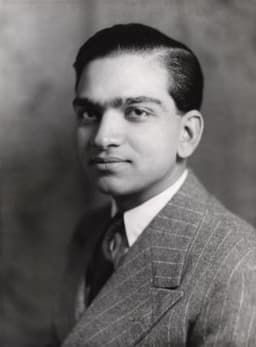
Madho Singh II
Emperor · Modern
54.7Total

Matthias
Emperor · Modern
49.7Total
Basic Information
Born
1861
1557
Died
1922
1619
Era
Modern
Modern
Nationality
India
Holy Roman Empire
Occupation
Emperor
Emperor
Civilization
Indian
Western
Score Comparison
Military (10%)
42.2
50.0
Political (20%)
68.0
39.4
Influence (20%)
53.3
54.9
Legacy (20%)
42.5
50.0
Leadership (15%)
72.0
67.0
Strategy (15%)
55.3
25.0
TOTAL
54.7
49.7
Madho Singh II — Complete Timeline
1876 AD
Construction of Albert Hall MuseumCultural◆ Major
Madho Singh II commissioned the construction of the Albert Hall Museum in Jaipur, designed by Sir Samuel Swinton Jacob. The building was completed in 1887 and became a major cultural landmark, housing a collection of artifacts and art.
JaipurArchitectureMuseum
Impact: regionalconstructive
1887 AD
Visit to England for Queen Victoria's Golden JubileePolitical Action
Madho Singh II traveled to England to attend Queen Victoria's Golden Jubilee celebrations. He presented gifts and strengthened ties with the British Crown, securing Jaipur's position as a loyal princely state within the British Raj.
British RajDiplomacy
Impact: national
1890 AD
Introduction of Water Supply System in JaipurReform◆ Major
Madho Singh II implemented a modern water supply system for Jaipur city, including the construction of the Ramgarh Lake dam and pipelines. This improved public health and sanitation, addressing chronic water shortages.
JaipurInfrastructurePublic Works
constructive
Matthias — Complete Timeline
1606 AD
Peace of ZsitvatorokPolitical Action◆ Major
Matthias, as the representative of the Habsburgs, negotiated the Peace of Zsitvatorok with the Ottoman Empire, ending the Long Turkish War. The treaty was a compromise, with the Habsburgs ceasing to pay tribute to the Ottomans but recognizing Ottoman control over much of Hungary. This peace was a diplomatic achievement for Matthias.
Peace TreatyOttoman EmpireLong Turkish War
Impact: regionalconstructive
1611 AD
Deposition of Rudolf IIPolitical Action◆ Major
Matthias led a revolt of the Habsburg family and the Bohemian estates against his brother Rudolf II, forcing him to cede the crowns of Bohemia, Hungary, and Austria. Matthias was crowned King of Bohemia in 1611 and later became Holy Roman Emperor in 1612. This internal conflict weakened the Habsburg dynasty.
DepositionHabsburg Family FeudPower Struggle
Impact: regionaldestructive
1612 AD
Coronation as Holy Roman EmperorPolitical Action◆ Major
Matthias was crowned Holy Roman Emperor in Frankfurt, succeeding his brother Rudolf II. His reign was marked by attempts to maintain religious peace and centralize authority, but he faced opposition from both Catholic and Protestant factions. His policies ultimately failed to prevent the outbreak of the Thirty Years' War.
CoronationImperial AuthorityReligious Tensions
Impact: global
1618 AD
Defenestration of Prague (1618)Political Action
During Matthias's reign, Protestant nobles in Bohemia threw two Catholic imperial governors out of a window in Prague Castle, an event known as the Second Defenestration of Prague. This act was a direct challenge to Matthias's authority and sparked the Bohemian Revolt, which escalated into the Thirty Years' War. Matthias died shortly after.
Defenestration of PragueThirty Years' WarBohemian Revolt
Impact: globaldestructive
Expert Analysis
Origins
**Madho Singh II** (1861–1922) was born into the Kachwaha Rajput dynasty of Jaipur, India. He was adopted by his uncle, Maharaja Ram Singh II, and ascended the throne in 1880 at age 19. Educated in traditional Rajput martial arts and English administration, he was influenced by British colonial modernity while upholding Hindu traditions.
**Matthias** (1557–1619) was born in Vienna as the fourth son of Holy Roman Emperor Maximilian II. Raised in the Habsburg court, he received a Catholic education but was exposed to the religious tensions between Catholics and Protestants. His early career was marked by service as a governor in the Netherlands and Austria, where he developed political ambitions against his brother Rudolf II.
Rise to Power
Madho Singh II became Maharaja upon Ram Singh II's death in 1880, inheriting a stable but economically strained kingdom. He quickly aligned with the British Raj, supporting colonial policies in exchange for autonomy. His key turning point was his 1887 visit to England for Queen Victoria's Golden Jubilee, where he presented lavish gifts and secured British favor for his infrastructural projects.
Matthias's rise was a family coup. In 1608, frustrated by Rudolf II's ineptitude and mental decline, Matthias led a revolt of the Habsburg family and Bohemian estates, forcing Rudolf to cede Hungary, Austria, and Moravia. He was crowned Holy Roman Emperor in 1612 after Rudolf's death, but his authority was undermined by religious polarization and the powerful Catholic League.
Leadership & Governance
Madho Singh II was a reformist autocrat who modernized Jaipur through public works. His most notable achievement was the Albert Hall Museum (completed 1887), a symbol of cultural patronage. He also introduced a modern water supply system, building the Ramgarh Lake dam and pipelines, which improved public health. Politically, he maintained loyalty to the British, scoring 68.0 in political acumen, but his military score of 42.2 reflects his reliance on British protection.
Matthias's governance was characterized by religious compromise and political weakness. He attempted to maintain the Peace of Augsburg but failed to curb Protestant expansion. His strategy score of 25.0 reflects his inability to prevent the Defenestration of Prague (1618), which triggered the Thirty Years' War. His leadership score of 67.0 is higher due to his initial success in deposing Rudolf, but his political score of 39.4 indicates his failure to control events.
Triumph & Tragedy
Madho Singh II's triumphs include the Albert Hall Museum, which boosted tourism and cultural pride, and the water system, which reduced disease. However, his legacy is mixed: his lavish spending drained state finances, and his close ties to the British limited his independence. He failed to industrialize Jaipur, leaving it economically dependent on agriculture.
Matthias's triumph was the Peace of Zsitvatorok (1606), ending the Long Turkish War with the Ottoman Empire. This treaty secured Habsburg borders and boosted his prestige. His tragedy was the Defenestration of Prague, which escalated into a devastating war that killed millions. Matthias died in 1619, just as the conflict exploded, leaving his successor Ferdinand II to face the chaos.
Character & Destiny
Madho Singh II was pragmatic and pro-British, prioritizing stability and modernization. His personality was cautious, avoiding confrontation with the colonial power. This allowed Jaipur to prosper peacefully but at the cost of sovereignty. His character shaped a destiny of quiet improvements rather than dramatic change.
Matthias was ambitious but indecisive. He deposed Rudolf through political maneuvering but lacked the will to enforce religious unity. His vacillation emboldened Protestant nobles, leading to rebellion. Historical assessments paint him as a transitional figure whose weakness accelerated the Thirty Years' War.
Legacy
Madho Singh II's legacy endures in Jaipur's architecture and infrastructure. The Albert Hall Museum remains a major tourist attraction, and his water system served the city for decades. However, his political impact was limited; he scored 42.5 in legacy, reflecting his role as a minor prince under British suzerainty.
Matthias's legacy is inextricably linked to the Thirty Years' War. While he did not cause it alone, his policies created the conditions. His score of 50.0 in legacy reflects his role in European history, but his negative influence overshadows any positive achievements.
Conclusion
Madho Singh II had a more positive impact within his sphere, improving lives in Jaipur through tangible projects. Matthias, despite higher influence (54.9 vs 53.3), triggered a catastrophic war. While Matthias's actions shaped European history more broadly, Madho Singh II's constructive governance yields a higher total score (54.7 vs 49.7). Therefore, Madho Singh II was the more effective leader, achieving meaningful progress without widespread destruction.
Rankings
🥇
Madho Singh IILeader
Mil: 42.2Pol: 68.0Inf: 53.3
54.7
🥈
Matthias
Mil: 50.0Pol: 39.4Inf: 54.9
49.7
+5.0 behind
How This Comparison Works
Algorithm
Each figure is scored on 6 dimensions (0—100 scale) based on structured historical data: Military (10%), Political (20%), Influence (20%), Legacy (20%), Leadership (15%), Strategy (15%). The weighted total produces the final ranking.
Data Sources
Scores are computed from structured sub-indicators in the database. Scale factors adjust for era (Ancient ×0.85, Modern ×1.0) and civilization size (Eastern ×1.05, Other ×0.80) to account for differences in population and military scale.
Maximum 3 Figures
Comparisons are limited to 2—3 figures to ensure readability and statistical meaningfulness.
Error Margins
±5 points per dimension — Sub-scores are derived from historical records with inherent uncertainty. Two figures within 5 points on a dimension should be considered roughly equivalent in that area.
Total Score Accuracy
±3 points overall — The weighted combination of 6 dimensions produces a total score with approximately ±3 points of uncertainty. Differences of less than 3 points are not statistically significant— the figures are effectively tied.
Known Limitations
- Historical records are incomplete and uneven across civilizations
- Figures from oral-tradition societies may be underrepresented
- Occupation labels can misclassify multi-role figures
- Scores measure capability and impact, not moral character
- Quantitative scoring is a comparison tool, not absolute truth
Capability Radar
Military (10%) — Battles & Warfare
Battles
31
20
Win Rate
34
15
Expansion
33
10
Political (20%) — Governance & Reform
Reform
55
30
Diplomacy
50
25
Economy
45
20
Influence (20%) — Cultural & Global Reach
Cultural
40
20
Global
20
50
Legacy (20%) — Historical Impact
Historical
35
60
Longevity
30
55
Leadership (15%) — Power & Stability
Tenure
60
55
Stability
60
15
Strategy (15%) — Tactics & Innovation
Strategy
40
15
Tactics
42
10
Reform
45
10
Similar Comparisons
Comments & Discussion
No comments yet. Be the first to share your thoughts!