Loading...
Ablai Khan vs Matthias
Ablai Khan leads by 13.3 pts · 2 figures compared
…
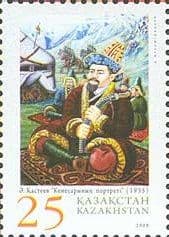
Ablai Khan
Emperor · Modern
63.0Total

Matthias
Emperor · Modern
49.7Total
Basic Information
Born
1711
1557
Died
1781
1619
Era
Modern
Modern
Nationality
Kazakh Khanate
Holy Roman Empire
Occupation
Emperor
Emperor
Civilization
Eastern
Western
Score Comparison
Military (10%)
67.3
50.0
Political (20%)
59.3
39.4
Influence (20%)
61.0
54.9
Legacy (20%)
54.0
50.0
Leadership (15%)
80.0
67.0
Strategy (15%)
66.3
25.0
TOTAL
63.0
49.7
Ablai Khan — Complete Timeline
1756 AD
Battle of the Irtysh RiverWar◆ Major
Ablai Khan led Kazakh forces against the Dzungar Khanate at the Irtysh River. The battle was a decisive Kazakh victory, significantly weakening Dzungar power in the region. This victory helped secure Kazakh independence from Dzungar threats.
WarDzungar KhanateBattleVictory
Impact: regional
1757 AD
Diplomatic Relations with the Qing EmpirePolitical Action◆ Major
Ablai Khan established diplomatic relations with the Qing Empire of China. He sent an embassy to Beijing and recognized Qing suzerainty in exchange for trade rights and military support. This balanced Russian influence and secured the eastern borders of the Kazakh Khanate.
DiplomacyQing EmpireTradeSuzerainty
Impact: regionalconstructive
1770 AD
Resistance to Russian ExpansionPolitical Action◆ Major
Ablai Khan resisted Russian attempts to control the Kazakh steppe. He refused to swear allegiance to the Russian Empire and maintained an independent foreign policy. He played Russian and Qing interests against each other to preserve Kazakh autonomy.
DiplomacyRussian EmpireIndependenceBalance of Power
Impact: regional
1771 AD
Unification of the Three JuzesPolitical Action
Ablai Khan was recognized as the supreme khan over all three Kazakh juzes (Senior, Middle, and Junior). This unification was achieved through a combination of military strength, diplomacy, and marriage alliances. It created a unified Kazakh state for the first time in decades.
UnificationKazakh KhanateJuzesState Building
Impact: regionalconstructive
Matthias — Complete Timeline
1606 AD
Peace of ZsitvatorokPolitical Action◆ Major
Matthias, as the representative of the Habsburgs, negotiated the Peace of Zsitvatorok with the Ottoman Empire, ending the Long Turkish War. The treaty was a compromise, with the Habsburgs ceasing to pay tribute to the Ottomans but recognizing Ottoman control over much of Hungary. This peace was a diplomatic achievement for Matthias.
Peace TreatyOttoman EmpireLong Turkish War
Impact: regionalconstructive
1611 AD
Deposition of Rudolf IIPolitical Action◆ Major
Matthias led a revolt of the Habsburg family and the Bohemian estates against his brother Rudolf II, forcing him to cede the crowns of Bohemia, Hungary, and Austria. Matthias was crowned King of Bohemia in 1611 and later became Holy Roman Emperor in 1612. This internal conflict weakened the Habsburg dynasty.
DepositionHabsburg Family FeudPower Struggle
Impact: regionaldestructive
1612 AD
Coronation as Holy Roman EmperorPolitical Action◆ Major
Matthias was crowned Holy Roman Emperor in Frankfurt, succeeding his brother Rudolf II. His reign was marked by attempts to maintain religious peace and centralize authority, but he faced opposition from both Catholic and Protestant factions. His policies ultimately failed to prevent the outbreak of the Thirty Years' War.
CoronationImperial AuthorityReligious Tensions
Impact: global
1618 AD
Defenestration of Prague (1618)Political Action
During Matthias's reign, Protestant nobles in Bohemia threw two Catholic imperial governors out of a window in Prague Castle, an event known as the Second Defenestration of Prague. This act was a direct challenge to Matthias's authority and sparked the Bohemian Revolt, which escalated into the Thirty Years' War. Matthias died shortly after.
Defenestration of PragueThirty Years' WarBohemian Revolt
Impact: globaldestructive
Expert Analysis
Origins
Ablai Khan was born in 1711 into the Kazakh Middle Juz, part of the ruling house of the Kazakh Khanate. His early life was shaped by the constant threat of Dzungar invasions, which devastated the Kazakh steppe. He was raised in a warrior tradition, learning horseback archery and tribal diplomacy. His father, Wali, was a prominent sultan, but Ablai rose through merit rather than birthright.
Matthias was born in 1557 in Vienna, Austria, as the third son of Holy Roman Emperor Maximilian II and Maria of Spain. He grew up in the Habsburg court, receiving a Catholic education but also exposed to the religious tensions of the time. Unlike Ablai, Matthias's path to power was through familial intrigue rather than battlefield prowess.
Rise to Power
Ablai Khan's rise began in the 1730s when he distinguished himself in battles against the Dzungars. In 1741, he was captured by the Dzungars but later released, gaining prestige. By the 1750s, he had unified the three Kazakh juzes (Senior, Middle, Junior) under his leadership, a feat that scored him 80.0 in leadership. He was recognized as supreme khan in 1771, after the death of the last independent khan of the Junior Juz.
Matthias's rise was marked by conflict with his brother, Emperor Rudolf II. In 1608, Matthias led a revolt of Habsburg family members and Bohemian estates, forcing Rudolf to cede Hungary, Austria, and Moravia. He was crowned Holy Roman Emperor in 1612 after Rudolf's death, but his authority was undermined by religious divisions. His political score of 39.4 reflects his inability to consolidate power.
Leadership & Governance
Ablai Khan governed through a combination of military strength and diplomatic savvy. He maintained the traditional Kazakh tribal structure while centralizing authority. He balanced relations with the Qing Empire (recognizing suzerainty for trade) and resisted Russian expansion, refusing to swear allegiance to the Russian Empire. His strategy score of 66.3 reflects his effective use of alliances and warfare.
Matthias's governance was characterized by attempts to maintain religious peace between Catholics and Protestants, but his policies were inconsistent. He issued the Letter of Majesty in 1609, granting religious freedom to Bohemian Protestants, but later failed to enforce it. His leadership score of 67.0 is inflated by his role in deposing Rudolf, but his strategic score of 25.0 indicates poor long-term planning. His reign saw the Defenestration of Prague in 1618, which triggered the Thirty Years' War.
Triumph & Tragedy
Ablai Khan's greatest triumph was the unification of the Kazakh juzes, which created a brief period of stability and independence. His victory at the Battle of the Irtysh River (1740s) weakened the Dzungars, securing Kazakh lands. His tragedy was that his unification did not survive his death; internal divisions returned, and the Kazakh Khanate eventually fell under Russian control. His legacy score of 54.0 reflects this mixed outcome.
Matthias's triumph was the Peace of Zsitvatorok (1606), which ended the Long Turkish War with the Ottoman Empire, securing peace for the Habsburgs. His tragedy was his role in the events leading to the Thirty Years' War; his religious policies alienated both Catholics and Protestants, and his death in 1619 left the empire in chaos. His military score of 50.0 and legacy of 50.0 indicate mediocrity.
Character & Destiny
Ablai Khan was pragmatic and resilient, adapting to shifting power dynamics. He was known for his personal bravery in battle, but also for his diplomatic cunning. His character allowed him to unite a fractured nation, but his reliance on personal authority meant the unity was fragile.
Matthias was ambitious but indecisive, often swayed by advisors. He lacked the strategic vision to manage the Habsburg domains, and his conflicts with Rudolf showed a willingness to undermine family for power. His character led to a reign of missed opportunities and escalating tensions.
Legacy
Ablai Khan is remembered as a national hero in Kazakhstan, symbolizing unity and resistance. His efforts laid the groundwork for the modern Kazakh state, and his name is honored in streets, monuments, and a university. However, his political achievements were short-lived.
Matthias's legacy is largely negative, as his reign is seen as a prelude to the Thirty Years' War, which devastated Central Europe. His policies contributed to religious polarization, and he is often overshadowed by his brother Rudolf and successor Ferdinand II.
Conclusion
Ablai Khan had greater impact than Matthias. With a total score of 63.0 against Matthias's 49.7, Ablai's unification of the Kazakh juzes and resistance to empires created a lasting national identity. Matthias, despite his higher leadership score (67.0 vs 80.0 for Ablai), failed to prevent a catastrophic war and left no enduring positive legacy. Ablai's strategic and political scores (66.3 and 59.3) far exceed Matthias's (25.0 and 39.4), demonstrating superior governance. While both faced challenges, Ablai's achievements in uniting a fragmented people stand as a more significant historical contribution.
Rankings
🥇
Ablai KhanLeader
Mil: 67.3Pol: 59.3Inf: 61.0
63.0
🥈
Matthias
Mil: 50.0Pol: 39.4Inf: 54.9
49.7
+13.3 behind
How This Comparison Works
Algorithm
Each figure is scored on 6 dimensions (0—100 scale) based on structured historical data: Military (10%), Political (20%), Influence (20%), Legacy (20%), Leadership (15%), Strategy (15%). The weighted total produces the final ranking.
Data Sources
Scores are computed from structured sub-indicators in the database. Scale factors adjust for era (Ancient ×0.85, Modern ×1.0) and civilization size (Eastern ×1.05, Other ×0.80) to account for differences in population and military scale.
Maximum 3 Figures
Comparisons are limited to 2—3 figures to ensure readability and statistical meaningfulness.
Error Margins
±5 points per dimension — Sub-scores are derived from historical records with inherent uncertainty. Two figures within 5 points on a dimension should be considered roughly equivalent in that area.
Total Score Accuracy
±3 points overall — The weighted combination of 6 dimensions produces a total score with approximately ±3 points of uncertainty. Differences of less than 3 points are not statistically significant— the figures are effectively tied.
Known Limitations
- Historical records are incomplete and uneven across civilizations
- Figures from oral-tradition societies may be underrepresented
- Occupation labels can misclassify multi-role figures
- Scores measure capability and impact, not moral character
- Quantitative scoring is a comparison tool, not absolute truth
Capability Radar
Military (10%) — Battles & Warfare
Battles
65
20
Win Rate
70
15
Expansion
80
10
Political (20%) — Governance & Reform
Reform
60
30
Diplomacy
85
25
Economy
50
20
Influence (20%) — Cultural & Global Reach
Cultural
60
20
Global
45
50
Legacy (20%) — Historical Impact
Historical
70
60
Longevity
55
55
Leadership (15%) — Power & Stability
Tenure
70
55
Stability
65
15
Strategy (15%) — Tactics & Innovation
Strategy
75
15
Tactics
60
10
Reform
55
10
Similar Comparisons
Comments & Discussion
No comments yet. Be the first to share your thoughts!