Loading...
Luis Carrero Blanco vs Michiel de Ruyter
Michiel de Ruyter leads by 11.4 pts · 2 figures compared
…

Luis Carrero Blanco
General · Modern
49.6Total
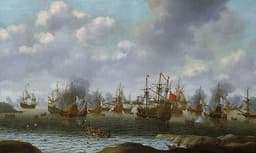
Michiel de Ruyter
General · Modern
61.0Total
Basic Information
Born
1904
1607
Died
1973
1676
Era
Modern
Modern
Nationality
Spain
Netherlands
Occupation
General
General
Civilization
Western
Western
Score Comparison
Military (10%)
50.0
74.0
Political (20%)
48.0
45.0
Influence (20%)
53.3
40.0
Legacy (20%)
44.2
80.0
Leadership (15%)
62.0
62.0
Strategy (15%)
36.8
75.3
TOTAL
49.6
61.0
Luis Carrero Blanco — Complete Timeline
1951 AD
Appointed Minister of the PresidencyPolitical Action◆ Major
Franco appointed Carrero Blanco as Minister of the Presidency, a key role coordinating the cabinet and acting as Franco's closest advisor. He became the regime's most trusted civilian administrator.
Francoist SpainGovernment
Impact: national
1967 AD
Appointed Vice President of the GovernmentPolitical Action◆ Major
Franco appointed Carrero Blanco as Vice President of the Government, placing him second in command. This position gave him oversight of key ministries and made him the regime's chief administrator.
Francoist SpainGovernment
Impact: national
1973 AD
Assassination by ETA car bombPolitical Action
ETA detonated a bomb placed under a Madrid street, killing Carrero Blanco as his car passed. He was President of the Government and Franco's designated successor. His death removed the figure expected to continue the Francoist regime after Franco's death.
ETAAssassinationFrancoist Spain
Impact: nationaldestructive
Appointed President of the GovernmentPolitical Action◆ Major
Franco appointed Carrero Blanco as President of the Government, effectively making him the head of government and the designated successor to lead Spain after Franco's death. This formalized his role as the regime's continuity figure.
Francoist SpainSuccession
Impact: national
Michiel de Ruyter — Complete Timeline
1639 AD
Battle of the DownsWar
De Ruyter served as a captain in the Dutch fleet under Maarten Tromp at the Battle of the Downs, where the Dutch decisively defeated a Spanish fleet. This battle established Dutch naval dominance and marked de Ruyter's early combat experience.
Eighty Years' WarNaval BattleDutch Victory
Impact: regional
1661 AD
Expedition to the MediterraneanWar
De Ruyter led a Dutch fleet to the Mediterranean to protect Dutch merchant shipping from Barbary pirates and to assert Dutch naval presence. He negotiated treaties with Algiers and Tunis, securing safer passage for Dutch trade.
Barbary PiratesNaval DiplomacyTrade Protection
Impact: regionalconstructive
1667 AD
Raid on the MedwayWar
De Ruyter led a Dutch fleet up the River Medway, attacking the English navy at its Chatham Dockyard. The Dutch burned or captured several major English warships, including the flagship HMS Royal Charles, a humiliating defeat for England.
Second Anglo-Dutch WarNaval RaidEnglish Defeat
Impact: regional
1672 AD
Battle of SolebayWar◆ Major
De Ruyter attacked the Anglo-French fleet at Solebay, preventing a blockade of the Dutch coast. The battle was tactically indecisive but strategically important as it thwarted Allied plans to invade the Netherlands.
Third Anglo-Dutch WarNaval BattleStrategic Defense
Impact: regional
1673 AD
Battle of the TexelWar◆ Major
De Ruyter commanded the Dutch fleet to a tactical victory over a combined Anglo-French fleet at the Battle of the Texel. This victory prevented an invasion of the Netherlands and secured Dutch independence during the Franco-Dutch War.
Franco-Dutch WarNaval BattleDutch Victory
Impact: regional
1676 AD
Death at the Battle of AugustaWar◆ Major
De Ruyter was mortally wounded by a cannonball during the Battle of Augusta against a French fleet. He died several days later. His death was a major loss for the Dutch navy and he was given a state funeral with great honors.
Franco-Dutch WarNaval BattleDeath in Battle
Impact: nationaltragic
Expert Analysis
Origins
Luis Carrero Blanco was born on March 4, 1904, in Santoña, Spain, into a military family. He entered the Spanish Naval Academy in 1918 and served in the Navy during the Rif War. His early career was marked by a strict Catholic and authoritarian worldview. After the Spanish Civil War (1936-1939), he became a trusted aide to Francisco Franco, rising through the ranks due to his loyalty and administrative skills.
Michiel de Ruyter was born on March 24, 1607, in Vlissingen, Netherlands, to a modest family. He went to sea at age 11, becoming a merchant sailor. He fought in the Dutch-Portuguese War and later against the Barbary pirates. His naval experience and leadership during the First Anglo-Dutch War (1652-1654) brought him to prominence, eventually becoming commander-in-chief of the Dutch fleet.
Rise to Power
Carrero Blanco's rise was gradual and bureaucratic. In 1941, Franco appointed him as Undersecretary of the Presidency, and he became the regime's key coordinator. By 1951, he was Minister of the Presidency, effectively Franco's right hand. In 1967, he was appointed Vice President of the Government, and in 1973, President of the Government, making him the designated successor to lead Spain after Franco. His power derived entirely from Franco's trust.
De Ruyter's rise was based on combat success. He gained fame in the Battle of the Downs (1639) as a captain under Maarten Tromp. During the First Anglo-Dutch War, he distinguished himself in the Battles of Plymouth (1652) and the Gabbard (1653). In 1659, he led a fleet to assist Denmark against Sweden. His appointment as commander-in-chief in 1665 came after the death of Tromp, and he cemented his reputation with the Raid on the Medway (1667), a bold attack on the English fleet in its home port.
Leadership & Governance
Carrero Blanco's leadership was administrative and repressive. He oversaw the coordination of Franco's cabinet and the implementation of authoritarian policies. He supported the regime's anti-communist and Catholic identity, and was instrumental in the development of the 1966 Organic Law, which formalized Franco's power. He had no independent command; his influence depended on Franco's favor. His governance score is 48.0, reflecting his role as an enforcer rather than an innovator.
De Ruyter's leadership was inspirational and tactical. He commanded the Dutch fleet through the Second and Third Anglo-Dutch Wars, achieving victories at Solebay (1672), the Schooneveld (1673), and the Texel (1673). His strategy of aggressive defense and use of line-of-battle tactics set standards for naval warfare. He scored 62.0 in leadership and 75.3 in strategy, showing his ability to outmaneuver larger English and French fleets.
Triumph & Tragedy
Carrero Blanco's triumph was his rise to the top of Franco's regime, becoming the most powerful figure after Franco himself. He was central to maintaining the dictatorship's stability. However, his tragedy was his assassination by ETA on December 20, 1973, just months after becoming President. The bomb destroyed his car and ended Franco's succession plan, leading to political uncertainty and ultimately the transition to democracy. His military score is 50.0, reflecting his naval background but lack of combat command.
De Ruyter's greatest triumph was the Raid on the Medway (1667), where he destroyed or captured 13 English ships, including the flagship HMS Royal Charles. This forced England to sue for peace. His tragedy was his death at the Battle of Augusta (1676) against the French, where a cannonball struck him, causing fatal injuries. He died on April 29, 1676. His military score is 74.0, and his legacy score is 80.0, indicating his enduring reputation.
Character & Destiny
Carrero Blanco was cautious, loyal, and bureaucratic. He avoided personal ambition, instead serving Franco unconditionally. This made him an effective administrator but vulnerable when his protector was gone. His fate was sealed by ETA's assassination, which exploited his predictable routines. His influence score of 53.3 shows his limited independent impact.
De Ruyter was bold, pragmatic, and deeply religious. He was known for his care for sailors and his tactical flexibility. His character led him to take calculated risks, like the Medway raid, which paid off. His destiny was to become a national hero, but his death in battle reflected his commitment to fighting for the Republic. His total score of 61.0 places him above Carrero Blanco's 49.6.
Legacy
Carrero Blanco's legacy is tied to Francoism. His death accelerated the regime's collapse and the Spanish transition to democracy. He is remembered as Franco's loyalist, but not as a transformative figure. His legacy score is 44.2.
De Ruyter's legacy is immense in the Netherlands. He is considered the greatest Dutch admiral, with multiple ships named after him, including the modern frigate HNLMS De Ruyter. His tactics influenced naval warfare for centuries. His legacy score is 80.0, reflecting his enduring impact.
Conclusion
Michiel de Ruyter had a greater impact than Luis Carrero Blanco. De Ruyter's military achievements directly shaped the balance of power in Europe, defending the Dutch Republic against England and France, and his legacy as a naval innovator persists. Carrero Blanco's influence was derivative and temporary, confined to the final years of a dictatorship. The score gap of 11.4 points (61.0 vs 49.6) reflects this disparity. While Carrero Blanco's assassination had historical consequences, De Ruyter's active role in creating history through decisive victories gives him the edge.
Rankings
🥇
Michiel de RuyterLeader
Mil: 74.0Pol: 45.0Inf: 40.0
61.0
🥈
Luis Carrero Blanco
Mil: 50.0Pol: 48.0Inf: 53.3
49.6
+11.4 behind
How This Comparison Works
Algorithm
Each figure is scored on 6 dimensions (0—100 scale) based on structured historical data: Military (10%), Political (20%), Influence (20%), Legacy (20%), Leadership (15%), Strategy (15%). The weighted total produces the final ranking.
Data Sources
Scores are computed from structured sub-indicators in the database. Scale factors adjust for era (Ancient ×0.85, Modern ×1.0) and civilization size (Eastern ×1.05, Other ×0.80) to account for differences in population and military scale.
Maximum 3 Figures
Comparisons are limited to 2—3 figures to ensure readability and statistical meaningfulness.
Error Margins
±5 points per dimension — Sub-scores are derived from historical records with inherent uncertainty. Two figures within 5 points on a dimension should be considered roughly equivalent in that area.
Total Score Accuracy
±3 points overall — The weighted combination of 6 dimensions produces a total score with approximately ±3 points of uncertainty. Differences of less than 3 points are not statistically significant— the figures are effectively tied.
Known Limitations
- Historical records are incomplete and uneven across civilizations
- Figures from oral-tradition societies may be underrepresented
- Occupation labels can misclassify multi-role figures
- Scores measure capability and impact, not moral character
- Quantitative scoring is a comparison tool, not absolute truth
Capability Radar
Military (10%) — Battles & Warfare
Battles
15
85
Win Rate
20
90
Expansion
5
60
Political (20%) — Governance & Reform
Reform
30
40
Diplomacy
40
70
Economy
35
55
Influence (20%) — Cultural & Global Reach
Cultural
20
75
Global
30
70
Legacy (20%) — Historical Impact
Historical
40
80
Longevity
15
75
Leadership (15%) — Power & Stability
Tenure
60
50
Stability
25
60
Strategy (15%) — Tactics & Innovation
Strategy
15
88
Tactics
10
95
Reform
5
75
Similar Comparisons
Comments & Discussion
No comments yet. Be the first to share your thoughts!