Loading...
Hafez al-Assad vs Michiel de Ruyter
Michiel de Ruyter leads by 6.6 pts · 2 figures compared
…
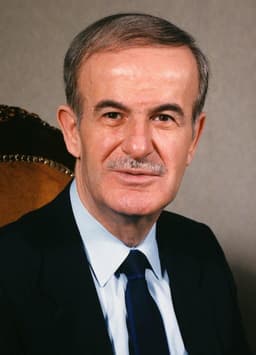
Hafez al-Assad
General · Modern
54.4Total
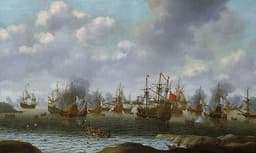
Michiel de Ruyter
General · Modern
61.0Total
Basic Information
Born
1930
1607
Died
—
1676
Era
Modern
Modern
Nationality
Syria
Netherlands
Occupation
General
General
Civilization
Middle Eastern
Western
Score Comparison
Military (10%)
20.0
74.0
Political (20%)
45.0
45.0
Influence (20%)
61.0
40.0
Legacy (20%)
54.0
80.0
Leadership (15%)
72.0
62.0
Strategy (15%)
60.7
75.3
TOTAL
54.4
61.0
Hafez al-Assad — Complete Timeline
1970 AD
Seized power in the Corrective MovementPolitical Action
Hafez al-Assad, then Minister of Defense, launched a bloodless intra-party coup known as the Corrective Movement on November 13, 1970. He ousted the civilian leadership of the Ba'ath Party, assumed the presidency, and established an authoritarian regime dominated by the Alawite minority.
Coup d'étatBa'ath PartyAlawite Rule
Impact: nationaldestructive
1973 AD
Launched the Yom Kippur WarWar◆ Major
Assad coordinated with Egypt's Anwar Sadat to launch a surprise attack on Israel on October 6, 1973. Syrian forces advanced into the Golan Heights but were repelled by Israeli counterattacks. The war ended with a ceasefire, and Syria failed to regain the Golan Heights.
Arab-Israeli WarGolan HeightsMilitary Campaign
Impact: regional
1976 AD
Intervened in the Lebanese Civil WarWar◆ Major
Assad sent Syrian troops into Lebanon to intervene in the civil war, initially against Palestinian and leftist forces. The Syrian military remained in Lebanon for 29 years, exerting political and military control. The intervention solidified Syria's dominance over Lebanese affairs.
LebanonMilitary InterventionHegemony
Impact: regionaldestructive
1982 AD
Crushed the Muslim Brotherhood uprising in HamaWar◆ Major
Assad ordered the Syrian army to besiege and bombard the city of Hama to suppress an Islamist uprising led by the Muslim Brotherhood. Over several weeks, between 10,000 and 40,000 civilians were killed, and large parts of the city were destroyed. The massacre ended armed opposition for decades.
MassacreRepressionMuslim Brotherhood
Impact: nationaldestructive
Michiel de Ruyter — Complete Timeline
1639 AD
Battle of the DownsWar
De Ruyter served as a captain in the Dutch fleet under Maarten Tromp at the Battle of the Downs, where the Dutch decisively defeated a Spanish fleet. This battle established Dutch naval dominance and marked de Ruyter's early combat experience.
Eighty Years' WarNaval BattleDutch Victory
Impact: regional
1661 AD
Expedition to the MediterraneanWar
De Ruyter led a Dutch fleet to the Mediterranean to protect Dutch merchant shipping from Barbary pirates and to assert Dutch naval presence. He negotiated treaties with Algiers and Tunis, securing safer passage for Dutch trade.
Barbary PiratesNaval DiplomacyTrade Protection
Impact: regionalconstructive
1667 AD
Raid on the MedwayWar
De Ruyter led a Dutch fleet up the River Medway, attacking the English navy at its Chatham Dockyard. The Dutch burned or captured several major English warships, including the flagship HMS Royal Charles, a humiliating defeat for England.
Second Anglo-Dutch WarNaval RaidEnglish Defeat
Impact: regional
1672 AD
Battle of SolebayWar◆ Major
De Ruyter attacked the Anglo-French fleet at Solebay, preventing a blockade of the Dutch coast. The battle was tactically indecisive but strategically important as it thwarted Allied plans to invade the Netherlands.
Third Anglo-Dutch WarNaval BattleStrategic Defense
Impact: regional
1673 AD
Battle of the TexelWar◆ Major
De Ruyter commanded the Dutch fleet to a tactical victory over a combined Anglo-French fleet at the Battle of the Texel. This victory prevented an invasion of the Netherlands and secured Dutch independence during the Franco-Dutch War.
Franco-Dutch WarNaval BattleDutch Victory
Impact: regional
1676 AD
Death at the Battle of AugustaWar◆ Major
De Ruyter was mortally wounded by a cannonball during the Battle of Augusta against a French fleet. He died several days later. His death was a major loss for the Dutch navy and he was given a state funeral with great honors.
Franco-Dutch WarNaval BattleDeath in Battle
Impact: nationaltragic
Expert Analysis
Origins
Hafez al-Assad was born on October 6, 1930, in Qardaha, a poor Alawite village in Syria. His father was a farmer, and young Hafez excelled in school, moving to Latakia for secondary education. He joined the Ba'ath Party in 1946 and entered the Syrian Military Academy in 1950, graduating as a pilot. His Alawite background shaped his later reliance on minority networks.
Michiel de Ruyter was born on March 24, 1607, in Vlissingen, Netherlands, the son of a beer porter. He went to sea at age 11, becoming a merchant sailor and later a ship's captain. He gained experience fighting Barbary pirates and served in the Dutch navy under Maarten Tromp. Unlike Assad's political ascent, de Ruyter's rise was purely maritime.
Rise to Power
Assad's rise came through the Ba'ath Party and military. He became Minister of Defense in 1966 after a coup. In 1970, he launched the "Corrective Movement," a bloodless intra-party coup that ousted the radical wing of the Ba'ath. He then consolidated power by installing Alawite loyalists in key positions. By 1971, he was elected President, a position he held until his death in 2000.
De Ruyter's rise was slower. He was appointed captain in the Dutch navy in 1641, but his great breakthrough came in 1653 when he won the Battle of the Gabbard against the English. In 1665, after the death of Admiral Wassenaer, de Ruyter became supreme commander of the Dutch fleet. His decisive raid on the Medway in 1667 forced England to sue for peace.
Leadership & Governance
Assad ruled Syria with an iron fist. He created a centralized police state, with the Alawite minority controlling the military and security services. He crushed dissent brutally, as in the 1982 Hama massacre, where 20,000-40,000 civilians died. Economically, he pursued state-led development but failed to diversify beyond oil. His political score of 45.0 reflects his authoritarian grip but lack of institutional growth.
De Ruyter led by example, known for his tactical brilliance and personal courage. He commanded fleets of up to 100 ships, often against superior Anglo-French forces. His leadership score of 62.0 is solid but not exceptional; his strength was in strategy (75.3) and military execution (74.0). He governed through naval discipline, not political administration.
Triumph & Tragedy
Assad's greatest triumph was surviving 30 years in power, maintaining Syrian independence amid regional turmoil. He also built a formidable military and influenced Lebanon. His greatest tragedy was the Hama massacre, which cemented his reputation as a butcher. The 1973 Yom Kippur War was initially successful but ended in an Israeli counterattack, and Assad failed to recover the Golan Heights.
De Ruyter's triumph was the Raid on the Medway (1667), a stunning naval victory that humiliated England and secured favorable peace terms. He also won the Battle of the Texel (1673), saving the Netherlands from invasion. His tragedy was his death at the Battle of Augusta (1676), where he was fatally wounded by a French cannonball. He died a hero but lost the battle.
Character & Destiny
Assad was calculating, ruthless, and paranoid. He never trusted his own party, relying on family and Alawite cronies. His character shaped Syria's destiny as a police state, with no peaceful transition of power (his son Bashar succeeded him). His military score of 20.0 reflects poor performance in wars: the 1973 war was a tactical failure, and his army was humiliated by Israel in 1982.
De Ruyter was brave, modest, and deeply religious. He was known for his calm under fire and his ability to inspire sailors. His destiny was to become the Netherlands' greatest naval hero, but he died in battle, a fitting end for a warrior. His strategy score of 75.3 reflects his innovative tactics, such as using line of battle and aggressive attacks.
Legacy
Assad's legacy is mixed. He stabilized Syria but at the cost of freedom. His Alawite-dominated system persisted after his death, leading to the brutal civil war under Bashar. His influence score of 61.0 reflects his regional impact, but his legacy score of 54.0 is tempered by his human rights abuses.
De Ruyter's legacy is overwhelmingly positive. He is revered as the father of the Dutch navy, with statues and ships named after him. His tactical innovations influenced naval warfare for centuries. His legacy score of 80.0 is among the highest. He remains a symbol of Dutch resilience and maritime power.
Conclusion
Michiel de Ruyter had greater impact than Hafez al-Assad. His military achievements directly shaped European history, while Assad's rule left Syria in ruins. De Ruyter's strategic brilliance (75.3 vs 60.7) and legacy (80.0 vs 54.0) far exceed Assad's. Though Assad wielded political power longer, de Ruyter's contributions to naval warfare and national survival are more enduring and positive. The total score gap of 6.6 points (61.0 vs 54.4) reflects this: de Ruyter is the superior historical figure.
Rankings
🥇
Michiel de RuyterLeader
Mil: 74.0Pol: 45.0Inf: 40.0
61.0
🥈
Hafez al-Assad
Mil: 20.0Pol: 45.0Inf: 61.0
54.4
+6.6 behind
How This Comparison Works
Algorithm
Each figure is scored on 6 dimensions (0—100 scale) based on structured historical data: Military (10%), Political (20%), Influence (20%), Legacy (20%), Leadership (15%), Strategy (15%). The weighted total produces the final ranking.
Data Sources
Scores are computed from structured sub-indicators in the database. Scale factors adjust for era (Ancient ×0.85, Modern ×1.0) and civilization size (Eastern ×1.05, Other ×0.80) to account for differences in population and military scale.
Maximum 3 Figures
Comparisons are limited to 2—3 figures to ensure readability and statistical meaningfulness.
Error Margins
±5 points per dimension — Sub-scores are derived from historical records with inherent uncertainty. Two figures within 5 points on a dimension should be considered roughly equivalent in that area.
Total Score Accuracy
±3 points overall — The weighted combination of 6 dimensions produces a total score with approximately ±3 points of uncertainty. Differences of less than 3 points are not statistically significant— the figures are effectively tied.
Known Limitations
- Historical records are incomplete and uneven across civilizations
- Figures from oral-tradition societies may be underrepresented
- Occupation labels can misclassify multi-role figures
- Scores measure capability and impact, not moral character
- Quantitative scoring is a comparison tool, not absolute truth
Capability Radar
Military (10%) — Battles & Warfare
Battles
45
85
Win Rate
40
90
Expansion
30
60
Political (20%) — Governance & Reform
Reform
50
40
Diplomacy
70
70
Economy
45
55
Influence (20%) — Cultural & Global Reach
Cultural
40
75
Global
55
70
Legacy (20%) — Historical Impact
Historical
60
80
Longevity
55
75
Leadership (15%) — Power & Stability
Tenure
85
50
Stability
40
60
Strategy (15%) — Tactics & Innovation
Strategy
60
88
Tactics
55
95
Reform
65
75
Similar Comparisons
Comments & Discussion
No comments yet. Be the first to share your thoughts!